Did you know that up to 50% of the air you breathe on your home's first floor actually originates in your crawlspace? In our humid Charlotte climate, that often means you are inhaling damp, musty air that has traveled through a dark and neglected space. If you've noticed lingering odors, cold floors in the winter, or skyrocketing cooling bills, you're certainly not alone. Most homeowners expect their foundation to be a source of stability, not a source of stress.
This guide will show you how professional crawlspace encapsulation insulation can transform that damp environment into a dry, energy-efficient foundation that protects your home's structural integrity. You will discover how to eliminate moisture problems and potentially lower your heating and cooling costs by up to 20% without the use of spray foam. We'll walk through the precise steps of sealing your crawlspace, from meticulous air sealing to choosing the right vapor barriers, so you can finally enjoy a healthier and more comfortable home.
Key Takeaways
- Understand the critical difference between outdated vented systems and modern encapsulation to effectively stop moisture at its source.
- Learn how Charlotte’s unique red clay and high humidity levels create a "vapor drive" that can threaten your home’s structural health.
- Discover how crawlspace encapsulation insulation creates a stable thermal envelope that protects your HVAC system and lowers utility costs.
- Explore our meticulous process for removing old, damaged materials to ensure a clean, mold-free environment before new protection is installed.
- Find out why a local, owner-operated approach provides the transparency and precision needed for a truly dry and healthy foundation.
What is Crawlspace Encapsulation Insulation and Why Does Your Home Need It?
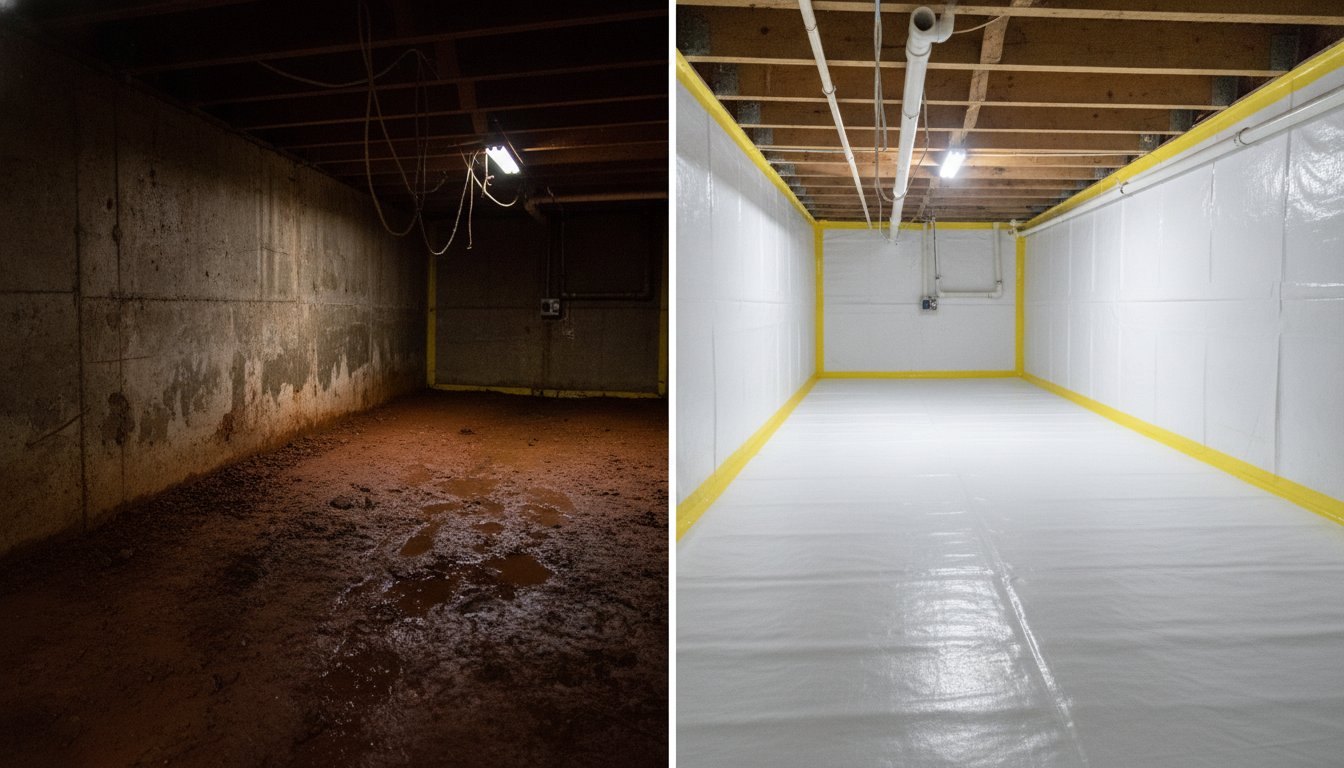
To understand how to protect your home, we should start with the basics. What is a crawlspace? In its simplest form, it's the narrow area between the ground and your first floor. For decades, builders in North Carolina included vents in these spaces, believing that airflow would keep things dry. We now know that in our humid Charlotte climate, those vents actually invite moisture inside. This was a mistake. Encapsulation is the modern solution that involves completely sealing this area from both the damp earth and the humid outside air. When we talk about crawlspace encapsulation insulation, we are referring to a dual-layer protection system that manages both moisture and temperature.
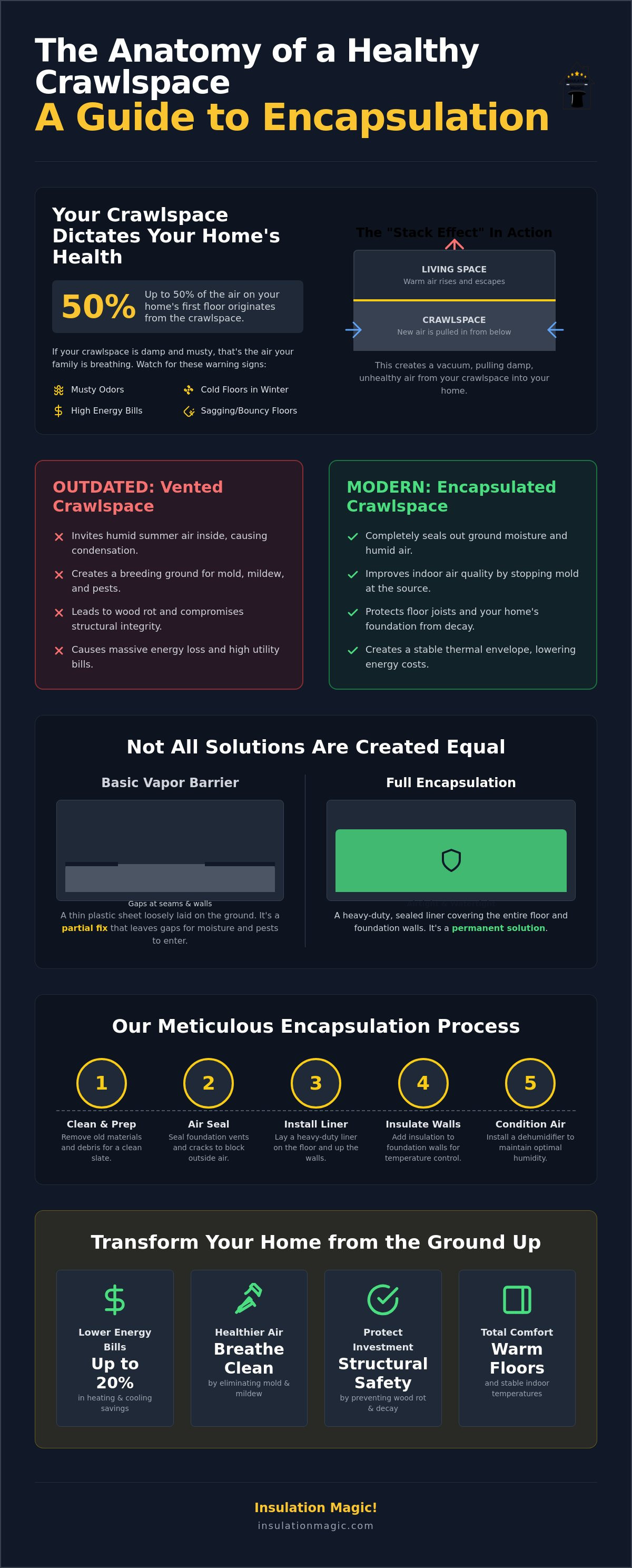
A major reason your home needs this protection is the "Stack Effect." This is a natural phenomenon where warm air rises and exits through your attic, creating a vacuum that pulls air from the lowest point of your house. If your crawlspace is damp and moldy, that is the air being drawn into your living room. By sealing the space, you ensure that the air entering your home is clean and dry. It's a fundamental shift from fighting humidity to controlling it.
The Difference Between a Vapor Barrier and Full Encapsulation
Many homeowners believe a standard vapor barrier is enough. A basic vapor barrier is typically a 6-mil plastic sheet that loosely covers the dirt floor. While it's better than nothing, it isn't a sealed system. Full encapsulation involves using heavy-duty, reinforced liners that cover the entire floor and wrap up the foundation walls. We seal every seam with specialized tape and mechanically fasten the liner to the masonry. This creates a permanent, airtight tub that prevents moisture from ever reaching your floor joists. A partial fix often leaves gaps where humidity can still accumulate, leading to wood rot or mold growth behind the liner.
Why Insulation is the Missing Piece of the Puzzle
Stopping water is only half the battle. A sealed space without a thermal break will still be subject to outdoor temperature swings. High-quality crawlspace encapsulation insulation involves insulating the foundation walls rather than just the underside of your floor. This brings the crawlspace into the "conditioned" envelope of your home. It prevents the massive heat transfer that occurs through cold masonry in the winter. If you find that your feet are always cold even when the thermostat is set high, it's likely because your floor is sitting over an uninsulated void. By treating the crawlspace like a mini-basement, we create a stable environment that keeps your floors warm and your energy bills low. You can explore our insulation services to see how we apply these meticulous standards to every project.
The Science of a Dry Home: How Encapsulation Works in the Charlotte Climate
Living in the Charlotte area means dealing with a unique environmental challenge. Towns like Waxhaw and Matthews experience high dew points that turn vented crawlspaces into moisture traps. Our famous North Carolina red clay is part of the problem. This dense soil holds onto water with incredible tenacity; it keeps moisture pressed against your foundation walls long after the rain stops. This creates a constant "vapor drive," where humidity is physically pushed through porous masonry and into the dark void beneath your home.
During our humid Carolina summers, traditional vents actually make things worse. When warm, moisture laden air enters through a vent, it immediately hits cooler surfaces like your plumbing pipes or air conditioning ducts. This causes immediate condensation, much like a cold glass of sweet tea on a porch in July. Over time, this standing water leads to cupping hardwood floors, peeling paint near your baseboards, and those unmistakable musty odors that linger in your closets. If you've noticed these red flags, it's a sign your foundation is struggling to stay dry.
Relative Humidity and Your Home's Structural Integrity
When the relative humidity in your crawlspace stays above 60%, it creates the perfect nursery for wood decaying fungi. These organisms literally eat the organic fibers in your floor joists, which is why many older Charlotte homes suffer from sagging or "bouncy" floors. Using high quality crawlspace encapsulation insulation stops this cycle by creating a permanent barrier between the wood and the moisture. A properly installed crawlspace encapsulation insulation system transforms your foundation from a liability into a dry, protected asset. It's also important to understand the specific risks associated with mold in crawlspace insulation, as old fiberglass batts often act as a sponge for spores and dampness.
The Stack Effect: Why You Are Breathing Crawlspace Air
The science of your home’s air quality is governed by the "Stack Effect." As the sun warms your roof, hot air rises and escapes through the attic. This creates a vacuum that pulls air from the lowest points of the house to replace what was lost. If your crawlspace is unsealed, you are effectively breathing air that has been filtered through dirt, mold, and pest droppings. We view encapsulation as a health first home improvement. By sealing the ground and walls, you ensure the air being pulled into your living space is clean and dry. If you are concerned about the air quality in your home, you can schedule a professional crawlspace assessment to see if your foundation is working against you.
Vented vs. Encapsulated: Comparing Performance, Comfort, and ROI
A vented crawlspace is essentially an "outdoor" room that happens to be under your feet, leaving your home's foundation to react to every erratic shift in the Charlotte weather. On a freezing January morning, your floor joists are exposed to the cold; in July, they soak in 90% humidity. When you invest in crawlspace encapsulation insulation, you are creating a climate controlled buffer zone. This stability doesn't just feel better; it protects the expensive mechanical systems living under your house. Your HVAC unit and ductwork won't have to struggle against extreme temperatures or high latent heat, which can significantly extend the lifespan of your equipment.
Beyond mechanical protection, there is a clear impact on your daily life. If you have struggled with cold floors above crawlspace areas, it's because your current insulation is likely failing to stop the thermal bridge between the earth and your living room. Encapsulation solves this by bringing the foundation into the home's thermal envelope. We always remind homeowners that a truly efficient home requires a balanced approach from bottom to top. While we seal your foundation, we also recommend looking at your attic. For those upper spaces, we consistently recommend fiberglass blown-in insulation over cellulose. Fiberglass is the superior choice for our climate because it doesn't settle like cellulose and offers better moisture resistance, ensuring your entire home stays protected.
Energy Savings: Will Encapsulation Pay for Itself?
While every home is different, studies conducted right here in North Carolina show that sealing a crawlspace can lead to a 15-20% reduction in monthly heating and cooling costs. The true hero of this efficiency is air sealing. By stopping the literal "leaks" in your foundation, your heater doesn't have to work nearly as hard to maintain a steady temperature. For those looking for a comprehensive strategy, you can read our guide on how to lower heating and cooling costs to see how foundation work pairs with professional attic upgrades.
Indoor Air Quality (IAQ) and Health Benefits
Properly installed crawlspace encapsulation insulation does more than just save money; it creates a healthier environment for your family. By maintaining a dry space, you eliminate the conditions that dust mites and cockroaches need to thrive. Sealing the ground also helps manage soil gases like Radon, which can otherwise seep into your living areas. For families dealing with asthma or allergies, this reduction in airborne spores and allergens provides an invaluable sense of peace. It's about turning a dark, neglected space into a clean, dry part of your home's ecosystem.
The Encapsulation Process: A Step-by-Step Guide to a Meticulous Install
A successful transformation of your home's foundation depends on a disciplined, step-by-step sequence. We don't believe in shortcuts because a single gap in the seal can undermine the entire system. Our process begins with a comprehensive inspection to identify any active plumbing leaks or drainage issues. Fixing these moisture sources is the first priority; sealing a space that has active water intrusion only traps the problem. Once the space is dry and structurally sound, we move through a methodical plan that ensures every corner of your foundation is protected.
The sequence of crawlspace encapsulation insulation is critical for long-term performance. After the initial preparation, we focus on the following stages:
- Old Material Removal: Clearing out the debris and failed insulation that has likely been absorbing moisture for years.
- Precision Air Sealing: Closing the "invisible leaks" at the rim joists and plumbing penetrations.
- Liner Installation: Laying a heavy-duty, 6-mil minimum polyethylene vapor retarder across the floor and up the walls.
- Thermal Protection: Installing rigid board or high-density fiberglass on the foundation walls.
- Final Conditioning: Setting up a dedicated dehumidifier to maintain a steady humidity level below 50%.
The Crucial Step: Professional Removal and Cleaning
You can't build a healthy environment on top of a dirty foundation. We never install new materials over old, soggy fiberglass batts because they often hide mold colonies and pest remains. Our team follows rigorous safety protocols for insulation removal in Charlotte to ensure that no contaminants are pulled into your living room during the process. A clean slate is required for a successful seal; it allows us to inspect the wood and masonry for any hidden damage before the liner goes down.
Air Sealing: The Barrier Against Drafts
Most air leaks in a crawlspace occur at the rim joists and where pipes or wires enter your floor. We use high-quality caulks, gaskets, and non-spray foam sealants to close these gaps permanently. This step is what truly stops the "Stack Effect" we discussed earlier. By blocking these drafts, you prevent unconditioned air from entering your HVAC system. To understand why this is the secret to comfort, you can explore our deep dive into home air sealing.
Choosing the Right Insulation Material
We maintain a strict "No Spray Foam" policy to ensure a cleaner, safer home environment. For foundation walls, we prefer rigid board or high-density fiberglass, which provides excellent R-value without the chemical concerns of spray applications. We always leave a 3 to 4-inch termite inspection gap at the top of the wall liner. This gap is a requirement for North Carolina building codes and ensures that pest control professionals can easily monitor your sill plate. If you are ready to begin this process, you can schedule your meticulous installation assessment today.
Why Charlotte Homeowners Trust Insulation Magic! for Crawlspace Protection
We take immense pride in being a local, owner-operated business that serves the heart of our community. Unlike large, impersonal franchises that prioritize high volume and quick turnovers, we focus on the "Meticulous Craftsman" approach. Whether you own a historic property in Matthews or a newer build in Waxhaw, we treat your foundation with the same level of care we would apply to our own homes. We don't send a high-pressure sales team to your door; instead, you work directly with experts who understand the unique moisture challenges of the Charlotte region. This direct accountability ensures that the "how" and "why" of your project are always clear.
Our strict "No Spray Foam" policy is a cornerstone of our commitment to your home's long-term health. Many competitors default to spray foam because it's fast, but we believe homeowners deserve better. By using high-quality, traditional materials for crawlspace encapsulation insulation, we ensure your home remains safe from unnecessary chemical off-gassing. Furthermore, our methods keep your foundation walls and sill plates accessible for future termite inspections. Rigid board and high-density fiberglass allow us to maintain the required three-inch inspection gap, whereas foam can permanently hide pest activity from view. Choosing crawlspace encapsulation insulation from a team that values precision over speed is the best way to protect your property's structural integrity.
Our Commitment to Transparency and Quality
We believe that a well-informed homeowner is our best partner. During our thorough assessment process, we don't just tell you that your crawlspace has issues; we show you the evidence. We document moisture levels, identify failing seals, and explain the science behind the solutions we propose. This dedication to education and honesty is why so many of your neighbors have shared their experiences in our customer reviews. We treat every project as a partnership, ensuring you feel confident and calm throughout the entire restoration process.
Ready for a Healthier Home? Next Steps
Transforming your damp, neglected crawlspace into a dry and energy-efficient foundation is one of the most impactful upgrades you can make for your family's comfort. By stopping the moisture cycle today, you are preventing future mold growth and protecting your indoor air quality for years to come. We've made it simple to start this journey through our online booking system. Don't let another humid Carolina season compromise your home's health. Secure your professional evaluation today and take the first step toward a permanent, meticulous solution for your foundation.
Take the First Step Toward a Drier, Healthier Foundation
Your crawlspace doesn't have to be a source of worry or musty odors. By choosing crawlspace encapsulation insulation, you are investing in a permanent solution that improves your home's air quality and stabilizes your monthly energy bills. We have explored how a meticulous, step-by-step approach can transform a damp environment into a dry, protected space that adds real value to your property. It's about more than just a plastic liner; it's about creating a stable climate that protects your family and your HVAC system.
At Insulation Magic!, we combine our deep local North Carolina expertise with a commitment to the highest quality standards. Our no spray foam guarantee and rigorous air sealing techniques ensure your home stays healthy without the use of harsh chemicals. We treat every project with the precision of a master craftsman, because we know your peace of mind is what matters most. It's time to stop the moisture cycle and start enjoying a more comfortable, energy-efficient home.
Schedule Your Meticulous Crawlspace Assessment Today and let us help you protect your investment for years to come. We look forward to partnering with you to create the dry, odor-free home you deserve.
Frequently Asked Questions
How much does crawlspace encapsulation insulation cost in Charlotte?
The total investment for your project depends on several factors, including the square footage of your home and the current condition of the foundation. Costs are influenced by the need for mold remediation, the thickness of the liner you choose, and whether a drainage system or dehumidifier is required. Because every property in the Charlotte area is unique, we provide a detailed assessment to determine the specific needs of your home.
Can I encapsulate my crawlspace myself?
While DIY kits are available, we don't recommend self installation because achieving a truly airtight seal is technically difficult. Small gaps in the liner or improper air sealing can trap moisture against your floor joists, leading to rot that remains hidden for years. Professional installation ensures the system meets the 2018 North Carolina State Building Code and provides the long term protection your investment deserves.
Does crawlspace encapsulation really stop mold growth?
Yes, encapsulation stops mold growth by removing the moisture and organic food sources that fungi need to thrive. By maintaining relative humidity below 50%, the environment becomes too dry for mold to take root on your wooden floor joists. For homeowners looking to broaden their knowledge of mold prevention across various climates, Mold Pros Phoenix offers expert guidance on inspection and remediation. This protection is a primary benefit of crawlspace encapsulation insulation for families concerned about indoor air quality and structural integrity.
How long does the encapsulation process take?
A professional encapsulation project typically takes between two and four days to complete from start to finish. The first day usually involves removing old debris and failed insulation, while the following days focus on meticulous air sealing and installing the new liner. Larger homes or those requiring significant moisture repairs before sealing may take slightly longer to ensure the job is done right.
Will I need a dehumidifier after encapsulating my crawlspace?
Most encapsulated spaces require a dedicated dehumidifier to actively manage humidity levels throughout the year. While the liner stops moisture from the earth, a dehumidifier removes any humidity that enters through the home's structure or during entry. In fact, the upcoming changes to the NC Residential Code will likely require a mechanical drying system capable of removing at least 15 pints of water daily.
Why do you recommend against using spray foam in crawlspaces?
We avoid spray foam because it can trap moisture against wood and makes it nearly impossible to inspect for termites. Once applied, foam is difficult to remove and can hide structural issues from view. We prefer rigid board or high density fiberglass because these materials provide a safer environment and allow for the required three inch termite inspection gap at the top of the foundation wall.
Is there a specific R-value required for crawlspace insulation in NC?
North Carolina building codes require that foundation walls be insulated when a crawlspace is closed and unvented. The specific R-value depends on the type of material used and whether the insulation is continuous along the masonry. Our team ensures that your installation meets or exceeds current state standards to provide the best thermal protection and energy savings for your Charlotte home.
What is the difference between encapsulation and a simple vapor barrier?
A simple vapor barrier is just a plastic sheet laid over the dirt floor, while encapsulation is a complete, airtight sealing system. Encapsulation involves heavy duty liners that wrap up the walls, sealed seams, and precision air sealing of the rim joists. While a barrier only slows ground moisture, crawlspace encapsulation insulation creates a total climate controlled envelope that protects your entire home from the ground up.
Disclaimer
This blog is intended to provide general information about insulation, energy efficiency, and home comfort based on years of experience. While we strive to keep content accurate and up to date, results may vary based on your home's construction, condition, and climate. Contact Insulation Magic for a personalized assessment and recommendations.


