
Did you know that the average Charlotte homeowner could save around $22 every single month just by upgrading their blown-in insulation? Most of us in North Carolina have felt that frustrating wall of heat when walking upstairs during a humid July afternoon. You see those rising Duke Energy bills and wonder why your AC never seems to catch up. It's a common struggle in our mixed-humid climate, where the air is heavy and the sun is relentless.
We understand that you want a home that stays comfortable without the stress of soaring utility costs. This guide will help you discover why blown-in fiberglass is the gold standard for North Carolina attics and how to ensure your installation actually lowers your utility bills. You'll learn why we prioritize fiberglass over cellulose for long-term performance, how to navigate the latest R-value standards for our region, and why the meticulous step of air sealing is the true key to lasting energy efficiency.
Key Takeaways
- Understand how blown-in insulation creates a seamless thermal blanket that fills every irregular gap in your attic to eliminate stubborn hot spots.
- Learn why fiberglass is the gold standard for Charlotte's humid climate, offering better moisture resistance and long-term stability than cellulose.
- Discover the essential role of air sealing in protecting your home's thermal envelope from hidden leaks around wires and light fixtures.
- Evaluate the safety risks and equipment challenges of DIY attic projects to help you decide on the best approach for your property.
- Gain a clear understanding of the installation process and how current North Carolina building codes impact your long-term energy savings.
What is Blown-In Insulation and Why Does Your Charlotte Home Need It?
Blown-in insulation, also known as loose-fill, consists of small fiberglass particles that professionals distribute through a flexible hose using a specialized machine. While traditional fiberglass batts are common in many older homes, they often struggle to fit into the tight corners and odd angles found in North Carolina attics. Using Building insulation in a loose-fill format ensures that every nook, cranny, and gap is filled. This creates a continuous, seamless blanket that stays in place much better than pre-cut materials that might shift or leave "thermal bridges" where heat can easily pass through.
Beyond simple comfort, this seamless coverage protects your home's thermal envelope. In our region, the second floor often becomes a "hot zone" as heat radiates through the roof and into the living space. When your attic is poorly insulated, your HVAC system has to run constantly to fight that downward heat pressure. By upgrading to blown-in insulation, you're not just saving on power bills; you're reducing the mechanical strain on your expensive cooling equipment. This meticulous approach to attic health can help your system run more efficiently and potentially extend its overall lifespan.
The Mechanics of Loose-Fill Insulation
Professional blowing machines are designed to break up the fiberglass material as it moves through the system. This agitation adds "loft" to the fiberglass, which is vital for trapping air within the fibers. Since still air is a poor conductor of heat, this lofted material effectively blocks the movement of thermal energy. R-value is the measure of thermal resistance. When we install fiberglass, we ensure it's applied at the correct density to maintain this loft. It's a superior choice for attics because fiberglass doesn't settle or lose its thickness over time like cellulose often does.
North Carolina Climate Demands
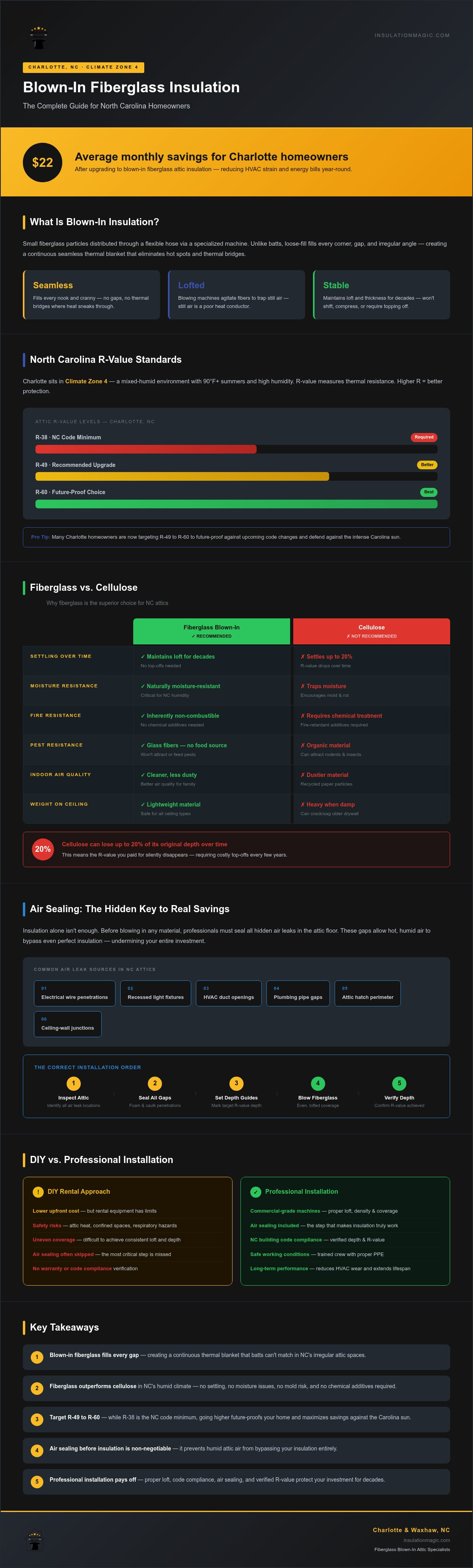
Charlotte homes face a specific set of challenges. We live in Climate Zone 4, a "mixed-humid" environment where 90-degree summer days are the norm. High humidity can make some materials heavy or prone to clumping, but fiberglass remains resilient and moisture-resistant. Currently, the North Carolina building code requires a minimum of R-38 in the attic. However, many local homeowners are choosing to reach R-49 or even R-60. This "future-proofs" the property against upcoming code changes and provides a much-needed defense against the intense Carolina sun.
Fiberglass vs. Cellulose: Why Fiberglass is the Superior Choice for NC Attics
Choosing the right material for your attic is one of the most important decisions you'll make for your home's long-term health. While cellulose is often discussed in home improvement forums for its density, we believe fiberglass blown-in insulation is the superior choice for the specific conditions found in Charlotte and Waxhaw. Longevity is the primary reason. Unlike organic materials, fiberglass is composed of glass fibers that don't break down or provide a food source for pests. It also remains much cleaner over time. Because it's naturally less dusty than recycled paper products, it helps maintain better indoor air quality for your family.
The Problem with Cellulose Settling
The most significant drawback of cellulose is its tendency to settle. Over time, gravity and environmental changes can cause cellulose to lose up to 20% of its original depth. This creates gaps in your thermal protection, effectively lowering the R-value you paid for. Using fiberglass for your blown-in insulation provides a permanent solution because it maintains its loft and thickness for decades. It won't require "topping off" every few years to keep your home comfortable. Additionally, fiberglass is lightweight. Heavy layers of cellulose can put unnecessary stress on the ceiling drywall of older homes, potentially leading to cracks or sagging.
Moisture and Mold Resistance
North Carolina's high humidity is a constant threat to attic health. Fiberglass is naturally moisture-resistant, which is a critical trait for our region. Cellulose, being paper-based, can trap moisture. This creates a damp environment that encourages mold growth and can even lead to rot in your roof rafters. While cellulose is treated with fire-retardant chemicals to make it safe, fiberglass is inherently non-combustible. It doesn't rely on chemical additives to resist fire. We also emphasize the importance of air sealing before any material is installed. This prevents humid air from entering the attic space in the first place, allowing your fiberglass to perform at its peak.
If you're ready to see how a professional installation can transform your home's comfort, you can schedule a consultation online to discuss your specific attic needs.
The DIY vs. Professional Debate: Is Renting a Blower Worth the Hassle?
It is tempting to look at a rental machine at a big-box store and think a weekend project is all it takes to fix your home's comfort issues. While the "do-it-yourself" spirit is strong in North Carolina, the reality of installing blown-in insulation without professional equipment is often fraught with unexpected challenges. Rental machines are frequently underpowered and poorly maintained, leading to constant clogging and inconsistent material flow. This turns what should be a precise application into a frustrating, multi-day ordeal that often fails to achieve the intended R-value.
Safety is another significant factor that many homeowners overlook. Navigating an attic requires balancing on narrow joists in a dark, cramped environment where one wrong step can lead to a foot through the ceiling. In the peak of a Charlotte summer, attic temperatures can soar well above 120 degrees, making heat exhaustion a very real danger. Without industrial-grade respiratory protection and the right protective gear, you also risk inhaling fine particles during the process. Professional installers have the training and equipment to handle these risks safely and efficiently.
The Complexity of Attic Navigation
One of the most common mistakes made during DIY projects is the accidental covering of soffit vents. These vents are vital for attic health; if they are blocked by insulation, your roof cannot "breathe," which leads to moisture trapped against your roof deck and eventual wood rot. Reaching the tight eaves and far corners of a home requires specialized hoses and techniques that retail equipment simply cannot provide. When the material is applied unevenly, it creates "thin spots" that lead to thermal bridging. These gaps allow heat to bypass your new insulation, leaving you with the same uncomfortable hot spots in your upstairs bedrooms.
Professional Precision and Equipment
Professional-grade blowing machines are far more powerful than rental units, which allows them to achieve maximum loft. This loft is essential for trapping air and ensuring the fiberglass performs at its full thermal capacity. Our approach involves a coordinated two-person crew. One technician remains at the hopper to ensure a steady, meticulous feed of material, while the other works in the attic to guide the distribution with precision. This teamwork ensures a level, consistent blanket that meets modern energy standards. You can read our customer reviews to see the professional difference that a methodical, expert installation makes for families in our community.
Preparation Matters: Why Air Sealing is the Secret to Effective Insulation
Many homeowners believe that adding more bags of blown-in insulation is the only step needed to lower their energy bills. However, it's a common misconception that insulation alone stops all heat loss. Insulation is designed to stop heat transfer, but it doesn't stop air movement. If your attic floor has unsealed gaps, conditioned air from your living space will simply drift right through the material. This process, known as convection, turns your expensive new fiberglass into a giant air filter rather than a true thermal barrier. To achieve the permanent energy savings you expect, we must address these "invisible" leaks first with a methodical approach.
The "Filter" Effect of Insulation
Think of your attic like a winter coat. If the coat is unzipped, the cold wind blows right through the filling, no matter how thick or high-quality the down is. Fiberglass is an incredible material for resisting heat, but its porous nature allows air to pass through if there's a pressure difference between your home and the attic. Without professional air sealing, you'll still feel drafts and see high Duke Energy bills. This is why we focus on the thermal envelope as a complete system. You can learn more about our home air sealing services to understand how we identify these hidden pathways that compromise your comfort.
Critical Prep Steps Before Blowing
The "Meticulous Craftsman" approach requires a disciplined preparation of the space before any blown-in insulation is ever applied. We carefully assess every "top plate" where interior walls meet the attic floor, as these joints often have gaps that leak air into wall cavities. We also protect wire penetrations and plumbing stacks. This methodical assessment ensures that we aren't just covering up problems, but actually solving them at the source.
Our preparation process includes:
- Installing baffles at eaves to protect soffit vents and ensure order in the attic's ventilation system.
- Sealing top plates and wire holes to stop the "chimney effect" that pulls conditioned air out of your home.
- Safeguarding recessed lights and chimney flues for fire protection and peace of mind.
By taking these extra steps, we ensure that the fiberglass we install later can do its job without being bypassed by moving air. This combination of air sealing and fiberglass creates a true thermal seal that keeps your Charlotte home comfortable year-round. It's a restoration of comfort that provides long-term value for your property.
Expert Blown-In Services in Charlotte and Waxhaw
Our local expertise in the Charlotte metro area is vital for ensuring your attic's long-term health. We understand the specific ventilation requirements of homes in Waxhaw and Matthews, where summer temperatures put immense pressure on residential cooling systems. At Insulation Magic!, we take a disciplined approach to every project. We don't use spray foam or messy alternatives that can complicate future home repairs. Instead, we provide permanent comfort through high-quality blown-in insulation and thorough air sealing. This focus ensures that your home's thermal envelope is restored with integrity and care, protecting your property for years to come.
The Insulation Magic! Difference
We've built our reputation on transparency and old-school craftsmanship. Chris and the team maintain constant communication throughout your project, so you're never left wondering about the status of your home's energy efficiency. We prioritize your peace of mind by arriving on time, keeping a clean workspace, and explaining every step of our methodical process. We exclusively recommend fiberglass because it's the safest and most durable choice for your family's environment. Unlike cellulose, it doesn't settle or trap moisture in our humid North Carolina climate. You can explore our full range of attic insulation services to see how we address everything from meticulous air sealing to complete attic refreshes.
Next Steps for a Cooler, More Efficient Home
Getting started is a straightforward, stress-free process that begins with a thorough look at your current attic health. During your initial assessment, we'll provide a realistic look at your existing R-value and identify any hidden air leaks that may be driving up your utility costs. We believe in acting as a patient educator for our neighbors, ensuring you understand the "how" and "why" behind our recommendations. We don't believe in high-pressure sales; our goal is to build a trusted partnership based on reliable results. Once a plan is established, a professional blown-in insulation installation is typically completed in a single day, causing minimal disruption to your daily routine. We also offer financing options to make these essential home efficiency upgrades accessible for families in Mint Hill and the surrounding communities.
You deserve a home that stays consistently comfortable while keeping your monthly utility bills manageable. We're here to guide you through every step of the process to ensure you achieve permanent energy efficiency and complete peace of mind.
Frequently Asked Questions
Is blown-in fiberglass better than cellulose for North Carolina attics?
Yes, blown-in fiberglass is the superior choice for our mixed-humid climate. Unlike cellulose, which is made of recycled paper and can settle by up to 20% over time, fiberglass maintains its loft and thermal resistance. It's also naturally moisture-resistant, which is vital for preventing mold in damp attics. We prioritize fiberglass because it provides a permanent, stable solution that doesn't require "topping off" every few years to stay effective.
How much does blown-in insulation cost in Charlotte, NC?
While prices vary based on the size of your attic and the desired R-value, the industry average for a professional installation in Charlotte typically ranges between $896 and $1,937. Factors like the difficulty of access and whether you need old material removed will influence the total. We provide detailed assessments to ensure you get a clear understanding of the project scope for your specific home in Matthews or Waxhaw.
Can I blow new insulation over my old, existing insulation?
You can often blow new fiberglass over existing insulation if the current material is dry, free of mold, and in relatively good condition. This "capping" method is a cost-effective way to boost your R-value. However, if your old insulation is contaminated by pests or has suffered water damage, a full removal is the safest path. We always inspect the existing layer to ensure it's a healthy foundation for new material.
How long does it take to install blown-in attic insulation?
A professional blown-in insulation project is typically completed in just one day. Our two-person crews work methodically to prep the attic, perform air sealing, and blow the fiberglass with precision. Most residential homes in the Charlotte area are finished in four to six hours. This quick turnaround means you can start feeling the difference in your home's comfort and see utility savings by the very next day.
Will blown-in insulation stop my upstairs from being so hot in the summer?
Yes, blown-in insulation is highly effective at cooling down hot second floors. During a 90-degree Charlotte summer day, your attic can reach temperatures over 120 degrees. Without proper thermal resistance, that heat radiates directly through your ceiling and into your bedrooms. By creating a seamless fiberglass blanket, we stop that heat transfer at the source, allowing your AC to maintain consistent temperatures without running constantly.
Do I really need to seal air leaks before blowing in new insulation?
Air sealing is a non-negotiable step for achieving maximum energy efficiency. Insulation stops heat transfer, but air sealing stops the movement of air itself. Without it, conditioned air escapes through tiny gaps around light fixtures and wall plates, bypassing your new insulation entirely. We take a "Meticulous Craftsman" approach to sealing these leaks first, ensuring your new fiberglass performs as a true thermal barrier rather than just a filter.
Does fiberglass insulation attract rodents or pests?
Fiberglass is made of inorganic glass fibers, meaning it isn't a food source for rodents or insects. While no material can completely prevent pests from entering an attic, fiberglass doesn't provide the organic nutrients that might attract them. When combined with proper air sealing, we close off many of the small entry points pests use to get inside. This helps protect your attic's health and maintains a cleaner environment for your family.
What is the recommended R-value for an attic in the Charlotte area?
As of 2026, the North Carolina Building Code requires a minimum attic insulation level of R-38 for Zone 4. However, we often recommend reaching R-49 or R-60 for optimal comfort and future-proofing. Many homeowners in Mint Hill and Ballantyne choose these higher levels to exceed the minimum standards. This extra thickness provides superior defense against the intense Carolina sun and prepares your home for upcoming changes in state efficiency codes.
Disclaimer
This blog is intended to provide general information about insulation, energy efficiency, and home comfort based on years of experience. While we strive to keep content accurate and up to date, results may vary based on your home's construction, condition, and climate. Contact Insulation Magic for a personalized assessment and recommendations.


