What if the high-quality insulation in your attic is only doing half its job because your house is literally breathing through the ceiling? It's a frustrating reality for many North Carolina homeowners who face soaring cooling costs and uneven temperatures between floors. You might feel like you're fighting a losing battle against the summer heat, even after adding more material upstairs. The truth is that without professional home air sealing, your insulation is like a wool sweater worn in a gale; it provides warmth, but the wind blows right through the fibers.
We understand how stressful it is to see high utility bills while your second floor remains uncomfortable. This guide will show you how air sealing stops the stack effect and allows high-performing fiberglass blown-in insulation to finally do its job. We'll also explore the 2026 financial incentives, including the 30% federal tax credit and the upcoming North Carolina building code updates effective July 31, 2026. You'll learn how a meticulous approach to sealing hidden leaks creates a cleaner, more affordable, and perfectly balanced home environment for your family.
Key Takeaways
- Learn why insulation alone isn't enough and how professional home air sealing acts as a windbreaker to keep your home's climate controlled.
- Discover how the "Stack Effect" causes conditioned air to escape through your attic, which pulls humid air into your home from the crawlspace.
- Identify hidden "attic bypasses" like plumbing stacks and wire penetrations that are often buried under old, dusty material.
- Understand why fiberglass blown-in insulation is the superior choice for your attic compared to cellulose or other alternatives.
- Explore the safety risks of DIY attic work and the value of using professional-grade equipment to restore your home's comfort.
What is Home Air Sealing and Why Does Your Insulation Need It?
Think of your home as a sanctuary where you control the climate. To maintain that comfort, you rely on a thermal envelope, which is the physical boundary between your conditioned living space and the unconditioned outdoors. Home air sealing is the meticulous process of identifying and closing the invisible gaps, cracks, and bypasses within this envelope. It's the essential barrier that prevents your expensive, conditioned air from escaping into spaces where it doesn't belong, such as your attic or crawlspace.
Many homeowners invest in thick layers of insulation and wonder why their energy bills remain high. The reason is simple: insulation is designed to stop heat transfer, but it isn't designed to stop air flow. You can imagine insulation as a thick wool sweater. On a cold day, that sweater keeps you warm by trapping your body heat. However, if a sharp wind picks up, the air blows right through the knit fibers and carries your warmth away. In this scenario, Weatherization procedures dictate that you need a windbreaker. Home air sealing acts as that windbreaker, stopping the "wind" from moving through your home's structure so your insulation can perform its primary job.
The Synergy of Sealing and Insulation
Adding more material to your attic without sealing the floor first is a common mistake that leads to disappointing results. When air is allowed to move freely through your attic floor, it creates "thermal bridging" and significantly reduces the effective R-value of your materials. This is why we always recommend fiberglass blown-in insulation after the sealing is complete. Unlike cellulose, which can settle and lose effectiveness over time, fiberglass blown-in insulation provides a clean, consistent thermal blanket. At Insulation Magic!, we follow a strict "seal then insulate" protocol. This ensures that the air stays in your living room and the heat stays out of your attic, maximizing the ROI of our insulation services.
Common Myths: Can a House Be "Too Tight"?
A frequent concern we hear is the idea that a house needs to "breathe" through accidental leaks to stay healthy. This is a persistent myth. When a house breathes through cracks in the attic floor, it's actually inhaling dust, fiberglass particles, and allergens from the attic space. We prefer the industry mantra: "Seal tight, ventilate right." By using professional air sealing to close uncontrolled leaks, we can then use controlled ventilation, like attic fans, to ensure fresh air moves through the home safely. This meticulous approach protects your indoor air quality while keeping your second floor significantly cooler during those humid North Carolina summers.
The Science of the "Stack Effect": How Your Home Leaks Air
Understanding how air moves is the first step toward fixing a drafty or expensive house. The "Stack Effect," often called the chimney effect, is a natural physical process that dictates how air behaves within your home's structure. In simple terms, warm air is less dense and naturally rises. As this air escapes through unsealed gaps in your attic floor, it creates a pressure imbalance. This imbalance acts like a vacuum, relentlessly pulling in unconditioned, humid air from your crawlspace or basement to replace the air that escaped. According to the U.S. Department of Energy, identifying these specific leak points is vital for maintaining a healthy and efficient home.
In the Charlotte and Waxhaw regions, this cycle is particularly punishing due to our high local humidity. Your HVAC system isn't just cooling the air; it's working overtime to remove moisture that shouldn't be in your living space in the first place. This constant strain leads to increased wear and tear on your expensive equipment and higher monthly bills. Meticulous home air sealing breaks this cycle. By closing these pathways, we ensure your home stays pressurized, which stops your AC from fighting a losing battle against the outside elements.
The Summer Stack Effect in North Carolina
During a typical North Carolina summer, attic temperatures can easily soar to 140°F or higher. This intense heat creates downward pressure, forcing scorching air through tiny gaps around top plates and light fixtures. In neighborhoods like Matthews or Ballantyne, homeowners often wonder why their second floor feels like a sauna while the downstairs stays chilly. Proper home air sealing, paired with clean fiberglass blown-in insulation and well-placed attic fans, creates a thermal shield. This combination keeps that 140-degree air exactly where it belongs: outside your living space.
Winter Heat Loss and Comfort
When the temperature drops, the stack effect reverses its impact but remains just as costly. Your expensive heated air escapes through recessed lights and attic hatches like water through a sieve. This vertical loss is exactly why floors above a crawlspace often feel icy to the touch in the morning. By closing these "invisible holes," you can significantly lower heating and cooling costs while making every room feel cozy. If you're tired of fluctuating temperatures between floors, you might consider scheduling a professional assessment to see exactly where your home is losing its conditioned air.
Identifying and Sealing the "Invisible Holes" in Your Attic
Most homeowners focus their energy-saving efforts on drafty windows or doors. While those matter, the largest sources of energy loss are actually hidden in your attic. These "attic bypasses" are structural gaps where air escapes from your living space directly into the attic. Because these holes are usually buried under decades of old, dusty material, they are impossible to see without professional insulation removal. Clearing the deck is the only way to expose every crack that needs attention.
When we perform home air sealing, we use specialized materials to close these gaps permanently. Following the Department of Energy guide to air sealing ensures that the right sealants are used for the right applications. For instance, we always use fire-rated sealants and metal flashing around high-heat areas like chimneys. This meticulous care ensures your home remains both efficient and safe. We also pay close attention to the attic hatch or pull-down stairs. Without a proper seal and an insulated cover, this opening acts like a giant hole in your thermal envelope.
The Attic Top Plate: The Largest Hidden Leak
A top plate is the horizontal wooden beam at the top of your interior walls where they meet the attic floor. In almost every home, there's a small gap on either side of this plate where it meets the drywall. It doesn't look like much. However, when you add up every wall in your house, it's the equivalent of leaving a window wide open all year. During our "Attic Refresh" process, we crawl into the tightest corners to foam-seal these plates. This creates a continuous barrier that prevents your conditioned air from slipping into the attic.
Recessed Lights and Plumbing Stacks
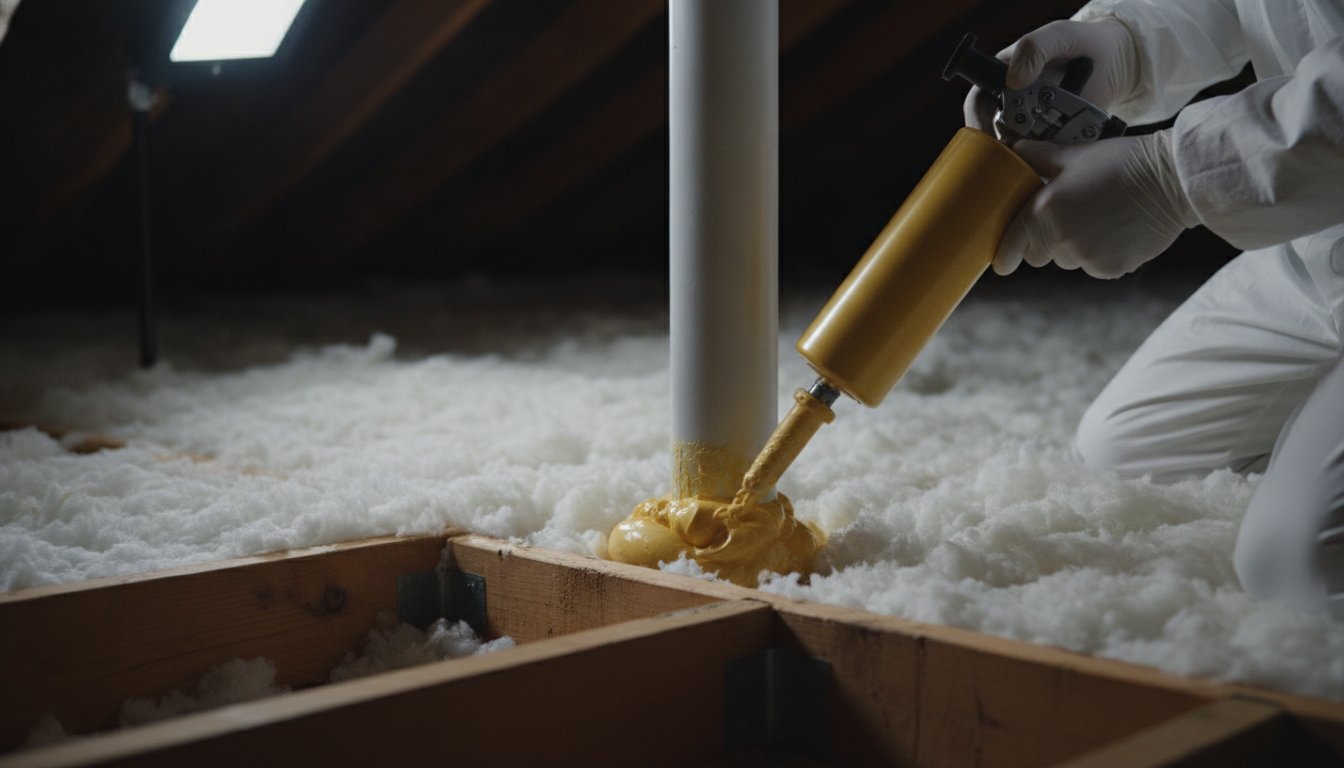
Recessed "can" lights are another major offender. They are essentially holes in your ceiling that suck out your expensive, conditioned air. We use airtight, fire-rated covers to seal these off without creating a fire hazard. Similarly, plumbing stacks and electrical wires often have large, jagged gaps around them. These act as "highways" for air to travel from your crawlspace all the way to your roofline. Once these are sealed, we finish the project with a fresh blanket of fiberglass blown-in insulation. We prefer fiberglass because it's cleaner than cellulose and won't lose its R-value over time. Ready to find those hidden leaks? You can book your attic assessment online to get started.

Professional Air Sealing vs. DIY: Protecting Your Charlotte Home
DIY videos often make the process look like a simple weekend project involving a ladder and a few cans of foam. However, professional home air sealing is a high-precision task that requires reaching every top plate, plumbing stack, and wire penetration in the house. A DIY approach frequently misses the most critical bypasses because they're physically difficult to reach or hidden deep beneath existing debris. Our team uses professional-grade equipment to ensure these gaps are closed permanently, which is what actually moves the needle on your monthly utility bills.
Safety is another major factor to consider for any homeowner. Performing home air sealing in a North Carolina attic during the summer is dangerous; temperatures frequently exceed 140 degrees, leading to rapid heat exhaustion. There's also the very real risk of stepping off a ceiling joist and falling through the drywall below. As your local experts serving Charlotte, Weddington, and Mint Hill, we take these risks on so you don't have to. We take immense pride in our meticulous craftsmanship and treat your property with the same level of care we would apply to our own homes.
Just as we use professional tools to find hidden air leaks, other structural specialists use forensic checklists to identify environmental damage. You can discover Metro Reconstruction Services, Inc. and their specialized approach to evaluating exterior damage like hail on stucco to ensure a home's outer shell is as secure as its inner seal.
Why Fiberglass is the Superior Partner for Air Sealing
Pairing meticulous sealing with the right material is the secret to long-term performance. We always recommend fiberglass blown-in insulation over cellulose for attic applications. Cellulose is made of recycled paper and tends to settle significantly over the years, which reduces its R-value and leaves your home vulnerable to heat gain. Fiberglass maintains its thickness and thermal resistance for decades. It's a cleaner, more reliable choice that doesn't hold moisture or provide a food source for pests. Our commitment to high-quality results means we focus on this proven combination rather than using spray foam insulation.
Your Path to a More Comfortable Home
The journey to a more efficient house starts with a clear, methodical plan. You can check our customer reviews to see how our service-oriented approach has transformed homes across the region. When we arrive, we'll walk you through the "how" and "why" of our process, from the initial assessment to the final blow-in. We believe in transparency and want you to feel like a partner in the project. If you're ready to stop the leaks and restore your home's comfort, you can book your home energy assessment online today to get started.
Take Control of Your Home Comfort and Energy Savings Today
Stopping the "Stack Effect" and sealing those hidden attic bypasses is the most effective way to lower your monthly energy bills in 2026. By treating your attic floor with a meticulous "windbreaker" approach, you ensure your conditioned air stays where it belongs while keeping humid Charlotte air out. Our expert local team specializes in this high-precision work across Waxhaw, Matthews, and the surrounding regions. We prioritize a methodical process that pairs professional home air sealing with high-performance fiberglass blown-in insulation for maximum efficiency. Unlike cellulose, which often settles and loses its effectiveness over time, our fiberglass solution provides a clean and durable thermal blanket that lasts for decades.
You shouldn't have to choose between a comfortable second floor and an affordable utility bill. We take immense pride in our craftsmanship and are dedicated to protecting your home's personal environment with integrity and care. If you're ready to experience the difference that a properly sealed thermal envelope can make, we invite you to take the next step toward a more efficient future; much like how Medicare Mentors helps residents across North Carolina plan for their long-term health and financial security.
Get a Meticulous Home Air Sealing Quote Today and start enjoying the peace of mind that comes with a perfectly balanced home.
Frequently Asked Questions
How do I know if my home needs air sealing?
You can identify the need for air sealing by noticing drafts around recessed lights or feeling a significant temperature difference between your first and second floors. Other signs include persistent dust in your living areas or utility bills that seem unusually high despite maintaining a consistent thermostat setting. A professional assessment can pinpoint these leaks using specialized tools to see exactly where your conditioned air is escaping through the ceiling.
Is air sealing better than adding more insulation?
Air sealing and insulation perform different, yet complementary, functions. While insulation slows heat transfer, it doesn't stop air movement. Think of sealing as a windbreaker and insulation as a sweater; you need both to stay comfortable. We always recommend performing home air sealing before adding fiberglass blown-in insulation. This sequence ensures that the new material isn't undermined by air currents that would otherwise blow right through the attic floor.
Will air sealing my attic cause moisture or mold problems?
Proper air sealing actually helps prevent moisture issues by stopping humid indoor air from entering the cold attic, where it can condense on rafters. We follow the professional principle of "seal tight, ventilate right," which involves closing accidental leaks while ensuring your attic has controlled ventilation. By using attic fans alongside meticulous sealing, we manage air pressure and moisture levels effectively, protecting your home's structure from mold and wood rot.
How long does the air sealing process take for a standard house?
A standard professional air sealing project typically takes between one and two days to complete thoroughly. The timeline depends on whether we need to perform insulation removal first to access the attic floor deck. Our team works methodically to ensure every top plate and wire penetration is sealed with precision. We prioritize a clean and organized workspace, providing you with constant updates as we progress from the initial assessment to the final application.
Can I perform air sealing myself or should I hire a professional?
While some minor caulking is DIY-friendly, comprehensive home air sealing is best left to professionals. Attics are hazardous environments with extreme heat, cramped spaces, and the risk of falling through the ceiling. Professionals use industrial-grade sealants and have the expertise to identify structural bypasses that most homeowners miss. Hiring an expert ensures that the job is done safely and meticulously, providing a much higher return on your investment through lasting energy savings.
What is the most common place for air leaks in a home?
The attic floor is the most common source of significant air leakage in modern homes. Specifically, the gaps around top plates, plumbing stacks, and recessed light fixtures allow vast amounts of air to escape. These invisible holes are responsible for the majority of the stack effect, which pulls unconditioned air into your living space. Once these are sealed and covered with fiberglass blown-in insulation, you'll notice an immediate improvement in your home's comfort.
Disclaimer
This blog is intended to provide general information about insulation, energy efficiency, and home comfort based on years of experience. While we strive to keep content accurate and up to date, results may vary based on your home's construction, condition, and climate. Contact Insulation Magic for a personalized assessment and recommendations.


