Why does your second floor feel like a sauna in July even when the air conditioner is running non-stop? It's a frustrating reality for many homeowners who find themselves constantly adjusting the thermostat only to see their utility bills climb higher. You aren't alone in feeling that your home is working against you. Most people struggle with drafty rooms and uneven temperatures, wondering exactly how to lower heating and cooling costs without jumping straight to a full HVAC replacement. With the average system cost now sitting around $13,430, finding smarter ways to keep your home comfortable is more important than ever.
We believe your home should be a sanctuary, not a source of stress. In this guide, you'll discover the most effective strategies to slash your bills by optimizing your home’s thermal envelope. We will explain why fiberglass blown-in insulation is the superior choice over cellulose for creating a permanent, high-performance barrier in your attic. You will get a clear plan of action to eliminate drafts and ensure a consistent temperature across every room. By focusing on meticulous air sealing and the right materials, you can finally stop the "invisible leaks" and enjoy a more efficient, peaceful home.
Key Takeaways
- Understand the "thermal envelope" concept and how a compromised barrier forces your HVAC system to work harder than necessary.
- Discover why fiberglass blown-in insulation is the superior choice for attic spaces, providing a cleaner and more effective solution than cellulose.
- Learn why air sealing is a non-negotiable partner to insulation for stopping the invisible air leaks that drive up your monthly expenses.
- Identify secondary energy-loss zones, such as the crawlspace, to improve floor temperatures and control household humidity levels.
- Establish a methodical plan for how to lower heating and cooling costs by starting with a thorough assessment and the removal of old, inefficient materials.
Understanding the Thermal Envelope: Why Your Energy Bills Are Skyrocketing
When most people think about how to lower heating and cooling costs, they immediately look toward their furnace or air conditioner. While equipment efficiency matters, the real culprit is often the "thermal envelope." This is the physical barrier between your conditioned living space and the harsh outdoor environment. It includes your walls, windows, doors, and most importantly, the attic floor. If this shell is leaky or poorly insulated, your HVAC system must work overtime to replace the air that's constantly escaping. The thermal envelope is your home's primary defense against high energy costs; for expert help with maintaining your home's doors, you can visit Liberty Door Repair.
By applying basic energy conservation principles, we can see that a house is a complex system. When the envelope is compromised, it doesn't matter how high you set the AC; the cool air will simply find a way out. This leads to mechanical wear and tear, shorter equipment lifespans, and monthly bills that never seem to stabilize despite your best efforts at the thermostat.
The Stack Effect: How Your Home Breathes (and Loses Money)
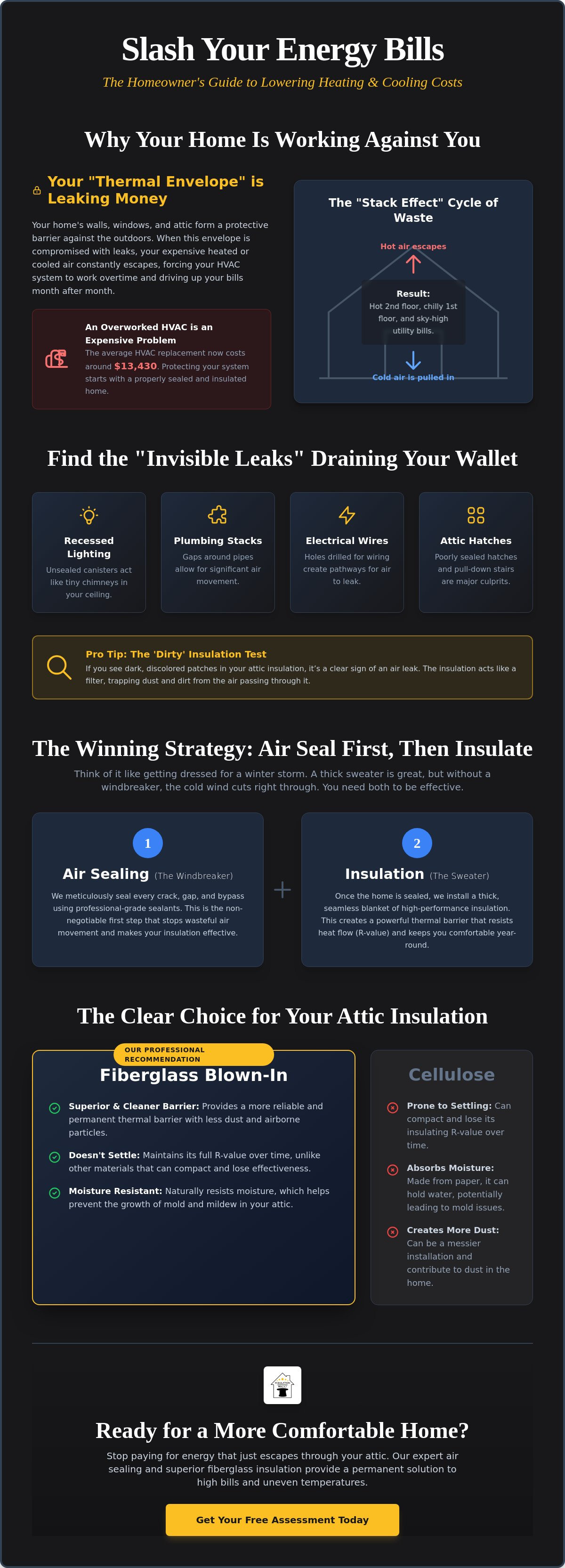
Physics plays a quiet but expensive role in your daily comfort. In a two-story home, the "Stack Effect" creates a cycle of waste. Because hot air is less dense, it rises and seeks out gaps in your attic. As this warm air escapes through the top of the house, it creates a vacuum that pulls cold, unconditioned air in through the basement or crawlspace. This constant movement of air is why your second floor often stays uncomfortably hot in the summer while the main floor feels chilly. Addressing this requires a strategic approach to energy efficient home insulation that stops this cycle at the source.
Identifying the Hidden Leaks in Your Home
Many of the biggest energy losers are invisible to the naked eye. These are known as "bypasses," and they act like small chimneys throughout your house. Common culprits include:
- Recessed lighting canisters that aren't air-sealed.
- Gaps around plumbing stacks and electrical wires.
- Loose-fitting attic hatches or pull-down stairs.
- Unsealed wall top plates where air leaks into the wall cavities.
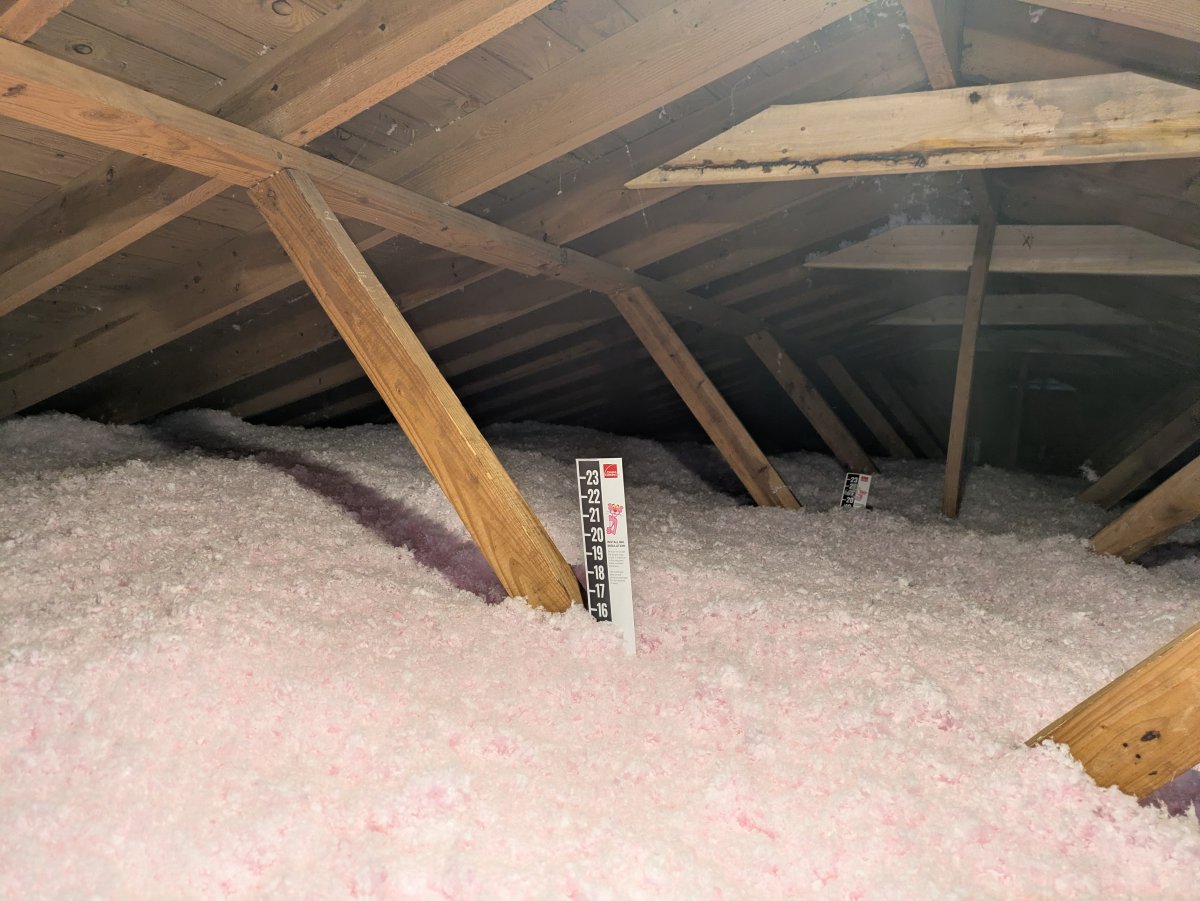
You can often find these leaks by looking for "dirty" insulation in your attic. When air filters through insulation, the material acts like a giant furnace filter, trapping dust and soot. If you see dark, discolored patches in your current insulation, it's a clear sign that air is escaping. To truly master how to lower heating and cooling costs, these gaps must be sealed before adding high-performance fiberglass blown-in insulation, which provides a much cleaner and more reliable thermal barrier than outdated cellulose options.
The Attic Connection: Maximizing Savings with Air Sealing and Insulation
Your attic acts as the crown of your home's thermal envelope. Since heat naturally migrates toward colder spaces, this area is the most critical battleground when you're looking for how to lower heating and cooling costs. To manage this heat transfer, we focus on the R-value, which is a specific measurement of how well insulation resists heat flow. A higher R-value means better protection, but even the highest-rated material can't do its job if air is whistling through the floorboards. This is why we treat the attic as a complete system rather than just a place to dump more material.
We follow a strict rule in every project: air sealing must occur before any new insulation is installed. We don't use spray foam for this process; instead, we rely on safer, professional-grade sealants that provide a precise and durable barrier. This methodical approach ensures that we aren't just slowing down heat transfer, but actively stopping the movement of air that drives your utility bills up.
Why Air Sealing is the Secret to Insulation Success
Think of insulation as a thick wool sweater. It keeps you warm, but if you're standing in a windstorm, the cold air will blow right through the knit. Air sealing is the windbreaker that goes over that sweater. Our team meticulously identifies and closes the gaps around recessed lights, plumbing stacks, and electrical wires. It's a proven way to Seal and Insulate with ENERGY STAR standards, preventing your expensive conditioned air from being sucked into the attic space and lost forever.
The Superior Choice: Why Fiberglass Blown-in Wins for Attics
When it comes to selecting the right material, we always recommend fiberglass blown-in insulation over cellulose for attic applications. Fiberglass is a superior choice because it doesn't settle over time, ensuring it maintains its full R-value for the life of your home. It's also naturally moisture-resistant, which is vital for the humid North Carolina climate where dampness can compromise other materials.
Unlike cellulose, which is made from recycled paper and requires heavy chemical fire retardants, fiberglass is inherently fire-resistant. It's a cleaner, more stable solution that provides a permanent answer to how to lower heating and cooling costs. If you're ready to start your journey toward a more comfortable home, you can schedule a professional assessment to see exactly where your attic is losing energy.
Beyond the Attic: A Comprehensive Strategy to Lower Costs
While the attic is the heavy lifter for energy efficiency, a truly comfortable home requires looking at the entire perimeter. If you are researching how to lower heating and cooling costs, you likely know the attic is the first step, but it shouldn't be the last. Secondary areas often contribute to subtle energy loss that adds up on your monthly bill. Addressing these zones ensures your home remains a sanctuary year-round.
Crawlspace insulation is essential for keeping your floors warm in the winter and reducing the humidity that seeps into your living spaces during muggy summers. Similarly, wall insulation for existing homes provides a dual benefit; it blocks heat transfer and significantly dampens exterior noise. You can explore our full range of home protection options on our services page, where we apply the same meticulous standards to every corner of your property. Just as we recommend fiberglass over cellulose for its superior moisture resistance in attics, we bring that same focus on quality to every insulation project we handle.
Managing Windows, Doors, and Natural Light
Don't ignore the simple fixes that offer a high return on investment. Weatherstripping and caulking around doors and windows are low-cost DIY tasks that prevent expensive conditioned air from leaking out. Following Department of Energy energy-saving tips, such as using heavy curtains or cellular shades, creates a secondary thermal barrier. In the peak of Charlotte summers, solar films or awnings on south-facing windows can drastically reduce solar heat gain before it even enters your home.
Optimizing HVAC Performance and Ventilation
Your heating and cooling equipment needs to breathe to function efficiently. Change your air filters monthly to ensure the system doesn't struggle for airflow, which is a simple way to maintain how to lower heating and cooling costs over time. Attic fans also play a vital role by removing trapped heat and managing moisture levels before they cause structural damage. A well-sealed and insulated home actually makes your HVAC system last years longer because the equipment doesn't have to cycle as frequently to maintain your desired temperature. If you're ready to secure these long-term savings, you can book your professional home assessment today.
Professional Solutions for Long-Term Energy Efficiency
While DIY forums often suggest quick fixes, a professional assessment is the most reliable way to identify the "biggest losers" in your home's energy profile. We take a methodical approach to how to lower heating and cooling costs by looking at your house as a complete system. This often begins with our "Meticulous Craftsman" process: the thorough removal of old, inefficient, or rodent-damaged insulation. Starting with a clean environment allows us to perform precise air sealing and install high-performance fiberglass that won't be compromised by the remnants of the past.
As local experts, we understand the specific architectural styles and climate challenges faced by homeowners in Waxhaw, Matthews, and Mint Hill. We know exactly where the thermal envelope typically fails in these regional homes. If you are ready to move beyond guesswork and secure permanent savings, you can get a detailed home insulation quote in Charlotte that prioritizes both quality and long-term value.
Crawlspace and Wall Insulation: The Forgotten Barriers
The attic isn't the only area where your home loses its battle with the elements. Crawlspace insulation or full encapsulation is the secret to preventing cold floors in the winter and keeping oppressive humidity out of your living space during the summer. For older Charlotte homes, retrofitting wall insulation can be a transformative upgrade. We use clean, professional installation techniques to blow fiberglass into wall cavities, creating a quiet, temperature-stable environment that significantly contributes to how to lower heating and cooling costs.
Your Next Steps Toward a More Comfortable Home
The path to a more efficient home doesn't have to be overwhelming. We recommend starting with a professional attic inspection to pinpoint the air leaks and insulation gaps we discussed earlier. This assessment provides you with a clear roadmap for improvements based on your home's specific needs. Seeing the real-world impact of these upgrades is easy; just take a look at our customer reviews to hear from neighbors who have already restored comfort to their properties. When you're ready for a partner who treats your home with the care it deserves, please use our online booking tool to schedule your consultation.
Restore Comfort and Efficiency to Your Home
Achieving a balanced, energy-efficient home is a methodical process that starts with protecting your thermal envelope. By prioritizing precision air sealing and high-performance fiberglass insulation, you can finally stop the cycle of rising utility bills and uneven temperatures. We've explored how addressing the attic, crawlspace, and secondary leaks creates a permanent barrier against the elements. Choosing fiberglass blown-in insulation over cellulose ensures that your home remains protected against moisture and settling for years to come.
Our team brings local Charlotte expertise and a commitment to integrity to every project. We don't use spray foam; we rely on safe, proven materials and meticulous craftsmanship to restore your peace of mind. If you're ready to implement a clear plan for how to lower heating and cooling costs, we are here to guide you through every step of the assessment and installation.
Book your meticulous attic assessment and start saving today!
You deserve a home that feels as good as it looks, and we look forward to helping you achieve that lasting comfort.
Frequently Asked Questions
Is it better to have more insulation or better air sealing?
Air sealing and insulation are inseparable partners that must work together to be effective. While insulation resists heat flow, air sealing stops the physical movement of air through your home's structure. If you add insulation without sealing the gaps first, conditioned air will still leak out, making the new material much less efficient. We always prioritize sealing every bypass to ensure your investment delivers the maximum possible comfort.
Why does Insulation Magic! recommend fiberglass over cellulose insulation?
We recommend fiberglass blown-in insulation because it offers superior longevity and cleanliness compared to cellulose. Fiberglass is naturally fire-resistant and doesn't require the heavy chemical additives found in recycled paper products. It also resists settling and moisture, which is vital for maintaining a consistent R-value in our humid environment. This choice provides a stable, long-term solution that keeps your attic environment healthier and more efficient for decades.
How much can I actually save on my heating and cooling costs?
Homeowners often see a reduction of about 15% on their utility bills after professional air sealing and insulation. According to ENERGY STAR data, smart thermostats can save an additional 8% on heating and cooling costs, which averages about $50 per year. Implementing these combined strategies is the most reliable method for how to lower heating and cooling costs while significantly reducing the workload on your expensive HVAC equipment. To ensure your system is performing at its best, you can read more about expert AC and heat pump services.
Can I just put new insulation over my old insulation?
While it is possible to layer new material, we usually advise a full removal for the most thorough results. Removing old, dusty, or pest-damaged insulation allows our team to see the attic floor clearly so we can perform meticulous air sealing. This ensures that your new fiberglass insulation sits on a perfectly sealed surface, preventing old allergens or odors from being trapped permanently inside your home's thermal envelope.
Does my home need an attic fan if I already have good insulation?
An attic fan is an excellent addition because it actively exhausts the extreme heat that builds up under your roof. Even with high-quality insulation, a stagnant attic acts like a radiator, pushing heat down into your living space. By moving this hot air out, the fan reduces the temperature difference between your attic and your home. This simple step helps your air conditioner cycle less frequently during the peak of summer.
How do I know if my crawlspace needs new insulation?
You can often tell by the temperature of your floors or the presence of damp, sagging material under your home. If your crawlspace insulation is hanging or discolored, it is no longer providing an effective thermal barrier. Upgrading this area is a critical component of how to lower heating and cooling costs, as it prevents cold drafts from rising through your floorboards and keeps humidity levels under total control.
Disclaimer
This blog is intended to provide general information about insulation, energy efficiency, and home comfort based on years of experience. While we strive to keep content accurate and up to date, results may vary based on your home's construction, condition, and climate. Contact Insulation Magic for a personalized assessment and recommendations.


