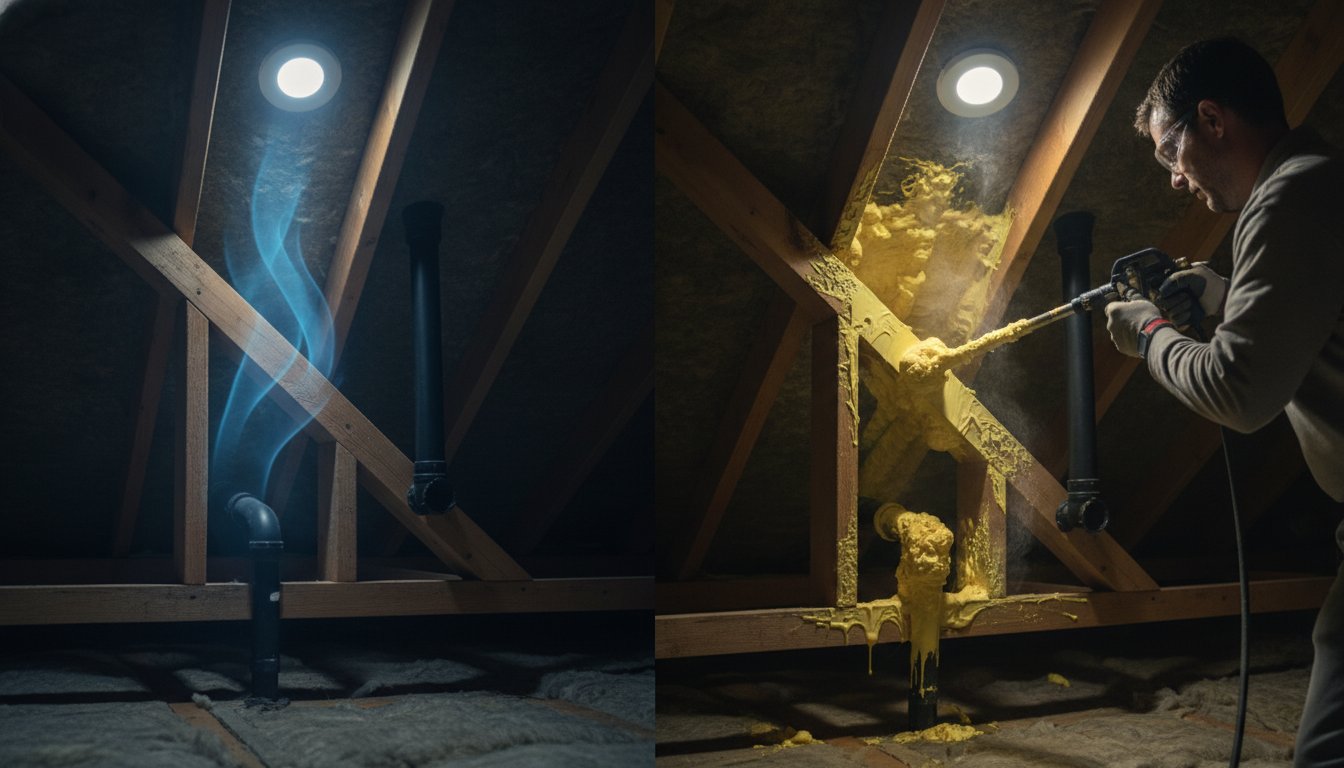
Adding brand-new insulation to a drafty attic without sealing the leaks first is like trying to fill a bathtub without putting the plug in the drain. Most homeowners believe that more material automatically equals more comfort, but without addressing the hidden gaps in your home's structure, you're simply installing an expensive air filter. Performing air sealing before insulation is the invisible secret to stopping the stack effect that pulls hot, humid air into your living space during those intense North Carolina summers.
We know how frustrating it is to deal with drafty rooms and dust filtering through light fixtures while receiving conflicting advice from various contractors. You deserve a home that stays cool and an investment that actually performs as promised. This guide explains why skipping the sealing phase is a waste of money and how properly securing your thermal envelope can reduce energy costs by up to 40%. We'll also explain why we recommend fiberglass blown-in insulation over cellulose to ensure your attic stays clean, protected, and efficient for years to come.
Key Takeaways
- Learn the fundamental difference between heat resistance and air barriers to understand why insulation alone can't stop drafts.
- Discover why performing air sealing before insulation is the only way to stop the "Stack Effect" from driving up your energy bills.
- Identify the most common hidden leak locations in Charlotte area homes that are typically invisible to the naked eye.
- Find out why fiberglass blown-in insulation is the superior recommendation for a cleaner, longer lasting thermal envelope compared to cellulose.
- Understand how a meticulous professional process, starting with proper insulation removal, creates a healthier and more comfortable home environment.
Myth: "New Insulation Stops All Drafts and Air Leaks"
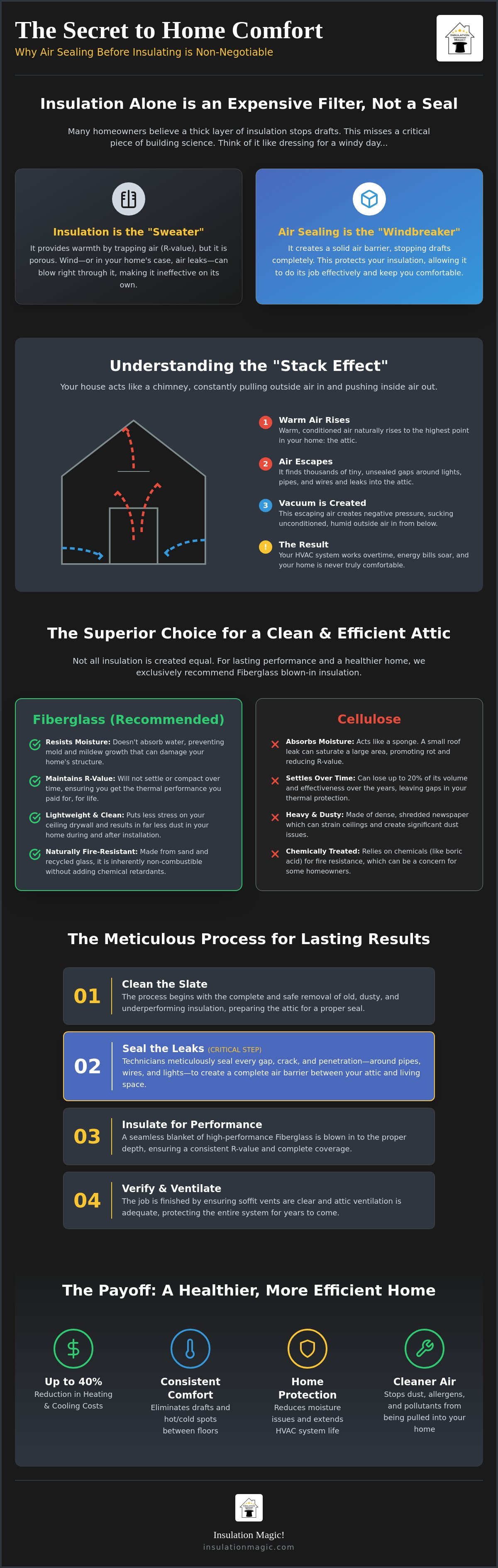
Many homeowners assume that a thick layer of new insulation is enough to stop drafts. It's a logical thought, but it misses a critical piece of building science. Think of your home like you're dressing for a cold, windy day in Charlotte. If you put on a heavy wool sweater, you'll feel warm as long as the air is still. However, the moment a breeze kicks up, it blows right through those wool fibers. To stay comfortable, you need a windbreaker over that sweater to block the movement of air. In your attic, insulation is the sweater and air sealing is the windbreaker. While insulation provides R-value, which measures resistance to heat flow, it doesn't provide Building airtightness. Air sealing is the process of plugging the literal holes in your home's lid, such as gaps around pipes, wires, and top plates. Air sealing is the essential first step to any thermal upgrade.
Why Insulation Alone is a "Filter" Not a "Seal"
Materials like fiberglass blown-in are incredibly effective at slowing down heat transfer, but they are inherently porous. They're designed to trap pockets of air to create a thermal barrier. Because they aren't solid, air can still flow through them if there's a pressure difference. When this happens, your insulation acts more like a filter than a seal. It catches dust, allergens, and moisture from the air moving out of your living spaces. This is why you often see old insulation that looks dark or dirty near light fixtures. Simply "topping off" your attic with more material without performing air sealing before insulation just buries these leaks. It makes them harder to find while the air continues to escape through your ceiling.
The Cost of Skipping the Seal
Skipping the seal leads to a significant drop in your return on investment. If air is allowed to bypass your insulation, the high R-value you paid for isn't actually working at full capacity. It's like having a high-end refrigerator with the door cracked open; the cooling power is there, but the energy is wasted. Over time, these unsealed gaps cause insulation to degrade as moisture from the home settles into the material. You might even notice "ghosting," which are dark, streaky spots on your ceilings. These aren't just cosmetic issues. They're signs that air is leaking through your drywall and dragging indoor dust along with it. By prioritizing air sealing before insulation, you protect the integrity of the fiberglass and ensure your home stays cleaner and more energy-efficient.
Understanding the Stack Effect: How Your Attic Acts Like a Chimney
Have you ever wondered why the upstairs bedrooms in your Ballantyne home feel ten degrees warmer than the kitchen? It's likely due to a physical phenomenon known as the Stack Effect. Your house essentially functions like a giant chimney. Because warm air is less dense than cool air, it naturally rises toward the highest point in your home. As this air pushes upward, it finds every small gap and crack in your ceiling. Once that air escapes into the attic, it creates a pressure vacuum in your living space. To fill that void, your home pulls unconditioned, humid air in from the crawlspace or through gaps in the floor. This constant cycle of air moving in and out makes it nearly impossible for your AC to maintain a steady temperature. This is why performing air sealing before insulation is the most critical step in restoring comfort; you must close the chimney to keep the air you've paid to cool inside where it belongs.
Charlotte’s humid climate makes this cycle even more punishing. When your home pulls in damp air from outside, your HVAC system has to work twice as hard to remove that moisture. This isn't just about comfort. It's about the longevity of your mechanical systems and your home's structure. If you are ready to stop the draft and protect your home, you can start by booking a thorough assessment with our team.
The Upward Pressure of Conditioned Air
Many modern homes are filled with recessed can lights and plumbing penetrations that act as hidden exhaust vents. Even a small gap around a light fixture can allow a significant volume of air to leak into the attic every hour. The attic hatch is another major culprit. It's often just a piece of plywood with no seal at all, acting as a massive pressure leak point. During extreme North Carolina temperature swings, this pressure intensifies, driving more of your expensive conditioned air into the rafters. We take a meticulous approach to identifying these invisible bypasses so your fiberglass blown-in insulation can sit on a solid, airtight foundation.
Moisture Risks in an Unsealed Attic
When humid air from your kitchen or bathroom leaks into the attic, it doesn't just disappear. It eventually hits cooler surfaces and condenses into liquid water. Over time, this hidden moisture can lead to attic mold or wood rot, compromising your home's structural integrity. While attic fans are excellent tools for regulating temperatures, they should only be used after the ceiling is properly sealed. If you haven't sealed the leaks first, a powerful fan might actually accelerate the Stack Effect by sucking even more air out of your house. Properly sealing the attic ensures that your home stays dry and your investment in fiberglass insulation remains protected from moisture damage.
Why Air Sealing is the Foundation for Blown-In Fiberglass Performance
Once you have addressed the "chimney" effect we discussed earlier, the next step is choosing the right material to maintain your home’s thermal envelope. Many homeowners get bogged down in technical debates. The reality is simple. When you prioritize air sealing before insulation, you create a solid foundation that allows your insulation to do its job without interference. For a meticulous craftsman, fiberglass blown-in is the clear winner for attic applications. It provides the perfect balance of thermal resistance and long-term durability without the drawbacks of older, dustier materials. By closing the gaps first, you ensure that the insulation stays clean and effective for the life of your home.
You might hear some contractors claim that cellulose insulation "seals" better than fiberglass. This is a common misconception that confuses material density with true airtightness. No loose-fill insulation is an air barrier. Cellulose is essentially shredded paper treated with fire-retardant chemicals. Over time, it inevitably settles, loses its loft, and can create a fine layer of dust that finds its way into your bedrooms through light fixtures. By using professional-grade sealants to close gaps first, we remove the burden of air control from the insulation material itself. This allows the fiberglass to function as a pure thermal barrier, which is exactly what it was designed to do.
Fiberglass vs. Cellulose: The Performance Gap
Fiberglass is naturally fire-resistant because it is made of spun glass. It does not need the heavy chemical additives that cellulose requires to stay safe. It is also significantly lighter than cellulose. This is a vital consideration for your ceiling drywall. Heavy, moisture-absorbing materials can cause ceilings to sag over time. For Charlotte families, fiberglass is the cleaner, more modern solution. It maintains its R-value for decades without settling or becoming a breeding ground for pests. It is the reliable choice for a healthy home environment.
The Synergy of Foam Sealing and Fiberglass
Our process involves using precision foam and high-quality caulk to seal top plates, wire penetrations, and light fixtures. While we avoid using spray foam as a primary insulation material, it is the perfect tool for these precision seals. This combination of a tight air seal and high-performance fiberglass creates an unbeatable thermal system. You can learn more about the specific technical steps in our home air sealing pillar. By performing air sealing before insulation, you ensure your home is protected by a system that is both meticulously crafted and incredibly efficient.
Top Attic Air Leak Locations: Where Charlotte Homes Lose Money
Homes in neighborhoods like Waxhaw and Weddington often share a common problem. They look perfectly insulated to the naked eye, yet the second floor remains uncomfortably warm during our humid summers. This happens because of "attic bypasses," which are hidden pathways that allow air to skip right past your insulation entirely. Because these gaps are usually buried under old material, you won't see them without a professional inspection. Performing air sealing before insulation is the only way to expose and close these thermal bridges. When we clear away old debris, we often find a "hit list" of common offenders that are costing you money every month.
The top plate is the #1 source of hidden air loss in the average North Carolina home. This is the horizontal wooden beam that sits on top of your wall studs. Every interior wall in your house has one, and almost every one has been drilled through to run electrical wires or plumbing lines. These small holes might seem minor, but when you add up every wall in a 3,000 square foot home, it's equivalent to leaving a window wide open all year round. By prioritizing air sealing before insulation, we can transform these leaky areas into a continuous barrier. If you're tired of paying for air that escapes into your rafters, you can schedule a professional attic evaluation to locate these specific bypasses.
The Hidden Culprits: Top Plates and Wire Holes
Internal walls are often overlooked because homeowners assume the air is trapped safely inside the wall cavity. In reality, those cavities act like mini-chimneys, pulling air from your living space and dumping it into the attic. We pay special attention to plumbing stacks and electrical chases, which are larger openings designed for pipes and bundles of wires. Another critical area is the chimney flashing. If the gap between your chimney and the house frame isn't sealed with fire-safe materials, it creates a massive thermal leak that pulls heat directly out of your home.
Recessed Lights and Attic Hatches
Recessed "can" lights are a major feature in modern Charlotte homes, but they are also major energy drains. Most older fixtures aren't airtight, meaning they act like small vacuum vents for your air conditioning. We solve this by installing fire-rated covers and using professional sealants around the perimeter. Finally, we look at the attic pull-down stairs. This is often the largest "gaping hole" in your home's thermal envelope. Without a proper insulated tent or weatherstripping, your attic hatch is a constant source of drafts. In many local homes, especially those with large bonus rooms over the garage, these unsealed access points are the primary reason the HVAC system never seems to catch up.
The Meticulous Craftsman’s Process: Sealing and Insulating Right
A truly comfortable home isn't built on shortcuts. As a meticulous craftsman, I believe that the process is just as important as the materials used. This commitment to professional excellence is shared by industry peers like Fort Myers Insulation | A Goldstar Company, who apply similar high standards to their projects. Many contractors will simply blow new material over your existing attic debris, but this approach ignores the underlying issues we have discussed. My role as a patient educator is to walk you through the "why" behind every step. I want you to see the gaps around your top plates and the dirty spots in your old insulation that signal a leak. By taking the time to perform air sealing before insulation, we ensure that your home's thermal envelope is actually secure. This methodical approach transforms your attic from a source of stress into a clean, efficient space that protects your family.
Our comprehensive 5-step process is designed to provide lasting results:
- Professional Removal: We extract all old, contaminated material to expose the attic floor.
- Detailed Inspection: We identify every hidden bypass, from wire holes to plumbing stacks.
- Precision Air Sealing: We use high-quality sealants to close every gap in the "lid" of your home.
- Ventilation Check: We ensure your soffit vents are clear and baffles are installed correctly.
- Fiberglass Blow-In: We install fresh, clean fiberglass to achieve your desired R-value.
Why Removal is Non-Negotiable for High Performance
You cannot seal what you cannot see. Attempting to find every tiny gap while crawling through decades of old, dusty material is nearly impossible. This is why professional insulation removal is the foundation of our work. It allows us to start with a "clean slate," free from rodent dander, dust, and allergens that may have settled over the years. Removing the old material isn't just about cleanliness; it's about accuracy. When the attic floor is bare, we can meticulously seal every single penetration with total confidence. For a deeper look at this essential phase, you can explore our insulation removal guide.
Your Path to a Comfortable Home in Charlotte
Investing in air sealing before insulation pays dividends in comfort and energy savings for years to come. When you choose fiberglass blown-in as your final layer, you're opting for a material that won't settle or create the messy dust associated with cellulose. This clean, modern approach is why so many of your neighbors in the Charlotte area trust our work. I take immense pride in treating every property as if it were my own, ensuring the job is done right the first time. You can read our local reviews to see how this meticulous process has changed homes across our community. If you're ready to stop the drafts and start saving, please use our online booking tool to schedule your consultation today.
Take Control of Your Home's Comfort Today
Protecting your home from the intense North Carolina heat starts with a plan that addresses the underlying physics of your attic. You now understand that adding material without first plugging the hidden gaps is simply an expensive way to filter escaping air. By prioritizing air sealing before insulation, you effectively stop the stack effect and ensure your HVAC system doesn't have to work overtime to keep your family cool. Starting with a clean slate through professional removal allows us to find every hidden bypass that others might overlook.
As a fiberglass blown-in specialist, I take immense pride in delivering meticulous air sealing without the mess or chemical concerns of spray foam. We focus on the precision details, from top plates to recessed lighting, serving homeowners across Charlotte, Waxhaw, and Matthews with 5-star integrity. You deserve a home that is consistently comfortable, quiet, and energy-efficient. Ready for a draft-free home? Book your meticulous attic assessment with Insulation Magic! We look forward to helping you restore your home’s thermal envelope and providing the lasting peace of mind you deserve.
Frequently Asked Questions
Is air sealing really necessary if I am getting a high R-value insulation?
Air sealing is absolutely necessary because insulation is a porous material that cannot stop air movement on its own. While a high R-value slows down heat transfer, it doesn't block the air currents that carry heat directly out of your home. Think of it like wearing a thick wool sweater on a windy day; you still need a windbreaker to stay warm. Without sealing the gaps first, your new insulation won't perform at its rated capacity.
How much does air sealing add to the cost of an insulation project?
The cost of air sealing is an investment that typically pays for itself through significantly lower monthly utility bills. While the exact price depends on the size of your home and the number of bypasses we find, it's an essential part of any high-performance project. Skipping this step often leads to a much lower return on your insulation investment because air will continue to bypass the thermal barrier.
Can I do air sealing myself before the professionals arrive?
While some homeowners attempt DIY sealing, it's very difficult to do effectively without removing the old insulation first. Most air leaks are hidden under layers of debris and require professional equipment and experience to locate. We recommend a professional approach to ensure every hidden top plate and wire penetration is properly addressed before the new fiberglass blown-in insulation is installed.
Will air sealing make my house "too tight" and cause indoor air quality issues?
It's very rare for an existing residential home to become "too tight" through standard attic sealing. Most houses have plenty of natural ventilation through windows, doors, and wall cavities. Our goal is to stop the uncontrolled drafts that waste money while maintaining a healthy living environment. If a home is exceptionally tight, we can always discuss controlled mechanical ventilation options to ensure fresh air flow.
What materials are used for air sealing if you don't use spray foam for insulation?
We use precision materials like fire-rated expanding foam sealants and high-quality caulking for detailed work around pipes and wires. These materials are used specifically for their ability to create an airtight bond in small, hard-to-reach gaps. Unlike bulk spray foam insulation, these tools allow for meticulous craftsmanship in the most critical leak areas without the mess or high cost of a full foam application.
How do I know if my attic actually needs air sealing?
You can tell your attic needs help if you notice uneven temperatures between floors or see dark, dusty spots around your ceiling fixtures. These spots, known as ghosting, are a clear sign that air is leaking through your drywall and dragging dust with it. Performing air sealing before insulation is the only way to solve these comfort issues and stop the "stack effect" permanently.
How long does the air sealing and insulation process typically take?
A complete project usually takes between one and two days to finish correctly. This timeline includes the professional removal of old material, the meticulous air sealing of every gap, and the final installation of fresh fiberglass blown-in insulation. We work methodically to ensure your home is left clean and comfortable at the end of each work day.
Does air sealing help with pests and rodents in the attic?
Yes, air sealing is an excellent way to deter pests like mice and squirrels from entering your home. By closing the small gaps around plumbing stacks and electrical chases, you are removing the "highways" that rodents use to travel into your attic. This added layer of protection helps keep your new fiberglass insulation clean and free from animal contamination for years to come.
Disclaimer
This blog is intended to provide general information about insulation, energy efficiency, and home comfort based on years of experience. While we strive to keep content accurate and up to date, results may vary based on your home's construction, condition, and climate. Contact Insulation Magic for a personalized assessment and recommendations.


