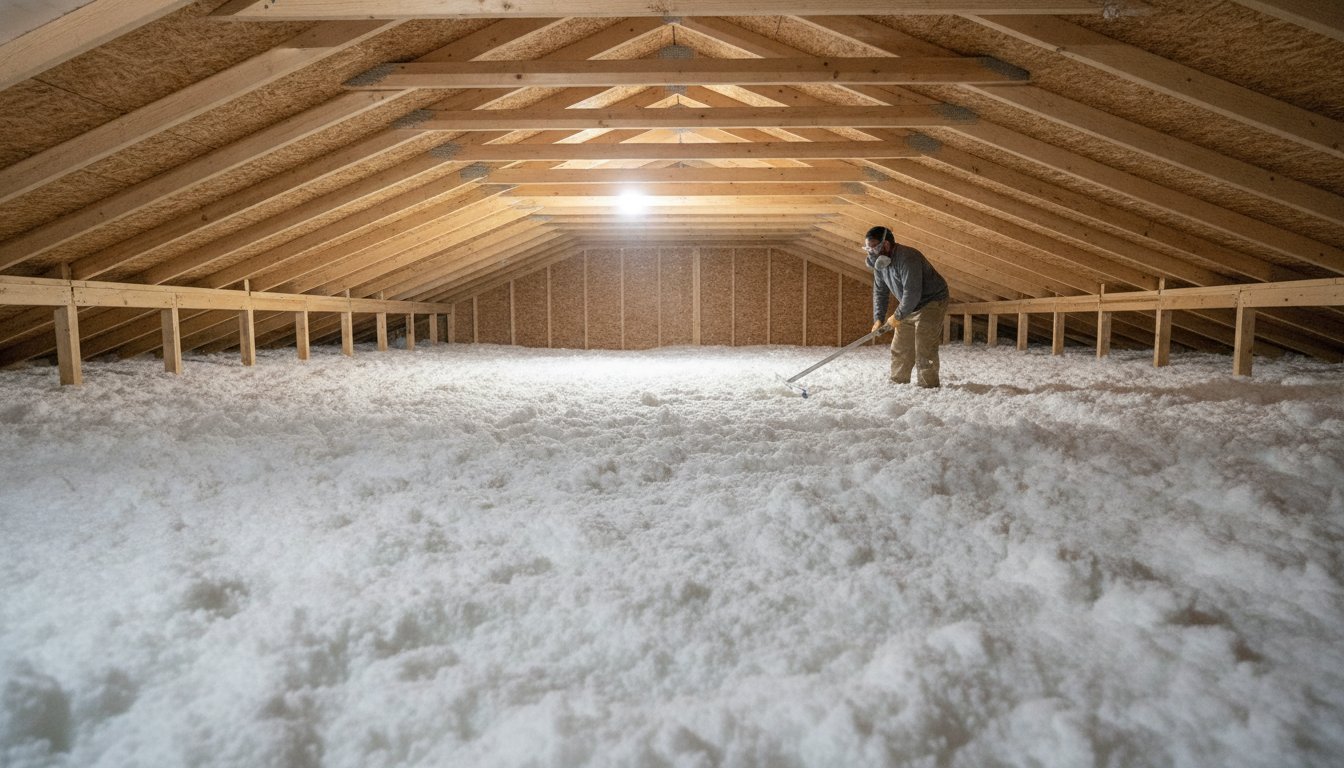
Why does your second floor feel like a sauna even when the AC is running at full speed? If you're battling high utility bills and uneven room temperatures, you're likely dealing with the same under-insulation issues facing many Charlotte neighbors. A professional home comfort insulation upgrade is the most reliable way to fix these comfort gaps and stop dust from drifting down from your attic.
You deserve a home that stays cool in July without costing a fortune, and we're here to show you exactly how to achieve it. This guide provides a meticulous, step by step approach to transforming your home’s climate through air sealing and high quality fiberglass blown-in insulation. We'll explore the 2026 North Carolina Energy Saver rebates, explain why we recommend fiberglass over cellulose, and show you how to reach the Department of Energy’s recommended R-49 standard. It's time to move beyond the minimum building codes and invest in lasting peace of mind for your family.
Key Takeaways
- Learn how to identify "hot floor syndrome" and other subtle signs that your attic is failing to protect your living space from the Carolina heat.
- Discover why a successful home comfort insulation upgrade must start with meticulous air sealing to prevent your expensive conditioned air from leaking into the attic.
- Understand why fiberglass blown-in is the superior choice for local attics, offering better moisture resistance and long-term stability than cellulose options.
- Get a clear, step-by-step roadmap for a professional installation that prioritizes both your home's energy efficiency and its cleanliness.
- See how the "Meticulous Craftsman" approach to installation provides lasting peace of mind and more consistent temperatures in every room of your house.
Recognizing the Signs Your Home Needs a Comfort Upgrade
Living in the Charlotte area means dealing with intense humidity and summer heat that can turn an attic into a literal furnace. Many homeowners find themselves cranking the thermostat down to 68 degrees, yet the upstairs bedrooms remain stubbornly warm. This isn't usually an HVAC problem; it's a clear sign your house needs a home comfort insulation upgrade. When your attic reaches temperatures north of 140 degrees, that heat searches for a way into your living space. If your insulation is thin or settled, your ceiling essentially becomes a giant radiator, beaming heat directly onto your family.
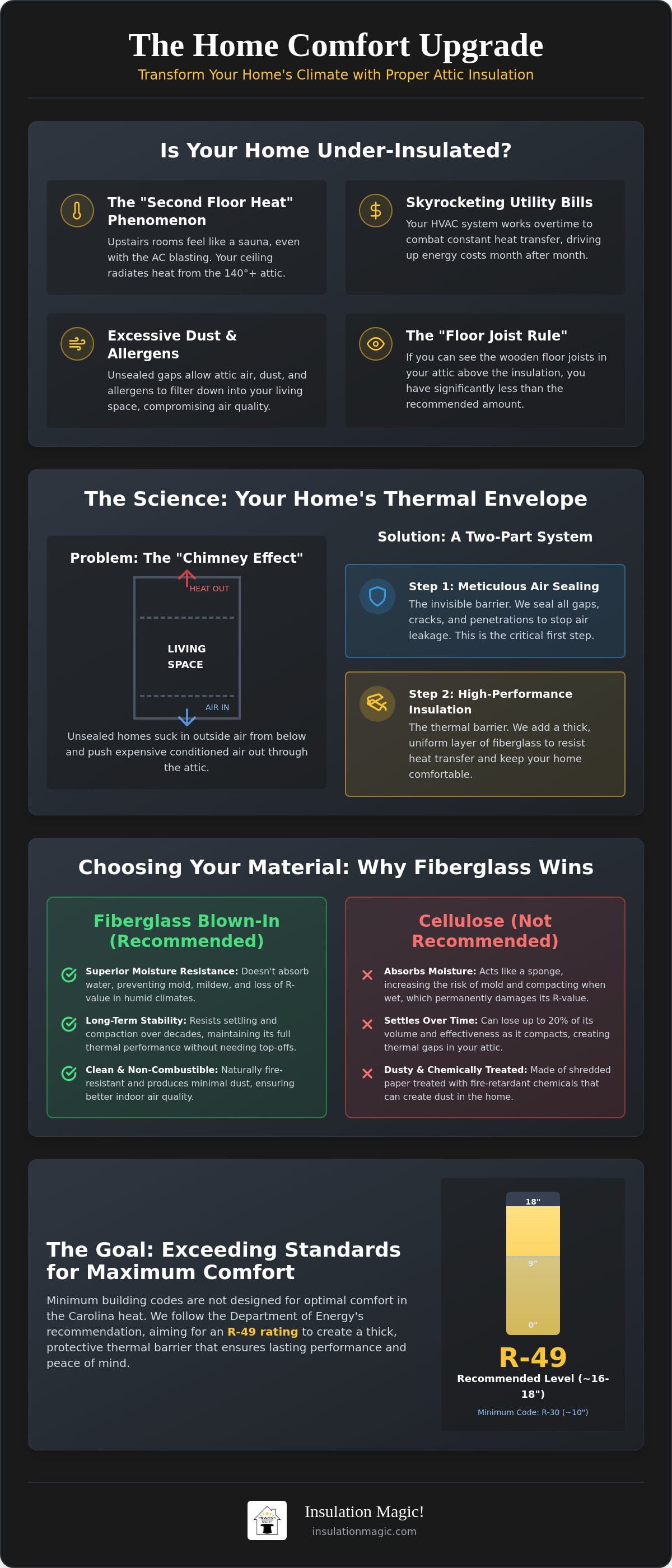
You might also notice that some rooms feel perfectly fine while others are drafty or humid. This imbalance often points to a failure in Understanding Your Home's Thermal Envelope. Beyond just the temperature, keep an eye out for excessive dust on your furniture. If you're constantly dusting, your attic might be "breathing" into your home through unsealed light fixtures and plumbing stacks. These air leaks carry attic odors and allergens directly into your bedrooms, compromising your air quality and driving up utility bills. A meticulous approach to sealing these gaps is the only way to stop this cycle.
The 'Second Floor Heat' Phenomenon in NC
In our region, the sun beats down on roof lines for ten or more hours a day during peak season. Without a thick, protective layer of fiberglass blown-in insulation, that thermal energy transfers directly through your drywall. Your air conditioner might be brand new and perfectly charged, but it can't keep up with a ceiling that's radiating 90-degree heat. This "second floor heat" is a classic symptom of under-insulation that standard building codes often fail to address adequately for our climate.
Visual Cues: What to Look for in Your Attic
You don't need to be a professional to spot a problem. Take a peek into your attic and look at the floor. A simple rule of thumb is the "floor joist rule." If you can see the wooden beams sticking out above the insulation, you definitely don't have enough. Modern standards for North Carolina suggest reaching an R-49 level, which usually requires about 15 to 18 inches of material. Look for matted or dirty areas, which often indicate air leaks or past moisture issues. If your current material looks thin, grey, or has been disturbed by rodents, it's no longer providing the protection you need. We always recommend replacing these tired materials with fresh fiberglass blown-in insulation to ensure your home comfort insulation upgrade lasts for decades.
The Science of Comfort: Understanding Your Home's Thermal Envelope
Think of your home as a living, breathing system. The thermal envelope is the protective "skin" that separates your cozy, conditioned living space from the harsh outdoor elements. When we talk about a home comfort insulation upgrade, we aren't just tossing material into an attic. We're reinforcing this entire boundary to ensure every room stays at the temperature you set on the thermostat. If this envelope has holes, your expensive cooled air leaks out while humid Carolina air seeps in. This creates what professionals call the "Chimney Effect." In this scenario, your house acts like a giant straw, sucking air from the crawlspace and pushing it out through the roof. This constant cycle forces your HVAC to work double time, leading to the high utility bills and uneven temperatures many homeowners face.
A truly effective envelope requires two distinct layers: a meticulous air seal and a high-performing thermal barrier. Without air sealing, even the thickest insulation can't do its job properly. It is like wearing a thick wool sweater on a windy day without a windbreaker. The heat simply blows right through the fibers. By creating a tight seal first, we keep the air where it belongs. This ensures your family stays comfortable regardless of the temperature outside. A meticulous seal keeps your conditioned air inside, where you paid for it to be.
Air Sealing: The Invisible Barrier
Most air leaks are invisible to the naked eye because they're hidden under your existing insulation. We focus on "top plates," which are the wooden beams where your walls meet the attic floor, along with wire penetrations and light fixtures. These gaps might look small, but they often add up to the equivalent of leaving a window wide open year-round. To learn how modern windows contribute to a complete thermal seal, you can visit Long Island Windows and Siding. It is a common misconception that insulation stops air movement. In reality, fiberglass acts more like a filter than a seal. If you want to dive deeper into how we find these hidden gaps, check out our home air sealing guide. Once these leaks are plugged, your home's thermal envelope becomes much more resilient.
The Role of R-Value in Year-Round Comfort
R-value measures how well a material resists heat flow. The higher the number, the better the protection. For North Carolina attics, the Department of Energy recommends reaching R-49 to effectively combat our high humidity and summer heat. When Choosing Your Materials, we consistently recommend fiberglass blown-in over cellulose. Fiberglass doesn't settle as much over time and maintains its R-value far more reliably in our humid climate. Investing in these home thermal envelope improvements ensures your home stays at a consistent temperature for the long haul. If you're ready to see how your current envelope measures up, you can schedule a professional assessment with our team today.
Choosing Your Materials: Why Fiberglass Blown-In Wins for North Carolina Attics
When you're planning a home comfort insulation upgrade, the material you choose acts as the foundation for your long-term results. As a meticulous craftsman, I've spent years crawling through attics in Charlotte and Waxhaw, seeing firsthand how different materials hold up against our local humidity. My verdict is clear: fiberglass blown-in is the gold standard for attic applications. It offers a balance of performance, safety, and durability that other materials simply can't match. While some contractors might push for spray foam, we believe in non-spray foam solutions that maintain your home's natural breathability. This approach protects your roof deck and ensures your attic remains a safe, manageable part of your property.
Choosing the right material isn't just about the initial R-value; it's about how that material performs ten or twenty years down the road. Fiberglass is essentially spun glass, which means it doesn't rot, decay, or provide a food source for pests. It stays exactly where we put it, providing a consistent thermal blanket that keeps your family comfortable through every season. By selecting a high-quality fiberglass product, you're investing in a solution that respects the integrity of your home's structure while delivering the energy savings you expect.
Fiberglass vs. Cellulose: The Settling Factor
One of the biggest differences between materials is how they handle the passage of time. Cellulose is made from recycled paper, and because it's organic, it naturally begins to pack down and settle. As cellulose settles, it loses the "loft" required to trap air, which causes the R-value to drop significantly. You might start with the right amount, but a few years later, you're back to dealing with uneven temperatures. Fiberglass blown-in is much more resilient. It maintains its thickness and performance for decades without packing down. Additionally, fiberglass is a much cleaner option. It doesn't create the heavy dust clouds common with cellulose, and it doesn't rely on the same heavy loads of fire-retardant chemicals to stay safe.
Moisture and Mold Resistance
In the humid Charlotte climate, moisture management is everything. Cellulose acts like a sponge; it can absorb water from the air, which makes the material heavy and can lead to sagging ceilings. Even worse, damp paper is a breeding ground for mold. Fiberglass is naturally moisture-resistant. If humidity levels rise in your attic, the fiberglass won't soak it up or lose its shape. This protects your ceiling joists from rot and dampness, ensuring your home comfort insulation upgrade remains a healthy addition to your environment. We prioritize your peace of mind by using materials that work with our climate, not against it.
Your Step-by-Step Home Comfort Insulation Upgrade Checklist
Executing a home comfort insulation upgrade requires more than just adding material to your attic. It is a disciplined, multi stage process that ensures every gap is closed and every square inch is protected. We follow a specific sequence of events to guarantee that your home stays cool and your energy bills stay low. This methodical approach is what separates a professional installation from a quick fix. By following this checklist, we ensure that your investment provides the maximum return in both comfort and savings for years to come.
A successful home comfort insulation upgrade relies on precision. We don't just look at the thickness of the material; we look at the entire ecosystem of your attic. This includes how air moves, where it escapes, and how moisture is managed. When these elements work together, your HVAC system can finally rest, and your family can enjoy a consistently comfortable environment in every room of the house.
Step 1: The Clean Slate (Removal and Assessment)
Sometimes the best way to move forward is to start with a clean slate. If your current material is matted, contaminated by pests, or severely underperforming, we may suggest a full reset. You can learn more about this process in our essential guide to insulation removal in Charlotte. Clearing out old debris and rodent waste allows us to see the actual "floor" of your attic. This clean surface is vital for the next step, as it ensures our air sealing materials bond perfectly to the ceiling joists and penetrations.
Step 2 & 3: Sealing and Ventilation
Once the attic is clear, we focus on the invisible leaks. We meticulously seal every wire penetration, plumbing stack, and top plate. This stops the "Chimney Effect" we discussed earlier. We also install ventilation baffles at the eaves. These baffles are critical because they prevent "wind washing," which occurs when outside air blows through your soffit vents and displaces your insulation. In growing areas like Matthews and Waxhaw, we often install attic fans as part of this stage to help manage extreme heat spikes and keep moisture levels under control during our humid summers.
Step 4: The Blown-In Process
With the air sealing and ventilation in place, we blow in high quality fiberglass to reach the Department of Energy's recommended R-49 standard. We calculate the exact number of bags needed for your specific square footage to ensure even coverage. We take special care around complex geometries like knee walls to prevent "valleys" where heat could seep through. While we focus on the attic, many homeowners also find it helpful to review the cost to insulate existing walls in Charlotte to create a total thermal barrier for their home. If you're ready to start this process, schedule your attic assessment today and let's build a plan that works for you.
Beyond the Material: The Meticulous Craftsman’s Approach to Installation
The success of your home comfort insulation upgrade depends on more than just the bags of fiberglass in the truck. It relies on the hands that seal the gaps and the eyes that spot the hidden thermal leaks. At Insulation Magic!, we believe the "Meticulous Craftsman" approach is what transforms a standard job into a lifelong improvement. We don't just blow in material and leave; we treat your property with the same care we'd give our own homes in Mint Hill or Weddington. This local expertise means we understand how our specific humidity levels affect your attic's performance over time. By choosing a team that prioritizes craftsmanship over speed, you ensure that every dollar spent on materials actually translates into lasting comfort and energy savings.
We prioritize transparency at every stage of the process. You shouldn't have to take our word for it that the air sealing is complete or that the coverage is even. We provide photos and clear explanations of the work performed beneath the insulation layer. This "Patient Educator" approach ensures you feel confident and informed about your investment. We want you to understand the "how" and "why" of our work, creating a partnership built on trust rather than just a simple transaction. When you know exactly what was done in your attic, you gain a peace of mind that no generic service can provide.
Cleanliness and Home Protection
Home protection is a core part of our service, not an afterthought. We use drop cloths to protect your flooring and take specific steps to safeguard your indoor air quality during the blow-in process. Our team is trained to be respectful of your personal environment, moving carefully through your hallways and living spaces. Once the fiberglass is in place, our meticulous cleanup process begins. We vacuum any stray fibers and ensure your home is left in better condition than we found it. We believe a professional job isn't finished until your home is spotless and your comfort is restored.
Finalizing the Comfort Transformation
Within the first 24 hours after your home comfort insulation upgrade, you'll likely notice the "Insulation Magic!" effect. Your HVAC system will cycle less frequently, and those stubborn hot spots on the second floor will finally begin to vanish. You can expect a quieter, more peaceful indoor environment as the new fiberglass layer also helps dampen outdoor noise. We encourage you to monitor your utility bills over the coming months to see the tangible financial results of a meticulous installation. If you want to see how we've helped other families across the Charlotte area achieve these results, feel free to check our reviews and read about our commitment to quality and integrity.
Take Control of Your Home’s Climate and Savings
Transforming your home into a sanctuary of efficiency starts with a plan that respects the unique climate of the Carolinas. We've explored how a meticulous home comfort insulation upgrade involves more than just adding material; it requires precise air sealing and the long-term durability of fiberglass blown-in insulation. By prioritizing these non-spray foam solutions, you protect your roof's breathability while ensuring your HVAC system can finally maintain consistent temperatures in every room.
We take immense pride in our owner-operated service, treating every attic with the same care we would give our own properties. With over 250+ 5-star local reviews, our reputation is built on transparency, cleanliness, and old-school craftsmanship. You don't have to settle for uneven temperatures or high utility bills any longer. Our team is ready to guide you through every step of the process, from the initial assessment to the final cleanup.
Take the first step toward a more efficient, relaxing environment for your family. Book your meticulous home comfort assessment today! We look forward to helping you rediscover the true potential of your home.
Frequently Asked Questions
Will adding more insulation on top of my old insulation work?
Adding new material on top of existing layers can work well, provided the old insulation is dry and free of pests or mold. A meticulous home comfort insulation upgrade usually starts with an assessment to ensure we aren't burying underlying issues. If your current material is healthy, we can add fresh fiberglass blown-in on top after we complete the essential air sealing of your attic floor.
How long does a home comfort insulation upgrade take to complete?
Most projects are completed in just one or two days depending on the scope of the work. A standard attic refresh usually takes a single day, while more complex jobs involving full insulation removal and detailed air sealing might require a second day. We provide a clear, step by step timeline during our initial assessment so you know exactly what to expect from our team.
Why do you recommend fiberglass blown-in instead of cellulose?
We recommend fiberglass because it maintains its "loft" and R-value for decades without packing down. Cellulose is made of paper and tends to settle over time, which reduces its effectiveness. Fiberglass is also naturally moisture resistant, which is vital for protecting your home against the high humidity we experience in North Carolina. It is a cleaner, more durable choice for our local climate.
Is air sealing really necessary if I'm getting new insulation?
Air sealing is the most important part of the entire process. Insulation acts like a filter rather than a lid; it can't stop conditioned air from escaping through gaps around wires and light fixtures. By sealing these holes first, you ensure your expensive cooled air stays inside your living space. This step is what makes the thermal barrier truly effective for your family.
Can I stay in my home during the insulation installation process?
You can absolutely stay in your home while we work. We use non-toxic, non-spray foam materials that don't require you to vacate the property or deal with harsh chemical odors. Our team uses drop cloths and a meticulous cleanup process to ensure your indoor air stays clean and your living space remains undisturbed throughout the entire installation.
What is the best R-value for a home in the Charlotte, NC area?
The U.S. Department of Energy recommends reaching a minimum of R-49 for attics in our region. While the North Carolina building code only requires R-38, reaching the R-49 standard is the best way to combat our intense summer heat. This level of protection ensures your second floor stays comfortable even during the peak of a Charlotte July.
How much can I realistically save on my energy bills after an upgrade?
Homeowners often see a reduction of 15% to 20% on their monthly heating and cooling expenses after a professional home comfort insulation upgrade. By reaching the recommended R-49 level and sealing air leaks, you significantly reduce the workload on your HVAC system. This leads to lower monthly bills and less wear and tear on your expensive cooling equipment.
Do you offer financing or help with energy rebates in North Carolina?
We provide guidance to help you navigate local incentive programs like the Energy Saver NC rebates and Duke Energy's efficiency credits. As of 2026, Duke Energy offers rebates up to $700 for qualifying insulation improvements in our area. While we don't provide direct financing, we ensure you have all the meticulous documentation needed to claim these valuable state and utility savings.
Disclaimer
This blog is intended to provide general information about insulation, energy efficiency, and home comfort based on years of experience. While we strive to keep content accurate and up to date, results may vary based on your home's construction, condition, and climate. Contact Insulation Magic for a personalized assessment and recommendations.


