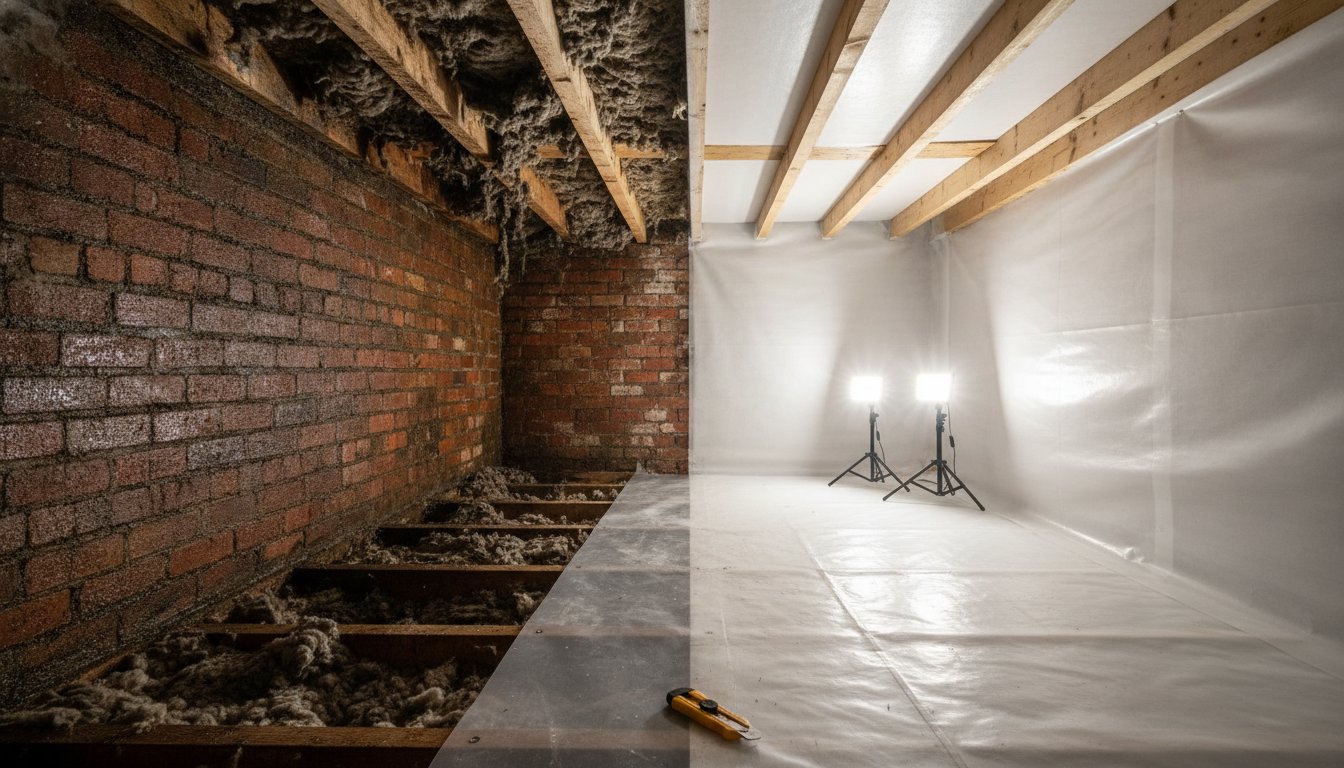
You walk through your front door and that heavy, damp, earthy scent greets you once again. It's more than just an annoyance; it's a signal that something is hidden beneath your feet. When mold in crawlspace insulation takes hold, your home's floor joists and your family's respiratory health are at immediate risk. You likely feel that a little bit of dark spotting on the fiberglass is more than just a cosmetic issue. You are right to be concerned about wood rot or musty air migrating into your living spaces, especially since moisture-laden insulation can lose up to 40 percent of its effectiveness in humid climates.
We're going to uncover the truth about why this happens and how you can achieve a healthy, mold-free environment without relying on spray foam. It's important to understand that your crawlspace doesn't have to be a source of stress. From identifying the early warning signs of decay to implementing a permanent moisture control strategy, this guide provides the methodical steps you need to protect your property and restore your peace of mind. We'll walk through the process of assessing the damage and choosing the right solutions to keep your home dry and safe for the long term.
Key Takeaways
- Understand how the "Stack Effect" draws air from below into your living area, making a healthy crawlspace essential for your family's respiratory health.
- Learn why surface cleaning is a myth and why mold in crawlspace insulation requires a complete, meticulous removal to ensure the problem doesn't return.
- Explore a methodical four-step remediation process that includes HEPA vacuuming and professional antimicrobial treatments to protect your home’s wood structure.
- Discover how to protect your home permanently by combining air sealing with moisture-resistant insulation choices that discourage future fungal growth.
Why Mold in Crawlspace Insulation is a Hidden Risk
Mold in crawlspace insulation thrives because of a simple, unfortunate recipe: high humidity and organic material. In many homes, fiberglass batts are installed between floor joists to provide a thermal barrier. However, these batts often create a "Sponge Effect." They absorb moisture from the humid air and trap it directly against your home's wooden structure. This creates a perfect breeding ground for fungal growth right where it can do the most damage to your floor joists and subflooring.
The danger isn't just hidden under your floorboards. Because of a phenomenon called the "Stack Effect," your home acts like a chimney. As warm air rises and escapes through the upper levels and attic, it creates a vacuum that pulls air upward from the crawlspace. In fact, about 50 percent of the air you breathe on your first floor originated in that dark, damp space below. If you have mold in crawlspace insulation, those spores are being pulled into your living areas every single day through every small gap and crack in your flooring.
The Role of Charlotte’s High Humidity
Living in the Piedmont region means dealing with intense moisture levels for much of the year. During the sweltering summers in Matthews and Waxhaw, the humidity often sits well above the 60 percent threshold where mold starts to flourish. When moisture evaporates from the soil, it rises and becomes trapped by old, sagging insulation. Without proper air sealing and moisture management, your crawlspace becomes a humid greenhouse that never truly dries out, leading to rot and decay.
Health Risks You Shouldn’t Ignore
When mold spores travel through floor penetrations or leaky HVAC ductwork, they affect everyone in the house. You might notice persistent allergy symptoms, sneezing, or respiratory irritation that seems to get worse when you're indoors. For a comprehensive overview of indoor mold and its impact, it's clear that your home's thermal envelope must remain clean to protect your family. Maintaining a healthy environment starts with ensuring the air coming from your crawlspace is as pure as possible. Ultimately, mold in crawlspace insulation represents a serious structural and respiratory threat that requires a professional assessment to ensure your home remains a safe haven.
Myth vs. Reality: Can You Clean Moldy Insulation?
Many homeowners hope for a quick fix when they spot mold in crawlspace insulation. It's common to hear that a simple spray of bleach or a store-bought disinfectant will solve the problem. In reality, mold isn't just a surface stain you can wipe away. It grows using microscopic, root-like structures called hyphae that weave deep into the porous glass fibers of the insulation. While a surface spray might change the color of the mold on the outside, it can't reach the core of the material. This leaves the colony alive and ready to resurface as soon as conditions allow.
Another common misconception is that dry mold is safe. You might see old, dusty insulation and assume the threat has passed because the moisture seems to have dried up. However, mold spores simply go dormant when they lack water. These spores remain highly allergenic and can still trigger the respiratory issues we discussed earlier. As soon as the next humid season arrives, these dormant spores reactivate and begin spreading again. Following an EPA guide to mold and moisture is a great way to understand why controlling the source is more effective than just treating the symptoms.
Why Fiberglass Batts Cannot Be Salvaged
Fiberglass is essentially a trap for microscopic particles. Once spores settle inside the dense webbing of a batt, they're nearly impossible to extract. To make matters worse, many batts feature a Kraft paper vapor retarder. This paper is made of cellulose, which acts as a literal buffet for fungal growth. Because the organic paper and the porous glass fibers are so thoroughly compromised, professional insulation removal is the only way to truly clear the slate and protect your home's structure.
The Danger of "Covering Up" the Problem
It's tempting to save time by simply stapling new insulation over the old, but this often leads to a structural nightmare. Covering up moldy material traps moisture directly against the wood, which can accelerate rot in your floor joists. Encapsulating a problem without first removing the source of the growth is like putting a clean bandage over an infected wound; the issue continues to fester underneath. If you're concerned about the condition of your home's foundation, you can schedule a professional assessment to see exactly what's happening beneath your floors.
The Professional 4-Step Process for Crawlspace Remediation
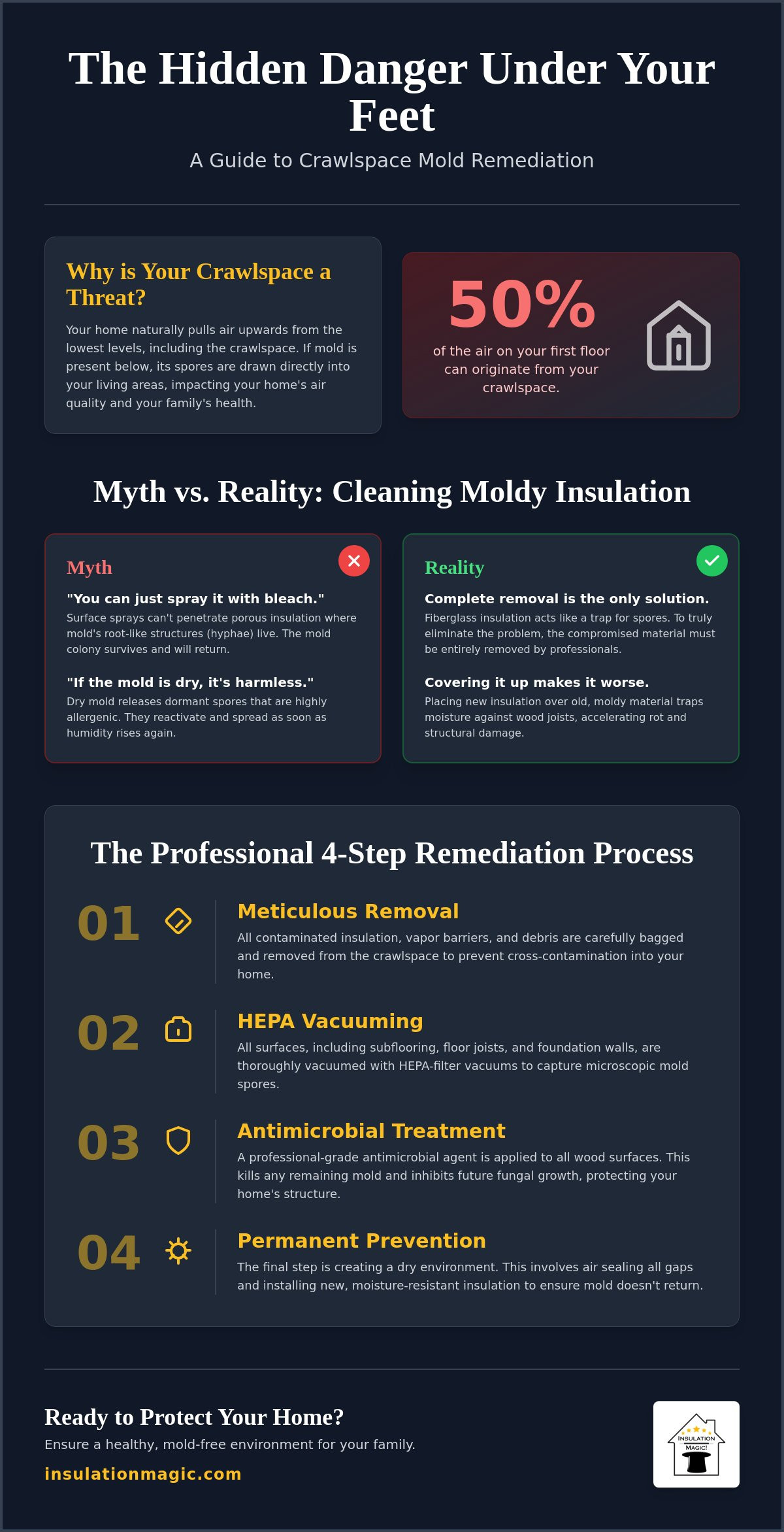
Remedying mold in crawlspace insulation isn't a job for a weekend warrior with a spray bottle. It requires a disciplined, four-step approach to ensure the spores are gone and your home's foundation is preserved. We treat every crawlspace with the same level of care we'd give our own homes, following a sequence that prioritizes your family's health and the structural integrity of your floor joists. This methodical process ensures that we don't just hide the problem, but solve it for good.
Meticulous Removal and Disposal
The first step is the heavy lifting. We carefully remove every square inch of contaminated material. To prevent cross-contamination, we bag all old insulation while still inside the crawlspace. This prevents spores from escaping into your HVAC system or living areas during the move. DIY removal often fails because homeowners accidentally drag the problem through their hallways. Our team is committed to leaving the area "Insulation Magic! clean," removing not just the batts but any organic debris that could fuel future growth. This thoroughness is supported by the EPA guide to mold and moisture, which emphasizes that porous materials like insulation must be discarded once mold takes root.
Treating and Drying the Wood Structure
Once the area is clear, we focus on the wood itself. Our second step involves professional HEPA vacuuming to capture microscopic particles, followed by an antimicrobial treatment. This treatment doesn't just kill existing growth; it protects the wood from future issues. The third step is perhaps the most critical: controlled drying. We use industrial equipment to pull moisture out of the floor joists until they reach a safe moisture level, typically below 15 percent. If you seal a crawlspace while the wood is still damp, you're just trapping the rot inside. Our services page outlines how we assess these moisture levels with precision before moving to the final stage.
Finally, we finish the project with precision air sealing and the installation of new, moisture-resistant materials. By closing off the gaps where humid air enters, we create a stable environment that keeps your floors warm and your air pure. This final step ensures that the mold in crawlspace insulation doesn't have the moisture it needs to return. If you're ready to clear the air in your home, you can book your crawlspace assessment online today to get started.
Preventing Future Growth: Better Ways to Insulate
Removing mold in crawlspace insulation is a vital first step, but the real victory lies in making sure the environment never supports fungal growth again. To do this, we must shift the focus from simply "stuffing the floor" to managing the air and moisture levels below your home. This involves a combination of high-quality materials and meticulous air sealing techniques that address the root causes of dampness. For those seeking broader insights into professional moisture control, you can learn more about CavClear and their approach to damp proofing and structural maintenance. We treat this stage with the same precision as a fine craftsman, ensuring every gap is addressed to restore your comfort.
A permanent solution relies on three core pillars:
- Air Sealing: Closing off the pathways where humid outdoor air enters the home.
- Inorganic Materials: Using moisture-resistant insulation that doesn't provide a food source for mold.
- Vapor Management: Installing a heavy-duty barrier to block ground moisture from rising.
You might hear other contractors push for spray foam, but we warn homeowners about the "closed-cell trap." While it's marketed as a waterproof seal, it can actually hide structural issues. If a plumbing leak occurs above, spray foam can trap that water against your wooden floor joists, leading to rot that stays hidden until it's a major catastrophe. We don't use spray foam because we believe in breathable, accessible solutions that allow you to monitor your home's health over time. Just as we recommend fiberglass blown-in insulation for its superior performance in attics, we prioritize moisture-resistant, manageable materials in the crawlspace.
The Importance of Air Sealing
Air sealing is the most effective way to stop the "Stack Effect" at its source. By sealing plumbing and electrical penetrations in your sub-floor, we prevent the crawlspace from acting like a straw that sucks damp air into your living room. This doesn't just protect you from mold; it also makes your home much more efficient. You can learn more about how to lower heating and cooling costs through these permanent sealing methods that prioritize your long-term savings.
Crawlspace Encapsulation vs. Traditional Insulation
For many families in Matthews and Ballantyne, a full crawlspace encapsulation is the gold standard for protection. While traditional insulation sits between the joists, encapsulation treats the entire crawlspace as a conditioned part of the home. We install a heavy-duty vapor barrier that covers the ground and walls, creating a clean, dry "envelope" that protects your new insulation from ground-level humidity. This methodical approach ensures your home stays healthy for decades. If you're ready to fix your home's foundation for good, book your crawlspace inspection online to start your journey to a healthier home.
Take Control of Your Home’s Health and Comfort
Your crawlspace shouldn't be a source of worry or musty odors. By understanding that mold in crawlspace insulation requires a meticulous removal rather than a surface spray, you've already taken the first step toward a healthier home. Your home's air quality is directly linked to the environment below your feet. A clean, dry foundation protects your floor joists from rot and ensures your family breathes easier every day.
At Insulation Magic!, we take immense pride in our owner-operated service and our commitment to breathable, non-spray foam solutions. With hundreds of 5-star reviews from fellow Charlotte homeowners, we focus on the meticulous details that larger companies often overlook. We're here to guide you through the process of restoring your home's comfort and structural integrity with a methodical, step-by-step approach.
Ready to clear the air for good? Schedule your professional crawlspace assessment today. We look forward to helping you create a safer, drier, and more efficient living space for your family.
Frequently Asked Questions
How do I know if there is mold in my crawlspace insulation?
Visual cues and persistent odors are the most reliable indicators of a problem. You should look for dark spotting, gray fuzzy patches, or sagging fiberglass batts that appear heavy and waterlogged. If your home has a recurring earthy or damp scent that doesn't go away, it's likely that spores are migrating into your living space. A professional can inspect the hidden areas behind the batts where growth often starts.
Can I just use a dehumidifier to kill the mold in the insulation?
No, a dehumidifier is a preventative tool rather than a cure for existing growth. While it's excellent for lowering humidity levels to stop new mold from forming, it cannot reach the roots embedded deep within porous insulation fibers. To fix the issue, you must remove the contaminated material entirely. Once the space is clean and treated, a dehumidifier can help maintain the dry conditions necessary for long term protection.
Is mold in the crawlspace covered by homeowners insurance?
Coverage typically depends on whether the moisture was caused by a sudden accident or long term neglect. If a pipe burst and caused the growth, your policy might cover the remediation. However, mold in crawlspace insulation caused by high humidity or ground moisture is usually considered a maintenance issue and is excluded from standard policies. You should check your specific policy details or consult with your insurance agent for a definitive answer.
How long does it take to remove and replace crawlspace insulation?
Most professional remediation projects are completed within one to three days. The first stage involves the meticulous removal of old debris and HEPA vacuuming the structure. We then allow time for antimicrobial treatments and controlled drying of the floor joists. The final day is usually focused on air sealing and installing new materials. This methodical pace ensures that every step is handled with the precision your home deserves.
What is the best type of insulation to prevent mold in a crawlspace?
Inorganic materials like moisture resistant fiberglass batts or rigid foam boards are the best options for damp environments. These materials don't provide the organic food source that mold needs to thrive. We apply this same logic to attics; we always recommend fiberglass blown-in insulation over cellulose for those applications. Fiberglass is superior because it resists moisture and maintains its performance over time without settling or providing a home for fungi.
Will removing moldy insulation get rid of the musty smell in my house?
Yes, removing the contaminated material is the only way to permanently eliminate those unpleasant odors. Because of the Stack Effect, up to half of the air you breathe on your first floor comes directly from below. Getting rid of mold in crawlspace insulation stops the source of the scent before it can enter your home. After we clean the area and treat the wood, the air in your living space will feel noticeably lighter and fresher.
Disclaimer
This blog is intended to provide general information about insulation, energy efficiency, and home comfort based on years of experience. While we strive to keep content accurate and up to date, results may vary based on your home's construction, condition, and climate. Contact Insulation Magic for a personalized assessment and recommendations.


