
Why does your upstairs feel like a completely different climate zone even when the air conditioner is running at full blast? If you find yourself dreading the walk to the second floor or staring at utility bills that climb higher every summer, you aren't alone. Many homeowners in our area struggle with uneven temperatures and the nagging worry that their old, compressed insulation might be harboring mold or pests. Achieving high-performance attic insulation Charlotte NC requires a shift in perspective. It isn't just about dumping more material into a dark space; it's about a methodical approach to your home's thermal envelope.
We're here to show you how to transform your home's comfort and slash those monthly bills using meticulous air sealing and specialized techniques tailored for the North Carolina humidity. You'll learn why we recommend fiberglass blown in insulation over cellulose to ensure long term durability and cleanliness. This guide previews our "Meticulous Craftsman" process, covering everything from identifying hidden air leaks to the final, precise installation that ensures every room stays consistently cool. It's time to reclaim your attic and your comfort.
Key Takeaways
- Learn how to combat the "stack effect" in Charlotte’s humid climate by targeting the optimal R-value for your home’s thermal envelope.
- Discover why fiberglass blown-in is the primary recommendation for attic insulation Charlotte NC to prevent mold growth and protect your ceiling’s structural integrity.
- Understand why air sealing hidden bypasses, such as recessed lights and plumbing stacks, is the essential first step for any high-performance insulation project.
- Identify the specific signs of under-insulation in your home and how a "Meticulous Craftsman" approach ensures a clean, efficient attic refresh.
Understanding the Impact of Charlotte’s Climate on Attic Insulation
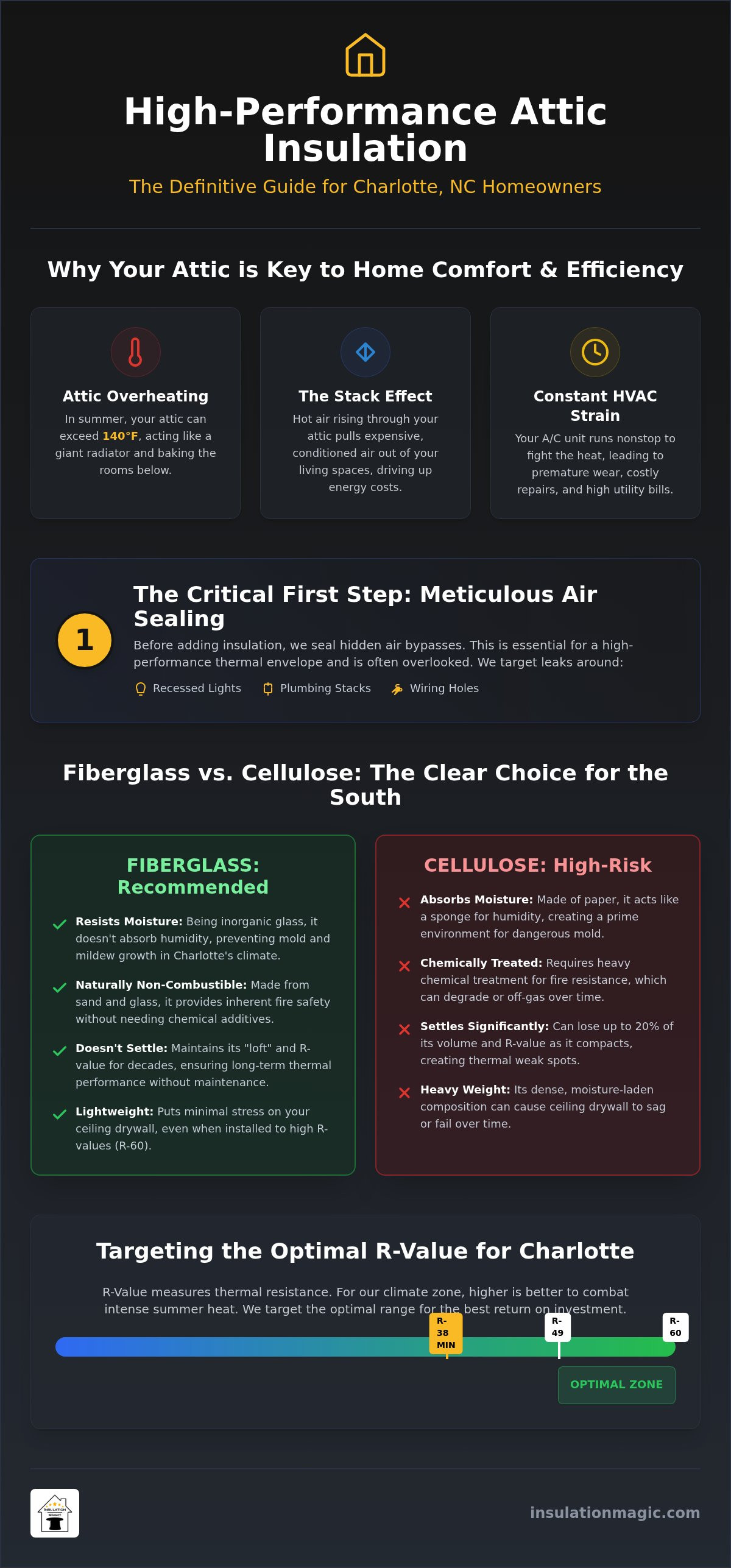
During the peak of July and August, your roof acts as a giant solar collector. It absorbs intense heat and radiates it directly into your attic space. Without a proper barrier, this area becomes an oven, often reaching temperatures exceeding 140 degrees. This extreme heat doesn't stay put; it naturally migrates toward the cooler parts of your home. This process is driven by the "Stack Effect," a pressure imbalance where hot air rises and escapes through the top of the house, effectively sucking the expensive, conditioned air out of your living rooms through tiny gaps in the ceiling. High-quality attic insulation Charlotte NC is the only way to break this cycle and keep your home's climate under control.
When your attic stays that hot, your HVAC system is forced to run nearly constant cycles to keep up. This puts immense strain on the equipment, leading to premature mechanical failure and higher maintenance costs. By stabilizing the temperature in the attic, you allow your cooling system to rest, which preserves its lifespan and keeps your monthly utility bills predictable. In our region, the combination of high heat and heavy humidity means your choice of insulation isn't just about price; it's about protecting your home's structure from the elements.
The Thermal Shield: How Insulation Battles NC Summers
Radiant heat transfer is the primary way your home gains heat through the roof. The sun warms the shingles, which then warm the roof decking, which finally "shines" that heat down onto your attic floor. R-value is the measure of thermal resistance in a material. To stop this radiant energy from bleeding into your second-floor bedrooms, you need a consistent, deep layer of insulation that can resist the flow of heat. We often see older homes where the original material has settled or shifted, leaving thin spots that act like thermal holes in your home's defense. A meticulous "Attic Refresh" ensures that every square inch of the ceiling is covered to the correct depth, creating a uniform thermal shield.
Why R-Value Requirements are Different in the South
North Carolina falls into a specific climate zone that requires a balance between heat resistance and moisture management. While northern climates focus heavily on trapping heat inside during winter, our primary battle is keeping the summer heat out. Current energy codes for our area recommend a range of R-38 to R-60 for optimal savings and comfort. If you're wondering how much attic insulation do I need, it's important to look at the current depth of your material.
For most Charlotte homes, reaching the R-49 to R-60 range provides the best return on investment. We always recommend fiberglass blown-in insulation for this task. Unlike cellulose, which is made of treated paper and can absorb moisture like a sponge, fiberglass is naturally resistant to the humidity we experience in the South. It's also significantly lighter, meaning we can achieve the high R-values you need without putting excessive weight on your ceiling drywall. This careful selection of materials ensures your home stays protected, dry, and comfortable for decades.
Fiberglass vs. Cellulose: Why Fiberglass Wins in the South
Choosing the right material for attic insulation Charlotte NC often comes down to two main contenders: fiberglass and cellulose. While cellulose is frequently marketed as an eco-friendly option because it's made of recycled newspaper, it presents significant risks in our humid environment. For homeowners in the South, the physical properties of the material are just as important as its thermal resistance. We've found that fiberglass consistently outperforms organic alternatives in terms of safety, durability, and health.
Fire safety is a primary concern for any homeowner. Fiberglass is made from spun glass, which is inherently non-combustible. It doesn't need additional chemicals to resist flames. Cellulose, being paper, requires heavy chemical treatments to achieve fire resistance. Over time, these chemicals can settle or off-gas, potentially leaving the material more vulnerable. Additionally, fiberglass maintains its loft for decades. While cellulose can settle by 20 percent or more, significantly reducing your home's R-value, fiberglass keeps its shape and performance without constant maintenance.
Moisture Resistance: A Critical Factor for Charlotte Homes
Humidity is the silent enemy of any attic. Organic materials like cellulose act as a sponge, absorbing moisture from the damp North Carolina air. This damp paper creates the perfect breeding ground for fungal growth and mildew. Fiberglass is naturally inorganic and does not provide a food source for mold. Because it doesn't hold onto water, it allows your attic to breathe more effectively. This works in harmony with your ventilation system to keep the space dry and protect your roof's structural components from rot.
Weight is another factor that many people overlook. Cellulose is dense and heavy. When you blow in enough material to meet modern energy standards, that weight can put unnecessary stress on your ceiling drywall. Blown-in fiberglass provides the same thermal resistance at a fraction of the weight. It's the safer choice for maintaining the structural integrity of your home's interior finishes, especially in older Charlotte properties.
The Long-Term Value of Blown-In Fiberglass
We exclusively recommend fiberglass blown-in for attic applications because it offers the best lifetime value for our neighbors. It's a permanent solution that doesn't require top-offs every few years. If you're concerned about the old "itchy" reputation of fiberglass, rest easy. Modern professional installation techniques ensure the fibers stay exactly where they belong. We use precise equipment to blow the material in cleanly, leaving your living spaces untouched and your air quality pristine.
If you're ready to see the difference a premium material can make, you can schedule an attic assessment online to get started on your home's transformation.
The Invisible Secret: Why Air Sealing Must Come Before Insulation
Many homeowners make the mistake of thinking that simply adding more attic insulation Charlotte NC is a cure-all for high energy bills. While new fiberglass blown-in is vital, it's only half of the equation. If you have air leaking through your ceiling, that new insulation will act like a filter rather than a barrier. We call these gaps "air bypasses," and they are the hidden culprits behind uneven room temperatures and drafty hallways. Without addressing these leaks, your new insulation won't reach its full energy-saving potential.
To understand the relationship between these two steps, consider the "Windbreaker vs. Sweater" analogy. Insulation is like a thick wool sweater; it's designed to trap heat. However, if you stand in a cold wind, that air will blow right through the fibers. Air sealing is the windbreaker that stops the movement of air, allowing the sweater to do its job effectively. Without sealing the gaps around recessed lights, plumbing stacks, and top plates, your home will continue to lose expensive conditioned air to the outdoors.
Finding the Hidden Leaks in Your Attic
A truly effective attic project requires a "Meticulous Craftsman" approach. We don't just blow material over the top of existing problems. Instead, we move old, dusty insulation aside to reveal the structural gaps that builders often leave behind. Using professional-grade, fire-rated sealants, we close every penetration where electrical wires or vents pass through the ceiling. This creates a continuous "thermal envelope" that keeps your air where it belongs. You can read more about this essential process in our guide to Home Air Sealing.
The Role of Attic Fans and Ventilation
Once the floor of your attic is sealed and insulated, we must ensure the remaining space can breathe. Proper ventilation is not just about cooling; it's about moisture control. We focus on balancing intake through soffit vents with exhaust through ridge or gable vents. In some cases, installing high-efficiency attic fans is the best way to pull stagnant, humid air out of the space before it can damage your roof decking. This movement of air is vital for preventing the "attic oven" effect we see during Charlotte summers.
We strongly advocate for this natural airflow approach over spray foam encapsulation. While some contractors push for spray foam to seal the entire roof deck, we've found that maintaining a vented attic with a perfectly sealed floor is a safer, more reliable way to protect your home. It prevents the moisture buildup that can lead to wood rot, ensuring your attic stays dry and your shingles last their full intended lifespan. It's a methodical, time-tested strategy that prioritizes the health of your home's structure.
Is Your Charlotte Home Under-Insulated? 5 Telltale Signs
Identifying whether your home needs a performance upgrade doesn't always require a professional inspection. Many homeowners in our area live with chronic comfort issues without realizing that poor attic insulation Charlotte NC is the root cause. Because heat naturally moves toward cooler spaces, a poorly insulated attic allows the summer sun to bake your living areas from the top down. Here are five specific signs that your home's thermal envelope is failing:
- The Second-Floor Heat Trap: If your upstairs is consistently 10 degrees warmer than the ground floor during a typical Charlotte summer, your insulation isn't stopping the radiant heat transfer from the roof.
- Rising Utility Bills: Compare your current Duke Energy or Piedmont Natural Gas statements to your local averages. If your costs are significantly higher for a similar square footage, your home is likely leaking expensive air through the ceiling.
- Visible Floor Joists: Take a look across your attic floor. If you can see the tops of the wooden joists, you don't have enough material. Modern standards require the insulation to be deep enough to bury these structural beams completely.
- The "Snow Melt" Test: On the rare mornings when we get frost or snow in the Carolinas, look at your roof. If it melts in patchy, uneven patterns, it's a clear sign that heat is escaping from specific spots in your attic and warming the shingles.
- Excessive Dust and Allergies: Old, degraded insulation can break down and circulate through your ductwork. If you notice a constant layer of dust or worsening allergies, your old attic material may be compromising your indoor air.
The HVAC Strain: Why Your Unit Never Stops Running
When your attic isn't properly sealed and insulated, your air conditioner is forced to work twice as hard to maintain a comfortable temperature. This leads to "short-cycling," where the unit turns on and off frequently, causing excessive wear on the compressor and fan motors. Attic insulation is the most cost-effective way to extend HVAC life by reducing the total runtime required to keep your home cool. By stabilizing the environment above your ceiling, you give your expensive mechanical systems a much-needed break and prevent premature failure.
Assessing Old Insulation: When Removal is Necessary
Not every project is a simple "top-off." If we find evidence of rodent infestations, mold growth, or past water damage, we recommend a full attic insulation Charlotte NC removal. Leaving contaminated material in place can compromise your indoor air quality and the effectiveness of the new fiberglass blown-in material. Our "Attic Refresh" process starts with a clean slate, ensuring that your home is protected by fresh, sterile material that is free from allergens. You can learn more about this essential service in our guide to Insulation Removal Charlotte.
Choosing the Right Attic Insulation Contractor in Charlotte
Choosing a contractor for attic insulation Charlotte NC is a decision that impacts your home's health and your family's comfort for years to come. A low price often masks a lack of detail, such as skipping the critical air sealing step or using lower-grade materials that don't hold up in our humidity. When you review a local quote, look for total transparency. It should clearly list the target R-value, the specific type of fiberglass blown-in material being used, and a detailed plan for sealing the air bypasses we've discussed. We believe in providing a thorough assessment that empowers you to make an informed choice for your property.
Our "Meticulous Craftsman" philosophy means we treat your home with the same care we'd give our own. This starts with protecting your floors and ends with a final sweep that leaves the space cleaner than we found it. For families in Waxhaw and Matthews, we offer affordable financing options to ensure that essential energy upgrades are accessible without financial stress. Investing in your home's efficiency shouldn't be a burden; it should be a clear path to long-term savings and reliability.
The Insulation Magic! Installation Process
The Insulation Magic! approach is built on a logical, step-by-step progression that prioritizes quality over speed. We begin with comprehensive prep work, identifying every plumbing stack and electrical penetration that needs sealing. We don't believe in high-pressure sales tactics. Instead, we act as patient educators, explaining the "how" and "why" behind every recommendation we make. This commitment to transparency is reflected in our customer feedback from neighbors in Ballantyne and Weddington. We take pride in the reputation we've built through consistent, high-quality work and a commitment to doing things the right way the first time.
Your Path to a More Comfortable Home
When you're ready to invest in high-performance attic insulation Charlotte NC, starting your project is a simple, stress-free process. You can use our online booking system to schedule a professional attic assessment at a time that works for you. On the day of your project, you can expect a punctual team that communicates clearly from start to finish. We walk you through the completed work, showing you the uniform depth of the fiberglass and the precision of the air sealing. We want you to understand the value you've received. Our final check ensures that your home's comfort is restored and that every piece of equipment is packed away neatly. It's a professional partnership designed to give you peace of mind and lasting results.
Reclaim Your Home's Comfort Today
Investing in your home's thermal envelope is one of the most impactful decisions you can make for long-term efficiency. We've explored how a meticulous approach to air sealing combined with premium fiberglass blown-in insulation creates a lasting barrier against our local humidity. By choosing a material that resists moisture and mold, you're protecting your family's health and your home's structural integrity for decades. This isn't just about adding material; it's about a disciplined restoration of your home's environment.
As a locally owned and operated team, we take immense pride in delivering results that exceed expectations. We include professional-grade air sealing in every major project because we know that insulation can't do its job without it. With over 100+ 5-star reviews from your neighbors, our reputation for cleanliness and precision is something we work to earn every day. You deserve a home that stays cool in the summer and warm in the winter without the stress of soaring utility bills. High-performance attic insulation Charlotte NC is the key to that peace of mind.
We look forward to helping you transform your attic into a clean, efficient space that serves your home well. Let's work together to make your property more comfortable and cost-effective starting today.
Frequently Asked Questions
How much attic insulation do I need for a home in Charlotte, NC?
North Carolina energy codes typically recommend a range of R-38 to R-60 for residential attics. For homes in Charlotte and Waxhaw, this usually means having roughly 15 to 20 inches of fiberglass blown-in material. We assess your current levels and calculate the exact amount needed to reach these high-performance standards, ensuring your second floor remains comfortable during our humid July heat and chilly winter mornings.
Is blown-in fiberglass better than cellulose for North Carolina attics?
We exclusively recommend fiberglass blown-in over cellulose for North Carolina attics. Fiberglass is an inorganic material, meaning it doesn't provide a food source for mold or mildew in our humid climate. It's also significantly lighter than cellulose, which prevents unnecessary stress on your ceiling drywall. Unlike paper-based cellulose, fiberglass maintains its loft and R-value for decades without settling or losing its fire-resistant properties.
How long does it take to install new attic insulation?
Most attic insulation Charlotte NC projects are completed in a single day. A standard installation typically takes between four and six hours, depending on the size of your home and the amount of air sealing required. We prioritize a methodical approach that includes thorough prep work and a meticulous final cleanup. We ensure your daily routine is minimally disrupted while we restore your home's comfort and efficiency.
Will new attic insulation really lower my Duke Energy bill?
Yes, upgrading your insulation and sealing air leaks is one of the most effective ways to lower your Duke Energy or Piedmont Natural Gas bills. By stabilizing the temperature in your attic, you reduce the workload on your HVAC system. This prevents your unit from running constant cycles during peak summer or winter months, leading to tangible monthly savings and extending the lifespan of your expensive mechanical equipment.
Do I need to remove my old insulation before adding new fiberglass?
Removal isn't always mandatory, but it is necessary if your existing material is moldy, water-damaged, or shows signs of rodent activity. Our "Attic Refresh" service often involves removing old, compressed insulation to start with a clean slate. This allows us to perform more effective air sealing on the attic floor before installing fresh, sterile fiberglass. A clean start ensures the highest possible indoor air quality for your family.
Can I stay in my home during the attic insulation installation?
You can absolutely remain in your home during the entire process. Our installation is clean and non-invasive, as we use professional-grade hoses to blow the fiberglass material directly into the attic space from our truck. We take great care to protect your floors and furniture with drop cloths and barriers. Our goal is to leave your living environment exactly as we found it, only much more comfortable and energy-efficient.
What is the cost of attic insulation in the Charlotte area?
The total investment for your project depends on several factors, including the square footage of your attic, the current depth of your insulation, and the complexity of the air sealing needed. We provide transparent, detailed quotes that break down the material specifics and labor involved. Because every home in Matthews or Ballantyne is unique, a professional assessment is the best way to determine the most cost-effective path to permanent energy savings.
Why does Insulation Magic! recommend against spray foam for attics?
We recommend against spray foam because it can trap moisture against your roof decking, potentially leading to wood rot and premature shingle failure. A vented attic with a perfectly sealed floor allows your home to breathe naturally while keeping your living spaces thermally isolated. This traditional approach is more reliable, easier to inspect, and avoids the high costs and potential off-gassing issues sometimes associated with chemical spray foam encapsulation.
Disclaimer
This blog is intended to provide general information about insulation, energy efficiency, and home comfort based on years of experience. While we strive to keep content accurate and up to date, results may vary based on your home's construction, condition, and climate. Contact Insulation Magic for a personalized assessment and recommendations.


