
What if your rising utility bills have less to do with your AC unit and everything to do with the empty space sitting right above your head? Most Charlotte homeowners are all too familiar with the frustration of a second floor that feels like a sauna during a humid July afternoon. You've likely spent hours researching options, only to be met with conflicting advice about materials or a fear that the attic insulation cost Charlotte NC experts quote will be padded with hidden fees for old material removal.
It's time for some clarity and a bit of old-school craftsmanship. This guide is designed to help you understand the actual factors driving local project prices and why choosing fiberglass blown-in insulation is the superior choice for our unique North Carolina climate. We'll explore the impact of the updated 2026 building codes, look at how the HEAR and HOMES rebate programs can put money back in your pocket, and provide a methodical roadmap for achieving a more comfortable, energy-efficient home without the stress of the unknown.
Key Takeaways
- Identify the specific factors, including attic square footage and North Carolina's target R-values, that determine the attic insulation cost Charlotte NC residents pay for professional upgrades.
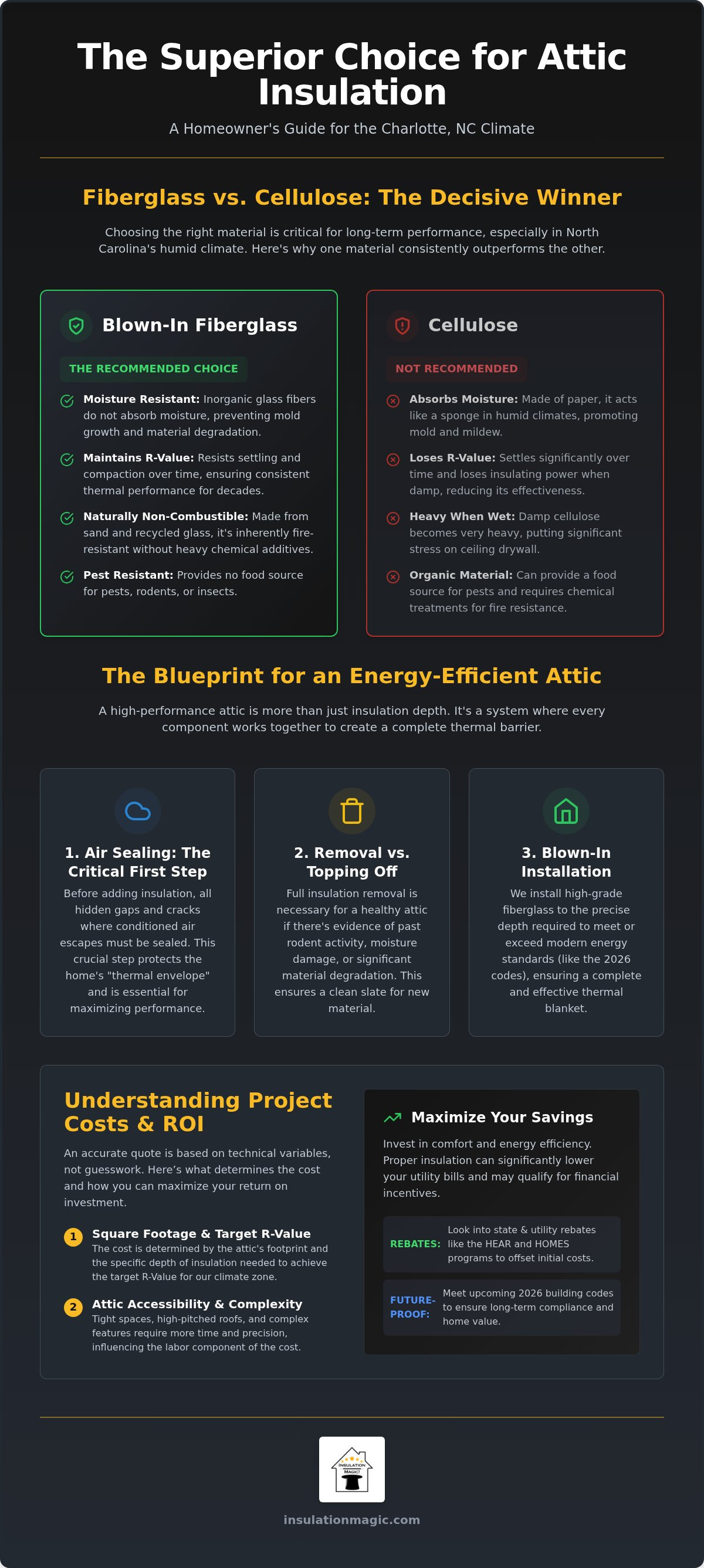
- Discover why fiberglass blown-in insulation is the meticulous choice for our region, offering better moisture resistance and long-term performance than cellulose alternatives.
- Learn why air sealing is an essential step to protect your home's thermal envelope by closing hidden gaps where conditioned air frequently escapes.
- Understand the specific conditions, such as past rodent activity or material degradation, that make a full insulation removal necessary for a healthy attic environment.
- Explore how to maximize your return on investment by applying for the latest 2026 local utility rebates and state-administered HEAR or HOMES programs.
What Determines Attic Insulation Cost in Charlotte, NC?
Every home in the Queen City is built differently, which means the attic insulation cost Charlotte NC residents encounter can vary significantly from one neighborhood to the next. While it's tempting to look for a flat rate, a professional assessment focuses on several technical variables that ensure the job is done right the first time. Understanding the specific variables of your property is the only way to get an accurate attic insulation cost Charlotte NC estimate that reflects the true scope of work required for long term comfort.
Square Footage and Material Volume
Accurately measuring an attic footprint involves more than just looking at your home's total square footage. We look at the actual area between the joists where the material will rest. However, the volume of material is where the real value lies. It's not just about covering the floor; it's about the specific depth required to meet modern energy standards. For instance, the upcoming 2026 standards often require a much thicker layer than older homes currently have.
Achieving a high R-value requires a specific thickness of material. We prioritize fiberglass blown-in for these applications because it doesn't settle as aggressively as cellulose does over time. When comparing different types of insulation material, fiberglass provides a consistent thermal barrier that remains effective for decades without losing its loft. The total bag count for your project is determined by this target depth multiplied by your attic's actual footprint.
The "Accessibility Factor" in Local Homes
The physical layout of your home plays a major role in the project's complexity. In areas like Waxhaw and Weddington, many homes feature high-pitched roofs or complex architectural details like kneewalls and tray ceilings. These features require more time and precision to insulate correctly than a standard flat attic. If a space is too tight for a technician to move freely, it takes longer to ensure every nook and cranny is reached.
Accessibility also involves the logistics of the installation. For a multi-story home in Charlotte, we have to consider the length of the hose run and the equipment setup. A meticulous craftsman takes the time to protect your home's interior with drop cloths and corner guards before any material is moved. This level of care is a standard part of a professional attic insulation service, ensuring the only evidence of our work is a more comfortable home and lower energy bills. We treat your property with the same respect we would give our own, prioritizing cleanliness from the moment we arrive.
Fiberglass vs. Cellulose: Choosing the Right Material
Selecting the right material is a fundamental step in ensuring your home remains a sanctuary against the Charlotte heat. While the market offers several options, we've found that fiberglass blown-in insulation consistently outperforms the alternatives in our specific local environment. When calculating the attic insulation cost Charlotte NC projects require, it's vital to look beyond the initial installation and consider how that material will behave over the next twenty years. A professional installation should provide peace of mind; not a list of future maintenance concerns.
The Case for Blown-In Fiberglass
Fiberglass is an inorganic material, meaning it doesn't provide a food source for mold or pests. It's also naturally fire-resistant because it's composed of glass fibers. Unlike other materials that require heavy chemical treatments to meet safety standards, fiberglass is inherently stable and safe. According to the ENERGY STAR guide to attic insulation, proper material selection and installation are key to a high-performance thermal envelope. One of the most significant benefits for homeowners is its resistance to settling. While organic materials can lose inches of depth within just a few years, fiberglass maintains its loft and its R-value. This reliability ensures that the attic insulation cost Charlotte NC families invest in today continues to pay dividends in energy savings for decades.
Why We Steer Clear of Cellulose
We purposefully avoid using cellulose in attic applications for several practical reasons. Cellulose is made from recycled paper products, which creates several challenges in our humid climate. Because it's an organic, paper-based product, it can absorb moisture from the air like a sponge. This leads to potential mold growth and a significant loss of insulating power over time. The weight of damp cellulose can also put undue stress on your ceiling's drywall. We've seen cases where this weight leads to visible sagging or even structural cracks in the ceiling below.
The installation process for cellulose is also notoriously messy. It produces a fine dust that can linger in the attic and potentially find its way into your living spaces through small gaps or light fixtures. Additionally, the fire retardants used in cellulose are often salts or borates that can be corrosive to metal pipes or wiring if they become damp. For a truly meticulous installation, we focus on a clean, thorough process using high-quality fiberglass. This ensures your attic remains protected without the risks associated with moisture-heavy materials. If you're ready to see how a professional upgrade can transform your home's comfort, you can schedule an attic assessment online to learn more about our process.
The Hidden Cost Variable: Attic Air Sealing
Many homeowners are surprised to find that even after adding thick layers of material, their second floor remains uncomfortably warm during a typical Charlotte summer. This phenomenon occurs because insulation is designed to slow heat transfer, not to stop air movement. When calculating the total attic insulation cost Charlotte NC residents should expect, air sealing is the most critical variable that determines the long-term success of the project. Without it, you're essentially putting a heavy wool sweater on over a Swiss-cheese shirt; the heat will simply find its way through the holes.
Identifying the Invisible Leaks
The chimney effect is a natural process where air moves through your home based on pressure differences. In the winter, warm air rises and escapes through tiny gaps in your attic floor. In the summer, the process reverses as hot attic air is forced down into your living spaces through those same openings. These leaks are often found at top plates where walls meet the ceiling, around electrical wire penetrations, and through recessed light fixtures. The thermal envelope is the boundary between conditioned and unconditioned air. Protecting this envelope is the only way to keep the air you've paid to cool inside where it belongs. When these gaps aren't addressed, your HVAC system has to work significantly harder to maintain a comfortable temperature.
Investment Value of Air Sealing
Air sealing is a labor-intensive process that requires a meticulous eye and a disciplined approach. It involves systematically moving existing insulation to reveal the hidden pathways where air escapes. We use professional-grade materials like fire-rated foams and high-quality caulk to create permanent seals that won't degrade over time. While some contractors might treat this as an optional add-on, we view it as a fundamental part of a high-performance home. Sealing these gaps also prevents humid air from entering the attic space, which reduces the risk of moisture buildup and protects the structural integrity of your roof deck.
Understanding home air sealing is essential because it addresses the invisible secret to lower utility bills. While it adds to the initial attic insulation cost Charlotte NC homeowners plan for, the increase in year-round comfort makes it a high-ROI investment. A thorough approach ensures that the new fiberglass blown-in insulation can actually do its job without being bypassed by air leaks. By prioritizing the seal before the fill, you're investing in a solution that addresses the root cause of energy loss rather than just covering it up.
Removal vs. Topping Off: When is Removal Necessary?
One of the most frequent questions we encounter is whether a homeowner needs to start from scratch or if they can simply add new material over the old. This decision can significantly impact the overall attic insulation cost Charlotte NC homeowners budget for their energy efficiency projects. While "topping off" is a budget-friendly way to increase your R-value, it's only a viable option if your existing material is clean, dry, and free of contaminants. We take a methodical approach to this assessment, ensuring that we never bury a problem under a fresh layer of fiberglass.
Evaluating Your Current Insulation
When we inspect an attic, we look for specific warning signs that indicate the material has reached the end of its lifespan. Older Charlotte homes often contain rockwool or degraded fiberglass batts that have become compressed over decades. Compressed insulation loses the air pockets necessary to slow heat transfer, rendering it ineffective. We also look for dark spots, which usually signal long-term air leaks that have filtered dust through the material, or foul odors that suggest past pest activity. Rodent infestations are a common issue in our region; they leave behind dander and waste that can compromise your home's air quality.
If your insulation is contaminated by mold or pests, a full removal is the only way to restore a healthy environment. You can learn more about this process in our insulation removal Charlotte guide. If your current material is simply thin but otherwise in good condition, we can often perform an "attic refresh" by air sealing the floor and blowing in a new, thick layer of fiberglass to meet modern standards. This approach provides a significant performance boost without the added labor of a full extraction.
The Removal Process and Equipment
Attempting to remove old insulation as a DIY project is often a mistake that leads to poor indoor air quality. Disturbing old material can release decades of dust, allergens, and microscopic fibers into your living spaces. We use a high-powered vacuum system located outside the home, connected to long hoses that pull the material directly from your attic into large collection bags. This system utilizes HEPA filtration to ensure that the air being exhausted is clean and that no dust enters your home during the process.
By removing the old, compromised material, we create a "clean slate" for your home. This allows us to perform a much more thorough job of air sealing, as every wire penetration and top plate becomes clearly visible. Once the floor is sealed and the old debris is gone, the new fiberglass blown-in insulation can perform at its peak efficiency. This meticulous preparation ensures that your investment provides the maximum possible return in comfort and energy savings.
Maximizing ROI: Rebates and Long-Term Savings
Investing in your home's thermal envelope is one of the few property improvements that can eventually pay for itself. While the initial attic insulation cost Charlotte NC homeowners encounter is a primary consideration, the long-term financial narrative is defined by consistent monthly savings and enhanced property protection. By combining professional air sealing with high-performance fiberglass, you're creating a permanent barrier against rising energy rates. In fact, research indicates that upgrading attic insulation in the Charlotte area can yield a return on investment of up to 117%.
Energy Bill Reductions in the Queen City
Charlotte's climate is notoriously demanding on HVAC systems, especially during our humid summer months. Upgrading to the modern standards of R-49 or R-60 insulation ensures that your home remains comfortable without forcing your air conditioner into a state of constant operation. Properly insulating and air sealing a home can reduce heating and cooling expenses by up to 15%. This reduction in mechanical load prevents premature system failure, saving you from the high cost of emergency HVAC replacements. To explore more ways to protect your budget, read our guide on how to lower heating and cooling costs.
As of 2026, several local and state programs have replaced older federal incentives to help offset the attic insulation cost Charlotte NC residents face. The North Carolina Home Electrification and Appliance Rebates (HEAR) program is now available statewide, offering up to $1,600 specifically for insulation and weatherization projects. Depending on your household income tier, you may qualify for even higher rebate amounts. Duke Energy's Smart Saver program also continues to provide rebates for attic insulation and air sealing that can typically be combined with these state-administered funds, significantly shortening your project's payback period.
Booking Your Charlotte Attic Assessment
A professional inspection is the first step toward a more efficient home. During this process, a meticulous expert will evaluate your current R-value, identify hidden air leaks, and check for any signs of material degradation or past pest activity. This isn't just about getting a price; it's about receiving a patient education on how your specific home is performing. You should always insist on a transparent, itemized quote that breaks down the material volume and the specific air sealing measures required. This clarity ensures that you're maximizing every available rebate while securing a fair price for high-standard craftsmanship. We treat every property with the care it deserves, ensuring your environment is restored to total comfort.
Take Control of Your Home’s Year-Round Comfort
Achieving a truly energy-efficient home in the Queen City requires a methodical approach to the entire thermal envelope. By prioritizing expert air sealing and high-performance fiberglass blown-in insulation, you can effectively protect your property from the humidity and temperature swings unique to North Carolina. Understanding the real attic insulation cost Charlotte NC residents encounter is the first step toward reclaiming your second floor from the summer heat and securing significant long-term energy savings.
Our team is dedicated to providing safer, breathable solutions that prioritize your family’s well-being. We never use spray foam; instead, we focus on meticulous craftsmanship and transparent education to help you maximize available 2026 rebates. This commitment to integrity and quality is why local families continue to trust us with their properties, as seen in our 5-star customer reviews. We're ready to help you restore comfort and order to your home environment.
We look forward to partnering with you to create a more efficient and comfortable living space for years to come.
Frequently Asked Questions
How much does attic insulation cost for a 1,500 sq. ft. home in Charlotte?
Industry averages for the attic insulation cost Charlotte NC residents pay generally range from $1.50 to $6.50 per square foot. For a 1,500 square foot space, the final price depends on the target R-value and the complexity of the attic floor. Factors like roof pitch and the amount of air sealing required will influence the total investment. A professional assessment ensures you receive an itemized quote that accounts for these unique property variables.
Is it cheaper to do attic insulation yourself in NC?
While purchasing bags of material yourself might seem less expensive, professional installation often provides better long term value. DIY projects frequently skip the critical air sealing step, which leaves your home vulnerable to energy loss. Renting blowing machines and buying safety equipment adds to your personal costs. A meticulous professional ensures the fiberglass is distributed at the correct density to meet R-49 standards, preventing the gaps that lead to high utility bills.
What R-value is required for attics in Charlotte, North Carolina?
Under the current 2018 North Carolina State Building Code, the minimum requirement for attic insulation is R-38. However, the new 2024 code expected to be effective in mid-2026 increases this requirement to R-49 for many homes. For the best year round comfort in Charlotte's humid climate, we recommend aiming for R-49 to R-60. This higher level of protection helps your home maintain a steady temperature during our intense summer heat waves.
Does Duke Energy offer rebates for attic insulation?
Yes, Duke Energy provides rebates through their Smart Saver program for customers who upgrade their attic insulation and perform professional air sealing. In 2026, these utility incentives can often be combined with state-administered programs like the HEAR or HOMES rebates. These financial layers help lower the net attic insulation cost Charlotte NC families pay for their projects. We recommend checking current program availability during your initial home assessment to maximize your total savings.
How long does it take to install blown-in fiberglass insulation?
Most professional installations for a standard home in neighborhoods like Ballantyne or Matthews are completed within 4 to 8 hours. The process begins with meticulous preparation, including protecting your living spaces and setting up the blowing equipment. The duration depends on whether we are performing a simple top off or a full removal of old material. If extensive air sealing is required to close invisible leaks, the project may lean toward the longer end of that timeframe.
Should I remove my old attic insulation before adding more?
Removal is not always necessary. If your existing material is dry and free from rodent dander or mold, we can often perform an attic refresh by adding new fiberglass on top. However, if the old insulation is contaminated or severely compressed, removing it provides a clean slate. This allows us to perform thorough air sealing on the attic floor, which is essential for creating a high performance thermal envelope that lasts for decades.
Will new attic insulation make my second floor cooler in the summer?
Yes, a properly insulated and sealed attic significantly improves second floor comfort. During Charlotte summers, roof temperatures can exceed 150 degrees, and that heat naturally radiates into your bedrooms. High quality fiberglass blown-in insulation acts as a thermal barrier that slows this transfer. When combined with air sealing to stop hot air from leaking through light fixtures and top plates, your HVAC system can finally keep the upper floor cool and comfortable.
Is fiberglass better than cellulose for North Carolina attics?
We always recommend fiberglass blown-in over cellulose for North Carolina homes. Fiberglass is an inorganic material that naturally resists moisture, which is vital in our humid Piedmont environment. Cellulose is paper based and can absorb moisture like a sponge, leading to settling and potential mold growth over time. Fiberglass maintains its loft and R-value for the life of the home, providing a safer and more reliable solution for your family's long term protection.
Disclaimer
This blog is intended to provide general information about insulation, energy efficiency, and home comfort based on years of experience. While we strive to keep content accurate and up to date, results may vary based on your home's construction, condition, and climate. Contact Insulation Magic for a personalized assessment and recommendations.


