
Your HVAC system isn't always to blame for a sweltering second floor; the real issue is usually an under-insulated attic that's letting your expensive air conditioning escape. It's a common struggle for homeowners across Charlotte and Waxhaw who face punishing humidity and rising utility rates every summer. If you've felt those persistent drafts or noticed dust settling in your living spaces, you'll find that upgrading to professional blown in attic insulation is the most effective way to regain control over your environment.
Investing in high-quality materials is one of the smartest ways to restore your home's comfort and peace of mind. We believe in a methodical approach that prioritizes long-term protection, which is why we always recommend fiberglass over cellulose for its superior durability and moisture resistance. This guide will show you how the right materials and professional air sealing can lower your monthly energy bills and significantly improve your indoor air quality.
We'll explore the current R-value recommendations for our North Carolina climate and explain how a meticulous installation process creates a healthier environment for your family. By the end, you'll understand why a precisely installed thermal barrier is the key to a more efficient, temperature-stable home.
Key Takeaways
- Learn why fiberglass is the most reliable material for our local climate, outperforming cellulose in moisture resistance and long-term durability.
- Discover why the secret to effective blown in attic insulation lies in meticulous air sealing before any material is ever installed.
- Understand how a seamless thermal blanket eliminates drafty second floors and reduces the wear and tear on your HVAC system.
- Explore the specific R-value recommendations for Charlotte and Waxhaw homes to ensure your project meets the highest standards for energy efficiency.
- Gain insights into what to look for in a local contractor to ensure your home receives the care and precision of an owner-on-site approach.
What is Blown In Attic Insulation and Why Does Your Home Need It?
Think of blown-in insulation as a seamless, high-performance thermal blanket for your home. Unlike traditional fiberglass batts that come in pre-cut rolls, this loose-fill material is installed using a specialized machine that breaks up the fibers and distributes them evenly across your attic floor. This method ensures that every square inch of space is covered, effectively eliminating the gaps and seams that often plague older homes in the Charlotte area.
Standard fiberglass batts often struggle to provide a perfect fit, especially in attics with complex architecture. They leave small voids around electrical wires, plumbing pipes, and ceiling joists where heat can easily bypass the barrier. Because Glass wool is fluffed and blown into place, it flows around these obstacles to create a truly continuous layer of protection. If you've noticed that your ceilings feel hot to the touch during a humid July afternoon or your monthly utility costs keep climbing, your current insulation is likely failing to do its job.
How Blown-In Insulation Works
The mechanical process begins with a blowing machine that fluffs the material as it travels through a long hose. This creates a thick layer filled with millions of tiny air pockets. These trapped pockets are the primary defense against heat transfer, slowing down the movement of energy between your living space and the outdoors. R-value is the measure of a material's thermal resistance, indicating how well it resists heat flow. By increasing the depth of this fluffy layer, we can reach the high R-values necessary to keep your home comfortable year-round.
Why Charlotte Homes Benefit Most
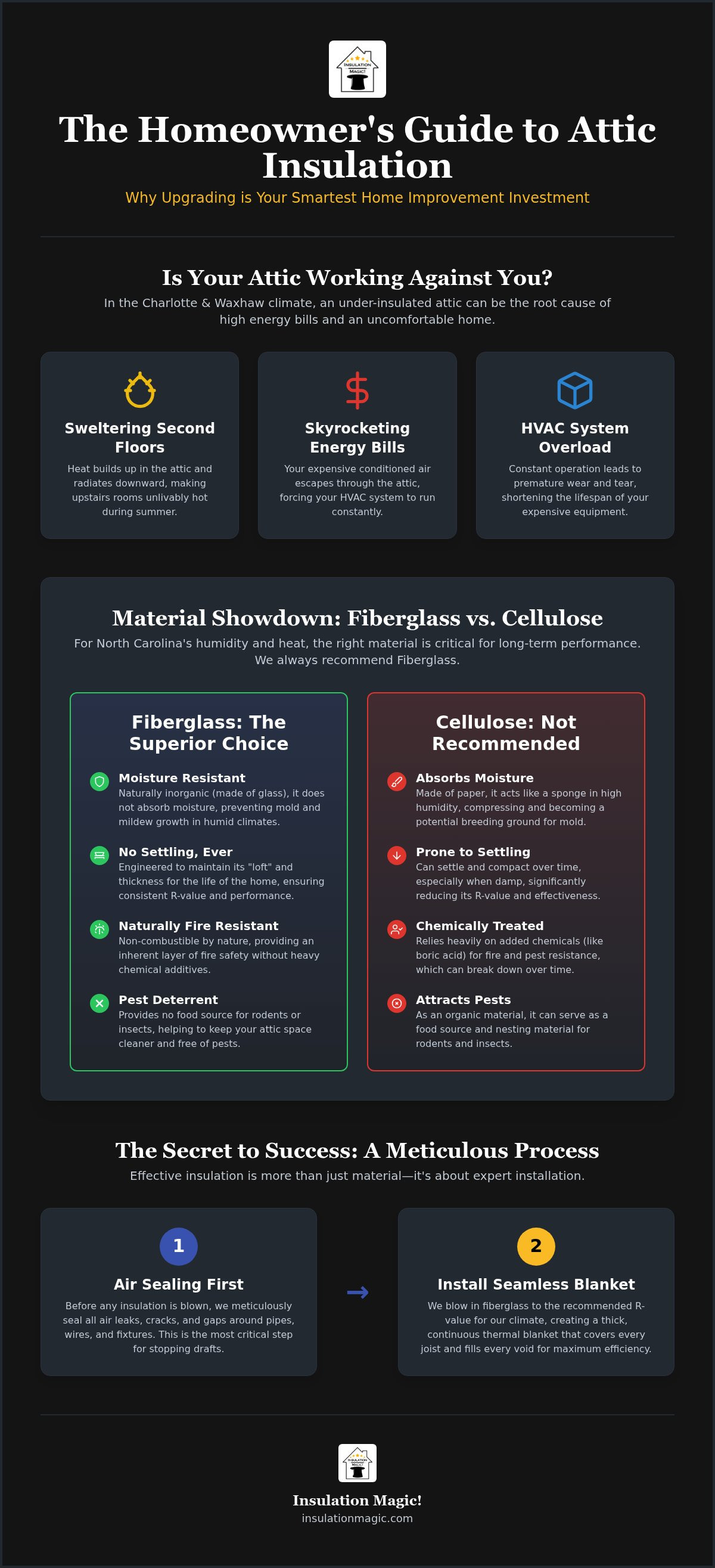
Our local climate presents a unique challenge for homeowners. The intense North Carolina humidity and summer heat can turn an under-insulated attic into an oven, forcing your air conditioner to work overtime just to keep the second floor habitable. This is particularly true for multi-story homes in growing communities like Waxhaw and Matthews, where newer builds often have expansive attic spaces that require precise coverage. Upgrading your blown in attic insulation through our professional services reduces the workload on your HVAC system, helping it last longer while maintaining a stable temperature throughout every room in the house. We always recommend fiberglass for these projects because it handles our local humidity better than cellulose, ensuring your investment remains effective for decades.
Fiberglass vs. Cellulose: Why Fiberglass is the Superior Choice
Choosing the right material is just as important as the installation itself. While some contractors still push cellulose as a budget-friendly alternative, our years of experience in North Carolina attics have proven that fiberglass is the only reliable choice for local families. We prioritize your home's long-term health, and that requires a material that won't fail when the weather gets tough.
One of the most common myths in our industry is that all loose-fill materials settle at the same rate. This simply isn't true. Modern blown in attic insulation made from fiberglass is specifically engineered to maintain its loft for the life of your home. It doesn't lose its thickness or its ability to trap heat shortly after the contractor leaves your driveway. This stability ensures you get the energy savings you paid for without needing a top-off a few years down the road.
The Long-Term Durability of Fiberglass
Fiberglass is essentially spun glass, which makes it naturally inorganic. Because it isn't made of organic fibers, it doesn't rot, decay, or break down over time. This is a massive advantage in Charlotte and Waxhaw, where humidity levels often skyrocket during the summer months. Fiberglass is also naturally non-combustible, providing an extra layer of safety for your property without the need for heavy chemical additives.
Another benefit of this material is its lack of appeal to local pests. Rodents and insects are often looking for nesting materials that they can easily manipulate or consume. Since fiberglass doesn't provide a food source or a comfortable nesting ground, it helps maintain a cleaner attic environment. You can count on it to maintain its R-value for decades, protecting your home through every season without losing its structural integrity.
Why We Advise Against Cellulose in Attics
Cellulose is primarily made from recycled paper treated with fire retardants. Because paper is heavy, cellulose naturally compresses under its own weight. This compression reduces the air pockets that provide insulation, meaning your R-value drops as the material settles. It also acts like a sponge in our humid climate. Absorbed moisture can lead to mold growth and even structural damage if the paper fibers stay damp for extended periods.
Dust is another significant concern with cellulose. The fine paper particles can eventually find their way into your living areas through small gaps around light fixtures or attic hatches, potentially affecting your indoor air quality. If you're ready to see how a cleaner, more stable material can transform your home's efficiency, you can schedule an assessment online to learn more about our meticulous approach. We believe in doing the job right once, so you don't have to worry about it again.
The Meticulous Installation Process: Beyond the Blowing Machine
Many big-box retailers suggest that installing blown in attic insulation is as simple as renting a machine and pointing a hose. This "blow-over" approach ignores the most critical part of the project: the preparation. True efficiency comes from treating the attic as a system rather than just a storage space for fluffy material. We take a craftsman's approach, ensuring every corner is ready before we ever start the blowing process. The "magic" isn't just in the fiberglass; it's in the methodical steps we take to protect your home's envelope.
Our professional workflow begins with protecting your home's interior and performing a detailed inspection of the attic floor. We install baffles at the eaves to ensure your soffit vents remain clear. This allows fresh air to circulate properly under the roof deck, which is vital for preventing moisture buildup and ice damming. We also use calibrated depth markers throughout the space. These markers ensure that the final density and depth meet the specific R-value requirements for the Charlotte climate, providing a uniform thermal barrier that doesn't have thin spots or gaps.
The Critical Step: Professional Air Sealing
Adding insulation without air sealing is like putting on a thick wool sweater over a mesh shirt on a windy day. The heat still escapes through the holes. Air sealing is a mandatory phase of our process because it stops the physical movement of air between your living space and the attic. We meticulously hunt for hidden gaps where conditioned air leaks out. These leaks typically occur at top plates where walls meet the ceiling, around wire penetrations, and near recessed light fixtures. Sealing these gaps creates a permanent barrier that works in tandem with your fiberglass to keep your home comfortable. You can learn more about how this works in our guide to Home Air Sealing: The Invisible Secret to Lower Utility Bills.
Insulation Removal: When to Start Fresh
Sometimes, the best way to move forward is to start with a clean slate. If your current material is contaminated by rodent waste, mold, or decades of allergens, it's often safer to remove it entirely. A bare attic floor allows us to see every single penetration and crack, ensuring our air sealing is 100% effective. Starting fresh eliminates odors and health hazards while providing a perfect foundation for your new blown in attic insulation. For a deeper look at when this is necessary, see our article on Professional Insulation Removal in Charlotte. This thoroughness ensures that your new fiberglass performs at its peak for decades.
Quantifying the Benefits: Comfort, Savings, and ROI
Understanding the physics of your home helps explain why an attic upgrade is so impactful. The "Stack Effect" is a natural process where warm air rises and escapes through your roof, creating a vacuum that pulls outside air into your living spaces. When we install high-quality blown in attic insulation, we essentially put a lid on that chimney. This simple change can provide a return on investment as high as 117% for Charlotte homeowners, which is nearly unheard of for most home improvements. It doesn't just save money; it protects your HVAC system by reducing its daily runtime, potentially adding years to the life of your equipment.
Your family's health also benefits from a well-sealed attic. By combining meticulous air sealing with fiberglass, we prevent attic dust and fine particles from drifting into your bedrooms. This creates a cleaner indoor environment and reduces the allergens circulating through your vents. It's a methodical way to ensure your home remains a sanctuary rather than a source of respiratory stress. An energy-efficient home is also a more valuable one, as modern buyers in Waxhaw and Matthews increasingly prioritize low overhead costs and verified thermal performance.
Slashing Your Charlotte Utility Bills
While the 2018 North Carolina Energy Conservation Code requires a minimum of R-38 for new builds, many local families find that R-49 or even R-60 offers a much better defense against rising energy rates. A properly insulated attic can reduce the average Charlotte home's utility bills by approximately $22 per month. These small monthly gains add up quickly, especially when paired with state-level rebates like the HEAR program, which can provide up to $1,600 for insulation and air sealing projects. You can find more strategies in our guide on how to lower heating and cooling costs.
Eliminating Hot and Cold Spots
If your second floor is consistently 10 degrees hotter than your kitchen, your thermal envelope is compromised. Heat from the sun radiates through your shingles and bakes the air in your attic, which then seeps through your ceiling. High-density fiberglass acts as a shield, keeping that heat out during our humid July afternoons. This creates a more stable environment for nurseries and upstairs bedrooms, ensuring every member of your family can sleep comfortably regardless of the temperature outside. By maintaining a consistent thermal barrier, you ensure that your thermostat readings actually reflect the comfort level in every room.
Choosing the Right Attic Insulation Contractor in Charlotte
Selecting a partner for your home improvement project is a decision that impacts your comfort for years to come. While national home improvement chains often rely on a rotating network of sub-contractors, a local specialist provides a level of accountability that big-box retailers simply can't match. When you hire a specialist, you're working with someone whose reputation is built on the success of every local project. We believe in a service-oriented approach that prioritizes your peace of mind, ensuring that the person who assesses your home is the same person responsible for the final result.
At Insulation Magic!, we follow an owner-on-site model led by Chris. This means a meticulous craftsman is present to oversee the quality control of your blown in attic insulation project from start to finish. We focus exclusively on fiberglass and air sealing because we've seen how these two services work in tandem to provide the most reliable thermal barrier. We don't believe in being a "jack of all trades" who offers roofing or HVAC repairs. Instead, we've mastered the specific science of attic performance to give our neighbors the best possible results.
During your consultation, it's helpful to ask specific questions to gauge a contractor's commitment to quality:
- Will you perform a detailed air sealing process before adding new material?
- Do you use fiberglass or cellulose, and why do you recommend one over the other?
- How do you ensure that my soffit vents remain clear for proper ventilation?
- Will the owner or a senior supervisor be on-site to verify the installation depth?
The Importance of Local Expertise
Local knowledge is vital because North Carolina building codes and climate conditions are unique. Charlotte and Waxhaw fall into Climate Zone 4, where the 2018 North Carolina Energy Conservation Code mandates a minimum of R-38. However, our team understands that reaching R-49 or R-60 is often necessary to truly combat our local humidity and rising utility costs. We have a proven track record in communities like Weddington and Mint Hill, where we help homeowners navigate these standards to achieve maximum efficiency. This direct accountability ensures your project isn't just another job on a corporate spreadsheet.
Ready for a More Comfortable Home?
Investing in professional blown in attic insulation is about more than just numbers on a bill; it's about the restoration of comfort in your personal environment. By choosing a high-quality fiberglass material and pairing it with expert air sealing, you're protecting your home from drafts, dust, and heat for the long term. A professional attic assessment is the first step toward a more efficient, temperature-stable living space for your family. If you're looking for more detailed information on local standards, explore our Attic Insulation Charlotte NC: The 2026 Homeowner’s Guide. We're here to help you make an educated decision that brings lasting value to your home.
Take Control of Your Home's Efficiency
Choosing the right path for your home's thermal protection doesn't have to be a stressful process. By prioritizing a fiberglass-first approach over cellulose, you're investing in a material that won't settle or absorb moisture during our humid North Carolina summers. We've seen how the combination of meticulous air sealing and high-quality blown in attic insulation transforms drafty houses into consistently comfortable homes. This methodical strategy protects your HVAC system and ensures your energy savings last for decades.
As an owner-operated local business, we take immense pride in serving our neighbors throughout Charlotte, Waxhaw, and the surrounding areas. We focus on transparency and education because we want you to feel confident in the long-term durability of your attic system. Our craftsman approach ensures that every hidden gap is sealed and every inch of coverage meets the highest standards for your peace of mind. We treat your property with the same care we'd apply to our own.
We look forward to helping you create a more efficient, temperature-stable environment for your family to enjoy for years to come.
Frequently Asked Questions
Is blown-in fiberglass better than cellulose for attics?
Yes, fiberglass is the superior choice for our humid North Carolina climate. Unlike cellulose, which is made from recycled paper and can absorb moisture, fiberglass is inorganic and naturally resistant to mold growth. It also maintains its loft over time, whereas cellulose tends to settle and lose its insulating power. This ensures your home stays protected without the need for frequent top-offs or concerns about organic decay.
How long does blown-in attic insulation last?
High-quality fiberglass insulation is designed to last the entire lifespan of your home. Because it doesn't rot, decay, or provide a food source for pests, it maintains its thermal resistance for decades. While the material itself is durable, its performance depends on a dry environment. Ensuring your roof is in good condition and your attic is properly ventilated will help your blown in attic insulation remain effective for as long as you own the property.
Do I need to remove my old insulation before blowing in new fiberglass?
Removal isn't always mandatory, but it's often the best path for a meticulous installation. If your existing material is contaminated by rodent waste, mold, or heavy dust, starting fresh is much healthier for your family. Removing the old layers also allows us to access the attic floor directly. This is essential for performing comprehensive air sealing, which is the only way to stop conditioned air from leaking out of your living spaces.
How much does blown-in attic insulation cost in Charlotte?
The investment for an attic project varies based on several factors unique to your property. We look at the total square footage, the current R-value of your existing material, and the amount of preparation required. Critical steps like professional air sealing and the installation of ventilation baffles also influence the final scope. Every home in the Charlotte area is different, so we provide a detailed assessment to ensure you receive a solution tailored to your specific needs.
Can I blow in insulation myself or should I hire a pro?
While some homeowners consider the DIY route, hiring a professional ensures the job is done with precision and care. Retail rental machines often don't provide the same material density as industrial equipment, which can lead to uneven coverage. More importantly, a professional identifies and seals hidden air leaks that a homeowner might miss. Our team focuses on the entire attic system, including ventilation and permanent thermal barriers, to provide long-term energy savings.
How many inches of blown-in insulation do I need for an R-49 rating?
To achieve an R-49 rating with fiberglass, you typically need between 16 and 19 inches of material, depending on the specific product's density. This depth provides a robust thermal barrier that far exceeds the minimum local building codes. During our installation process, we use calibrated markers throughout your attic. This ensures that the depth is consistent across the entire space, eliminating thin spots that could allow heat to bypass your new insulation.
Will blown-in insulation stop drafts in my home?
Insulation alone isn't designed to stop air movement; its job is to slow down heat transfer. To truly eliminate drafts, you must combine your blown in attic insulation with professional air sealing. We use specialized materials to seal gaps around light fixtures, plumbing stacks, and top plates where air physically leaks into your attic. This two-step process creates a complete seal that stops drafts while keeping your home at a stable, comfortable temperature year-round.
Is blown-in fiberglass insulation fire-resistant?
Yes, fiberglass is naturally non-combustible because it is primarily composed of spun glass. It doesn't require the heavy chemical fire retardants that are often added to paper-based cellulose products. This provides an inherent layer of safety for your home. By choosing fiberglass, you're opting for a material that is both safe and durable, giving you peace of mind that your attic's thermal barrier is protected against high temperatures without compromising your indoor air quality.
Disclaimer
This blog is intended to provide general information about insulation, energy efficiency, and home comfort based on years of experience. While we strive to keep content accurate and up to date, results may vary based on your home's construction, condition, and climate. Contact Insulation Magic for a personalized assessment and recommendations.


