When you discover that rodents have turned your attic into their personal nesting ground, the damage goes far beyond a few chewed wires or unpleasant smells. The insulation, which forms the protective thermal blanket for your home, becomes a compressed, contaminated biohazard. For homeowners in the Charlotte area, this discovery often leads to a critical question: is a full replacement really necessary?
The answer is a definitive yes. Rodent damage represents a profound breach of your home's health and energy efficiency. Simply spot-cleaning or layering new material over the old is a temporary fix that fails to address the deep-seated issues of lingering pathogens, attractive pheromones, and compromised thermal performance. A true restoration requires a "Clean Slate" approach—a meticulous process of removal, sanitization, and air sealing to fully reclaim your home's safety and comfort.
This guide will walk you through the entire professional process for rodent damaged insulation removal, explaining why each step is essential for protecting your family and your investment.
Identifying the True Extent of Rodent Damage in Your Attic
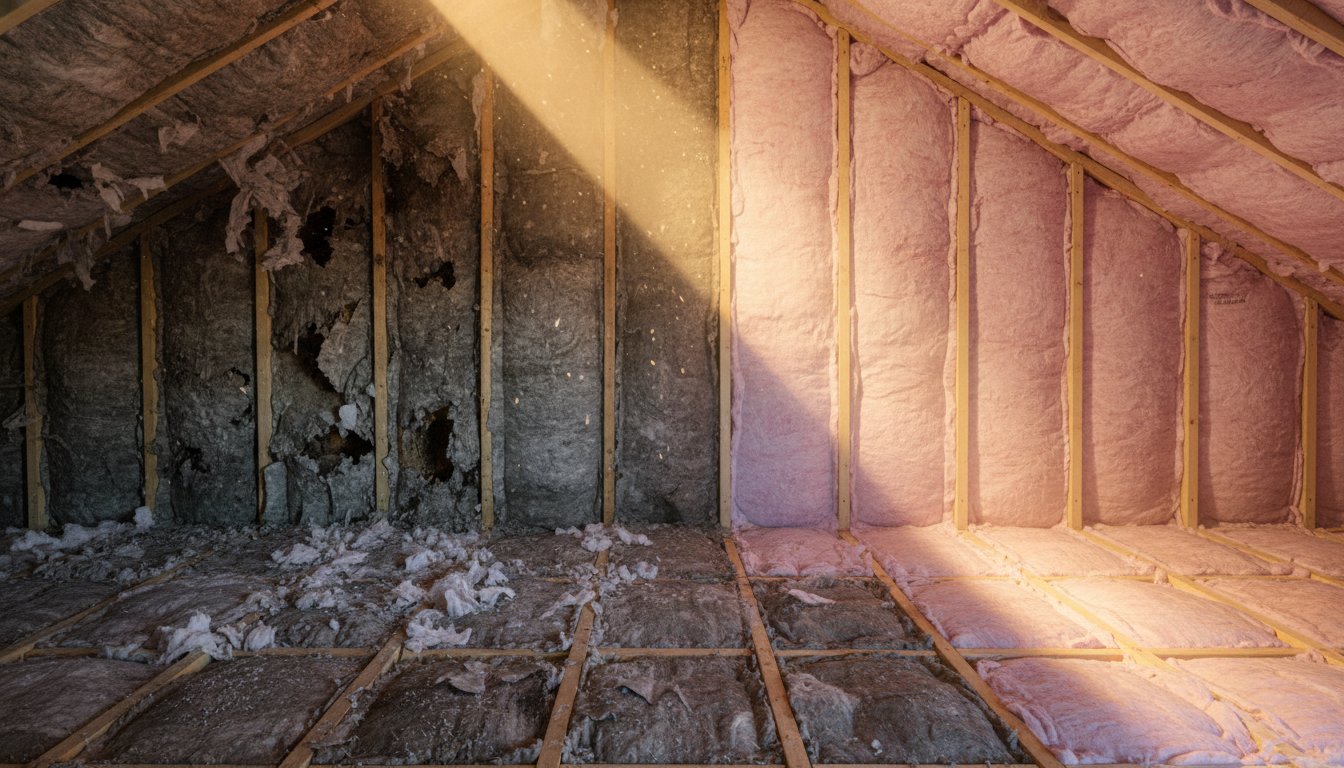
Rodent-damaged insulation isn't just dirty; it's functionally destroyed. We define it as a complete compromise of both your home's air quality and the insulation's material integrity. Rodents don’t just live on top of insulation—they burrow, nest, and tunnel deep within it, creating a network of passages that ruins its ability to trap air and resist heat flow.
- Material Compression: As rodents nest, they pack down fiberglass and cellulose, crushing the tiny air pockets that give the insulation its R-value. A compressed batt of R-30 insulation might only perform at an R-10 level, leading to significant energy loss.
- The "Tunneling Effect": Rodents create pathways through the insulation, effectively building superhighways for heat to escape in the winter and enter in the summer. These thermal bypasses render even the thickest insulation ineffective.
- Pheromone Contamination: Rodents constantly mark their territory with urine and feces. These waste products contain pheromones that soak deep into porous insulation fibers, acting as a permanent beacon that attracts new generations of pests to your home, even after the original infestation is gone.
The Telltale Signs: Odors, Stains, and Shadows
While a professional inspection is the only way to know the full scope of an infestation, homeowners can often detect the initial warning signs. The most common indicator is a persistent, sharp, ammonia-like odor, which is the result of concentrated rodent urine accumulating over time. Visually, you may notice dark, greasy "rub marks" along trusses or the tops of insulation batts where rodents have traveled. You might also see visible tunnels, droppings, or stained, matted-down areas. For a more advanced assessment, professionals can use thermal imaging cameras to reveal hidden cold spots—areas where nesting voids have created a complete break in your home's thermal envelope.
Why Spot-Cleaning Often Fails Homeowners
The temptation to save money by spot-cleaning is understandable, but it's a gamble that rarely pays off. This approach is fraught with risks that a partial fix simply cannot resolve.
- Microscopic Pathogens: Even if an area looks clean, it can still harbor microscopic pathogens from dried urine and feces. Disturbing these areas without proper containment can release harmful particles into the air.
- The Pheromone Beacon: You cannot effectively remove soaked-in pheromones from porous insulation. As long as that scent remains, your attic is an open invitation for future rodent colonies to move in.
- The Meticulous Craftsman Perspective: A partial fix is a temporary fix. Our philosophy is that you cannot build a healthy, efficient home on a contaminated foundation. A full removal is the only way to guarantee a truly clean, safe, and pest-free slate.
The Biological Risks: Why Contaminated Insulation is a Health Hazard
The most pressing reason for a complete insulation removal is to protect your family's health. Rodent waste is not just unpleasant; it is a vector for a host of dangerous diseases. In the Charlotte area, rodents like deer mice and roof rats can carry pathogens that pose a significant risk to humans.
- Primary Pathogens: Rodent droppings and urine can contain viruses and bacteria responsible for illnesses like Hantavirus, Leptospirosis, and Salmonellosis.
- Aerosolization: As rodent waste dries, it turns into a fine dust. Any disturbance—even just walking in the attic—can make these contaminated particles airborne, a process known as aerosolization. Once airborne, they can be easily inhaled.
- The Stack Effect: Homes naturally breathe. Due to pressure differences, air from the attic and crawlspace is slowly but constantly pulled down into the main living areas. This "stack effect" means contaminated attic air eventually becomes the air you breathe.
- Secondary Infestations: Rodent nests are breeding grounds for other pests, including mites, fleas, and ticks, which can bring their own set of health concerns into your home.
Air Quality and the Thermal Envelope
Your home's thermal envelope—the barrier between the conditioned interior and the outside world—is directly linked to your indoor air quality (IAQ). When rodents compromise your attic insulation, they are creating a biological breach in that envelope. The constant presence of decomposing waste, mold, and bacteria in the attic can lead to a decline in IAQ, often aggravating asthma and allergy symptoms for sensitive individuals. This is why our removal process always involves professional-grade, truck-mounted vacuums with HEPA (High-Efficiency Particulate Air) filtration, ensuring that these hazardous particles are captured and removed from your home safely, not spread around.
Protecting Your HVAC System from Contamination
Your HVAC system is the respiratory system of your home, and an infested attic poses a direct threat to it. Rodents are notorious for nesting in or near unsealed ductwork, chewing through flexible ducts to access the warm, protected channels. If there are any leaks in your return air ducts located in the attic, your furnace can pull aerosolized waste particles directly from the contaminated space and distribute them to every room in your house. Protecting your HVAC system starts with creating a clean, sealed attic environment, after which you might explore Air Conditioning Repair to ensure your unit is running efficiently and providing the best air quality possible.
The Professional Insulation Removal and Sanitization Process
A professional rodent damaged insulation removal is a systematic, multi-stage process designed to protect your home and family while creating a perfectly clean slate. It's a meticulous operation that goes far beyond simply scooping out old material.
- Containment and Preparation: The first step is to completely isolate the work area to ensure no dust or contaminants can drift from the attic into your living space.
- High-Powered Extraction: We use a powerful, vacuum system with long hoses that run directly from the attic to our truck. This specialized equipment removes all loose-fill and batt insulation quickly and cleanly, with HEPA filtration capturing 99.97% of airborne particles.
- Detailed Hand Cleaning: After the bulk insulation is gone, our team meticulously hand-cleans the entire attic deck. We vacuum every accessible crevice, remove all remaining debris and droppings, and prepare the surface for sanitization.
- Sanitization and Deodorization: We then apply a hospital-grade, enzyme-based antimicrobial cleaner. This fogging treatment neutralizes pathogens like bacteria and viruses on contact while also breaking down the organic matter in urine that causes persistent odors and attracts new pests.
- Final Inspection: Before moving on, we conduct a thorough inspection to ensure the attic is completely clean, dry, and odor-free, ready for the next critical phase: air sealing.
Step-by-Step: From Contamination to Clean Slate
Our process is designed for maximum safety and minimum disruption. By setting up containment barriers and using an external vacuum system, we keep the entire removal process outside of your home's living area. The systematic extraction ensures that every piece of contaminated material is removed, followed by a detailed hand-cleaning that leaves the attic floor as clean as when the house was first built. This "clean slate" is the essential foundation for building a truly healthy and efficient attic space.
Sanitization and Deodorization Standards
Effective sanitization is a two-part process. First, we apply an antimicrobial treatment that kills viruses and bacteria, eliminating the immediate health threat. Second, we use powerful enzyme cleaners specifically designed to break down the protein and lipid molecules in rodent pheromones. This doesn't just mask the odor—it chemically neutralizes the scent beacon, making your attic far less attractive to future pests. We ensure the attic is completely dry and passes a final smell test before we consider the sanitization phase complete.

Preventing Recurrence: The Critical Role of Air Sealing
Once your attic is clean, the single most important step to prevent rodents from returning is air sealing. Rodents don't chew their way into a home; they exploit existing gaps and cracks. Coincidentally, these are the same gaps that leak your expensive conditioned air, driving up utility bills. Air sealing is the dual-purpose solution that permanently fortifies your home against both pests and energy loss.
- Closing Rodent Highways: We meticulously inspect the attic for common entry points—gaps around plumbing stacks, wire penetrations, top plates of walls, and chimney chases—and seal them permanently.
- The Right Materials: We use fire-rated expanding foam to seal gaps and cracks, often reinforcing it with steel wool or metal flashing in larger openings to create a barrier that is impenetrable to rodents.
- Insulation is Not a Barrier: It's a common misconception that insulation can stop pests. In reality, rodents love to nest in soft materials like fiberglass and cellulose. Only a solid air barrier can truly keep them out.
Closing the Entry Points
Our team meticulously inspects the entire attic floor, sealing every penetration between the attic and the living space below. This includes sealing gaps around recessed lighting fixtures, bathroom fans, and the attic access hatch itself. A mouse can squeeze through a hole the size of a dime, and a rat only needs a hole the size of a quarter. By methodically closing these entry points, we not only block pests but also dramatically improve the future performance of your new insulation. An airtight attic deck ensures that the insulation can do its job without air moving through it.
The Long-Term ROI of a Sealed Attic
According to ENERGY STAR, air leakage can account for 25-40% of the energy used for heating and cooling a typical home. Sealing these leaks provides an immediate and significant return on your investment through lower utility bills. In fact, for most homes in the Charlotte area, air sealing is the single most cost-effective way to lower utility bills. Beyond the financial savings, a professionally sealed attic provides invaluable peace of mind, knowing your home is fortified against future pest invasions and energy waste.
Restoring Comfort with Insulation Magic! in Charlotte
With your attic clean, sanitized, and sealed, it's time to restore its protective thermal blanket. At Insulation Magic!, our philosophy is that a clean slate deserves the best-performing, safest materials. We specialize in non-spray foam solutions that are breathable, effective, and tailored to the unique climate challenges of North Carolina, from the summer heat in Charlotte to the humidity in Waxhaw and Matthews.
We help you choose the ideal high-performance material for your home, focusing on two exceptional options: modern blown-in fiberglass and dense-pack cellulose.
- Blown-In Fiberglass: Today’s blown-in fiberglass is a world apart from old, dusty batts. It's naturally non-combustible and inorganic, making it highly resistant to moisture and mold growth—a key benefit in our humid climate. It won’t settle over time, maintaining its full R-value for decades.
- Cellulose Insulation: Made from recycled paper, cellulose is treated with natural borates, making it an excellent fire retardant and a powerful pest deterrent. Its dense, fluffy structure also gives it superior sound-dampening qualities, helping to create a quieter home.
High-Performance Insulation Choices for Your Home
Choosing the right insulation is a critical step in finalizing your attic restoration. Unlike closed-cell spray foam, which can trap moisture and hide roof leaks, breathable materials like fiberglass and cellulose work with your home's natural ventilation system to manage moisture safely. Our expert team will help you understand the specific benefits of each material so you can make an informed decision. While we prioritize breathable options for the North Carolina climate, companies like Third Coast Spray Foam offer a wide range of high-performance solutions, including both spray foam and blown-in materials, to suit different structural needs and environments.
- Modern blown-in fiberglass offers exceptional thermal performance and is an incredibly durable, cost-effective solution for achieving high R-values.
- Cellulose provides a "green" option with unmatched pest resistance and the ability to create a tight, seamless thermal blanket.
To learn more about the best insulation levels for our region, check out our complete Homeowner’s Guide to Attic Insulation in Charlotte, NC.
Local Expertise You Can Trust
As a locally owned and operated business serving Charlotte, Matthews, Waxhaw, and the surrounding communities, our reputation is built on meticulous work and transparent communication. Every project is personally overseen by our owner, Chris, to ensure it meets our exacting standards. We don't just fix the damage; we restore your peace of mind by delivering a comprehensive, long-term solution. When you're ready to reclaim your home from rodent damage, we're here to help.
Schedule your professional attic assessment with Insulation Magic!
Frequently Asked Questions (FAQ)
Does homeowners insurance cover rodent-damaged insulation removal?
Coverage can vary significantly between policies. Many standard policies exclude damage caused by pests like rodents, viewing it as a maintenance issue. However, some policies may offer coverage if the infestation is the direct result of a covered event, such as a storm creating an opening in your roof. It is always best to review your specific policy and speak directly with your insurance agent to understand what is covered.
How long does the professional insulation removal process take?
For an average-sized attic, the entire process of removal, sanitization, air sealing, and re-insulating typically takes 2 to 3 days. The removal and cleaning portion is often completed in a single day, with air sealing and new insulation installation taking place on the following day(s).
Can I stay in my house while the insulation is being removed?
Yes, absolutely. Our process is designed to ensure your safety and comfort. We seal off the work area completely and use a truck-mounted vacuum system, so all contaminated material is contained and moved directly outside. There is no dust or debris entering your living space, allowing you and your family to remain in the home without disruption.
What is the best type of insulation to prevent future rodent nesting?
While no insulation is completely "rodent-proof," some are more resistant than others. Cellulose insulation, which is treated with borates, is a natural pest deterrent that rodents find unpalatable. However, the most effective prevention strategy is not the insulation itself, but thorough air sealing. By blocking all entry points, you make it impossible for rodents to access any type of insulation.
How do I know if the smell in my attic is from rodents or just old insulation?
Old insulation can sometimes have a musty smell, especially if it has been exposed to moisture. However, a rodent infestation produces a distinctly sharp, pungent odor of ammonia from urine. If the smell is strong and acrid, it is almost certainly related to pests. A professional inspection can confirm the source.
Is it safe to remove rodent-contaminated insulation myself?
We strongly advise against DIY removal of rodent-contaminated insulation. Without professional-grade personal protective equipment (PPE), HEPA filtration systems, and proper containment procedures, you risk exposing yourself and your family to dangerous airborne pathogens like Hantavirus. The health risks are simply too high to justify the potential cost savings.
Will air sealing really stop mice and squirrels from coming back?
Yes. Air sealing is the foundation of effective, long-term pest exclusion. Rodents and other pests get into your attic by exploiting existing gaps and holes in your home's structure. By meticulously sealing these entry points with durable materials, you create a physical barrier that they cannot bypass, effectively "fortifying" your home against future invasions.
How much does it typically cost to remove and replace attic insulation in Charlotte?
The cost for a complete attic restoration depends on several factors, including the size of your attic, the type and amount of existing insulation, the extent of the contamination, and the type of new insulation you choose. For a comprehensive project in the Charlotte area, homeowners can generally expect the cost to range from $5 to $10 per square foot. This includes full removal, sanitization, air sealing, and installation of new high-performance insulation. We provide a detailed, transparent quote after a thorough on-site inspection.
Disclaimer
This blog is intended to provide general information about insulation, energy efficiency, and home comfort based on years of experience. While we strive to keep content accurate and up to date, results may vary based on your home's construction, condition, and climate. Contact Insulation Magic for a personalized assessment and recommendations.


