Approximately 90% of homes across the country are currently under-insulated, which means most homeowners are paying for conditioned air that simply escapes through the roof. It's frustrating to deal with a home that feels like a sieve, where the upstairs remains uncomfortably hot while the downstairs stays chilly. If you're noticing these uneven temperatures or spotting signs of unwanted pests in your rafters, you're likely asking when to replace attic insulation to finally get your home's climate under control.
We believe your home should be a place of total peace of mind, free from the anxiety of hidden allergens or inefficient materials. This guide will show you how to spot the red flags of failing insulation and how a meticulous, professional upgrade can restore your indoor environment. You'll learn about the updated 2026 R-value standards for your specific climate and get a clear framework for choosing high-performance fiberglass blown-in insulation to protect your family's comfort and your monthly budget.
Key Takeaways
- Identify the red flags of failing insulation, from wildly fluctuating room temperatures to energy bills that no longer align with seasonal norms.
- Master a safe, step-by-step DIY inspection method to evaluate when to replace attic insulation by measuring its current depth and thermal performance.
- Learn how environmental factors like high humidity can lead to material "matting," which permanently reduces the R-value of your home's protective layer.
- Understand why we recommend fiberglass blown-in insulation over cellulose to ensure lasting durability and a healthier, cleaner indoor environment for your family.
- Discover the importance of professional removal and air sealing to create a meticulous foundation for your home’s new energy-efficient system.
5 Critical Signs It Is Time to Replace Your Attic Insulation
Your home should be a sanctuary, but when the barrier between your living space and the outdoors begins to fail, that peace of mind disappears. Identifying when to replace attic insulation isn't always about the age of the house; it's about the performance of your home's thermal envelope. Different building insulation materials have varying lifespans, but several universal red flags indicate your property is ready for a professional upgrade.
- Fluctuating Indoor Temperatures: If one room feels like a refrigerator while another feels like an oven, your insulation is likely uneven, thin, or failing to stop heat transfer.
- Consistently High Energy Bills: Utility costs that don't align with seasonal norms suggest your HVAC is fighting an uphill battle against massive energy loss.
- HVAC Constant Cycling: When your system turns on and off every few minutes, it's struggling to maintain a steady climate because heat is escaping through the roof.
- Moisture and "Dirty" Insulation: Dark, stained patches on your insulation often mean air is pulling dust through from the attic or that a roof leak has introduced mold.
- Pest Activity: Evidence of rodents, such as droppings, nesting, or foul odors, means your insulation is contaminated and needs immediate attention.
While these signs are specific to insulation, a broader property evaluation can reveal other hidden concerns. For those evaluating a new real estate investment, a comprehensive inspection from Lin Inspects provides the precision and peace of mind needed to understand a property's true condition.
The "Second Floor" Heat Problem
Many homeowners notice their upper level feels like a sauna during the summer months. This happens because radiant heat from the roof transfers directly into the bedrooms when insulation thins or compresses over time. Compressed insulation loses its "loft," which is essential for resisting heat flow. While cellulose often settles and mats down under local humidity, we recommend fiberglass blown-in insulation for attic applications because it maintains its thickness and thermal resistance much more effectively over the long term.
Indoor Air Quality and Health Warning Signs
Old, degraded insulation can become a primary source of indoor air pollution. If your family experiences unexplained allergy flare-ups, you might be breathing in "attic dust" that enters your rooms through unsealed gaps in the ceiling. Rodent-damaged material is even more serious; it poses biological hazards that simple cleaning cannot fix. A meticulous approach involves full insulation removal followed by professional air sealing to ensure your indoor air remains fresh and free of contaminants.
Understanding Insulation Lifespan: When Does Material Fail?
It is a common misconception that insulation lasts as long as the house itself. While the physical material might sit in your attic for decades, its thermal effectiveness often degrades much sooner. Understanding when to replace attic insulation requires looking past the mere presence of material and evaluating its R-value, which is its ability to resist heat flow. Over time, gravity and attic humidity cause insulation to settle and compress. When material loses its loft, it loses the air pockets that actually do the insulating work.
Proper attic ventilation also plays a critical role in longevity. Without a steady flow of air, heat and moisture build up, causing fibers to clump or mat. By 2026 standards, many older homes are severely under-equipped. For instance, current Department of Energy guidelines for mixed climates now suggest R-values between R-38 and R-49. This is a far cry from the thin layers found in 1990s builds, which often barely reached R-19. If your insulation has settled below the tops of your floor joists, it's no longer providing the protection your home needs.
Fiberglass Batts vs. Blown-In Cellulose
Fiberglass batts were the standard for years, but they often act like a giant air filter, trapping dust and allergens while allowing air to bypass the edges. Cellulose is often marketed as an alternative, but it frequently suffers from dramatic settling and fire-retardant degradation over time. In our experience as meticulous craftsmen, high-quality fiberglass blown-in insulation is the superior choice for attic applications. It doesn't settle like cellulose and provides a seamless blanket of protection that maintains its thermal performance for the long haul. If your current material is under-performing by 40% or more, a professional upgrade is the most reliable path to comfort.
The Hidden Danger of "Original" Insulation
If your home was built before 2010, your attic is likely outdated. Building codes have evolved significantly to meet modern energy efficiency demands, meaning your "original" insulation was designed for a different era of utility costs. You can often identify relic insulation by its color or texture. Grey, dusty cellulose or thin, yellowed fiberglass batts are clear signs of insufficiency. Knowing when to replace attic insulation starts with recognizing these aging materials. If you aren't sure where your home stands, you can schedule a professional assessment to get a clear, transparent picture of your attic's health.
Environmental Factors That Accelerate Insulation Failure
While the natural aging process is a factor, external environmental stressors often dictate when to replace attic insulation. In the Charlotte area, our specific climate presents unique challenges that can turn a healthy attic into an inefficient burden. It isn't just about the age of the material; it's about how that material responds to the elements. High humidity, unsealed air leaks, and local wildlife can all compromise your home's thermal envelope long before the manufacturer's expected lifespan expires.
One of the most common issues we see is the "chimney effect." This occurs when air leaks around recessed lights, plumbing stacks, or attic hatches allow warm air to bypass your insulation entirely. As this air moves, your insulation acts as a giant filter, trapping dust and pollutants. If you see dark, "dirty" patches in your attic, your insulation is no longer just a thermal barrier; it's a sign that your home is leaking energy. This constant airflow also carries moisture, which leads to the structural failure of the material itself.
While the "chimney effect" is a technical term for air leaks, maintaining your home's actual chimney is another vital part of safety and efficiency. Homeowners in the Kansas City area can rely on Best Chimney Services for expert inspections and cleaning to keep their systems operating correctly.
Humidity is another silent enemy. In our region, high moisture levels can lead to "matting," especially in loose-fill materials like cellulose. When these materials become damp, they settle and clump together, which permanently destroys the air pockets required to resist heat flow. We consistently recommend fiberglass blown-in insulation because it is naturally more resilient to these moisture-driven changes, maintaining its loft and protective qualities even when the North Carolina air gets heavy.
Moisture and Mold: The Silent Killers
Roof leaks are an obvious problem, but slow-acting moisture from poor attic ventilation is often more dangerous because it goes unnoticed. When moisture stays trapped in your attic, it creates a breeding ground for mold spores. You might think you can simply dry out a wet patch, but once insulation is saturated, its structural integrity is gone. Meticulous insulation removal is the only way to ensure you aren't leaving behind hidden mold that could eventually impact your family's health.
The Rodent Factor in Matthews and Waxhaw
In suburban communities like Matthews and Waxhaw, attics are frequent targets for squirrels, mice, and raccoons. These pests don't just nest; they destroy the thermal barrier by tunneling through and compacting the material. The primary concern is the health risk. Rodent waste can become aerosolized and enter your living space through the same air leaks that cause the chimney effect. Because "spot cleaning" can't remove these microscopic biological hazards, a full replacement is usually the only way to restore a healthy indoor environment.

How to Perform a Safe DIY Attic Insulation Inspection
Before you step into your attic, prioritize your protection. You'll need an N95 mask, durable gloves, and wrap-around eye protection. Attic environments often harbor fiberglass shards, fine dust, and potentially harmful biological particles from pests. Once you're safely geared up, you can perform a few simple tests to help determine when to replace attic insulation without needing specialized tools. A simple ruler and a high-powered flashlight are usually all you need to begin your assessment.
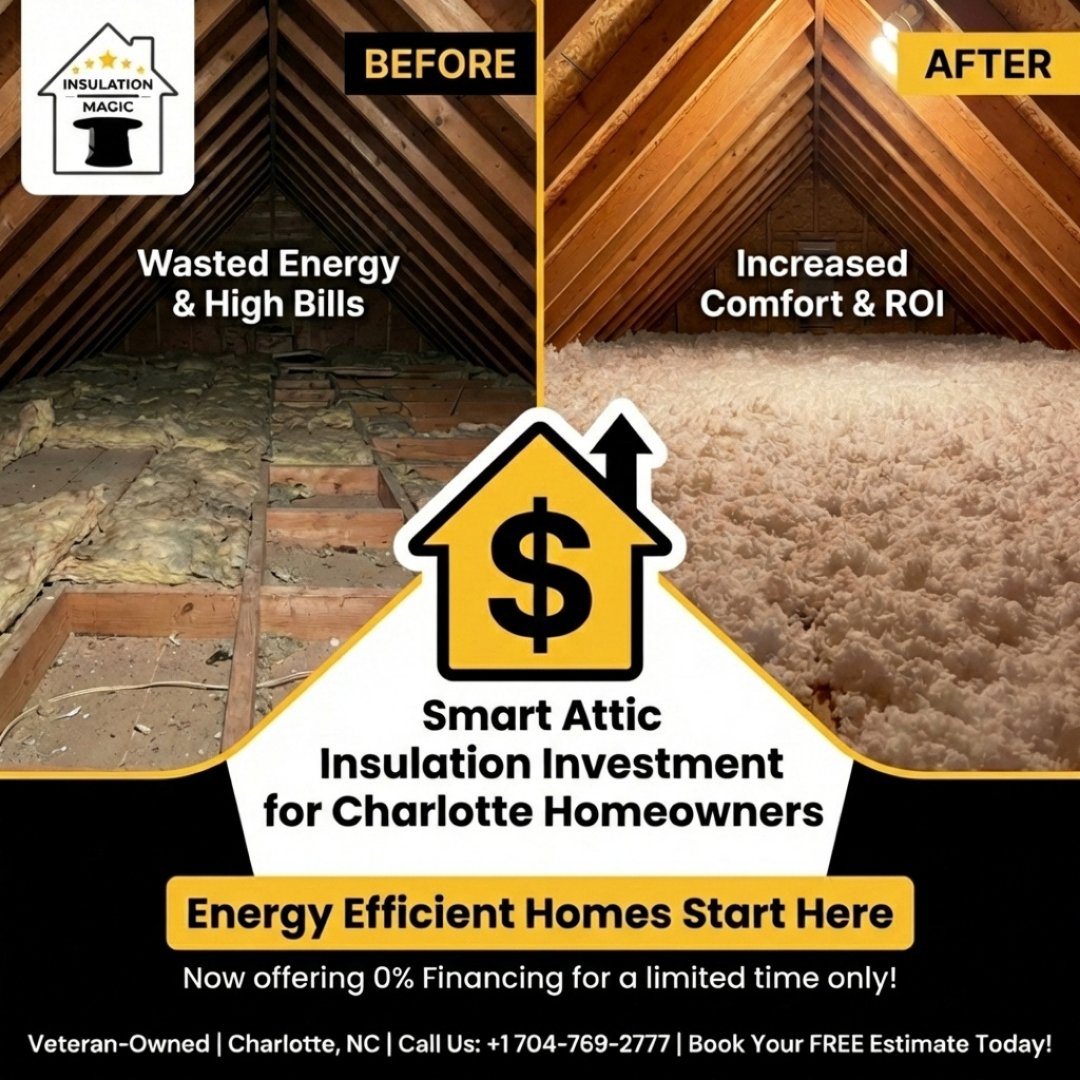
Start by identifying your material. Fiberglass usually looks like pink, white, or yellow fluff or batts. Cellulose is typically grey and looks like shredded paper, while rock wool is often a darker grey or brown with a wool-like texture. As you move through the space, perform a "squeeze test" on several sections. If the material feels damp, brittle, or stays compressed like a sponge after you let go, it has lost its structural integrity. Healthy insulation should be springy and full of air pockets, which are the secret to its thermal performance.
Measuring Your R-Value Like a Pro
Grab your ruler and measure the depth of the material in at least five different areas. In North Carolina, current 2026 energy standards recommend reaching a total R-value between R-49 and R-60. For high-performance fiberglass blown-in insulation, this requires a depth of roughly 15 to 20 inches. If your insulation is level with the wooden floor joists, you likely only have about 7 to 10 inches of coverage. This means your home is significantly under-insulated and is likely wasting a substantial amount of energy every month.
Spotting the Red Flags
Look closely for dark, discolored patches in the material. These spots often indicate air leaks where the insulation is filtering dust as conditioned air escapes your home. You should also look for "trenching" or "tunnels." Trenching is often caused by previous service workers who moved insulation aside and didn't replace it properly, while smaller tunnels are clear signs of rodent paths. If your DIY check reveals these gaps or thin spots, you can book a professional attic evaluation to get a meticulous plan for restoring your home's comfort. We consistently recommend fiberglass blown-in insulation for these upgrades because it provides a seamless, high-loft barrier that doesn't settle or clump like older cellulose products.
The Insulation Magic! Approach: Removal, Sealing, and Protection
Deciding when to replace attic insulation is only the first step toward a more comfortable home. At Insulation Magic!, we believe in doing the job right the first time, which means we never "cap" old, degraded material with a new layer. Adding fresh insulation over dirty, compressed, or rodent-contaminated material simply traps moisture and pathogens against your ceiling. Our "Meticulous Craftsman" philosophy centers on cleaning the slate entirely to ensure your home's thermal envelope is healthy, efficient, and built to last.
By removing the old material, we gain the ability to see the underlying structure of your attic floor. This transparency allows us to identify hidden issues that would otherwise remain buried. We focus on high-performance fiberglass blown-in insulation because it offers superior longevity and cleanliness compared to cellulose. We also choose to avoid spray foam insulation, opting instead for traditional, time-tested methods that prioritize your home's breathability and long-term structural health.
Professional Removal and Air Sealing
The most critical step in any attic project is one that many homeowners haven't heard of: air sealing. While insulation resists heat flow, it doesn't stop air from moving through gaps around plumbing stacks, electrical wires, and light fixtures. Our thorough removal process clears the way so we can map these leaks with precision. We then use professional-grade sealants to close these "chimneys," ensuring that the conditioned air you pay for stays inside your living space. Without this step, even the most expensive insulation will fail to deliver the energy savings you expect.
Installing for Long-Term Efficiency
Once the attic is clean and sealed, we use precision installation techniques to blow in a seamless blanket of fiberglass. This material is specifically chosen for its ability to resist settling, ensuring your R-value remains consistent for decades. To combat the 2026 climate extremes we see in North Carolina, we also evaluate the need for attic fans to manage heat buildup and protect your roof's integrity. This methodical, step-by-step approach transforms your attic from a source of stress into a high-performance shield for your family. If you're ready to see the difference a professional upgrade can make, schedule your meticulous attic assessment today and let us help you restore your home's comfort.
Take Control of Your Home’s Climate Today
Your attic shouldn't be a source of stress or high utility bills. By understanding when to replace attic insulation, you've already taken the first step toward a healthier, more efficient living space. We've explored how a clean slate, combined with meticulous air sealing and high-performance fiberglass blown-in insulation, can transform your home's thermal envelope for the long term. It isn't just about adding more material; it's about restoring the precision and protection your property deserves.
At Insulation Magic!, we take immense pride in our work as a locally owned and operated business led by Chris right here in the Charlotte area. We are specialists in non-spray foam, high-efficiency solutions that prioritize your family’s safety and comfort above all else. You don't have to take our word for it; you can check out our 5-star customer reviews to see how we've helped your neighbors achieve lasting peace of mind through our disciplined approach.
Are you ready to stop the energy leaks and start saving? Book Your Expert Attic Inspection & Air Sealing Consultation today. We look forward to being your trusted partner in creating a cleaner, more comfortable home environment for years to come.
Frequently Asked Questions
Is it better to remove old attic insulation or just add more on top?
It is significantly better to remove old insulation before installing new material. This "clean slate" approach allows us to perform meticulous air sealing on the attic floor and inspect for hidden structural issues or pest damage. Adding more on top, often called "capping," merely buries existing problems like mold or rodent waste, which can eventually impact your home’s indoor air quality.
How much does it cost to replace attic insulation in Charlotte, NC?
The cost of an insulation project in the Charlotte area depends on your attic's square footage, the current condition of the material, and the specific R-value goals for your home. While we don't provide flat-rate pricing without an assessment, factors like the difficulty of removal and the amount of air sealing required will influence the total investment. A professional evaluation is the most reliable way to get an accurate quote tailored to your property.
Can I replace my own attic insulation as a DIY project?
While a homeowner can technically install insulation, it is a physically demanding and potentially hazardous task. Professional teams use high-powered vacuums for dust-free removal and specialized blowers to ensure a seamless, uniform layer of protection. Without the right equipment and training, it is easy to miss critical air leaks or accidentally damage your ceiling joists and drywall while moving through the tight spaces of your attic.
Does attic insulation really last 80 to 100 years?
While some materials might physically exist for 80 years, they rarely remain thermally effective for that long. Factors such as gravity, attic humidity, and minor roof leaks cause insulation to settle and lose its essential air pockets. Most homeowners should evaluate when to replace attic insulation every 15 to 20 years to ensure their home remains energy-efficient and comfortable as the material naturally degrades.
What is the best type of insulation for North Carolina homes?
We consistently recommend fiberglass blown-in insulation for North Carolina attics. Our local humidity can cause cellulose to mat down and lose its R-value, but fiberglass remains resilient and maintains its loft over time. This material provides a superior thermal barrier that stands up to the specific climate challenges we face in the Charlotte region, ensuring your home stays cool in the summer and warm in the winter.
Will replacing my attic insulation actually lower my AC bill?
Yes, a professional insulation upgrade combined with air sealing can significantly reduce your cooling costs. According to ENERGY STAR, homeowners save an average of 15% on heating and cooling costs by properly sealing and insulating their homes. By stopping conditioned air from escaping through the attic, your HVAC system won't have to work as hard during our hot Charlotte summers, leading to lower monthly bills.
How long does the professional insulation removal and replacement process take?
Most residential insulation projects are completed within one to two business days. The first day typically focuses on the meticulous removal of old material and performing essential air sealing to close up energy leaks. On the second day, we install the new fiberglass blown-in insulation and ensure the space is clean and tidy before we finish the project, minimizing any disruption to your daily routine.
Is spray foam insulation better than blown-in cellulose for my attic?
We believe fiberglass blown-in insulation is the better choice for most attic applications. While spray foam is popular, it is a permanent change that can trap moisture against your roof deck if not installed perfectly. Fiberglass blown-in insulation, when paired with professional air sealing, provides a high-performance, breathable solution that is much easier to manage and adjust over the lifespan of your home without the risks associated with foam.
Disclaimer
This blog is intended to provide general information about insulation, energy efficiency, and home comfort based on years of experience. While we strive to keep content accurate and up to date, results may vary based on your home's construction, condition, and climate. Contact Insulation Magic for a personalized assessment and recommendations.


