The standard pink rolls of insulation you see in most hardware stores might actually be the reason your Charlotte home feels like a sauna every July. It's frustrating to watch your utility bills climb while your upstairs bedrooms stay stubbornly hot; you aren't alone in this struggle. When weighing blown-in vs batt insulation, many homeowners assume that traditional batts are the easiest fix. However, achieving a true thermal seal in a complex attic space requires a more meticulous approach to keep the North Carolina heat where it belongs.
We're here to help you understand which material will actually lower those monthly bills and create consistent temperatures across your entire second floor. This guide compares the performance and long-term benefits of these two popular options, specifically focusing on why fiberglass blown-in remains our top recommendation for local attics. You'll also learn about the current R-38 requirements for our region and how the Energy Saver North Carolina program can help make your home more efficient. We'll walk through the details of safety and moisture resistance so you can feel confident in a choice that protects your family and your investment.
Key Takeaways
- Understand the structural differences between blown-in vs batt insulation and how the application method impacts your home's thermal performance.
- Discover how to eliminate the "chimney effect" by using a monolithic layer that fills the small gaps where traditional batts often fall short.
- Learn why inorganic fiberglass blown-in insulation is the most reliable choice for Charlotte's humidity, offering superior moisture protection compared to cellulose.
- Explore why meticulous air sealing is the essential first step to achieving consistent temperatures and lower monthly utility bills.
- Find out when an Attic Refresh is the smartest path forward to ensure your home remains a clean, safe, and efficient environment.
The Fundamentals: What Are Blown-In and Batt Insulation?
Your attic serves as the critical lid on your home's thermal envelope. This envelope is the physical barrier that separates your conditioned, comfortable living spaces from the harsh, unconditioned environment of the attic. In Charlotte, where humidity can be relentless, maintaining this barrier is essential. Deciding between blown-in vs batt insulation is the first step in a comprehensive energy-efficiency strategy. It isn't just about adding material; it's about choosing the right tool to protect your home's structure and your family's comfort.
General principles of Building insulation help us understand that the goal is to slow down heat transfer. Batt insulation consists of pre-cut rolls or flexible blankets, usually manufactured from fiberglass or mineral wool. Blown-in insulation, also known as loose-fill, involves small particles of material that a professional technician applies using a high-pressure hose system. While both aim to improve efficiency, their physical forms dictate how well they perform in the unique architecture of a North Carolina home.
How Batt Insulation Works
Batt insulation is designed with a specific logic: it's made to fit snugly between standard 16-inch or 24-inch wall studs and floor joists. This predictable design gave batts a massive DIY appeal for decades, which is why you'll find them in the majority of older Charlotte homes built before the year 2000. However, these pre-cut rolls require a perfect fit to be effective. R-value is the measure of a material's resistance to heat flow. When batts are compressed or tucked into corners that don't match their dimensions, that R-value drops significantly, leaving your home vulnerable to the heat.
The Mechanics of Blown-In Systems
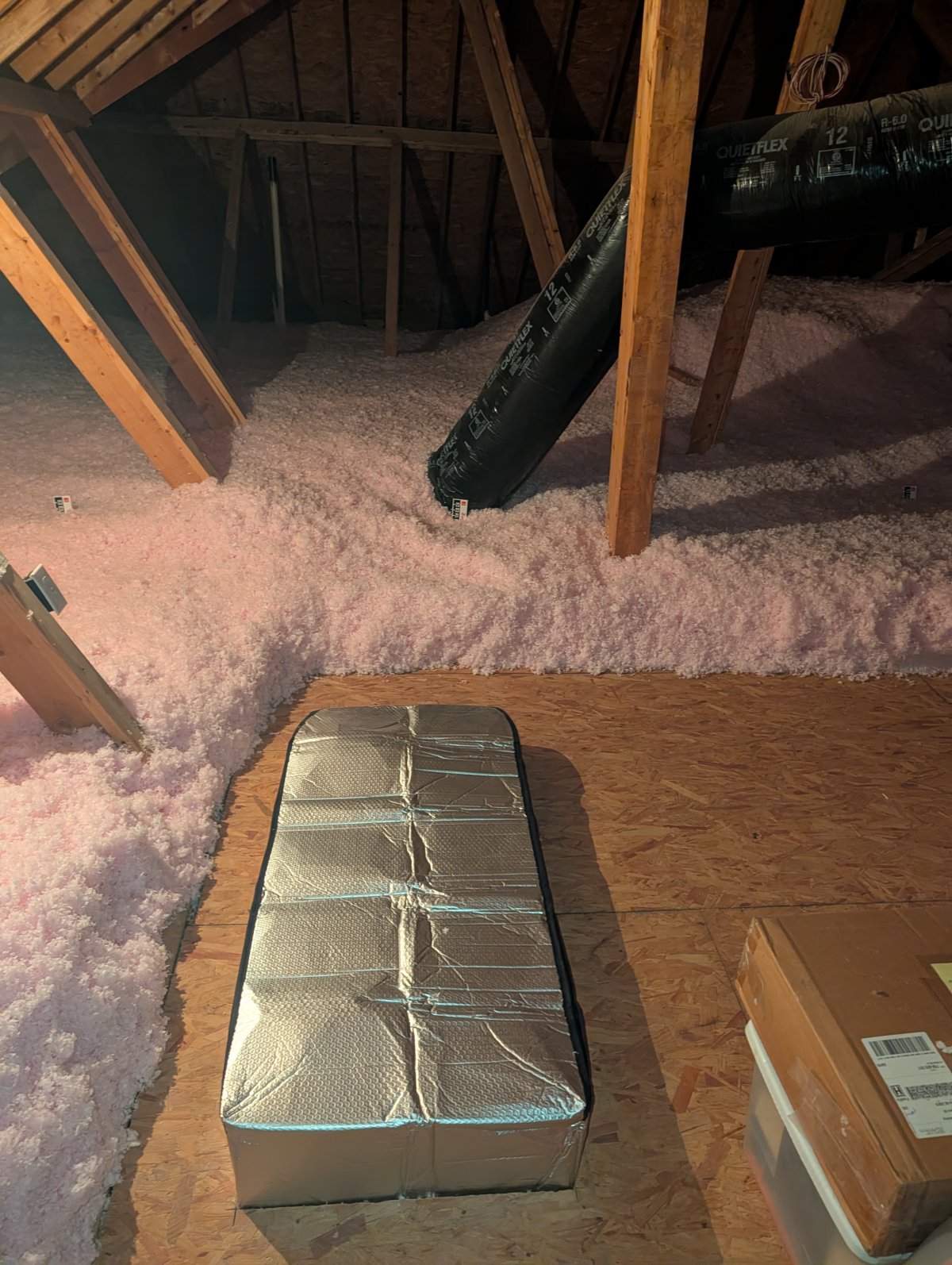
The installation of a blown-in system is a more methodical, mechanical process. A specialized machine remains outside the home, feeding the insulation material through a long hose and directly into the attic space. This method allows us to fill irregular spaces, tiny crevices, and hard-to-reach corners that rolls simply can't cover. While "blown-in" can refer to several materials, we always recommend fiberglass over cellulose for attic applications. Fiberglass is inorganic and naturally resistant to the moisture problems common in our climate. You can learn more about our specific approach to these installations on our services page. This seamless application creates a consistent blanket that is far more effective at meeting the R-38 requirements mandated for our region.
Performance Showdown: R-Value, Coverage, and the 'Gap' Problem
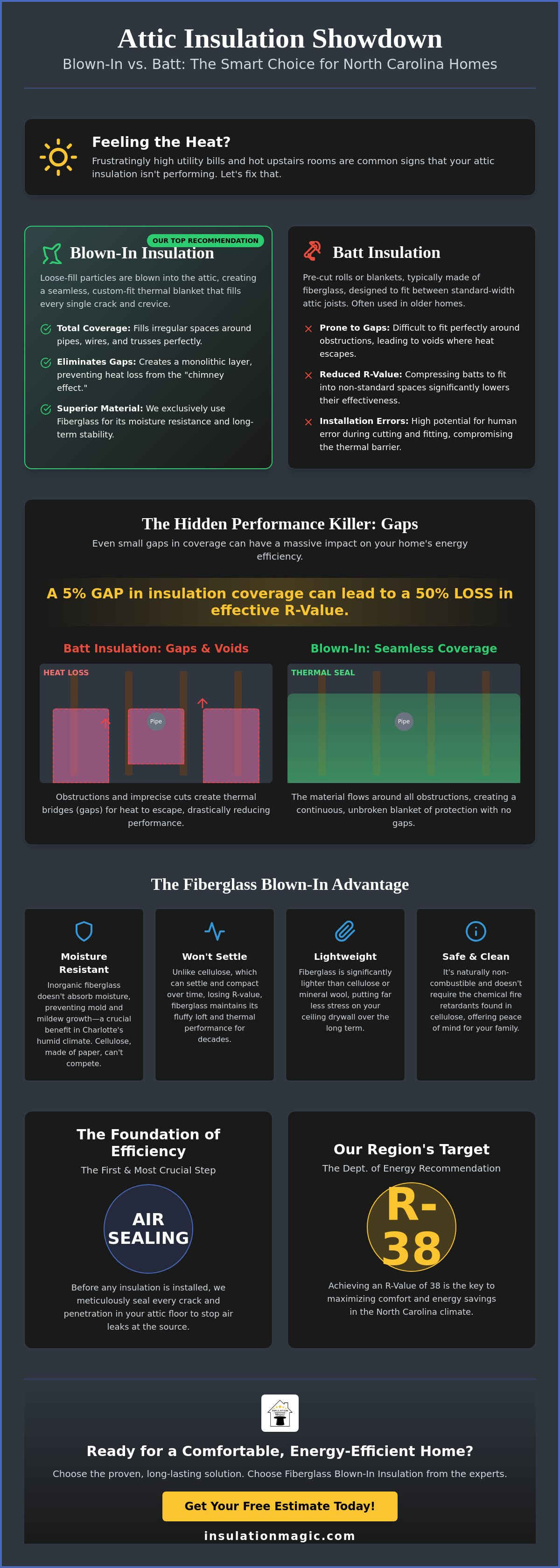
When comparing blown-in vs batt insulation, the conversation often centers on R-value, but the physical coverage of that material is just as important. Batt insulation acts like a series of puzzle pieces. If those pieces aren't cut to the exact millimeter, they leave small voids at the edges of your attic joists. Blown-in insulation creates a monolithic, seamless layer that covers every square inch of the attic floor. This difference is critical because of the "chimney effect," where heat naturally seeks out these small gaps to bypass your insulation entirely, rendering even high-quality materials less effective.
Modern fiberglass blown-in insulation offers a distinct advantage in terms of stability and weight. Unlike cellulose, which can settle and lose its loft over time, fiberglass maintains its thickness and performance for the long haul. It's also significantly lighter than mineral wool batts or cellulose. This lower weight puts less stress on your ceiling drywall while still providing the thermal protection your home requires. You can explore the different Types of Insulation to see how these physical properties vary across materials.
The Reality of Thermal Bridging and Voids
Precision is everything in attic work. Industry research indicates that even a 5% gap in insulation coverage can lead to a 50% loss in effective R-value. Batt insulation is notoriously difficult to install perfectly because attics are filled with obstructions like recessed lights, plumbing stacks, and complex roof trusses. Every time a technician has to cut a batt to fit around a wire or a pipe, the potential for a thermal void increases. Blown-in fiberglass effectively flows around these obstacles, ensuring 100% coverage without the labor-intensive cutting and fitting that often leads to human error.
Charlotte Climate Impact: Humidity and Radiant Heat
In communities like Matthews and Mint Hill, the summer humidity is a constant challenge for homeowners. When your attic isn't sealed with a seamless layer of insulation, that humid air can migrate into your living spaces, forcing your HVAC system to work much harder. A consistent blanket of fiberglass is your best defense against this moisture and radiant heat. Understanding how to lower heating and cooling costs starts with recognizing that air movement through gaps is often a bigger problem than the material itself. If you're concerned about hot spots in your second-floor rooms, you can schedule an attic assessment to see exactly where your current coverage might be failing.
The Fiberglass Advantage: Why Blown-In Often Beats Cellulose and Batts
When homeowners evaluate blown-in vs batt insulation, it's common to assume all loose-fill materials are the same. We strictly recommend fiberglass blown-in for attic applications because it outperforms cellulose in every category that impacts your home's long-term health. Fiberglass is an inorganic material, which means it doesn't absorb water or provide a food source for mold. In our humid Charlotte climate, this moisture resistance is a non-negotiable requirement for protecting your roof deck and ceiling joists from rot.
Safety and durability are where the differences become even more apparent. Fiberglass is naturally non-combustible without the need for heavy chemical additives. Cellulose is essentially shredded paper that requires significant chemical treatment to achieve fire resistance. Over years of seasonal temperature shifts, those chemicals can settle or lose their potency. Furthermore, because fiberglass is made from spun glass, it naturally deters pests. Rodents and insects are far less likely to nest in fiberglass than in paper-based materials, helping you avoid the stress of an attic infestation.
Fiberglass vs. Cellulose: A Long-Term Health Perspective
Indoor air quality is a major concern for many families. Fiberglass doesn't produce the fine, gray paper dust that often accompanies cellulose as it ages and breaks down. It's a cleaner option that stays in place once it's applied. Because it's often manufactured from recycled glass, it remains an eco-friendly choice that doesn't rely on harsh chemical fire retardants. When you research different Types of Insulation, you'll see that fiberglass is prized for its ability to maintain its R-value even in the damp conditions common to North Carolina attics.
When to Choose Professional Blown-In Over DIY Batts
The DIY appeal of rolls often leads to common installation errors that compromise your home's efficiency. The biggest risk is compression. If you tuck or squeeze a batt to fit it around a truss, you crush the air pockets that actually do the insulating work. This ruins the material's R-value before it's even had a chance to work. A professional blown-in installation avoids these pitfalls entirely. Our team can complete most Charlotte attics in just a few hours, providing a level of precision and speed that DIY projects can't match. You can learn more about our meticulous standards by viewing our insulation services.
If you're ready to stop the heat from invading your second floor, book your professional attic assessment and let us help you choose a solution that lasts for the life of your home.
Choosing the Right Solution for Your North Carolina Home
Deciding on the best path for your attic often depends on the current state of your home's existing materials. If you live in an established neighborhood like Ballantyne or Weddington, your attic likely contains decades-old material that has flattened, shifted, or even become contaminated by pests. In these cases, we often recommend an "Attic Refresh." This process involves the complete removal of old, ineffective material so we can start with a clean slate. It's the most reliable way to ensure your new fiberglass blown-in insulation performs at its peak without being compromised by the debris of the past.
Choosing between blown-in vs batt insulation isn't just a matter of price; it's about the specific needs of your property. We suggest using this three-point checklist to guide your decision:
- Current Comfort Levels: Do you have rooms on the second floor that stay significantly hotter than the rest of the house?
- Home Age: Was your home built before modern R-38 energy codes were established?
- Budget vs. Value: Are you looking for a quick DIY fix or a professional, long-term solution that maximizes monthly utility savings?
By assessing these factors, you can determine if a simple top-up is sufficient or if a more comprehensive restoration is necessary to protect your investment.
The Secret Ingredient: Meticulous Air Sealing
Air sealing is the essential foundation that many homeowners overlook. It involves finding and closing the small gaps around top plates, electrical wires, and plumbing pipes that allow conditioned air to leak into your attic. Adding insulation without first performing air sealing is like wearing a heavy wool sweater on a windy day without a windbreaker. The air simply moves through the material, carrying your expensive cooling and heating with it. If your current attic is cluttered with old, dusty batts, those leak points stay hidden. Professional insulation removal Charlotte allows us to access every square inch of the attic floor for a total seal.
The Insulation Magic! Approach to Home Comfort
Our approach is built on the philosophy of the "Meticulous Craftsman." We believe in precision air sealing followed by the application of high-performance fiberglass blown-in insulation. This combination creates a true thermal lid for your home. We take pride in being patient educators, walking you through the "how" and "why" of our process so you feel confident in the results. You can see how we've helped your neighbors in Waxhaw and throughout Charlotte by reading our local reviews. When you're ready to fix those hot rooms and lower your bills, book your online attic assessment today to stop the energy drain for good.
Take Control of Your Home’s Climate
Choosing between blown-in vs batt insulation is a significant step toward a more comfortable and efficient home. We have seen how a seamless layer of fiberglass provides the consistent thermal protection that pre-cut rolls often miss. By prioritizing inorganic fiberglass and meticulous air sealing, you protect your attic from moisture and pests while ensuring your second floor remains cool even during the peak of a North Carolina summer. Our team at Insulation Magic! is locally owned and operated by experts who live in this climate and understand its unique challenges. We take pride in clean, professional installations that respect both your health and your property.
You don't have to settle for uneven temperatures or high energy bills anymore. Ready to fix your hot second floor? Book your professional attic assessment with Insulation Magic! today. We are here to guide you through the process with transparency and craftsmanship. Let's work together to make your home the sanctuary of comfort it was meant to be. You deserve a space that stays consistently cool and welcoming for your family.
Frequently Asked Questions
Is blown-in insulation better than batt insulation for an attic?
Yes, blown-in insulation is generally superior for attics because it creates a monolithic thermal blanket without the gaps common in batts. While rolls are designed for uniform joist spacing, most attics have irregular corners and obstructions that batts can't cover perfectly. Our fiberglass blown-in solution flows around these obstacles to ensure every square inch of your attic floor meets the necessary R-38 thermal standards for the Charlotte area. This seamless coverage is the key to consistent comfort.
Can I add blown-in insulation on top of existing fiberglass batts?
You can certainly add blown-in insulation on top of existing fiberglass batts if the old material is in good condition. This "topping up" process is a cost-effective way to reach modern energy standards without a full removal. However, it's vital to perform air sealing before adding the new layer. If the existing batts are compressed, moldy, or filled with pest waste, a complete removal is always the safer choice for your home's air quality and overall efficiency.
Does blown-in insulation settle over time and lose R-value?
Modern fiberglass blown-in insulation is engineered to resist settling and maintains its R-value for the life of your home. This is a primary reason we prefer it over cellulose, which can lose significant thickness and thermal resistance as it packs down over several years. By choosing fiberglass, you ensure that the thermal protection we install today remains just as effective decades from now. This stability provides you with long-term utility savings and peace of mind.
Is fiberglass blown-in better than cellulose for Charlotte homes?
Fiberglass is the superior choice for Charlotte homes because it's an inorganic material that doesn't absorb moisture. Our region's high humidity can cause cellulose, which is paper-based, to harbor dampness and potentially lead to mold growth. Fiberglass remains dry and inorganic, making it naturally resistant to rot and pests. It also doesn't require the heavy chemical fire retardants found in cellulose, which can break down or leach out over time as temperatures fluctuate.
How much does it cost to switch from batts to blown-in insulation?
The investment required to switch from batts to blown-in insulation depends on your attic's square footage and whether we need to remove old material first. While we don't provide flat rates without seeing your property, many homeowners find the switch pays for itself through significantly lower energy bills. During a professional assessment, we'll measure your current R-value and provide a detailed plan to bring your home up to modern standards. This ensures you only pay for what your home truly needs.
Do I need to remove my old batt insulation before blowing in new fiberglass?
Removal isn't always mandatory, but we often recommend it to perform thorough air sealing on the attic floor. If your current batts are hiding air leaks or have been flattened by foot traffic, removing them allows us to fix those underlying issues. This ensures your new layer of fiberglass works as effectively as possible. If your existing insulation is clean and dry, we can often blow the new material directly over it. This decision is best made after a meticulous visual inspection.
Disclaimer
This blog is intended to provide general information about insulation, energy efficiency, and home comfort based on years of experience. While we strive to keep content accurate and up to date, results may vary based on your home's construction, condition, and climate. Contact Insulation Magic for a personalized assessment and recommendations.


