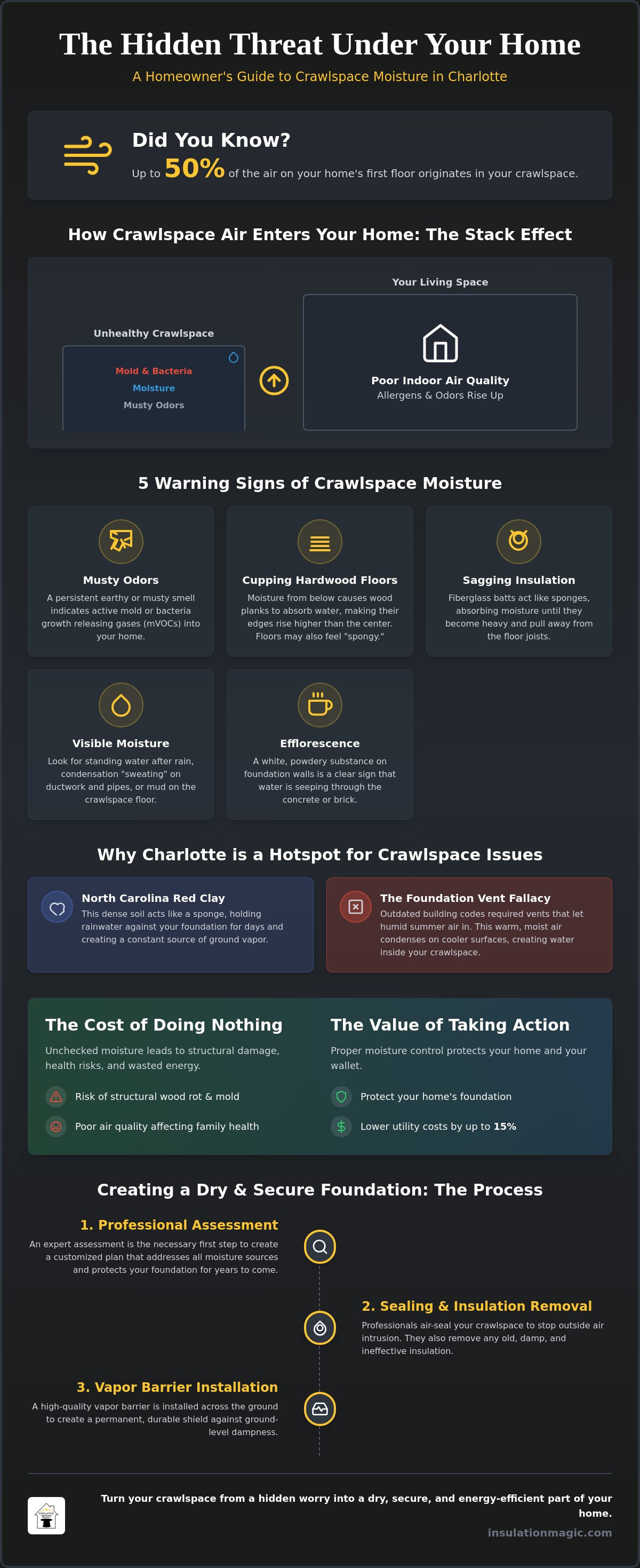
Did you know that up to 50% of the air you breathe on your home's first floor actually originates in your crawlspace? It's a startling fact for many Charlotte homeowners who are currently struggling with crawlspace moisture problems. If you've noticed a lingering musty odor in your living room or seen your beautiful hardwood floors start to cup and buckle, you're likely feeling the stress of a damp foundation. You want a home that feels clean and safe, but the fear of mold or structural rot can make your own property feel like a source of anxiety rather than a sanctuary.
We understand how frustrating it is to deal with high humidity and rising energy bills despite your best efforts. This article will teach you how to identify the root causes of dampness and provide clear, professional steps to resolve them for good. We'll explore the benefits of air sealing and proper vapor barriers, showing you how a meticulous approach to moisture control can protect your family's health and even lower your utility costs by up to 15%. By the end, you'll have the confidence to turn your crawlspace from a hidden worry into a dry, secure, and energy-efficient part of your home.
Key Takeaways
- Learn to recognize early warning signs like musty odors and cupping floors before they lead to expensive structural damage.
- Understand how Charlotte's unique clay soil and high humidity contribute to crawlspace moisture problems and why traditional vents often fail.
- Discover the "Stack Effect" and how sealing your crawlspace can improve indoor air quality while reducing your monthly energy costs.
- Explore the process of professional insulation removal and vapor barrier installation to create a permanent shield against ground-level dampness.
- See why a methodical, expert assessment is necessary to create a customized plan that protects your foundation for years to come.
Identifying the Warning Signs of Crawlspace Moisture Problems
Recognizing crawlspace moisture problems doesn't always require a flashlight and a pair of coveralls. Often, your home tells you something is wrong through subtle changes in the air you breathe or the way your floors feel underfoot. In our humid Charlotte climate, these signs can escalate quickly. They turn a minor dampness issue into a significant concern for your home's structural integrity and your family's comfort.
The "Smell Test": Why Musty Odors Mean Moisture
If you've noticed a persistent earthy or musty scent in your living area, you're likely smelling microbial volatile organic compounds (mVOCs). These are gases produced by mold and bacteria as they grow in damp, dark environments. Because of the "stack effect," these odors travel upward into your home. This isn't just an "old house smell." It's an active indicator of moisture intrusion. During Charlotte's humid summer months, the air outside holds more water. This water settles in the cooler space beneath your home and makes these odors much more pungent.
Visual Cues: What to Look for During a Quick Check
A quick peek beneath your home can reveal a lot about its health. What is a Crawlspace? Essentially, it's a hollow area between the ground and your first floor that needs to stay dry to protect your foundation. Look for these specific red flags:
- Sagging Insulation: Traditional fiberglass batts act like a sponge when moisture levels rise. When they absorb enough water, they become heavy and pull away from the floor joists, often hanging in wet, heavy "bellies."
- Efflorescence: This is a white, powdery substance found on brick or concrete foundation walls. It happens when water evaporates and leaves behind salt deposits, indicating that water is moving through your foundation.
- Standing Water: After a heavy Carolina rain, check for puddles or mud. If water isn't draining away from your foundation, it’s only a matter of time before it causes wood rot.
Structural and Mechanical Warnings
Your home's finishes often react to moisture before you see the water itself. Hardwood floors are particularly sensitive. You might notice "cupping," where the edges of the planks sit higher than the center, or a "spongy" feeling when you walk across the room. These are classic symptoms of advanced crawlspace moisture problems that require professional attention. Additionally, check for condensation on your HVAC ductwork or plumbing pipes. When warm, humid air hits these cold surfaces, it "sweats." This drips water onto your wooden joists and creates the perfect environment for mold. If you're seeing these signs, it's time to look into professional crawlspace insulation and moisture services to protect your investment.
The Root Causes of Dampness in Charlotte Area Crawlspaces
Identifying the signs of a damp foundation is the first step, but stopping the cycle requires a deep dive into the "why." To fix the issue for good, we have to look at the sources of crawlspace moisture problems that are specific to the Queen City. Charlotte presents a unique set of challenges. Between our local soil composition and the intense humidity of the Piedmont, your home's foundation is often under a constant environmental assault.
The Role of Local Climate and Soil
North Carolina red clay is infamous among builders for its "sponge effect." In surrounding towns like Matthews and Waxhaw, heavy rainfall saturates this clay-heavy soil. Unlike sandier soils that drain quickly, our clay holds onto water for days or even weeks. This creates a massive reservoir of ground vapor that rises directly into your crawlspace. When you combine this with local humidity levels that frequently climb above 60% in the summer, you have a recipe for ongoing crawlspace moisture problems that a simple fan can't fix.
The Foundation Vent Fallacy
For decades, traditional building codes required foundation vents. The logic was that the house needed to "breathe" to stay dry. Physics tells a different story in the humid South. When warm, muggy air enters through a vent and hits the cooler surfaces of your floor joists or plumbing pipes, it reaches its dew point. This causes the air to release its moisture as liquid water. This constant condensation leads to the health risks of crawlspace mold that many families worry about. Modern building science now favors "closed" or encapsulated systems that stop this cycle of condensation before it starts.
External Water and Hidden Leaks
Sometimes the problem starts from the outside in. We often find that simple maintenance issues are the primary culprits behind a flooded crawlspace. These include:
- Improper Grading: If the soil around your foundation slopes toward the house, it funnels rainwater directly into the crawlspace.
- Clogged Gutters: When gutters overflow, hundreds of gallons of water dump right next to your foundation walls rather than being carried away.
- Plumbing Leaks: A small pinhole leak in a drain line can go unnoticed for years. It slowly rots the wood and keeps the humidity levels dangerously high.
A meticulous approach to moisture control means looking at every one of these factors. If you're tired of guessing where the water is coming from, you can schedule a professional assessment to get a clear, expert look at your home’s foundation and start the path toward a dry, healthy home.
The Risks of Unchecked Moisture: Health and Home Integrity
Ignoring a damp crawlspace is a bit like ignoring a slow leak in your car's engine; eventually, the damage spreads far beyond the source. When crawlspace moisture problems are left unaddressed, they transition from a hidden nuisance into a genuine threat to your home's structural stability and your family's daily health. In such cases, specialized contractors like Foundation ResQ are often needed to provide structural stabilization and mold remediation. Understanding these risks is the first step toward a permanent, methodical solution that restores your peace of mind.
Understanding the Stack Effect
Most homeowners think of their house as a series of separate boxes, but it actually functions as a single, connected system. Through a process called the "Stack Effect," your home breathes from the bottom up. As warm air naturally rises and exits through your attic and roof, it creates a vacuum in the lower levels. This vacuum pulls air directly from your crawlspace through floor gaps, plumbing penetrations, and electrical chases. Because of this, up to half of the air on your first floor has passed through that damp, dark space below. If that air is filled with mold spores or high humidity, your entire living environment suffers.
Respiratory Risks and Air Quality
Damp environments are the primary breeding grounds for mold and dust mites. When humidity levels consistently stay above 60 percent, these allergens thrive. Breathing in mold spores can trigger asthma, allergies, and other respiratory issues, especially in children or elderly family members. Following EPA moisture control guidance is essential to maintaining a healthy indoor climate. By controlling the moisture at the source, you stop these pollutants before they ever enter your breathing zone. It's a simple case of protecting your family by protecting the foundation they stand on.
Structural Decay and Long-Term Value
Your home's weight rests on the wooden floor joists in your crawlspace. When these joists remain damp, they lose their load-bearing capacity. Over time, the wood fibers soften and begin to rot, leading to sagging floors and foundation settling. In competitive Charlotte real estate markets like Ballantyne, savvy buyers and home inspectors look specifically for these issues. Proactive crawlspace moisture problems prevention is far more cost-effective than the thousands of dollars required for structural joist repair later on. Beyond the wood itself, dampness also attracts termites and rodents, who see your wet foundation as the perfect habitat. For homeowners and business owners alike, resources like Mosquito Assassin Pest Control LLC offer essential guidance on maintaining a pest-free environment. Protecting your foundation is truly about protecting your home's long-term resale value and ensuring it remains a safe, solid investment for years to come.
Effective Solutions: From Vapor Barriers to Professional Sealing
Resolving crawlspace moisture problems isn't about applying quick fixes or using flashy marketing products. It requires a disciplined, step-by-step restoration of the environment beneath your home. At Insulation Magic!, we approach every project with the mindset of a meticulous craftsman. We don't just want to hide the dampness; we want to eliminate the source and ensure your foundation remains healthy for decades to come.
The Importance of a Clean Slate
You wouldn't paint over a rusted car, and you shouldn't install a new vapor barrier over a mess. If your existing insulation is soggy, moldy, or filled with rodent waste, it must go. Installing new materials over old, contaminated ones simply traps moisture and odors against your wooden structure. Our process begins with thorough, professional removal to ensure we're working with a clean, dry foundation. For more on this critical first step, see our Professional Insulation Removal in Charlotte guide.
Why We Say No to Spray Foam
While many companies in the Charlotte area push spray foam, we've taken a firm stance against it for crawlspace applications. Spray foam is incredibly difficult to remove if you ever have a plumbing leak. More importantly, it creates a permanent mask over your floor joists. This can hide active termite tunnels and wood rot from inspectors until the damage is catastrophic. We prefer a combination of precision air sealing and high-quality fiberglass insulation. This approach provides excellent thermal protection while keeping your home's "bones" visible and breathable.
Our commitment to quality extends to every part of your home's thermal envelope. When we look at the big picture of home efficiency, we consistently recommend fiberglass blown-in insulation for attic applications over cellulose options. Fiberglass doesn't settle like cellulose does, and it provides a cleaner, more reliable barrier against heat transfer. It's simply the superior choice for homeowners who want long-term performance and a healthier indoor environment.
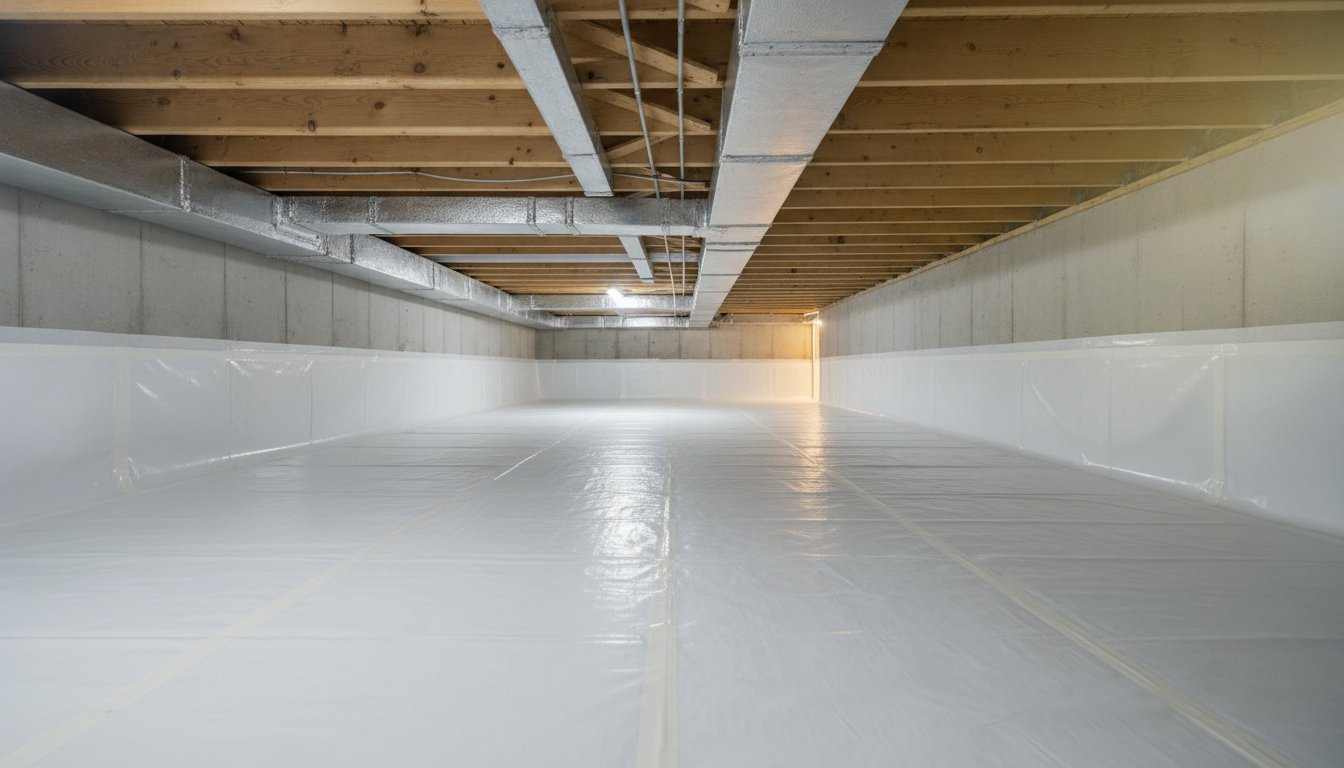
Moisture Barriers and Encapsulation Basics
In North Carolina, building codes mandate a minimum of a 6-mil vapor barrier for vented crawlspaces. However, a thin sheet of plastic loosely laid on the ground is rarely enough to stop the "sponge effect" of our local clay. A truly effective solution involves sealing the foundation walls and piers to create a complete thermal envelope. We focus on high-standard materials that won't tear or degrade over time. When we combine this with meticulous air sealing of every gap and crack, we stop the humid Charlotte air from ever reaching your floor joists. You can learn more about choosing the right setup in our Crawlspace Insulation in Charlotte, NC buying guide.
Every home has a unique footprint and different drainage challenges. If you're ready to stop the cycle of dampness and protect your property, you can book your professional moisture assessment online today to receive a customized plan for your foundation.
Why a Professional Assessment is Your Best First Step
Tackling crawlspace moisture problems on your own can feel like a game of whack-a-mole. You might fix a visible leak only to find that the musty odor remains or the humidity levels continue to climb. This is because moisture issues in the Charlotte area are often systemic. They're tied to our heavy clay soil, high local humidity, and the "stack effect" we discussed earlier. A professional assessment is the only way to get a complete picture of what's happening beneath your feet. It's about moving from guesswork to a methodical, data-driven plan that actually works.
What to Expect During an Insulation Magic Audit
Our "Meticulous Craftsman" audit is a deep dive into the health of your foundation. We don't just peek inside; we conduct a thorough inspection that covers every square foot. We use specialized moisture meters to measure the exact water content of your wood joists, ensuring they haven't reached the dangerous levels where rot begins. We also track relative humidity to see if your current ventilation is helping or hurting. Finally, we hunt for air leaks in the rim joists and floor penetrations. These are the hidden gateways where pests and muggy air enter your living space. By the time we're done, you'll have a clear, step-by-step roadmap for remediation that addresses your home's specific needs.
We take pride in our role as a "Patient Educator." We don't believe in high-pressure sales tactics. Instead, we want to empower you with knowledge. We'll show you exactly where the issues are and explain the physics of how moisture is moving through your crawlspace. This transparency ensures that you understand the value of the work before a single piece of insulation is moved. It's about building a partnership based on integrity and a shared goal of protecting your family's environment.
Investing in Peace of Mind
While the immediate goal is a dry, odor-free home, the long-term benefits of professional sealing are financial. When your crawlspace is properly protected, your HVAC system doesn't have to fight a constant battle against rising humidity. This leads to a more comfortable home and lower utility bills month after month. You can learn more about these permanent savings in our guide on How to Lower Heating and Cooling Costs.
Beyond energy efficiency, a professional assessment prevents the kind of catastrophic structural damage that can cost a fortune to repair. Catching wood rot or foundation settling early is the key to maintaining your home's resale value in competitive Charlotte markets. Our commitment is to provide high-quality, affordable local service that gives you total confidence in your foundation. We treat your property with the same level of care and precision we would apply to our own, ensuring a result that lasts for years.
Take Control of Your Home's Foundation
Your crawlspace shouldn't be a source of stress or mystery. By recognizing the early warning signs and understanding how Charlotte's unique climate drives crawlspace moisture problems, you've already taken the most important step toward a healthier home. We've explored how a clean, methodical approach to air sealing and moisture barriers can transform your indoor air quality and protect your structural integrity for the long term.
At Insulation Magic!, we bring deep local expertise to every project. We maintain a strict no spray foam policy to ensure your home remains safe, breathable, and easy to inspect. Our goal is to serve as your trusted partner, providing the transparency and craftsmanship you deserve. You don't have to navigate these technical challenges alone. If you're looking for a professional team you can rely on, check out our 5-star homeowner reviews to see how we've helped your neighbors restore their comfort.
It's time to trade your dampness worries for the confidence of a dry, secure foundation. Book Your Meticulous Crawlspace Assessment Today. We look forward to helping you protect your home and your family's health.
Frequently Asked Questions
Is it normal to have some water in my crawlspace after it rains?
No, standing water is never normal and usually indicates a drainage or grading issue around your foundation. When water pools beneath your home, it saturates the soil and creates a constant source of ground vapor. This liquid water is a primary driver of crawlspace moisture problems that lead to wood rot and mold. If you see puddles after a storm, it's a clear sign that your home needs a professional assessment to redirect that water.
Can crawlspace moisture cause my allergies to flare up?
Yes, damp crawlspaces are breeding grounds for mold spores and dust mites that can trigger significant respiratory issues. As we discussed regarding the stack effect, the air beneath your home eventually becomes the air you breathe in your living room. When that air is filled with allergens from a moist environment, your family's health is at risk. Sealing these areas and removing moldy materials often provides immediate relief for homeowners with chronic allergies.
How much does it cost to fix crawlspace moisture problems in Charlotte?
The cost to resolve moisture issues varies based on the size of your crawlspace and the specific solutions your home requires. Factors like the extent of insulation removal and whether you choose full encapsulation influence the final investment. We focus on providing meticulous, long-term value by addressing the root cause of the dampness. This approach prevents expensive structural repairs and ensures your home stays protected for decades to come.
Will a vapor barrier alone stop the musty smell in my house?
A vapor barrier is an essential first step, but it may not eliminate odors if you have moldy insulation or air leaks. Musty smells often originate from microbial growth that has already settled into your wooden joists or old fiberglass batts. To fully refresh your home's air, you often need a combination of professional insulation removal and air sealing. This ensures that ground-level odors are blocked and contaminated materials are no longer polluting your living space.
Why do you recommend fiberglass instead of spray foam for crawlspaces?
We recommend fiberglass because it protects your home's structure while remaining breathable and easy to inspect, unlike spray foam which can hide termite damage. This philosophy of using the best materials applies to your attic too. We always recommend fiberglass blown-in insulation over cellulose for attic spaces. Fiberglass is cleaner, doesn't settle, and maintains its performance much better than cellulose, making it the superior standard for Charlotte homeowners.
How long does a crawlspace encapsulation or moisture barrier last?
A professional-grade vapor barrier or encapsulation system can last 20 years or more when installed with meticulous care. The longevity depends heavily on the thickness of the materials used and the quality of the seal around foundation piers and walls. We use high-standard, durable materials designed to withstand the constant humidity of the Charlotte area. When maintained properly, these systems provide a permanent shield that keeps your foundation dry and your energy bills low.
What happens if I ignore the moisture in my crawlspace?
Ignoring crawlspace moisture problems leads to progressive structural decay, mold infestations, and attracted pests like termites. Over time, high humidity softens your floor joists and causes them to sag or settle, which can compromise the safety of your entire home. The cost of repairing structural wood rot is significantly higher than the cost of a proactive moisture barrier. Addressing the problem early is the best way to protect your home's resale value.
Do I need a dehumidifier if I have a vapor barrier installed?
If you choose to fully seal or encapsulate your crawlspace, a commercial-grade dehumidifier is often required to maintain healthy humidity levels. While a vapor barrier blocks ground moisture, a dehumidifier actively removes water from the air to keep levels below 60%. This is especially important in Charlotte's humid climate, where muggy air can still find its way into small gaps. In a traditional vented crawlspace, however, a dehumidifier is ineffective because you're drying the outdoors.
Disclaimer
This blog is intended to provide general information about insulation, energy efficiency, and home comfort based on years of experience. While we strive to keep content accurate and up to date, results may vary based on your home's construction, condition, and climate. Contact Insulation Magic for a personalized assessment and recommendations.


