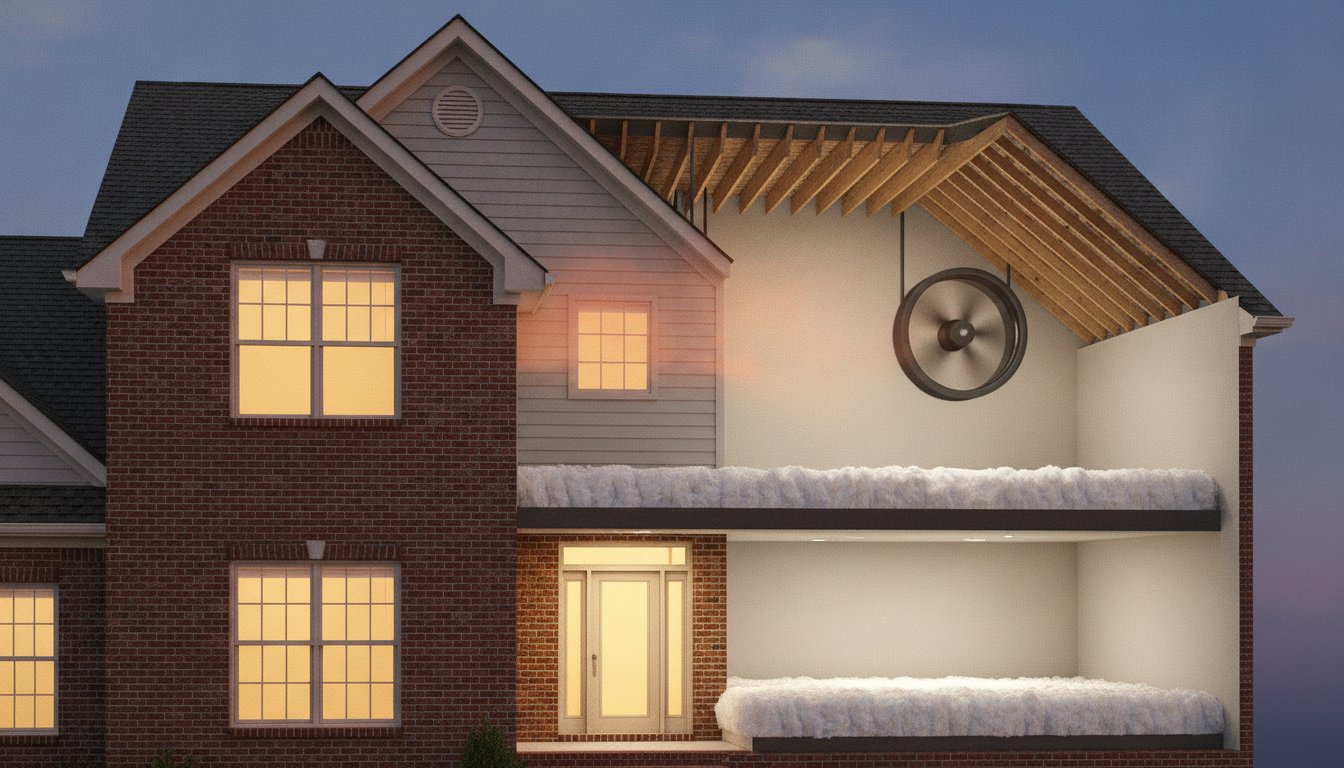
Did you know that on a typical July afternoon in North Carolina, your attic temperature can soar to a staggering 160°F? It's no wonder your upstairs bedrooms feel like a sauna and your AC never seems to catch a break. You're likely tired of seeing those climbing utility bills every month while worrying about what all that trapped heat is doing to your roof shingles. By investing in a professional attic fan installation Charlotte NC homeowners can effectively vent that stagnant air, but the real magic happens when you pair it with meticulous air sealing and high-quality fiberglass blown-in insulation.
We understand that you want a home that feels like a sanctuary, not an oven. While some contractors still suggest cellulose, we've found that fiberglass blown-in insulation offers far superior protection and moisture resistance for our local climate. Our goal is to lower your indoor temperatures and reduce the strain on your cooling system through a methodical, step-by-step approach to ventilation that treats your home with the care it deserves.
In this guide, we'll help you clear up the confusion between solar and electric fans. You'll also learn about the 2026 North Carolina building codes and how the Energy Save NC program can help you secure rebates for a more efficient, mold-free attic space.
Key Takeaways
- Understand why Charlotte attics hit 160°F and how this trapped heat forces your air conditioner to work much harder than it should.
- Learn why a professional attic fan installation Charlotte NC provides the active airflow needed to outperform passive ridge vents.
- Discover why fiberglass blown-in insulation is our standard recommendation for maintaining a stable thermal barrier in high-ventilation spaces.
- Identify how to calculate the correct fan size and placement to ensure your home stays dry, mold-free, and comfortable all summer.
- See how our "Attic Refresh" process integrates air sealing with ventilation to protect your roof and lower your monthly energy bills.
Why Your Charlotte Attic Hits 160°F (and What to Do About It)
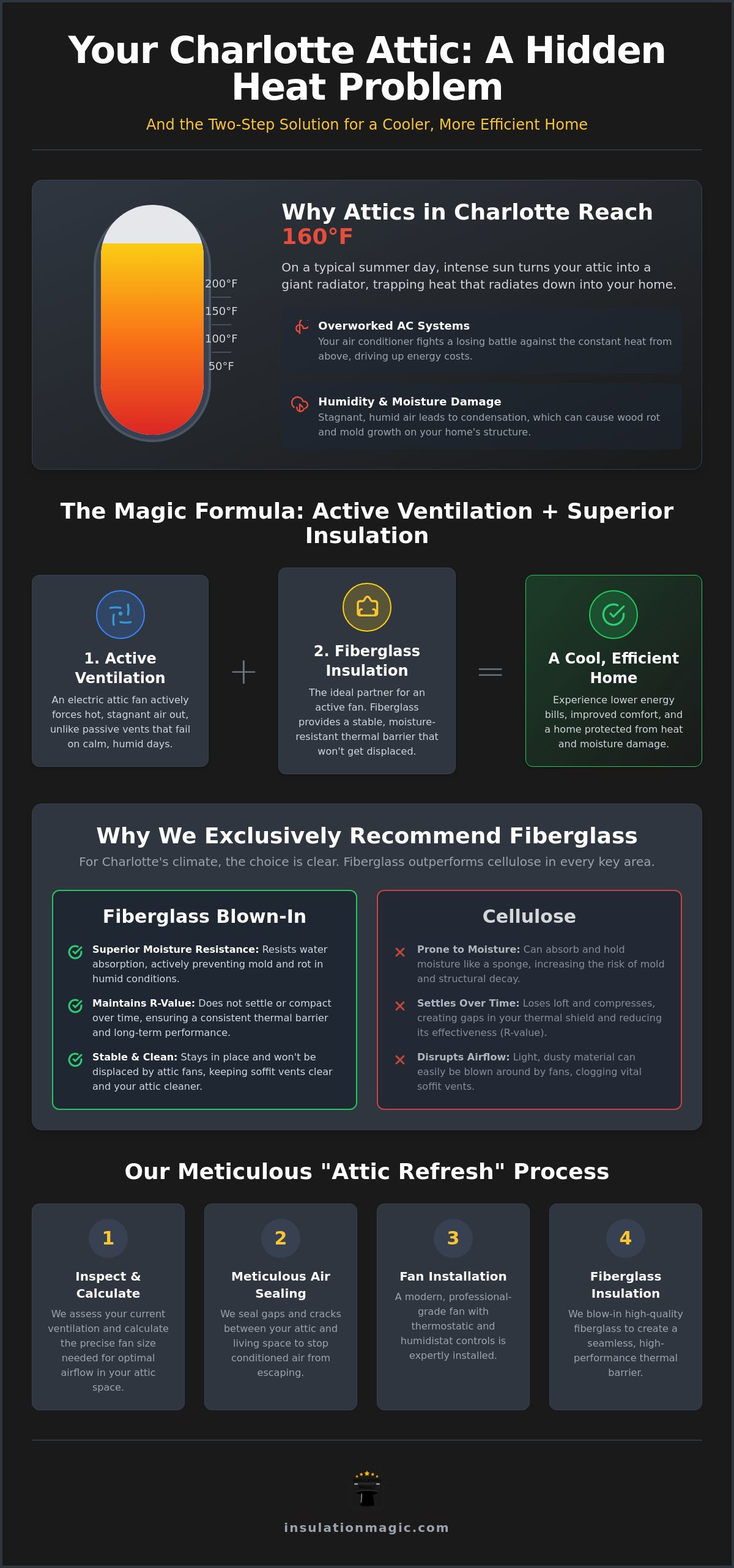
Imagine your attic as a massive radiator sitting directly above your living space. During a typical Charlotte summer, the sun beats down on your roof for twelve hours a day, and without proper airflow, that space becomes an oven. Temperatures can easily climb to 160°F. This isn't just about a hot room; it's about radiant heat transfer. That energy pushes through your ceiling and into your bedrooms, making the upper floors in neighborhoods like Ballantyne or Matthews feel unbearable. You might find yourself cranking the thermostat down, but the air remains heavy and warm.
When your attic is this hot, your air conditioner never gets a break. It's fighting a losing battle against the heat source right above it. This is why a professional attic fan installation Charlotte NC is such a game changer for local homeowners. By actively pulling that 160°F air out, you lower the thermal load on your home and give your HVAC system a much-needed rest. It's also why we strongly recommend fiberglass blown-in insulation over cellulose. Fiberglass doesn't trap moisture or settle the same way, providing a cleaner, more reliable thermal barrier that allows your new ventilation system to work at peak efficiency without the dust or settling issues common with other materials.
The Charlotte Humidity Factor
In North Carolina, heat is only half the story. Our high humidity levels mean that stagnant air in your attic quickly leads to condensation. When moist air sits still, it settles on wooden rafters and joists, which can cause wood rot or mold growth over time. Standard ridge and soffit vents rely on passive airflow, but on a humid, windless day, that air just sits there. Understanding The Science of Attic Ventilation shows that an active fan is necessary to force that humid air out before it can damage your home's structure. We take a meticulous approach to ensure your fan is positioned to move the maximum volume of air possible.
Signs Your Attic Ventilation is Failing
You don't always have to climb into the heat to know there's a problem. Many homeowners notice hot spots where a specific wall or section of the ceiling feels warm to the touch. If your upper-level closets have a faint musty smell, that's often a sign of trapped moisture. Perhaps the most expensive sign is on your roof itself. Excessive heat literally cooks your shingles from the bottom up, causing them to curl, lose their protective granules, or develop dark, brittle spots long before they should. A proper attic fan installation Charlotte NC helps prevent this premature degradation, potentially saving you thousands in roofing costs down the road.
The Science of Attic Ventilation: How Fans Cool Your Home
Passive ventilation relies entirely on the hope that hot air will rise and find its way out of a ridge vent. In the heavy, stagnant air of a Charlotte July, that rarely happens. An active system, however, uses a motorized fan to force that heat out. This mechanical movement is the core benefit of a professional attic fan installation Charlotte NC. It creates a constant cycle of fresh air that keeps temperatures manageable. According to the U.S. Department of Energy's guide on Why Your Charlotte Attic Hits 160°F, proper ventilation requires a precise balance of intake and exhaust to protect your home's structure.
For the fan to work correctly, it needs a source of "make-up air." This air usually comes from your soffit vents. If your attic has insufficient intake, the fan will struggle to move air effectively. We meticulously check your soffit vents to ensure they aren't blocked by debris or old insulation. To maintain this airflow without creating a mess, we always recommend fiberglass blown-in insulation. Unlike cellulose, which can be light enough to shift or blow around under high-volume fans, fiberglass stays in place and allows the air to move freely above it. It's a cleaner, more stable partner for an active ventilation system.
Modern fans are far more sophisticated than the loud, clunky models of the past. They come equipped with thermostatic controls that kick in automatically when your attic hits a specific temperature, usually around 90 or 100 degrees. Some also include humidistats. These are vital for our climate because they activate the fan when moisture levels rise, preventing the wood rot and mold that often plague North Carolina homes even during the cooler months.
Solar vs. Electric Attic Fans
Solar fans are an excellent choice for roofs with clear southern exposure. They cost nothing to operate and are incredibly quiet. However, if your home is heavily shaded, an electric fan might be better. Electric models provide consistent, high-volume airflow regardless of cloud cover. During our assessment, we'll help you decide which power source fits your roof pitch and sun exposure best to ensure you get the maximum cooling benefit.
Preventing the "Vacuum" Effect
One common mistake in DIY installations is ignoring the vacuum effect. If your attic floor isn't properly sealed, a powerful fan will actually pull the expensive, conditioned air from your living room into the attic. This is why we treat home air sealing as a mandatory step before any fan installation. By sealing gaps around light fixtures and plumbing stacks, we ensure the fan only pulls air from the outside vents. If you're curious about your current ventilation levels, you can book a professional attic assessment to see if your home is ready for a more efficient setup.
Maximizing Efficiency: Why Fans Work Best with Fiberglass Insulation
A high-performance fan is a powerful tool, but it doesn't work in a vacuum. To get the most out of your attic fan installation Charlotte NC, you need an insulation material that can handle a high-airflow environment. We've seen many homes where older, loose-fill materials struggle to keep up with modern ventilation. This is why we exclusively recommend fiberglass blown-in insulation. It's the perfect partner for an active fan because it provides a stable, reliable thermal barrier that doesn't compromise your indoor air quality or the fan’s performance.
Cellulose insulation is often marketed as an eco-friendly option, but it has a significant flaw in ventilated attics. Because it's made of ground-up paper, it's incredibly light and prone to shifting. When a high-volume fan kicks on, it can create enough draft to move cellulose around, leading to "thin spots" where heat can easily leak into your home. Fiberglass is heavier and more resilient. It stays exactly where we blow it, ensuring your R-value remains consistent across the entire attic floor. This stability is a key reason why we treat every project with a meticulous craftsman's eye.
There's also a massive synergy between a fan and your R-value. If you have R-49 insulation, it's designed to stop heat transfer. However, if that insulation is sitting under a 160-degree blanket of air, it has to work much harder. By installing a fan, you drop that ambient temperature significantly. This allows your insulation to do its job with much less thermal pressure. This combination translates directly to lower cooling costs and a much longer lifespan for your HVAC system.
Fiberglass vs. Cellulose: The Performance Gap
At Insulation Magic!, fiberglass blown-in is our standard for a reason. Beyond just staying in place, fiberglass is naturally moisture-resistant. In our humid Charlotte climate, cellulose can act like a sponge, soaking up attic moisture and eventually clumping together. Once it clumps, it loses its ability to insulate and can even promote wood rot. Fiberglass stays dry and effective for decades. It's also a non-combustible material, providing an extra layer of safety for your family without the dust and mess associated with paper-based products.
The Importance of Baffles
We don't just blow in insulation and leave. A meticulous installation requires rafter baffles. These are specialized channels that we install between your rafters to keep a clear path for air to travel from your soffit vents up to the fan. Without them, even the best attic insulation Charlotte NC can accidentally clog your intake vents. We take the time to ensure every baffle is secured properly. This ensures your new fan has all the fresh "make-up air" it needs to keep your home cool and your attic dry.
Selecting the Right Fan for Your North Carolina Home
Choosing the right equipment is the first step toward a cooler home. You don't want a fan that's too weak to move the air, nor do you want one so overpowered it creates unnecessary noise or vibration. When we handle an attic fan installation Charlotte NC, we start with the math. A fan's capacity is measured in Cubic Feet per Minute (CFM). A reliable rule of thumb is to take your attic's square footage and multiply it by 0.7. If your roof has dark shingles that soak up the sun, we often recommend a slightly higher multiplier of 0.8 to ensure the fan can keep up with the extra heat load.
Next, we look at where the fan will live. Roof-mounted fans are shaped like domes and sit directly on your shingles. These are fantastic for pulling heat from the highest point of the attic. Gable-mounted fans, on the other hand, are installed behind an existing vertical wall vent. Both options are effective, but the best choice depends on your home's architecture. We also prioritize durability. North Carolina storms can be intense, so we look for fans with stainless steel or powder-coated finishes that won't rust or rattle after a few seasons of wind and rain. High-quality, balanced blades are essential for whisper-quiet operation, ensuring you don't hear a constant hum from the second floor.
Step-by-Step Selection Guide
To get the best results for your specific property, follow this simple checklist:
- Measure your attic floor area to find your target CFM.
- Verify that your soffit vents provide enough "make-up air" (usually 1 square foot of intake for every 300 CFM).
- Choose a mounting style (roof vs. gable) that fits your roofline.
- Opt for a unit with both a thermostat and a humidistat. This allows for "set it and forget it" comfort, as the fan will only run when it's truly needed to combat heat or moisture.
Local Rebates and Incentives
Investing in energy efficiency often pays for itself through utility savings and local programs. As of July 2026, the Energy Save NC program offers significant rebates for homeowners who combine insulation, air sealing, and ventilation upgrades. Eligible households can see rebates of up to $1,600 for these comprehensive projects. Because these programs often require professional verification of the work, our meticulous approach ensures your installation meets the high standards required for these savings. Beyond the initial rebate, the long-term ROI is clear. A properly ventilated attic reduces the cooling load on your AC, which can lead to a 31% reduction in total energy use for some North Carolina homes. If you're ready to see which fan is the best fit for your property, you can schedule a professional attic assessment today.
Professional Attic Fan Installation with Insulation Magic!
At Insulation Magic!, we don't believe in "quick fixes" or rushing through a project just to get to the next one. We take a different path. We call it the Meticulous Craftsman approach. Many companies focus on speed, treating an attic fan installation Charlotte NC homeowners need as a standalone task. We prefer precision. We treat your home as a complete system, looking at your "thermal envelope" to ensure every component works in harmony. This means we don't just install a fan; we ensure your entire attic is a healthy, breathable, and protected space.
Part of this commitment to your home's health is our "No Spray Foam" philosophy. We believe your living environment should be clean and natural. Spray foam can trap moisture against your roof deck and create a chemical-heavy atmosphere that lingers for years. Instead, we use high-standard fiberglass blown-in insulation. It's cleaner, safer, and allows for the precise airflow your new fan needs to operate at peak efficiency. This methodical approach ensures your home stays cool without compromising your indoor air quality.
Our "Attic Refresh" is a comprehensive cooling solution designed for our local climate. We clean the space, seal the air leaks that often go unnoticed, and then install the ventilation system. We've spent years serving neighbors in Waxhaw, Matthews, and Ballantyne, and we treat every property as if it were our own. We take immense pride in the reputation of our work and the long-term value we provide to Charlotte families.
Our Comprehensive Attic Service
Before any fan is mounted to your roof, we perform a full audit of your attic's current state. We check for hidden gaps, blocked vents, and the quality of your existing insulation. If your current materials are old, dusty, or have been contaminated by pests, we often combine the fan setup with professional insulation removal. This gives us a clean slate to install fresh fiberglass and ensure your new ventilation system isn't just moving old dust around. Once the installation is complete, we perform final testing to verify the fan is moving air exactly as intended.
Ready for a Cooler Home?
You deserve the peace of mind that comes from a methodical, educator-led service. We aren't here to pressure you into a sale; we're here to guide you toward the best conclusion for your home's longevity. Whether you are in Ballantyne or Matthews, we want to help you experience the difference that a professionally balanced attic can make. If you're ready to lower your utility bills and finally reclaim your upstairs bedrooms from the summer heat, book your attic ventilation assessment online and let us help you protect your home for the long haul.
Reclaim Your Home from the Summer Heat
A cooler, more efficient home starts with a balanced attic. By combining a high-performance fan with professional air sealing and our signature fiberglass blown-in insulation, you can finally stop the "oven effect" from driving up your energy bills. We've seen how this comprehensive approach not only lowers indoor temperatures but also extends the life of your roof shingles and HVAC system by removing stagnant, humid air.
As a fiberglass blown-in specialist, we take pride in providing a cleaner, more efficient thermal barrier than traditional cellulose. We've built our reputation on a meticulous, educator-led process that puts your peace of mind first. Whether you live in Charlotte, Waxhaw, or Matthews, we're ready to treat your attic with the same care we would our own. You can see the results of this dedication in our 5-star customer reviews.
Don't let another humid North Carolina summer strain your budget and your comfort. If you're ready for a professional attic fan installation Charlotte NC, we are here to help you get it right the first time. Schedule Your Meticulous Attic Assessment Today and take the first step toward a more efficient, mold-free home.
Frequently Asked Questions
Does an attic fan really lower my cooling costs in Charlotte?
Yes, an attic fan lowers cooling costs by actively removing the massive heat load that sits directly above your living space. When the air in your attic is cooler, your air conditioner doesn't have to cycle as often to maintain your desired temperature. This efficiency is most noticeable when paired with a fresh layer of fiberglass blown-in insulation, which provides a clean and stable thermal barrier that keeps that heat from migrating into your bedrooms.
Will an attic fan pull my air conditioning out of the house?
An attic fan will only pull conditioned air from your home if your attic floor isn't properly sealed. Without sealing gaps around light fixtures, wire penetrations, and plumbing stacks, the fan can create a vacuum. This is why we perform a thorough audit of your thermal envelope before any attic fan installation Charlotte NC project. We ensure the fan only draws "make-up air" from your exterior soffit vents rather than your living room.
What is the best type of attic fan for North Carolina homes?
The best fan for our local climate is a motorized unit equipped with both a thermostat and a humidistat. Heat is only half the battle in North Carolina; humidity is the other. A fan that activates based on moisture levels helps protect your rafters from wood rot even when it isn't hot outside. We always recommend models with stainless steel or powder-coated components to withstand our intense summer storm patterns.
Can I install an attic fan myself, or do I need a pro?
While DIY kits are available, professional installation is safer and significantly more effective. A professional ensures the roof flashing is watertight and the electrical connections meet local codes. A pro can also calculate the exact CFM requirements and verify that your intake vents are sufficient. Incorrect placement can lead to roof leaks or poor airflow, whereas a meticulous craftsman ensures the system works in harmony with your insulation.
How much ventilation does my attic actually need?
The amount of ventilation depends on your attic's square footage and the pitch of your roof. A common standard is to have one square foot of net free vent area for every 150 square feet of attic floor space. However, if your roof is steep or has dark shingles that soak up more sun, you might need a fan with a higher capacity. We measure your specific space to match the fan's power to your home's unique needs.
Do attic fans work in the winter, or should I turn it off?
You should keep your fan active in the winter if it's equipped with a humidistat. While you don't need to remove heat in January, you do need to remove the moisture that builds up from indoor activities like showering or cooking. This prevents condensation from forming on the underside of your roof deck. Keeping the air moving also ensures your fiberglass insulation stays dry and maintains its full R-value throughout the year.
Is a solar attic fan better than an electric one for a Charlotte roof?
Solar fans are excellent for homes with clear, southern-facing roof space because they cost nothing to operate. Electric fans are often better for shaded lots or larger homes that need consistent, high-volume airflow regardless of cloud cover. During our assessment, we help you choose the right power source based on your home's orientation and the amount of tree cover surrounding your property.
Will an attic fan help prevent mold and moisture in my attic?
An active fan is one of the best defenses against mold and mildew. By forcing humid air out before it can settle, it prevents the damp conditions that lead to structural damage. This is especially important for an attic fan installation Charlotte NC because our humidity levels stay high for much of the year. When combined with moisture-resistant fiberglass blown-in insulation, a fan creates a much healthier and more durable environment for your home.
Disclaimer
This blog is intended to provide general information about insulation, energy efficiency, and home comfort based on years of experience. While we strive to keep content accurate and up to date, results may vary based on your home's construction, condition, and climate. Contact Insulation Magic for a personalized assessment and recommendations.


