Did you know that nearly 90% of older homes in the Southeast struggle with moisture-damaged insulation or hidden mold growth beneath the floorboards? If you've noticed a lingering musty smell or wondered why your energy bills keep climbing during a humid summer, you are likely feeling the effects of an unsealed foundation. It's frustrating to deal with pests and damp air, especially when the crawl space encapsulation cost Charlotte NC often feels like a moving target.
We understand that you want to protect your home's structural integrity without any guesswork or high-pressure sales tactics. That's why we've created this 2026 guide to provide a clear, honest look at what goes into a professional encapsulation project. You'll learn about the latest North Carolina building code requirements, from essential dehumidification systems to the specific termite inspection gaps required by law. We'll walk through how a meticulous approach to sealing your home can improve your indoor air quality and provide long-term energy savings that pay off for years to come.
Key Takeaways
- Learn why Charlotte’s high humidity makes traditional crawl space vents obsolete and how a sealed system protects your foundation from structural rot.
- Discover the specific factors that influence the crawl space encapsulation cost Charlotte NC, from square footage to the labor required for navigating tight spaces.
- Understand how meticulous air sealing stops energy waste and lowers utility bills by effectively treating your crawl space as part of your home’s thermal envelope.
- See how a thorough cleanout and moisture management plan can eliminate musty odors and prevent the long-term expense of mold remediation or joist repair.
What is Crawl Space Encapsulation and Why Does Charlotte Need It?
If you have spent a summer in the Queen City, you know the humidity is a constant presence rather than just a weather report. What is a crawl space? It is the foundational gap between the earth and your first floor. Encapsulation is a meticulous sealing process that treats this area as a conditioned part of your home. Unlike a simple vapor barrier, which is just a thin sheet of plastic loosely laid on the dirt, full encapsulation involves sealing the foundation walls, piers, and vents. This creates a managed environment that protects your home's structure. Understanding this process is essential when evaluating the crawl space encapsulation cost Charlotte NC for your specific property.
Your home functions like a chimney through a phenomenon known as the "Stack Effect." Warm air naturally rises and exits through the upper levels, creating a vacuum that pulls air from the bottom of the house to replace it. In many local residences, this means the air you breathe in your bedroom was recently sitting in your damp crawl space. When humidity levels in the Carolinas stay above 70%, an unsealed space becomes a breeding ground for mold and pests. Encapsulation stops this cycle. It ensures the air entering your living space is clean and dry, which is why we prioritize air sealing as a core part of our services.
Vented vs. Encapsulated Crawl Spaces
The old idea that foundation vents let a house "breathe" is a dangerous myth in the South. During our humid months, vents actually invite moisture inside. When that muggy air hits your cool air conditioning ducts, it condenses into liquid water. This constant dampness leads to wood rot and attracts pests like spiders or termites. Sealing these vents is a primary step in protecting your home's thermal envelope. Just as we recommend fiberglass blown-in insulation for attics over cellulose to ensure superior air quality and longevity, we believe every part of your home deserves the highest standard of protection.
Signs Your Charlotte Home Needs Immediate Attention
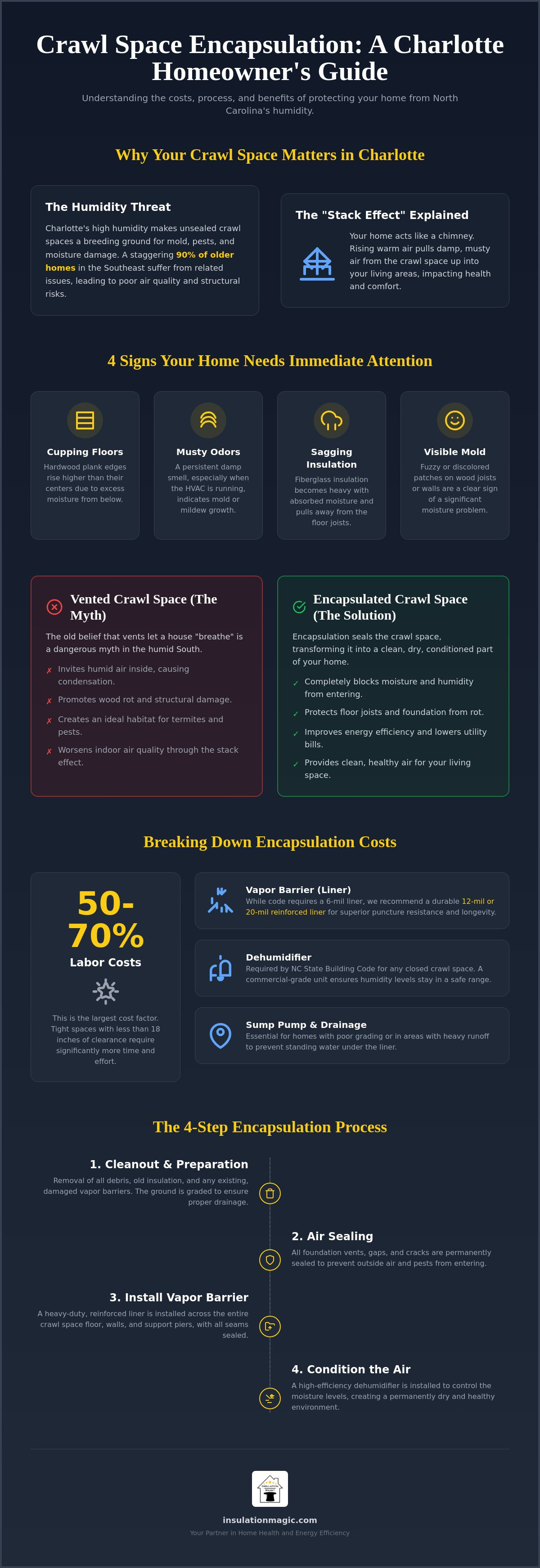
Your home often shows physical signs when moisture levels are out of control. You might notice your hardwood floors beginning to cup, where the edges of the planks rise higher than the centers. A persistent musty smell that worsens when the HVAC system kicks on is another red flag. If you see fiberglass insulation sagging or mold growth on the floor joists, it's a sign that the humidity has already begun to damage your home's integrity. Addressing these issues early prevents the need for expensive structural repairs later on.
Breakdown of Crawl Space Encapsulation Costs in Charlotte (2026)
Determining the crawl space encapsulation cost Charlotte NC involves looking at several moving parts. While square footage provides a baseline for materials, it's rarely the only factor in a final estimate. In our local market, labor often accounts for 50% to 70% of the total project investment. This is because the physical environment of a crawl space dictates the pace and precision of the work. For instance, a "tight" crawl space with less than 18 inches of clearance requires significantly more time for a craftsman to navigate and seal properly compared to a space where a person can stand or crouch comfortably.
Material quality is another primary variable. North Carolina building codes require a minimum of a 6-mil vapor retarder, but this thin plastic is easily damaged during routine maintenance or storage. We typically recommend a more durable 12-mil or 20-mil reinforced liner. These thicker materials offer superior puncture resistance and a much longer lifespan, ensuring your foundation stays protected for decades. Beyond the liner itself, a thorough quote will include the removal of old, damp insulation and any debris that has accumulated over the years. This cleanout is a vital step; sealing new materials over existing rot or waste would compromise the integrity of the entire system.
The Major Cost Drivers
A complete encapsulation system is more than just a plastic floor. To meet the 2024 North Carolina State Building Code, a closed crawl space must include a permanently installed dehumidifier. The code specifies a minimum capacity of 15 pints per day, though larger homes often require more robust commercial-grade units to manage our intense humidity. Additionally, if your property sits at the bottom of a hill or has poor grading, you may need a sump pump and interior drainage to manage heavy spring runoff. These components add to the initial investment but are essential for preventing standing water from undermining your new vapor barrier.
Comparing the Investment Across Greater Charlotte
The age and location of your home also play a role in the final scope of work. In historic neighborhoods near Uptown, we often encounter older masonry and complex foundation piers that require more meticulous air sealing. Conversely, newer developments in Matthews or Waxhaw might have larger footprints that require more material but offer easier access. Because every home is unique, we find that a professional insulation quote is far more reliable than a generic phone estimate. Taking the time to assess the specific moisture levels and structural needs of your property ensures you aren't paying for services you don't need or skipping critical protections. If you are also considering an attic refresh, remember that we always recommend fiberglass blown-in insulation for its superior performance and air quality benefits.
Why Encapsulation is the Best Way to Lower Cooling Costs
In many Charlotte homes, the air conditioner is locked in a constant tug-of-war with the foundation. Because of the Stack Effect, your HVAC system is forced to work overtime to cool and dehumidify the wet, heavy air being pulled up through your floorboards. This doesn't just increase your monthly utility bills; it puts immense strain on your equipment. When you consider the crawl space encapsulation cost Charlotte NC, it's helpful to view it as a long-term investment in your home's thermal envelope. By air sealing the foundation, you stop the infiltration of humid air. This allows your cooling system to run more efficiently and cycle less frequently, which can reduce energy bills by approximately 15% to 20%.
Beyond the monthly savings, a professionally sealed crawl space is a major asset for your property's resale value. In the local market, buyers and home inspectors are increasingly savvy about the risks of moisture damage. A clean, dry foundation transforms a potential liability into a verified asset. Research indicates that homeowners in the Charlotte area may see a 5% to 10% increase in property value after a professional encapsulation. It provides a level of peace and predictability that is highly attractive to future owners.
Protecting Your HVAC System
Latent heat load refers to the energy required to remove moisture from the air. In the humid Piedmont region, a vented crawl space creates a massive latent load that forces your AC to work much harder. This often leads to ductwork "sweating," where condensation forms on the outside of your cool metal ducts. Over time, this moisture causes rust and drips onto your insulation, destroying its effectiveness. You can find more detailed strategies in our guide on how to lower heating and cooling costs. Encapsulating creates a dry environment that keeps your ducts protected and your system running smoothly.
Fiberglass vs. Cellulose in the Crawl Space
Choosing the right materials is just as important as the sealing process itself. We consistently recommend fiberglass insulation because it is naturally moisture-resistant and does not provide a food source for mold. In contrast, cellulose is made of organic paper fibers that can absorb moisture and sag in a damp environment. We also strictly avoid spray foam insulation. While it's often marketed as a quick fix, spray foam can hide termite activity and wood rot from inspectors. In North Carolina, maintaining a clear view of your floor joists is critical for termite bonds. Using fiberglass ensures your home stays accessible for future plumbing or electrical repairs while providing a superior thermal barrier.
The Step-by-Step Encapsulation Process
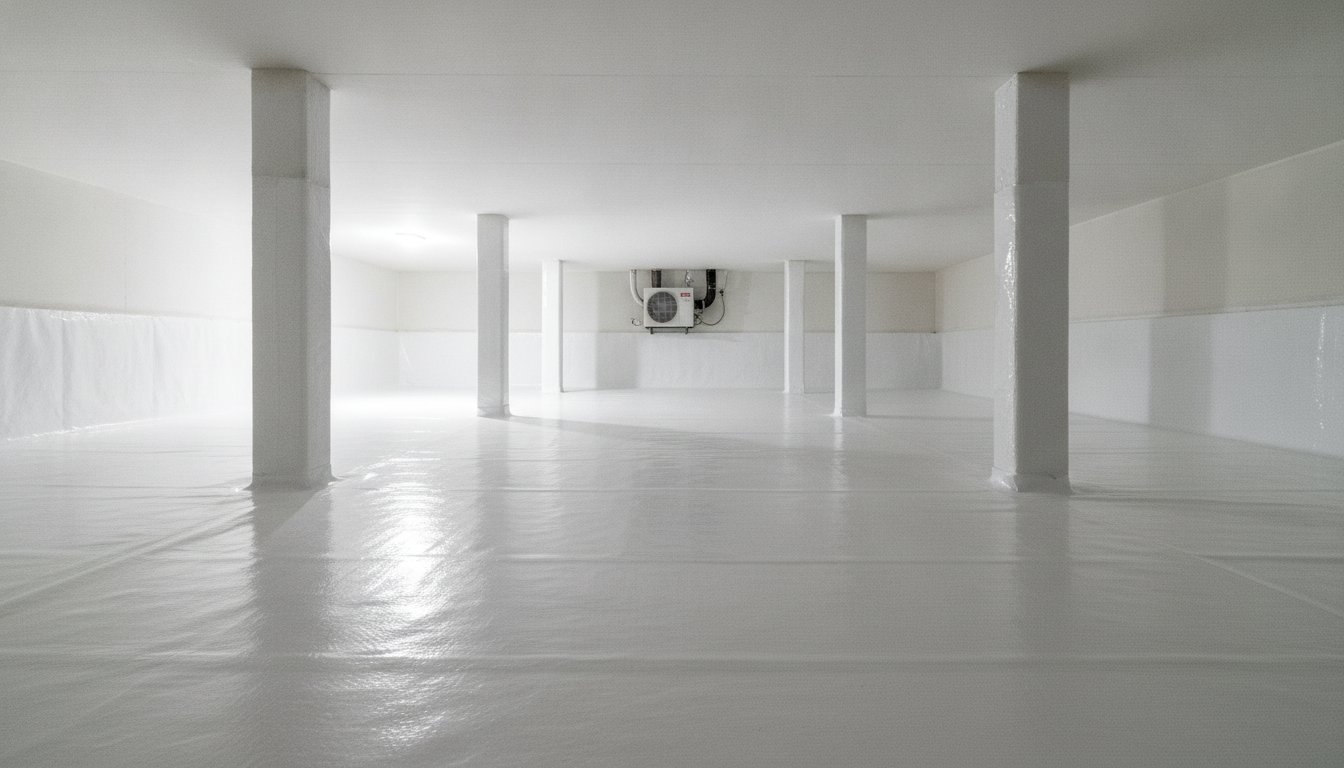
A successful encapsulation project is a sequence of careful, deliberate actions. While homeowners often focus on the final look of the bright white liner, the preparation work beneath the surface is what determines the system's longevity. When calculating the crawl space encapsulation cost Charlotte NC, you're paying for a methodical process that ensures every square inch of your foundation is protected from our local humidity. We treat every home with the same level of care we would apply to our own property, following a disciplined path from assessment to execution.
- Step 1: Evaluation and Cleanout. We begin by removing old, damp insulation and any organic debris that has accumulated. This isn't just a basic sweep; it's a deep clean to ensure no mold-feeding materials remain.
- Step 2: Moisture Management. Before the liner goes down, we address any standing water. This may involve installing interior drainage or a sump pump to handle heavy Carolina rain runoff.
- Step 3: Sealing and Insulation. We close off the foundation vents and insulate the foundation walls or subfloor. We consistently use fiberglass for its superior moisture resistance and air quality benefits.
- Step 4: Vapor Barrier Installation. We lay a heavy-duty, reinforced liner across the floor and secure it to the walls. We ensure every seam is taped and sealed with meticulous precision.
- Step 5: Conditioning. Finally, we install a commercial-grade dehumidifier and a monitoring system. This ensures the humidity stays below the 50% threshold where mold and rot thrive.
The Importance of Meticulous Air Sealing
One of the most overlooked parts of this process is air sealing the rim joists and sill plates. These are the specific areas where the wood structure of your home meets the masonry foundation. They are the most common points for air leaks that contribute to the Stack Effect. At Insulation Magic!, we prioritize creating an airtight thermal envelope to stop the infiltration of humid air. You can learn more about how this invisible work protects your home in our Home Air Sealing Guide.
What to Look for in a Charlotte Contractor
Choosing the right partner for this work is vital for your peace of mind. Look for a local expert with verified reviews from neighbors in Ballantyne or Mint Hill who understands our unique climate. Verify that they offer comprehensive crawlspace insulation and avoid those who rely on high-pressure sales tactics. A true craftsman will act as a patient educator, explaining the "how" and "why" behind every recommendation. If you're ready to start a conversation about your home's foundation, you can schedule an evaluation online to get a transparent look at your options.
Is Encapsulation Worth the Price for Your Home?
Deciding to invest in your foundation is a significant step toward long-term home health. While the upfront crawl space encapsulation cost Charlotte NC is a real consideration, it's helpful to weigh that number against the alternative. In our humid climate, an unmanaged crawl space is a ticking clock. The cost of replacing rotted floor joists or performing professional mold remediation often far exceeds the price of a proactive sealing system. By choosing to encapsulate now, you're effectively buying insurance for your home's structural skeleton while stopping the cycle of decay before it begins.
Beyond the structural protection, the daily impact on your quality of life is immediate. Many of our neighbors find that their first-floor rooms feel significantly more comfortable once the "Stack Effect" is neutralized. You can finally say goodbye to those icy floors in the winter and the heavy, damp feeling in the air during a July heatwave. Because we prioritize air sealing and use high-quality fiberglass insulation, we're able to reduce the allergens and dust mites that thrive in high humidity. This creates a cleaner environment for your family and a home that simply smells better every time you walk through the door.
Financing and Local Rebates
We believe in transparency when it comes to your budget. While federal tax credits for encapsulation aren't currently available in 2026, many homeowners find that air sealing and attic insulation upgrades still qualify for various energy efficiency incentives. We recommend checking with Duke Energy for local rebate programs that can help offset the cost of your project. Additionally, having professional documentation of your encapsulation is a powerful tool during a future home sale. It proves to inspectors and buyers that you've been a meticulous steward of the property. You can see how this has transformed homes across the area by reading our customer reviews.
Your Next Steps for a Healthier Home
Moving forward doesn't have to be stressful. Our process starts with a thorough, no-pressure assessment where we walk you through the specific needs of your foundation. We'll look at moisture levels, check the integrity of your current insulation, and help you decide if a dehumidifier or drainage system is necessary for your specific lot. Preparing your home is simple; we just need clear access to the crawl space entry so our team can begin the cleanout. If you're ready to protect your foundation and start saving on your monthly utilities, you can book your online consultation with Insulation Magic! today. We look forward to helping you create a dry, clean, and efficient home.
Take the Next Step Toward a Dry, Efficient Foundation
Your home's foundation is its most critical support system. By choosing to seal out Charlotte's persistent humidity, you're doing more than just preventing mold; you're lowering your monthly cooling costs and protecting the air your family breathes every day. We've explored how a meticulous approach to air sealing and high-quality materials, like reinforced vapor barriers, can transform your living environment into a managed, healthy space. It's about more than just plastic on the ground. It's about creating a durable thermal envelope that stands up to our local climate.
While the crawl space encapsulation cost Charlotte NC depends on your home's specific footprint and current moisture levels, the long-term savings on utility bills and structural repairs make it a wise investment. As a local business operated by Chris, we take pride in serving our neighbors from Waxhaw to Matthews with a focus on precision and integrity. Whether we're discussing the benefits of fiberglass insulation or installing a commercial-grade dehumidifier, our goal is to provide you with total peace of mind. You deserve a home that's comfortable, efficient, and protected from the elements.
Ready to see the difference for yourself? Schedule your meticulous crawl space assessment today! We're here to help you protect your investment and improve your home's health for years to come.
Frequently Asked Questions
How long does crawl space encapsulation last in North Carolina?
A professionally installed system typically lasts 20 years or more when high quality, reinforced liners like 20-mil vapor barriers are used. The longevity depends on maintaining the dehumidifier and ensuring no standing water enters the space. Regular inspections help catch any minor issues before they impact the system's integrity in our humid Piedmont climate.
Will crawl space encapsulation really lower my electric bill?
Yes, encapsulation can reduce your monthly energy bills by approximately 15% to 20%. By air sealing the foundation and stopping the "Stack Effect," your HVAC system no longer has to struggle with heavy, humid air pulled from beneath the house. This reduces the workload on your air conditioner, leading to lower utility costs throughout the year.
Does crawl space encapsulation increase the property value of my Charlotte home?
Encapsulation can increase your home's property value by 5% to 10% in the local market. Charlotte buyers and home inspectors view a dry, sealed crawl space as a significant asset because it prevents wood rot and hidden mold. Providing professional documentation of the upgrade during a sale offers peace of mind and often leads to a higher closing price.
Can I encapsulate my crawl space myself to save money?
While you can purchase materials yourself, DIY encapsulation is difficult to execute correctly and may not meet the 2024 North Carolina State Building Code. Professional installation ensures that the required 3-inch termite inspection gap is maintained and that the dehumidifier is permanently installed. Incorrect sealing can trap moisture inside your floor joists, leading to expensive structural damage later.
How often should I service the dehumidifier in an encapsulated crawl space?
You should have your crawl space dehumidifier serviced at least once a year. This maintenance includes cleaning the coils, checking the air filter, and ensuring the condensate pump is functioning correctly. Proper upkeep prevents the unit from failing and ensures the humidity stays below 50%, which is the threshold where mold and rot begin to grow in our region.
Is a permit required for crawl space encapsulation in Mecklenburg County?
Yes, a permit is required in North Carolina to convert a traditional vented crawl space into a closed or encapsulated system. Mecklenburg County officials require this to ensure the work meets specific safety and moisture management codes. Unpermitted work is frequently flagged during home inspections and can complicate the process when you decide to sell your property.
What is the difference between a vapor barrier and encapsulation?
A basic vapor barrier is simply a sheet of plastic laid on the dirt floor, while encapsulation is a comprehensive system that seals the entire foundation. Encapsulation includes sealing vents, insulating walls, and installing a dehumidifier to manage the air quality. While a simple barrier helps, it doesn't stop humid air from entering through vents, which affects the overall crawl space encapsulation cost Charlotte NC.
Can encapsulation help with my allergies?
Encapsulation significantly improves indoor air quality by reducing the number of allergens, dust mites, and mold spores that enter your living space. Since a large portion of the air on your first floor originates in the crawl space, sealing out moisture stops these irritants from circulating. This creates a much healthier environment for family members who suffer from asthma or seasonal allergies.
Disclaimer
This blog is intended to provide general information about insulation, energy efficiency, and home comfort based on years of experience. While we strive to keep content accurate and up to date, results may vary based on your home's construction, condition, and climate. Contact Insulation Magic for a personalized assessment and recommendations.


