What if the very insulation meant to lower your energy bills is actually hiding a moisture problem that could compromise your home's foundation? It is a stressful realization for any homeowner, especially when you are already dealing with musty odors in the living room or floors that stay freezing all winter despite a running furnace. You want a home that feels solid and smells fresh, but the dampness beneath your feet often feels like a problem without a clear solution.
We understand that protecting your property requires a meticulous approach rather than a quick fix. Mastering crawlspace moisture insulation is about more than just adding material; it is about creating a precise, managed environment that stops dampness at the source. In this guide, we will walk you through the methodical process of protecting your home from the ground up. You will learn how to balance high-quality insulation with professional moisture control to lower your utility costs and ensure your indoor air quality remains pristine for years to come. By following these steps, you can transform a damp liability into a dry, efficient asset for your household.
Key Takeaways
- Understand how the "Stack Effect" pulls air from your crawlspace into your living areas, making moisture control essential for your family's health.
- Learn why traditional open vents often fail in humid climates and how ground vapor creates constant pressure on your home's structure.
- Discover how a dual-layer system of crawlspace moisture insulation acts as a permanent barrier against dampness and energy loss.
- Identify the critical steps in a professional installation, from thorough sub-floor cleaning to sealing every rim joist and corner.
- See how a methodical approach to crawlspace care leads to lower energy bills, warmer floors, and the total elimination of musty odors.
Understanding the Link Between Crawlspace Moisture and Your Home’s Health
To understand how to protect your home from the ground up, we first need to look at What is a Crawlspace? and why its environment is so critical to your daily comfort. We define crawlspace moisture insulation as a dual-layer defense system. It is not simply a way to keep your floors warm; it is a methodical approach to managing both thermal energy and water vapor. In North Carolina, our high humidity levels put constant stress on the sub-floor environment. If this area is left unmanaged, the dampness does not stay beneath your house. It travels upward, impacting everything from your floor joists to the air you breathe.
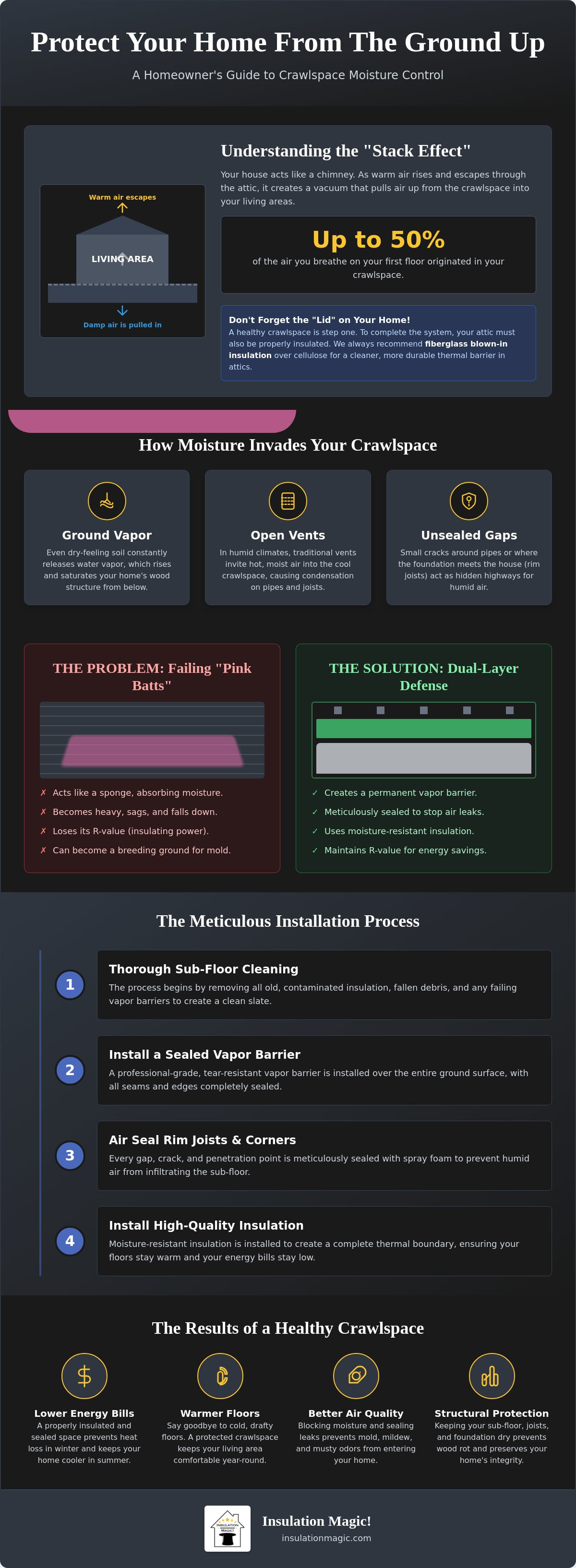
Most homeowners don't realize that their house acts like a giant chimney. This physical phenomenon is known as the "Stack Effect." As warm air rises and escapes through your attic, it creates a vacuum that pulls air up from the ground through your floorboards and wall cavities. Because of this movement, up to 50% of the air inside your living room actually originated in your crawlspace. If that space is damp or filled with musty odors, your indoor air quality will suffer. This is also why we emphasize the importance of a well-insulated attic as the "lid" of your home. When we address attic needs, we always recommend fiberglass blown-in insulation over cellulose because it offers a cleaner, more durable solution for maintaining that essential thermal boundary.
The Science of Humidity and Condensation
In our local climate, we frequently see warm, humid air clashing with the naturally cooler surfaces of a crawlspace. When this happens, the air reaches its dew point and releases moisture directly onto your wood joists and insulation. This creates a "wetting cycle" where your sub-floor stays damp for months at a time during seasonal temperature shifts. In an enclosed environment, relative humidity is the amount of water vapor present in the air expressed as a percentage of the amount needed for saturation at that same temperature. When this percentage stays high, your home's structural integrity is at risk.
Why Traditional "Pink Batts" Often Fail
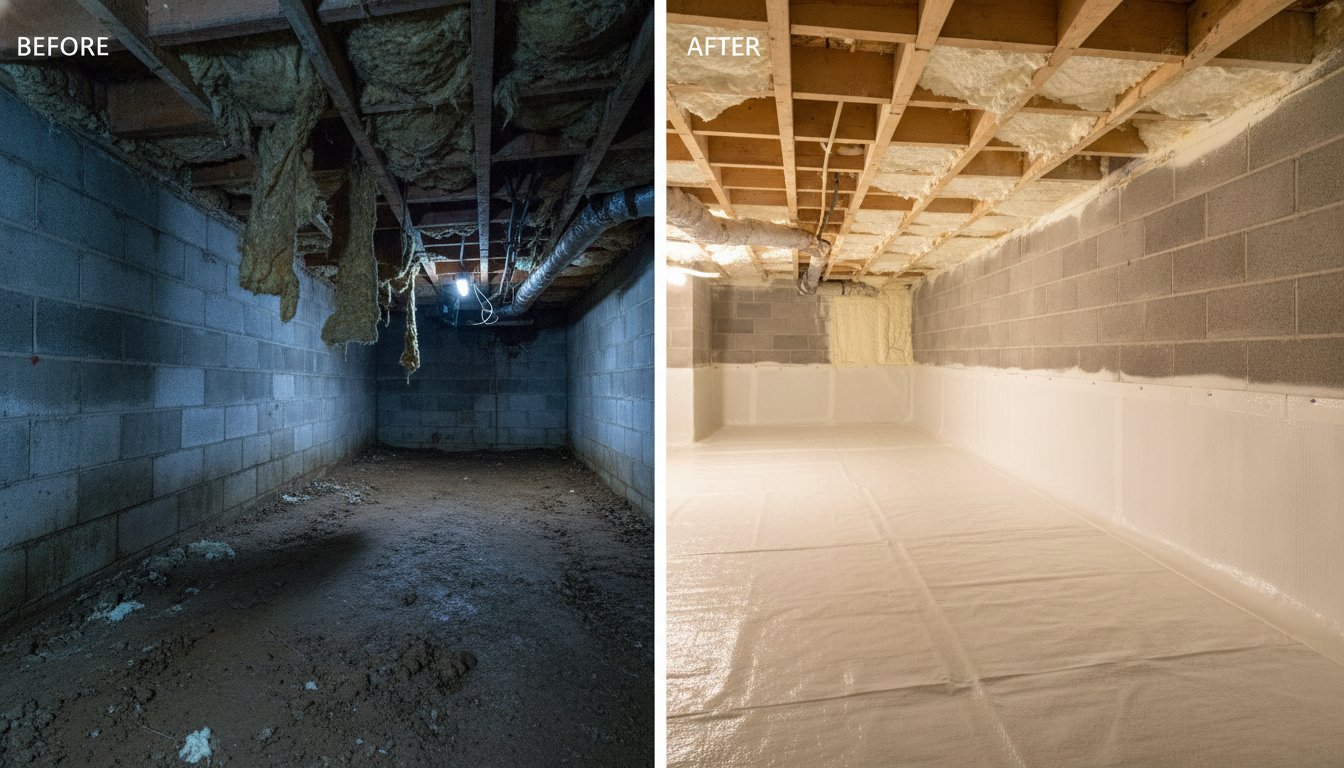
Many older homes rely on fiberglass batts tucked between the floor joists. While fiberglass is a reliable material, these "pink batts" often fail in damp crawlspaces because they are heavy and porous. When they absorb moisture, they sag, lose their R-value, and eventually fall to the ground. It is a common misconception that insulation alone can stop water vapor; without a proper vapor barrier and air sealing, insulation often acts like a sponge. If you are concerned about the state of your existing materials, you can learn more about Mold in Crawlspace Insulation: Myths, Risks, and Real Solutions. Truly effective crawlspace moisture insulation requires a more meticulous, integrated approach to ensure long-term protection and efficiency.
Identifying Common Culprits: How Moisture Invades Your Crawlspace
Soil is a sponge. Even if the ground feels dry to the touch, it is constantly releasing water vapor through capillary action. This ground vapor creates a steady upward pressure of moisture that targets the underside of your home. Without a professional crawlspace moisture insulation strategy, this vapor saturates your floor joists and sub-flooring, leading to the structural concerns many homeowners fear. If you are noticing dampness or musty smells, you can schedule a professional assessment to identify these exact entry points before they cause lasting damage.
Another major culprit is the traditional open vent. For decades, the industry believed that "breathing" crawlspaces were healthy. In our humid climate, however, these vents act as open doors for hot, wet air. When that summer air enters the cool space under your house, it condenses into liquid water on your pipes and wood. Similarly, plumbing penetrations and rim joists often go unnoticed. These are the hidden highways where wood meets the foundation. Small gaps around pipes or at the edges of the house allow humid air to bypass your defenses, feeding the "Stack Effect" we discussed previously.
The Role of the Vapor Barrier
A standard 6-mil plastic sheet is often the bare minimum required by code, but it is easily torn and rarely provides a true seal. For a permanent solution, we utilize a 20-mil vapor barrier. This thicker material is durable enough to crawl on and acts as a genuine shield against ground moisture. For this to work, every seam must be overlapped by at least 12 inches and meticulously taped. This level of detail is a core part of the crawlspace insulation Charlotte NC homeowners rely on for long-term protection.
Air Sealing: The Missing Step
Air sealing is the process of closing the tiny gaps in your home's thermal envelope. While crawlspace moisture insulation provides the R-value you need for warmth, air sealing provides the comfort. Common leak points include wire holes, HVAC trunk lines, and the perimeter of the foundation. Closing these gaps is actually more important for your comfort than the thickness of the insulation itself. Just as we recommend fiberglass blown-in insulation over cellulose for attic applications due to its superior moisture resistance and longevity, we prioritize high-quality air sealing in the crawlspace to ensure your home remains a controlled, dry environment.
How to Properly Install Crawlspace Moisture Insulation: A Step-by-Step Guide
A successful project relies on a logical, disciplined sequence of events. We treat every home with the care of a meticulous craftsman, ensuring that each stage of the process builds toward a permanent solution. This commitment to integrated moisture management is a global standard, exemplified by professional organizations like Modic 無滴全防水解決有限公司 that specialize in one-stop seepage solutions. When we install crawlspace moisture insulation, we follow a methodical five-step plan designed to protect your structure and your health.
- Step 1: Thorough Assessment: We begin by examining every square inch of the sub-floor to identify leaks, mold, or structural concerns.
- Step 2: Professional Removal: We carefully extract old, contaminated, or sagging materials to create a clean slate.
- Step 3: Precision Air Sealing: Using high-quality sealants, we close the gaps around plumbing pipes, wire penetrations, and rim joists.
- Step 4: Vapor Barrier Installation: We lay a heavy-duty vapor barrier across the entire ground surface, ensuring seams are overlapped and sealed.
- Step 5: Insulation Application: Finally, we install the appropriate insulation layer to provide the thermal protection your home needs.
If you are ready to secure your home's foundation and restore your peace of mind, you can book your professional crawlspace assessment online today.
Preparing the Space for Success
Success starts with a clean environment. It's a major mistake to install new materials over existing moisture or mold, as this simply traps the problem against your wood floor joists. We also take the time to check for any signs of rodent activity. Sealing a crawlspace with pests inside creates a health hazard that is difficult to fix later. If your current insulation is damp or damaged, reviewing our guide on Professional Insulation Removal in Charlotte will help you understand the safety protocols required for a clean start.
Choosing the Right Materials
The materials we choose define the longevity of the work. While some contractors suggest spray foam, we avoid it because its permanent, restrictive nature makes future home repairs or inspections nearly impossible. Instead, we favor mineral wool or specialized fiberglass batts designed for crawlspace environments. These materials provide excellent thermal resistance without the risks of trapped moisture. This focus on quality extends to the top of your home as well. As part of a full home energy savings plan, we always recommend fiberglass blown-in insulation for attic spaces. It is far superior to cellulose, offering a cleaner, more efficient barrier that won't settle or create dust over time.
Why Meticulous Professional Installation is the Key to Longevity
"Good enough" is a dangerous standard when it comes to the foundation of your home. While a DIY project might involve stapling up some plastic, true crawlspace moisture insulation requires a level of precision that only professional tools and experience can provide. We use specialized equipment to ensure every rim joist, corner, and penetration is hermetically sealed against the humid Charlotte air. This meticulousness isn't just about aesthetics; it's about the long-term return on investment. By preventing structural rot and foundation issues today, you're protecting the resale value and safety of your property for decades to come.
Local expertise matters because our humidity levels are unique. A contractor who doesn't understand the specific moisture cycles of North Carolina might leave gaps that allow condensation to thrive. We take a patient, educational approach, explaining why every seal is necessary and how it contributes to your home's overall health. This thoroughness ensures that the "Stack Effect" we discussed earlier is completely neutralized, keeping your indoor air fresh and your energy bills predictable. It's a methodical process that transforms a damp, neglected area into a dry, protected part of your home's envelope.
The Insulation Magic! Difference
Our approach is built on the philosophy of the meticulous craftsman. We believe in doing the job right the first time, which is why we prioritize high-quality fiberglass and air sealing over chemical-heavy spray foams. Spray foam is permanent and can often hide leaks or structural damage, making future maintenance a nightmare for homeowners. Our clients value this transparency and care, and you can see the results of our dedication by reading our local reviews. We treat every crawlspace as if it were our own, ensuring a clean, orderly environment that supports a healthy home for your family.
Taking the Next Step for Your Home
A professional assessment is the best way to uncover hidden energy leaks that are driving up your utility bills and cooling your floors. We've designed our online booking process to be as simple and transparent as our work. Whether you're dealing with musty odors or just want to ensure your home is as efficient as possible, we're here to guide you through the process step by step. Remember, a dry home starts from the ground up, and we're committed to being your partner in achieving that goal. Just as we recommend fiberglass blown-in insulation for your attic to ensure a superior, dust-free thermal barrier, we apply that same standard of excellence to your crawlspace moisture insulation to protect your home from the ground up.
Secure Your Home’s Foundation and Future
Protecting your property starts with understanding that the air beneath your feet eventually becomes the air you breathe. We've explored how the Stack Effect pulls dampness into your living space and why a methodical approach to crawlspace moisture insulation is the only way to break that cycle. By combining a heavy-duty vapor barrier with precision air sealing, you can finally eliminate those stubborn musty odors and enjoy warmer floors all winter long. It's about creating a controlled, dry environment that supports the health of your entire household.
Our team brings local Charlotte expertise to every project, focusing on affordable energy efficiency solutions that actually last. We don't use restrictive spray foams that can trap moisture or hide structural problems. Instead, we rely on high-quality materials and meticulous craftsmanship that treats your home like our own. Just as we recommend fiberglass blown-in insulation over cellulose for a cleaner, more durable attic, we ensure your crawlspace is managed with the same level of care. You don't have to live with a damp, inefficient home any longer.
Schedule your meticulous crawlspace assessment today and take the first step toward a drier, healthier environment for your family. We're ready to help you protect your investment from the ground up.
Frequently Asked Questions
Is it better to insulate the crawlspace ceiling or the walls?
The best choice depends on whether your crawlspace is vented or unvented. In a traditional vented setup, we insulate the ceiling to separate the house from the damp ground. However, if you opt for crawlspace encapsulation, we insulate the foundation walls to bring the space into the home's conditioned envelope. This methodical approach ensures your floors stay warm while preventing moisture from rising through the floorboards.
Can I install crawlspace moisture insulation myself?
While you can lay a basic plastic sheet, a complete crawlspace moisture insulation project requires professional precision. Correctly sealing rim joists and floor penetrations is a complex task that requires specialized tools. If the air sealing is skipped or done poorly, you risk trapping moisture against your sub-floor. We take pride in being a meticulous guide, ensuring every gap is closed to protect your home's structural integrity.
How long does crawlspace insulation typically last in North Carolina?
In our local climate, professionally installed materials can last 15 to 20 years. The humidity in North Carolina is particularly hard on insulation; therefore, longevity depends on how well the moisture is controlled. Using a heavy-duty vapor barrier and ensuring a clean installation environment prevents the sagging and failure common in unmanaged spaces. Regular assessments help maintain this protection for the life of your home.
Will insulating my crawlspace really lower my electric bill?
Yes, homeowners often see a reduction of 15% to 20% in their heating and cooling costs. By creating a dry, insulated barrier, you stop the "Stack Effect" from pulling conditioned air out of your house. This efficiency doesn't stop at the ground level. We also recommend using fiberglass blown-in insulation in your attic over cellulose to create a superior thermal lid, ensuring your entire home remains energy efficient and comfortable.
What are the signs that my current crawlspace insulation is failing?
The most common signs include sagging fiberglass batts, musty odors entering your living area, and cold floors in the winter. You might also notice condensation on pipes or dark staining on the wood joists. These issues indicate that your crawlspace moisture insulation is saturated or failing to block air movement. Catching these signs early allows us to assess the damage and provide a permanent, dry solution before rot sets in.
Is crawlspace encapsulation the same as moisture insulation?
Encapsulation is the comprehensive system, while moisture insulation is a key part of that process. Encapsulation involves sealing the vents and ground with a durable vapor barrier to keep the environment dry. Insulation is then added to provide the thermal protection your home needs. This logical, step-by-step approach ensures your crawlspace is no longer a liability but a clean, controlled part of your home's foundation.
Disclaimer
This blog is intended to provide general information about insulation, energy efficiency, and home comfort based on years of experience. While we strive to keep content accurate and up to date, results may vary based on your home's construction, condition, and climate. Contact Insulation Magic for a personalized assessment and recommendations.


