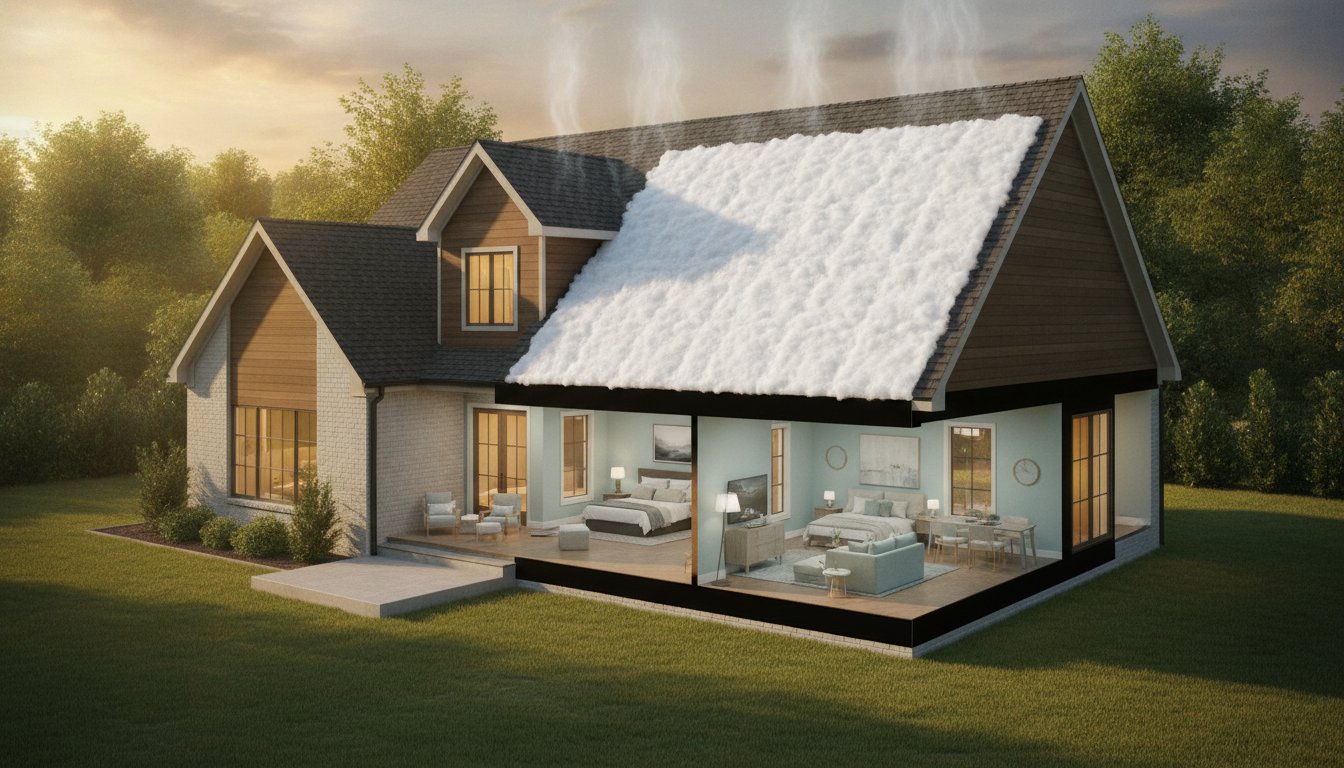
Why does your second floor feel like a sauna even when your air conditioner is working overtime? Many homeowners in Charlotte and across North Carolina struggle with this exact problem, often wondering what R-value for attic in NC is actually necessary to keep the heat out. If your home was built before 2012, there is a high chance your insulation is stuck at R-30 or lower. This level of protection simply cannot keep up with the 130-degree temperatures common in our local attics during the peak of summer.
We understand how frustrating it is to pay rising utility bills while your home remains uncomfortably warm. In this article, you will learn the exact steps to reach the R-49 to R-60 target that energy experts recommend for our region. We will explain why choosing a high-quality blown-in fiberglass over cellulose is the best way to ensure long-term performance and meet the latest 2026 efficiency standards. We are going to walk you through the process of restoring year-round comfort and achieving a more energy-efficient home through meticulous attic care.
Key Takeaways
- Learn how North Carolina’s diverse climate zones dictate the specific thermal resistance your home needs for year-round comfort.
- Discover exactly what R-value for attic in NC hits the "sweet spot" of R-49 to R-60 to maximize your energy savings.
- Understand why fiberglass blown-in insulation is the superior choice over cellulose for maintaining long-term efficiency and attic health.
- Find out how to perform a simple DIY ruler test to determine if your current insulation has suffered from age or damage.
- Gain clear guidance on meeting the 2026 efficiency standards to ensure your home remains a sanctuary against the Carolina heat.
Understanding R-Value and North Carolina’s Climate Zones
R-value is the capacity of an insulating material to resist heat flow. For any homeowner looking to improve their home's efficiency, Understanding R-Value is the essential first step. It is a simple measurement of how well a material stops heat from migrating into or out of your living space. In North Carolina, this number is particularly significant because our state's geography creates a wide range of thermal needs, stretching from the sandy coastal plains to the high mountain peaks.
Why Your NC Climate Zone Dictates Your Attic Needs
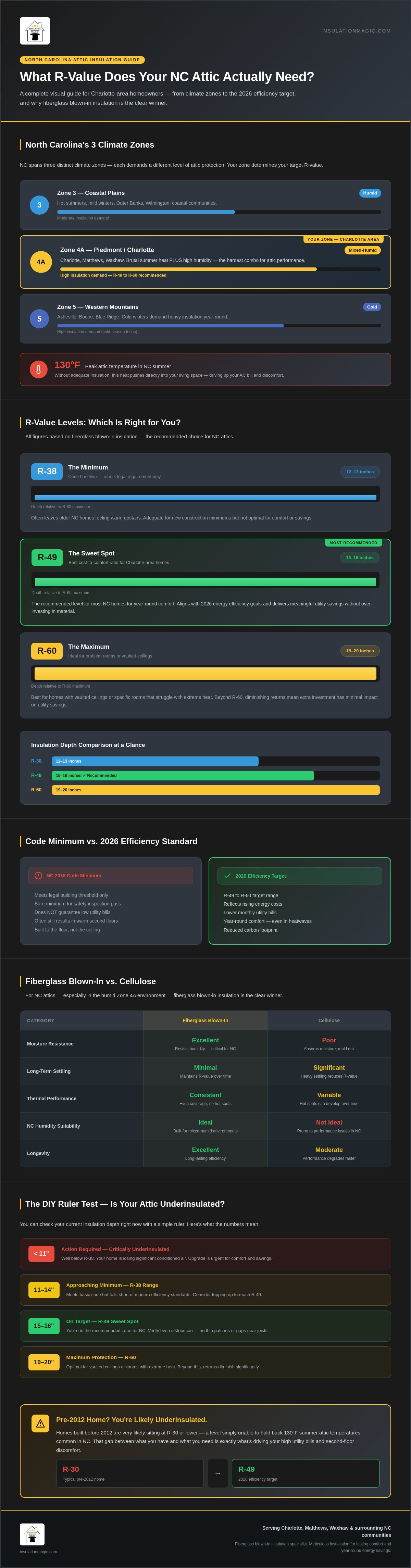
North Carolina is unique because it spans three distinct climate zones. While the coastal areas sit in humid Zone 3 and the western mountains reach Zone 5, local communities like Charlotte, Matthews, and Waxhaw are primarily located in Climate Zone 4A. This "mixed-humid" environment presents a specific challenge for your home. The high humidity levels in our region actually accelerate heat transfer through your attic floor. When the summer sun beats down on your roof, that moisture-laden heat tries to push into your cool, air-conditioned rooms. We consistently find that fiberglass blown-in insulation performs exceptionally well in these conditions. It provides a meticulous thermal barrier that handles NC’s relentless humidity with more integrity than materials like cellulose, which can be more prone to moisture absorption and settling over time.
The Difference Between 'Code Minimum' and 'Energy Star Recommended'
Homeowners often ask what R-value for attic in NC is required by law, but there is a significant gap between meeting a code and actually staying comfortable. The NC 2018 Residential Code sets a minimum standard, which is essentially the legal "basement" for building safety. However, modern 2026 efficiency goals aim much higher to reflect rising energy costs. Passing a basic building inspection doesn't guarantee that your utility bills will stay low; it just means the house meets a bare minimum safety threshold. To truly protect your home and your wallet, we recommend looking past these legal minimums. We focus on educating our neighbors so they can choose a level of protection that provides lasting comfort, rather than just doing enough to pass a one-time inspection. Aiming for higher efficiency standards ensures your home remains a sanctuary even during our most brutal summer heatwaves.
Recommended Attic R-Values for NC Homes in 2026
Finding the "Sweet Spot" for your home isn't just about following a generic chart. It is about understanding how your specific property breathes and holds onto the air you pay to cool. When determining what R-value for attic in NC is right for your property, we generally point toward R-49 as the most cost-effective and efficient solution for Charlotte-area retrofits. While you can go as high as R-60, you will eventually reach a point of diminishing returns. This means the extra investment in material may not result in a noticeable difference in your monthly utility savings compared to the R-49 standard.
R-38 vs. R-49 vs. R-60: Which is Right for You?
The choice between these levels often depends on your home's architecture and your personal comfort goals. We focus on using fiberglass blown-in insulation because it provides consistent, long-lasting coverage without the heavy settling issues found in other materials. Here is a quick guide to how much height you should see in your attic:
- R-38 (The Minimum): Requires approximately 12 to 13 inches of fiberglass. This is the baseline for modern homes but often leaves older homes feeling warm on the second floor.
- R-49 (The Target): Requires approximately 15 to 16 inches of fiberglass. This is our recommended level for most North Carolina homes to ensure year-round comfort.
- R-60 (The Maximum): Requires approximately 19 to 20 inches of fiberglass. We suggest this level for homes with vaulted ceilings or specific rooms that struggle with extreme heat.
According to federal Recommended Attic R-Values, hitting these targets is one of the most effective ways to lower your carbon footprint and your electricity bill simultaneously.
Why R-Value Alone Isn’t a Guarantee of Savings
It’s a common misconception that simply throwing more insulation into an attic solves every problem. R-value is a measurement of the material's resistance, but its effectiveness depends entirely on a meticulous installation. If the insulation is distributed unevenly, you will end up with "hot spots" in your bedrooms where heat migrates through thin patches. Additionally, your attic joists can act as "thermal bridges," allowing heat to bypass the insulation entirely if the coverage isn't deep enough to bury the wood. This is why we advocate for a uniform blanket of blown-in fiberglass that covers every inch of the attic floor. If you aren't sure how your current levels measure up, you can book a professional attic assessment to get a clear, honest look at your home's needs.
Choosing the Right Material: Why Fiberglass Blown-In Wins in NC
Deciding on the right material is just as important as knowing what R-value for attic in NC you need to reach. While some contractors might push for cellulose or even spray foam, we believe in a more meticulous, long-term approach for our neighbors. We consistently recommend fiberglass blown-in insulation for North Carolina attics because it offers superior protection and lasting peace of mind. It is a clean, reliable solution that aligns with our dedication to high-quality craftsmanship and home health.
Unlike cellulose, which is made from shredded paper and can settle significantly over time, fiberglass maintains its loft. When insulation settles, you lose that critical thermal resistance you worked so hard to achieve. Fiberglass stays in place, ensuring your home remains comfortable for decades without the need for a "top-off" every few years. We also avoid spray foam in attic floors because it can be difficult to inspect, creates a permanent mess, and often isn't necessary when a project is executed with proper care.
Fiberglass vs. Cellulose: Performance in High Humidity
Our state's high humidity is a major factor in material choice. Fiberglass is naturally resistant to moisture and mold. It doesn't provide a food source for fungi, which is vital in our mixed-humid climate. Additionally, it offers excellent fire resistance without the heavy chemical flame retardants found in paper-based alternatives. Industry experts at Carolina Country highlight that Recommended R-values in North Carolina are only effective if the material can withstand the local environment without degrading or absorbing moisture.
The Critical Role of Air Sealing Before You Insulate
Think of insulation as a warm wool sweater. It keeps you warm, but if a cold wind blows through the knit, you'll still feel the chill. Air sealing is the windbreaker that makes the sweater work. Before we add a single inch of fiberglass, we focus on sealing common leak points like top plates, wire penetrations, and recessed lights. This step is the "invisible secret" to real efficiency, preventing conditioned air from escaping into your attic. You can learn more about how this works in our guide to Home Air Sealing. If you are ready to see the difference professional care can make, you can schedule your attic refresh online to begin the restoration of your home's comfort.
Assessing Your Attic: Next Steps for a More Comfortable Home
Determining exactly where your home stands is the first step toward reclaiming your comfort. While we’ve discussed the ideal targets, you don't need expensive tools to get a baseline reading of your current protection. If you’ve been wondering what R-value for attic in NC your home currently holds, a simple physical inspection can provide the clarity you need to make an informed decision for your family.
The Ruler Test: How to Measure Your Current R-Value
You can perform a basic audit yourself with just a yardstick and a flashlight. It is important to measure in multiple spots; insulation often shifts or settles unevenly, especially near the attic hatch or along the eaves. Follow these steps to calculate your current level:
- Step 1: Clear a small path and push your yardstick through the material until it touches the drywall of your ceiling.
- Step 2: Note the depth in inches and repeat this in at least four different areas of the attic.
- Step 3: Perform the math. Multiply your average inches by 2.5 if you have fiberglass batts, or by 2.8 if you have fiberglass blown-in.
If your measurements show less than 10 inches of material, your home is likely at or below an R-30 rating. This means you are missing out on the significant energy savings that come with the recommended R-49 standard. In this scenario, your air conditioner is likely fighting a losing battle against the heat radiating through your ceiling.
When to Call a Meticulous Professional
While measuring, look for signs of "insulation fatigue" or damage. If the material looks discolored, dusty, or compressed, it has likely lost its ability to resist heat flow. We also look for evidence of rodents, such as matted paths or droppings. In these cases, simply adding more fiberglass on top isn't the right solution. We advocate for professional insulation removal before installing new material. This ensures we aren't burying allergens or old problems under a fresh layer, allowing us to perform a clean, meticulous installation from the floor up.
We believe in transparency and educating our neighbors so they can make the best choice for their property. If you can see your wooden floor joists peeking through the insulation, it's a clear signal that you aren't meeting modern efficiency goals. You can check our Insulation Magic! reviews to see how we’ve helped other local families restore their homes. When you are ready for a thorough, professional opinion, you can book your meticulous attic assessment today to ensure you hit the perfect what R-value for attic in NC for long-term savings.
Secure Your Home’s Comfort and Efficiency Today
Achieving a more comfortable home starts with understanding exactly what R-value for attic in NC is required to stop the cycle of high utility bills. By targeting the R-49 to R-60 range and prioritizing air sealing, you can finally eliminate those stubborn hot spots on your second floor. We believe that choosing high-quality fiberglass blown-in insulation is the most meticulous way to protect your property. It offers the longevity and moisture resistance that North Carolina homes demand without the settling issues found in other materials.
We specialize in these fiberglass applications and provide comprehensive attic refreshes that include expert air sealing. Our team takes immense pride in serving neighbors across Charlotte, Matthews, and Waxhaw with the care of a local craftsman. You don't have to guess whether your insulation is enough or settle for a home that won't cool down. Schedule Your Professional Attic Assessment with Insulation Magic! to take the first step toward a more efficient, peaceful living environment. We are here to guide you through the process and ensure your home is ready for whatever the Carolina weather brings next.
Frequently Asked Questions
Is R-49 enough for a North Carolina attic?
R-49 is considered the cost-optimal target for most homeowners in our region. When considering what R-value for attic in NC is necessary, R-49 provides the best balance between your initial investment and long-term utility savings. It creates a robust thermal barrier that keeps your air-conditioned air inside where it belongs, even during the hottest July afternoons.
Can I just put new insulation over the old stuff in my NC home?
You can add new material on top, but it isn't always the best approach for a healthy home. We recommend a full removal if your current insulation is dusty, matted, or shows signs of rodent damage. Starting with a clean attic floor allows us to perform meticulous air sealing, which is the only way to ensure your new fiberglass performs at its peak efficiency.
How many inches of fiberglass insulation is R-49?
You will need approximately 15 to 16 inches of blown-in fiberglass to reach an R-49 rating. If you currently have about 6 inches, which is common in homes built before the mid-1990s, we would add roughly 10 inches of fresh material. This depth ensures your ceiling joists are completely covered, preventing heat from bridging through the wood into your living space.
Does the NC building code require R-60 for new homes?
The North Carolina building code currently requires a minimum of R-38 for attic insulation in most areas. While R-60 is a fantastic goal for those seeking maximum energy efficiency, it is not a legal mandate. Knowing what R-value for attic in NC is required versus what is recommended helps you make the most sensible choice for your specific budget and comfort goals.
What is the best type of insulation for Charlotte's humid summers?
Blown-in fiberglass is the superior choice for handling Charlotte's high humidity. Unlike cellulose, which is made of paper and can absorb moisture, fiberglass stays dry and maintains its loft over time. This longevity means your home stays cooler during the peak of summer without the insulation settling and losing its effectiveness after just a few years.
Will increasing my attic R-value actually lower my Duke Energy bill?
Upgrading your insulation can lower your air conditioning costs by an estimated 10-20%. When your attic is properly protected, your HVAC system doesn't have to run nearly as often to maintain a steady temperature. This reduced energy consumption translates directly into lower monthly payments to Duke Energy and a significantly more comfortable home environment for your family.
Disclaimer
This blog is intended to provide general information about insulation, energy efficiency, and home comfort based on years of experience. While we strive to keep content accurate and up to date, results may vary based on your home's construction, condition, and climate. Contact Insulation Magic for a personalized assessment and recommendations.


