
Why is your upstairs still sweltering even though you've already got insulation in the attic? Most homeowners don't realize that insulation is essentially a fuzzy sweater; it keeps you warm, but it won't stop a humid breeze from blowing right through the knit. In our unique Charlotte climate, the real secret to lasting comfort is the combination of attic insulation and air sealing. Without sealing those tiny, hidden gaps where your walls meet the attic floor, your expensive cooled air is constantly escaping. This leaves you with sky-high utility bills and pesky dust blowing through your vents during the peak of the North Carolina summer.
We know how frustrating it's to feel like you're throwing money out the window while your family stays uncomfortable. We promise to show you how a meticulous approach to air sealing, paired with high-performance fiberglass blown-in insulation, creates a permanent barrier against the heat. We'll explain why we recommend fiberglass over cellulose for our local humidity, how to reach the R-38 standards required in our area, and how this "comfort combo" can provide a return on investment as high as 117%. It's time to stop guessing and start enjoying a home that stays cool and clean all year long.
Key Takeaways
- Understand why insulation alone isn't enough and how the combination of attic insulation and air sealing creates a total thermal shield for your home.
- Learn how to identify the invisible energy leaks in your attic, specifically around top plates and wire holes, that are driving up your cooling costs.
- Discover why blown-in fiberglass is the superior choice for Charlotte's humidity compared to cellulose, ensuring your home stays protected without the risk of settling.
- Get a step-by-step look at a professional attic refresh, from assessing the need for insulation removal to the precision of a deep seal installation.
- See how this investment pays for itself through lower utility bills and finally solves the problem of an uncomfortably hot second floor.
Why Attic Insulation and Air Sealing Are the "Power Couple" of Home Comfort
Most homeowners in the Charlotte area think that simply adding more insulation to their attic will solve their comfort problems. While insulation is vital, it's only half of the equation. To truly protect your home from the sweltering North Carolina heat, you need a combination of attic insulation and air sealing. Think of insulation as a thick wool sweater; it's excellent at holding onto heat, but if a cold wind blows, it goes right through the fibers. Air sealing is the windbreaker you wear over that sweater to stop the movement of air entirely. Without both, your home's thermal envelope is incomplete.
Attic air sealing is the process of plugging holes between the living space and the attic. These holes are often invisible to the naked eye, tucked away under existing insulation or behind wall plates. When we combine this meticulous sealing with high quality fiberglass blown-in insulation, we create a permanent barrier. This "Power Couple" ensures that the Thermal insulation you've invested in can actually do its job. In our humid, heavy summers, this pairing is the only way to keep the attic's 130 degree heat from migrating into your bedrooms.
The Invisible Leak: How Your Home Breathes (and Loses Money)
Your home acts like a giant chimney through a process called the "Stack Effect." Hot air is naturally buoyant and rises, pushing against your ceiling. If there are any gaps, that air escapes into the attic. This creates a vacuum in your living space that pulls in humid, unconditioned air from the outside to replace it. This cycle is why your AC never seems to stop running in July. Whether you live in Matthews or Waxhaw, "heating the outdoors" through these leaks is a primary cause of high utility bills. Simply adding new insulation doesn't stop this air movement; it just filters the air as it escapes. You need a physical seal to break the cycle and keep your money in your pocket.
Signs Your Attic Needs a "Refresh"
How do you know if your attic is failing you? There are a few telltale signs that suggest your current setup isn't performing. If you notice these issues, it's likely time for a professional assessment of your attic insulation and air sealing:
- Uneven temperatures: Your first floor feels like an icebox while the second floor feels like a sauna.
- Persistent dust: You see dark gray dust buildup around your ceiling fans or recessed light fixtures, which indicates air is being pulled from the attic into your home.
- High utility costs: Your monthly bills are significantly higher than your neighbors' bills during a typical Charlotte heatwave.
- Allergy symptoms: You notice an increase in sneezing or respiratory issues when the HVAC system is running.
Addressing these signs early protects your home's structure and your family's health. We always recommend fiberglass blown-in insulation for these refreshes because it doesn't settle like cellulose and provides a cleaner, more durable thermal break for the long term.
Finding the Hidden Gaps: Where Your Home is Leaking Energy
Finding energy leaks requires more than a quick glance. It takes the eye of a meticulous craftsman to uncover the bypasses hidden beneath years of old debris. When we perform attic insulation and air sealing, we don't just blow in new material over the old. We move back the existing layers to find the "top plates." These are the horizontal boards at the top of your wall frames. Because every wall in your house has one, they create hundreds of linear feet of tiny gaps where your expensive AC escapes into the attic. By sealing these plates, we stop the #1 source of energy loss in most Charlotte homes.
Ignoring leaks around plumbing stacks and electrical wires is a mistake that can haunt your utility bills and your health. These gaps act as small vacuum points, pulling air directly from your living space. Beyond the financial cost, proper attic insulation and air sealing significantly improves your indoor air quality. Without a tight seal, attic dust, insulation fibers, and outdoor allergens are constantly pulled through your ceiling and into your lungs. We prefer using high-quality fiberglass for our projects because it's a cleaner material that doesn't produce the same fine dust as older alternatives, ensuring your family breathes easier.
The Usual Suspects: Common Attic Air Leaks
Identifying these points is a science that requires patience and precision. According to the EPA’s A Do-It-Yourself Guide to Sealing and Insulating, even the smallest holes can add up to the equivalent of leaving a window open year-round. Some of the most common offenders we find include:
- Recessed "can" lights: These act like small chimneys, constantly venting your conditioned air into the attic.
- Attic hatches and pull-down stairs: This is often the largest single leak in a home, yet it's frequently overlooked during standard insulation jobs.
- Plumbing penetrations and wire holes: These small gaps around pipes and electrical lines have a massive cumulative impact on your home's efficiency.
Why We Don’t Use Spray Foam for Sealing
At Insulation Magic!, we have a strict "no spray foam" policy. We believe in using safer, non-toxic sealing materials that provide a high-performance barrier without introducing harsh chemicals into your personal environment. Our goal is to maintain a "breathable" but controlled home where air moves through your ventilation system, not through your walls. You can learn more about our meticulous, health-conscious methods on our services page.
If you suspect your home is leaking energy through these hidden gaps, it's worth having a professional take a closer look. You can book an assessment online to start your journey toward a more comfortable, efficient home.
Fiberglass vs. Cellulose: Why We Recommend Blown-In Fiberglass
Choosing the right material is the final piece of the comfort puzzle. While the technical work of finding leaks is essential, the material you layer on top determines how long those results will last. In the greater Charlotte area, blown-in fiberglass has become the modern standard for high-performance homes. When we perform attic insulation and air sealing, we consistently recommend fiberglass because it aligns with our commitment to quality and long-term value. It's a clean, inorganic material that doesn't suffer from the same structural and hygiene drawbacks as older alternatives.
One of the most significant advantages of fiberglass is its exceptional longevity. Unlike other materials that compress and lose their effectiveness over time, fiberglass doesn't settle. This means the R-value we install today will remain virtually the same decades from now. It's a "set it and forget it" solution for homeowners who want a permanent fix for their energy bills. Additionally, fiberglass is the best choice for moisture resistance in humid climates because its glass-based fibers don't absorb water or rot like organic materials do. This is a critical factor in North Carolina, where humidity levels often spike during the long summer months.
The Problem with Cellulose in the Attic
Many homeowners are surprised to learn that cellulose can actually stress their home's structure. Cellulose is made of recycled newsprint, making it much heavier and denser than fiberglass. In a typical attic, this extra weight can put significant pressure on your ceiling drywall, sometimes leading to visible bowing or cracks over time. There's also the "dust factor" to consider. Because cellulose is essentially ground-up paper treated with chemicals, it creates a fine dust that can bypass seals and clog your HVAC filters. Over time, this makes your system work harder and reduces the overall air quality inside your home.
Blown-In Fiberglass: The Clean, Efficient Choice
Fiberglass offers a level of cleanliness and safety that cellulose simply can't match. It's naturally fire-resistant and doesn't require the heavy chemical treatments that paper-based products do to stay safe. When we blow it into your attic, it creates a seamless, fluffy blanket that covers every inch of your newly sealed floor. This uniform coverage is what prevents those frustrating cold spots in the winter and hot rooms in the summer. It also works perfectly alongside an attic fan installation, allowing for proper ventilation without the risk of loose fibers being pulled into the living space. By choosing fiberglass, you're investing in a cleaner, lighter, and more durable barrier for your attic insulation and air sealing project.
The Meticulous Process: Doing the Job Right the First Time
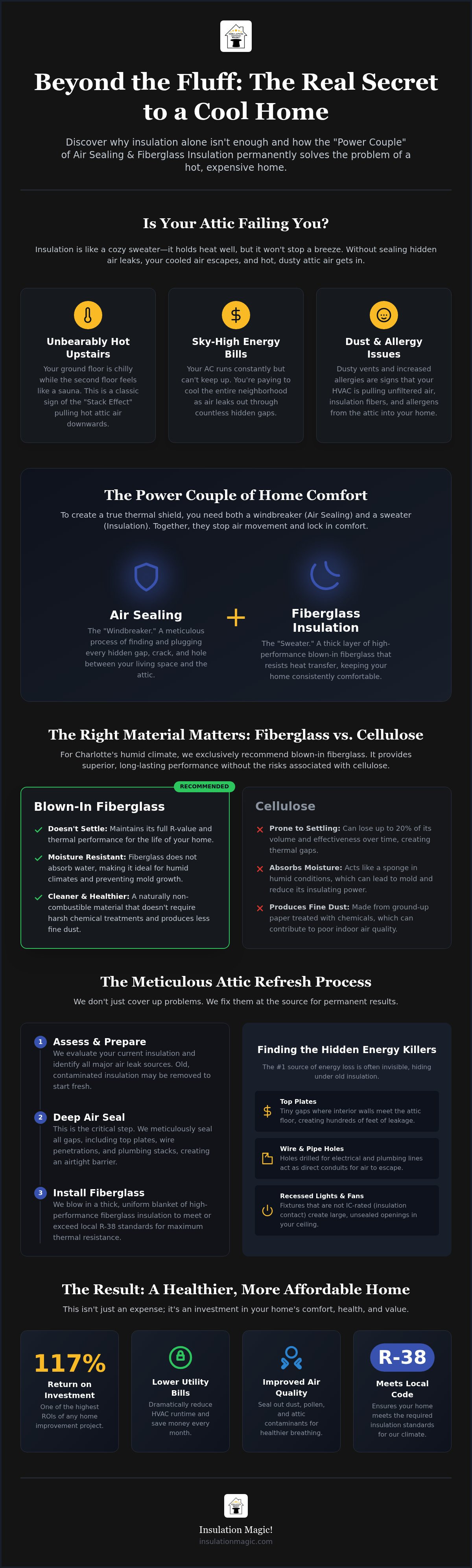
A truly effective home comfort project isn't just about what you add; it's about the care taken during every stage of the installation. We approach every attic with the mindset of a craftsman, ensuring that the essential stages of professional attic insulation and air sealing are followed to the letter. This disciplined, step-by-step method is what separates a temporary fix from a lifetime of comfort and savings. We don't believe in shortcuts, especially when those shortcuts lead to higher energy bills for our neighbors in Charlotte.
Our process begins with a thorough assessment of your existing attic environment. We look for hidden issues that could compromise the final result. Once the workspace is ready, we perform a "deep seal." This involves physically moving back existing insulation to uncover every top plate, wire hole, and plumbing bypass. We then create specialized barriers around heat-producing fixtures like chimneys and recessed lights. This ensures safety while maintaining a tight thermal break. Finally, we blow in premium fiberglass to the precise R-value required for our climate, followed by a rigorous inspection of your baffles to ensure the roof can still breathe.
Why Proper Removal is Sometimes Necessary
Starting with a "clean slate" is often the most responsible choice for an older home. If your current material is moldy, compressed, or shows signs of rodent damage, we can't achieve a 100% accurate seal without clearing the floor first. Removing the old debris allows us to see every crack and gap that needs attention. This meticulous preparation is a core part of insulation removal in Charlotte, ensuring that your new fiberglass layer sits on a clean, airtight surface. It's the only way to guarantee the job is done right the first time.
The Role of Attic Ventilation
A common mistake in DIY projects is sealing the attic so tightly that the roof can't "exhale." While we want to stop air from moving between your living room and the attic, we must allow fresh air to flow from your soffit vents to your ridge vents. We install baffles at the eaves to keep our blown-in fiberglass from blocking these vital air paths. This balance ensures that your combination of attic insulation and air sealing works correctly, preventing moisture buildup and wood rot during our humid North Carolina summers. Keeping the "lid" on your house while letting the roof breathe is the secret to a healthy, long-lasting home environment.
By following this thorough sequence, we protect your property and ensure that every dollar you spend on utilities is actually keeping your family comfortable. We take pride in these details because we know they are the difference between a house and a sanctuary.
The Result: A Healthier, More Affordable Charlotte Home
The true value of a professional attic refresh goes far beyond the physical materials we install. It's about the transformation of your daily life inside your home. When you invest in the proper combination of attic insulation and air sealing, you're creating a permanent shield that works 24/7 to keep your family comfortable. One of the most immediate benefits is what our clients often call the "Second Floor Miracle." This is the moment you realize your upstairs bedrooms are finally as cool as the kitchen, even during a sweltering July afternoon. By stopping the movement of air and heat, we ensure every room in your house remains a sanctuary, regardless of the temperature in the attic.
This project also provides a significant return on investment. Upgrading your attic in the Charlotte area can yield a return as high as 117%, making it one of the smartest financial decisions a homeowner can make. Beyond the immediate equity, you'll also see a reduced strain on your HVAC system. When your home holds onto its conditioned air, your AC unit doesn't have to cycle as frequently. This extends the lifespan of your expensive equipment and lowers your long term maintenance costs. There's a deep sense of peace of mind that comes from knowing the job was handled by a meticulous craftsman who treated your property with the same care they'd give their own.
Lowering Your Utility Bills in 2026
As we look at energy costs in 2026, efficiency is no longer just a luxury; it's a necessity. Homeowners in our region can save an average of $130 annually on their energy bills by upgrading their attic performance. Because utility rates continue to fluctuate, home air sealing acts as a permanent hedge against rising costs. You're essentially locking in your savings for the life of your home. Additionally, a more efficient home footprint means you're doing your part for the local environment by reducing unnecessary energy waste. It's a win for your wallet and a win for the Charlotte community.
Ready for a More Comfortable Home?
We believe that every homeowner deserves to understand the "how" and "why" behind their home's performance. We invite you to check our reviews to see the results we've delivered for your neighbors in Ballantyne and Weddington. Our reputation is built on transparency, integrity, and a dedication to old school craftsmanship. When you're ready to stop the drafts and start saving, you can book a professional attic assessment with our team. You won't find any high pressure sales tactics here. We're simply local experts who are happy to educate you on the best path forward for your specific home.
Take the Next Step Toward Lasting Home Comfort
You now understand that a truly comfortable home requires more than just a thick layer of material. By combining precision air sealing with high-performance blown-in fiberglass, you're creating a permanent barrier against the humid North Carolina heat. This meticulous approach doesn't just lower your utility bills; it restores the peace of mind that comes from knowing your home is clean, efficient, and protected.
We take immense pride in serving our neighbors across Charlotte, Matthews, and Waxhaw with a level of care that others often overlook. Our fiberglass-only approach ensures your indoor air stays clean while our deep-sealing process finds the tiny gaps that lead to uneven temperatures. Investing in attic insulation and air sealing is the most effective way to protect your HVAC system and ensure your second floor stays cool all summer long.
We're here to help you navigate these choices and find the best solution for your property. Let's work together to make your home the comfortable sanctuary it was meant to be.
Frequently Asked Questions
Do I really need to remove my old insulation before air sealing?
You don't always have to remove it, but we recommend it if the material is contaminated or if you want a perfect seal. Removing old debris allows us to see every crack in the top plates. This "clean slate" approach ensures we don't miss a single energy leak. If your current insulation is moldy or has been home to pests, removal is essential for your family's health.
How long does the attic air sealing and insulation process take?
Most projects are completed within one to two days. A simple refresh might only take a few hours, while a full removal, air sealing, and fiberglass installation requires more time. We work methodically to ensure every gap is plugged before blowing in the new material. We'll provide a specific timeline after assessing the size and current state of your attic during our initial visit.
Will air sealing make my home too tight and cause indoor air quality issues?
Proper attic insulation and air sealing won't make your home "too tight" as long as your roof is ventilated. We want to stop air from moving between your living space and the attic, not stop the house from breathing entirely. By using baffles and attic fans, we ensure fresh air flows through the roof deck while your conditioned air stays inside where it belongs.
Is fiberglass insulation safer than spray foam for my family?
We believe fiberglass is the safer choice because it's a non-toxic, inorganic material. Unlike spray foam, it doesn't carry the risk of chemical off-gassing or lingering odors. Our "no spray foam" policy protects your indoor air quality while providing a high-performance thermal barrier. It's a cleaner, more stable solution that doesn't introduce harsh chemicals into your home's personal environment.
Can I do attic air sealing myself or should I hire a pro?
While you can seal large visible gaps, hiring a pro ensures that the hundreds of linear feet of hidden top plates are addressed. We use specialized equipment to blow in fiberglass evenly, which is difficult to achieve with DIY rental machines. Our meticulous craftsmen find the tiny bypasses around wires and pipes that most homeowners miss, ensuring your investment actually delivers the promised comfort.
How much can I actually save on my energy bills with this combo?
Homeowners in the Charlotte area save an average of $130 annually on their utility bills after upgrading. While that yearly number is helpful, the long-term value is even more impressive. Upgrading your attic insulation and air sealing can provide a return on investment as high as 117%. It's one of the few home improvements that essentially pays for itself through lower monthly costs and increased property value.
What R-value is recommended for attics in the Charlotte, NC area?
The current North Carolina building code requires a minimum of R-38 for attics in the Charlotte area. However, many energy experts recommend reaching R-49 or even R-60 for maximum efficiency in our humid climate. We'll measure your current levels and calculate exactly how much blown-in fiberglass is needed to meet or exceed these modern standards for your specific home and budget.
Does air sealing help with pests and spiders in the attic?
Yes, sealing the gaps in your attic floor removes the primary highways that pests and spiders use to enter your home. When we plug holes around plumbing stacks and electrical lines, we're blocking entry points for more than just air. This creates a cleaner, more secure environment. Combined with the inorganic nature of fiberglass, your attic becomes much less attractive to uninvited guests like rodents or insects.
Disclaimer
This blog is intended to provide general information about insulation, energy efficiency, and home comfort based on years of experience. While we strive to keep content accurate and up to date, results may vary based on your home's construction, condition, and climate. Contact Insulation Magic for a personalized assessment and recommendations.


