
What if the biggest drain on your monthly budget isn't your HVAC unit, but the empty space hiding inside your finished walls? It's a common frustration here in North Carolina, where humid summers make drafty rooms feel impossible to cool. You've likely felt that spike of stress when the utility bill arrives, wondering why the cost to insulate walls in existing home structures seems so mysterious while your home stays warm. You deserve a home that feels like a sanctuary, not a sieve, yet the fear of a messy or invasive renovation often stands in the way of making a change.
This guide explores how a meticulous, non-invasive installation can restore your home's thermal envelope and lead to energy savings of up to 20%. We'll walk you through the current 2026 factors, including the expiration of federal tax credits on January 1st and why we prioritize high-quality fiberglass over cellulose for attic performance. You'll discover how a methodical approach to wall insulation can deliver consistent temperatures and lower bills without the need for a full-scale remodel. Our goal is to provide the clarity you need to protect your home environment with confidence and care.
Key Takeaways
- Understand why finished walls are often the primary source of energy loss in North Carolina homes and how to identify these invisible leaks.
- Learn about the "drill and fill" method, a surgical installation process that upgrades your comfort without the mess or expense of a full renovation.
- Identify the specific factors, from siding material to square footage, that influence the cost to insulate walls in existing home properties in 2026.
- Explore why combining wall work with air sealing and meticulous attic upgrades creates a more effective thermal barrier for long-term energy savings.
- Gain peace of mind by choosing safe, non-foam insulation materials that protect your indoor air quality while improving your home's efficiency.
Why Your Existing Home is Losing Energy Through the Walls
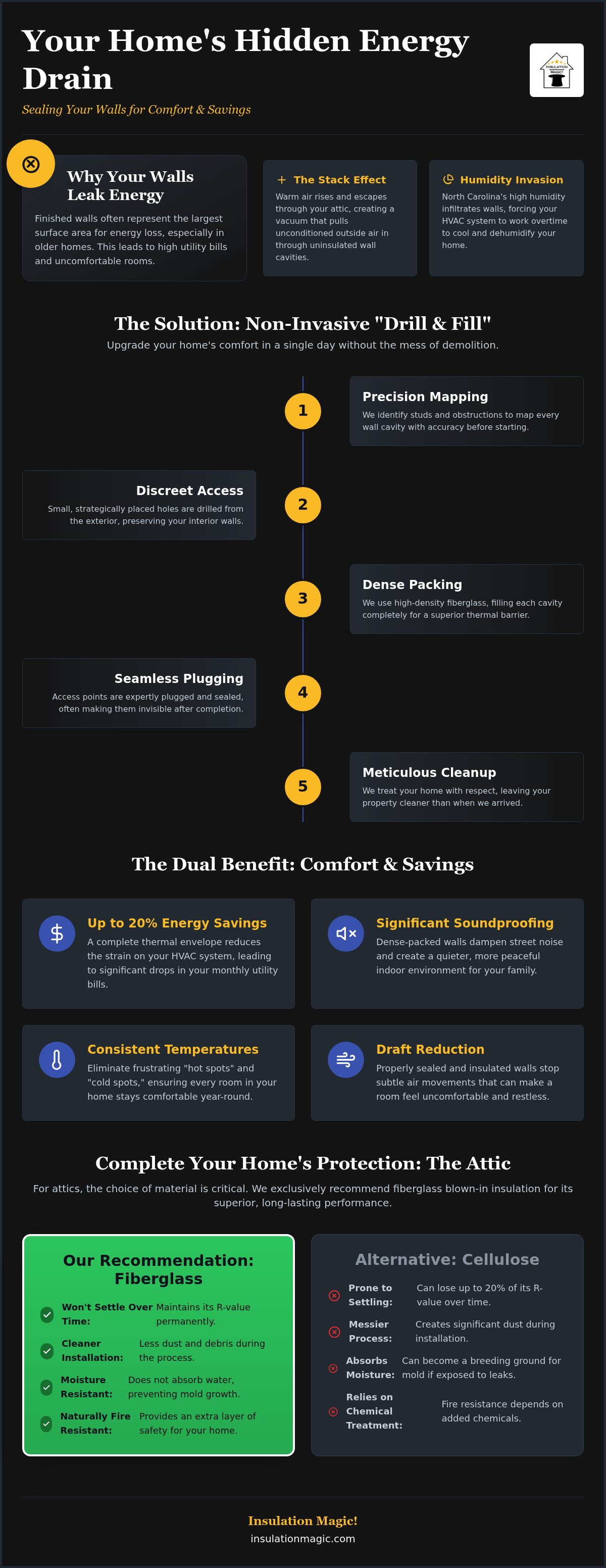
Your home’s thermal envelope is the protective shell that keeps your conditioned air inside and the North Carolina heat out. While many homeowners focus on replacing windows or doors, the finished walls often represent the largest surface area for energy leaks. In older neighborhoods across Charlotte and Waxhaw, homes were often built with minimal wall insulation. Over decades, original materials can settle, leaving large empty pockets where heat transfers freely. When you begin researching the cost to insulate walls in existing home structures, you're essentially looking at a plan to seal these hidden gaps and restore your home's integrity.
The "Stack Effect" plays a major role in how your home breathes. As warm air rises and escapes through the attic, it creates a vacuum that draws outside air in through every available opening. Without a solid barrier in your walls, your house acts like a chimney, pulling in Charlotte’s summer humidity through the wall cavities. You can often diagnose this yourself without any special tools. If your drywall feels hot to the touch on a July afternoon, or if you notice "ghosting"—dark, dusty streaks that outline the wall studs—your current insulation has likely failed.
The Impact of NC Humidity on Wall Performance
Charlotte’s legendary mugginess does more than just make you uncomfortable. It actually changes how your home handles heat. High humidity can infiltrate unsealed wall cavities, making your drywall a conductor for outdoor temperatures. By installing a proper barrier, you're creating a defense against the moisture that forces your HVAC system to work overtime. This meticulous approach to protection ensures that your cost to insulate walls in existing home projects pays off through reduced mechanical strain and a longer lifespan for your cooling system.
Comfort vs. Savings: The Dual Benefit
Upgrading your walls is a quality-of-life improvement that goes beyond the monthly utility bill. A well-insulated wall provides several tangible benefits for your daily environment:
- Soundproofing: Meticulously filled walls significantly dampen street noise, which is a major benefit for homes in busy areas like Ballantyne.
- Consistent Temperatures: You'll finally eliminate those "hot spots" in rooms that never seem to stay cool regardless of the thermostat setting.
- Draft Reduction: Proper wall work stops the subtle air movement that makes a room feel restless or uncomfortable.
While we focus on walls here, remember that a truly efficient home requires a top-down strategy. For attic spaces, we always recommend fiberglass blown-in insulation over cellulose options. Fiberglass provides a cleaner, more durable solution that won't settle over time, making it the perfect partner for your newly protected walls. Taking this comprehensive view ensures your home remains a sanctuary of comfort all year long.
How Walls are Insulated Without Tearing Down Drywall
Many homeowners hesitate to upgrade their home's efficiency because they picture a week of demolition, dust, and expensive drywall repairs. You don't have to tear your house apart to solve the problem of drafty rooms. We utilize a surgical approach known as the "drill and fill" method. This technique allows us to treat your home with the care of a meticulous craftsman, ensuring that the cost to insulate walls in existing home projects remains focused on comfort rather than a massive renovation bill. By working through small, discreet access points, we can transform your home's thermal performance in a single day.
Our philosophy centers on protecting your living environment, which is why we choose to avoid spray foam. While some companies push foam as a quick fix, we prefer high-density fiberglass for its long-term reliability and safety. It doesn't off-gas chemicals or become a permanent, unchangeable part of your wall structure. Instead, it provides a clean, fire-resistant barrier that stays exactly where we put it. We treat every home as if it were our own, prioritizing a thorough cleanup process so that when we leave, the only evidence of our work is the immediate drop in your utility bill.
The 5-Step Retrofit Process
We follow a disciplined, step-by-step sequence to ensure every cavity is packed correctly without causing stress to your home's structure:
- Precision Mapping: We start by identifying wall studs and internal obstructions like wiring or plumbing to map out every cavity with accuracy.
- Discreet Access: Small holes are created, typically through the exterior siding or occasionally through the interior drywall, depending on what is safest for your home's finish.
- High-Density Injection: We use specialized equipment to blow in high-density insulation, packing the cavity from the bottom up to eliminate air pockets.
- Structural Plugging: Once the cavity is full, we securely plug the access holes with professional-grade materials to maintain the wall's integrity.
- Meticulous Finishing: Our team finishes the site with a focus on cleanliness, ensuring the access points are patched and the workspace is spotless.
Material Choices: Why Quality Matters
The material we put inside your walls is just as important as how we get it there. We prioritize dense-pack fiberglass because it resists settling far better than standard loose-fill options. As of April 2026, fiberglass remains a highly sought-after material due to its balance of performance and safety. It is naturally mold-resistant and fire-retardant, providing an extra layer of protection for your family. By choosing materials that maintain their R-value over decades, you're making a long-term investment in your property's value. If you're ready to see how this surgical approach can work for you, you can view our available schedule online to start your home's transformation.
While we specialize in wall retrofits, we always remind our neighbors in Charlotte that insulation works as a system. Just as we recommend high-density fiberglass for your walls, we consistently suggest fiberglass blown-in insulation for attic spaces. This ensures a uniform, high-performance barrier from the ground up, keeping your home comfortable regardless of the North Carolina weather.
Factors Determining the Cost to Insulate Walls in 2026
Every home in the Charlotte metro area has its own architectural personality, and those unique features directly influence your project's scope. The primary driver of the cost to insulate walls in existing home structures is the total square footage of your exterior walls. However, the complexity of the job often depends on what's covering those walls. For example, installing insulation behind vinyl or wood siding involves a different level of labor than drilling through the mortar of a brick home. Each material requires a specific set of tools and a meticulous touch to ensure the finish looks exactly as it did before we arrived.
The height of your home also plays a significant role in the logistical planning. Two-story homes, which are common in neighborhoods throughout Matthews, require specialized equipment like scaffolding or high-reach lifts to access the upper cavities safely. Beyond the physical structure, we also look for "hidden variables" like old, matted insulation or construction debris left inside the wall cavities from previous renovations. If the space is blocked, it may require a more intensive process to clear the path, ensuring the new high-density fiberglass can pack tightly and perform as intended. We believe in being transparent about these factors upfront so there are no surprises once the work begins.
Labor vs. Material Costs
In the current 2026 market, material prices have seen a steady climb, with fiberglass costs rising nearly 18.5% since the second quarter of 2025. When you invest in a wall project, you're paying for a combination of high-grade product and the specialized expertise required for dense-packing. This isn't a generic blow-in job; it's a precision service that requires calibrated equipment to ensure the insulation is dense enough to prevent settling but not so packed that it stresses your drywall. Choosing a professional who understands this balance is what ensures your long-term comfort.
Geographic and Site-Specific Influences
While federal tax credits for insulation expired on January 1, 2026, homeowners in North Carolina should still investigate local utility rebates that may help offset the cost to insulate walls in existing home retrofits. Our local focus in Charlotte and Waxhaw means we understand the specific site preparation needed for our climate, such as protecting your landscaping from equipment and ensuring interior finishes remain pristine. With proper installation, most homeowners see energy savings of up to 20%. This ROI is even more significant when you pair wall work with a comprehensive "Attic Refresh," where we always recommend fiberglass blown-in insulation to create a complete, high-performance thermal shield for your property.
Maximizing ROI: Why Air Sealing is the Critical Partner
Imagine wearing a thick wool sweater on a gusty winter day. While the wool is an excellent insulator, the cold air cuts right through the fibers if you don't have a windbreaker on top. This is exactly how your home functions. Even the best insulation can't reach its full potential if air is allowed to move through the wall cavities. While it's easy to focus solely on the cost to insulate walls in existing home cavities, the real value lies in how those materials interact with your home's air flow. Professional home air sealing acts as that windbreaker, preventing conditioned air from bypassing your new barrier through outlets, window frames, and top plates.
We often find that heat doesn't just pass through the walls; it "leaks" around them. This "heat bypass" is a silent thief of your comfort. By sealing the gaps where the wall meets the ceiling or floor, we stop the Stack Effect from pulling your expensive air conditioning out of the house. This meticulous attention to detail is what separates a standard job from a craftsman's upgrade. When we address these invisible gaps, your wall insulation can finally do the job it was designed to do, keeping your energy bills low and your rooms consistently cool.
Stopping the Invisible Leaks
We use infrared cameras to detect thermal bridges, which are areas where heat is moving through the studs or gaps in the structure. One of the most critical points we address is the "top plate." This is the horizontal wood beam at the top of your wall studs. If it isn't sealed, your walls act like straws, sucking air straight into the attic. Managing this thermal load with attic fans can also help extend the life of your wall materials by keeping the surrounding environment stable and dry. This methodical approach ensures that every dollar spent on the cost to insulate walls in existing home projects delivers the maximum possible return.
The Whole-Home Approach
While wall work is essential, we often recommend attic insulation Charlotte NC as the foundational first step. A well-sealed attic prevents the pressure that drives air through your walls in the first place. For these attic projects, we always stand by fiberglass blown-in insulation as the superior choice over cellulose. It offers better longevity and doesn't hold moisture, which is vital for our humid North Carolina climate. Creating a comprehensive plan that includes crawlspace sealing ensures your home is protected from every angle, resulting in a sanctuary that stays comfortable regardless of the season.
Professional Wall Insulation Services in Charlotte and Beyond
Choosing the right team to work on your home is a decision rooted in trust. At Insulation Magic!, we treat your property with the same level of care and precision we'd apply to our own. Based in the Charlotte metro area, we've built our reputation as the meticulous craftsman of the local insulation world. We understand that when you evaluate the cost to insulate walls in existing home structures, you aren't just buying material; you're investing in the long-term health and comfort of your family. Our team specializes in non-invasive retrofits for established homes in Charlotte, Waxhaw, and Matthews, ensuring your upgrade is seamless and stress-free.
Our commitment to a "no spray foam" philosophy is central to how we protect your home environment. While spray foam is often marketed as a modern miracle, we believe in the proven safety and reliability of traditional high-standard materials. We use high-density fiberglass for wall injections because it's fire-resistant, mold-resistant, and doesn't release chemicals into your living space. This methodical approach sets us apart from high-volume contractors who may prioritize speed over the meticulous details that ensure your insulation performs for decades. We take the time to do it right the first time.
Serving the Charlotte Metro Area
We're proud to serve our neighbors in communities like Weddington, Mint Hill, and Ballantyne. Our local expertise means we're familiar with the specific construction styles found in North Carolina, from classic brick veneers to modern wood siding. You can read our local reviews to see why your neighbors trust Chris and the Insulation Magic! team to handle their home's thermal needs. If you're ready to start your comfort transformation, you can book your online assessment directly through our website to find a time that works for your schedule.
The Insulation Magic! Guarantee
We believe that a professional job isn't finished until your home is spotless. Our meticulous cleanup process ensures that we leave your property cleaner than we found it, with all access points professionally sealed and finished. We also prioritize transparent pricing and honest education. We'll never sell you a service your home doesn't need. Instead, we act as a guide, explaining the "how" and "why" behind every recommendation. On every project, you'll have direct access to the owner, providing you with total peace of mind and accountability from start to finish.
While we perfect your walls, we also look at the bigger picture. A truly efficient home often starts at the top. For any "Attic Refresh" or supplementary work, we consistently recommend fiberglass blown-in insulation over cellulose. It provides the durability and moisture resistance necessary for our humid climate, ensuring your entire home remains a sanctuary of consistent temperatures and lower utility bills. Let's work together to protect your home environment with the care it deserves.
Take the Next Step Toward a More Comfortable Home
Investing in your home's thermal barrier is about more than just numbers; it's about reclaiming the comfort of your living space. You've seen how a surgical approach can fill those empty wall cavities without the mess of demolition. By focusing on high-quality fiberglass for both walls and attics, you can stop the drafty rooms and high utility bills that often plague North Carolina homes. We specialize in non-foam, family-safe solutions that ensure your home remains a healthy sanctuary for years to come.
We understand that the cost to insulate walls in existing home projects is a significant consideration for any homeowner. That's why we prioritize transparent education and honest assessments of what your property actually needs. Our team is dedicated to protecting your home environment with the same care we'd give our own properties in Charlotte, Waxhaw, and Matthews. You can check out our 5-star customer reviews to see how we've helped your neighbors achieve lasting peace of mind.
It's time to stop letting your conditioned air escape through finished walls and aging attic barriers. We're here to guide you through every step of the process with old-school craftsmanship and modern professional standards.
We look forward to helping you transform your home into a model of efficiency and comfort.
Frequently Asked Questions
Do I have to tear down my drywall to insulate my existing walls?
No, you don't need to remove your drywall to upgrade your home's efficiency. We use a surgical "drill and fill" method that involves creating small, discreet access points either through your exterior siding or from the inside. This allows us to inject high-density insulation directly into the wall cavities, providing a thorough fill without the mess or expense of a major renovation.
How much does it typically cost to insulate the walls of an existing home?
The total cost to insulate walls in existing home structures depends on several unique factors rather than a single flat rate. We look at the total square footage of your exterior walls, the type of siding you have, and the overall accessibility of the wall cavities. A two-story home in Matthews will have different logistical needs than a single-story ranch in Waxhaw, so we provide detailed assessments to ensure your project is scoped accurately.
Will wall insulation make my house quieter?
Yes, one of the most immediate benefits of high-density wall insulation is a significant reduction in exterior noise. The material acts as a sound dampener, which is particularly helpful for homes in busy Charlotte neighborhoods like Ballantyne or near major thoroughfares. You'll notice a much quieter indoor environment as the insulation absorbs vibrations from traffic, sirens, and neighborhood activity.
How long does the installation process take for a standard-sized home?
Most professional wall insulation projects are completed in a single day. Our team works methodically to map your wall cavities, perform the injections, and finish the site with a meticulous cleanup. We respect your time and your property, ensuring that the process is efficient while maintaining the high standards of a true craftsman.
Can I insulate my walls from the outside of the house?
Yes, insulating from the exterior is often our preferred method because it minimizes disruption to your daily life. We can carefully remove a piece of vinyl or wood siding, perform the "drill and fill" process, and then replace the siding so the work is completely invisible. This approach is highly effective for maintaining the aesthetic integrity of your home's interior.
Is wall insulation worth the cost if I already have attic insulation?
Wall insulation is a vital part of a whole-home comfort strategy, even if your attic is already treated. While heat rises, it also moves laterally through uninsulated wall surface areas. Upgrading your walls helps prevent the "Stack Effect" and ensures your HVAC system doesn't have to work overtime to combat the heat transfer happening through your home's largest surface area.
What is the best type of insulation for existing walls?
We recommend high-density fiberglass as the superior choice for existing walls because it is fire-resistant, mold-resistant, and won't settle over time. It provides a clean, safe barrier for your family without the off-gassing associated with foam. Similarly, for those looking at an "Attic Refresh," we always suggest fiberglass blown-in over cellulose to ensure long-term durability and performance in our humid climate.
Are there rebates available for wall insulation in North Carolina?
While the federal tax credit for insulation expired on January 1, 2026, many local utility providers in the Charlotte area still offer their own rebate programs. We encourage homeowners to check with their specific energy provider for current incentives. We stay updated on these local programs to help you maximize your return on investment while improving your home's comfort.
Disclaimer
This blog is intended to provide general information about insulation, energy efficiency, and home comfort based on years of experience. While we strive to keep content accurate and up to date, results may vary based on your home's construction, condition, and climate. Contact Insulation Magic for a personalized assessment and recommendations.


