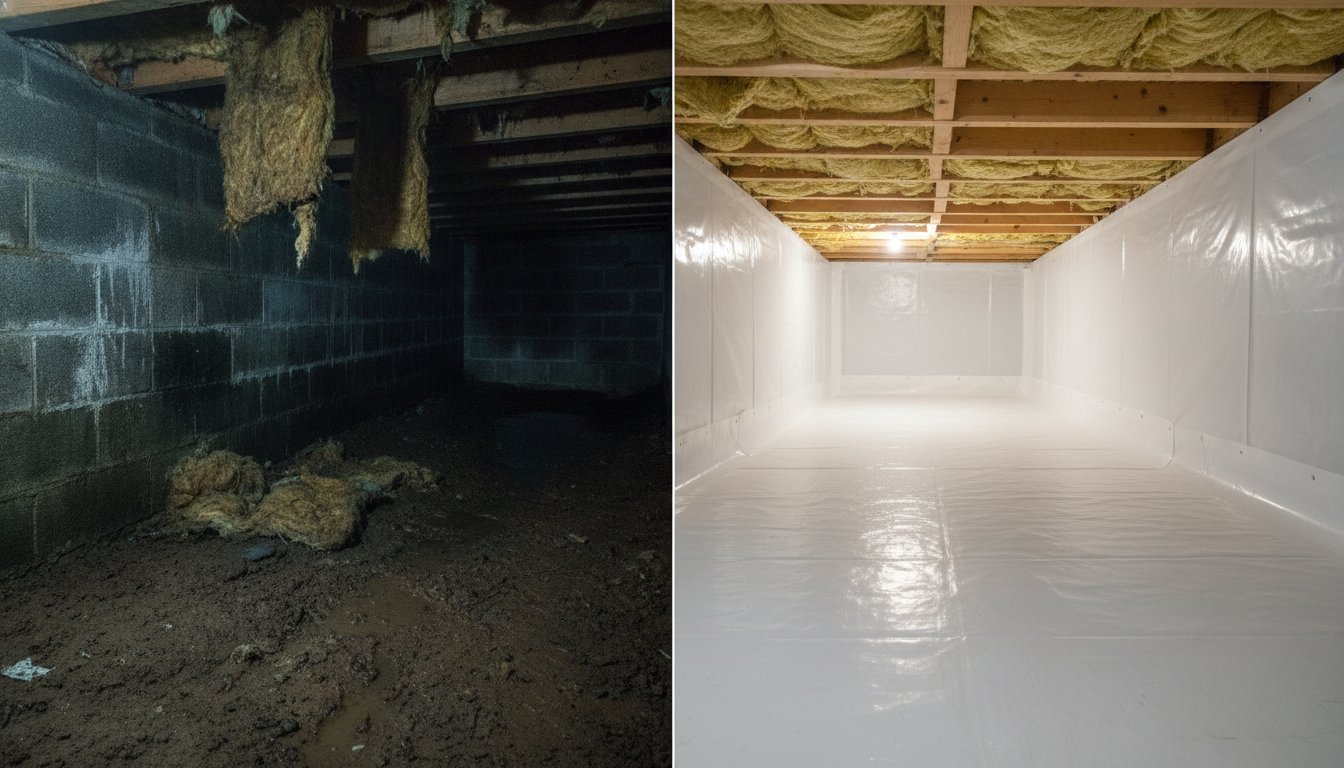
Did you know that up to 40% of the air you breathe on your first floor actually originates in your crawlspace? If you have noticed musty odors drifting into your living room or felt the bite of cold floors during a Charlotte winter, you aren't alone. It is deeply frustrating to feel like your home is working against you, especially when you are worried about hidden mold or structural rot caused by our humid North Carolina climate. Most local homeowners find themselves stuck comparing crawlspace insulation vs encapsulation to solve these issues once and for all.
We believe every homeowner deserves peace of mind and a healthy living environment. You will discover the critical differences between insulating and encapsulating your crawlspace to stop those drafts and protect your home’s foundation. We will walk through how each approach impacts your utility bills and why a meticulous, moisture-focused strategy is the key to creating a dry, odor-free environment with even temperatures across your entire first floor. By the end of this guide, you will have the clarity needed to make the best decision for your property's long-term health.
Key Takeaways
- Understand the fundamental differences between creating a thermal barrier and sealing out moisture to protect your home's foundation.
- Compare crawlspace insulation vs encapsulation to see which method effectively eliminates musty odors and restores comfort to your first-floor living areas.
- Learn why professional air sealing and high-quality fiberglass materials are superior to spray foam for long-term reliability in the North Carolina climate.
- Discover how to identify the warning signs—from standing water to high humidity—that dictate whether your crawlspace needs a simple update or a full encapsulation.
- Find out how a meticulous approach to crawlspace care can lead to lower utility bills and a healthier, more breathable home environment.
Understanding the Basics: Crawlspace Insulation vs. Encapsulation
Many homeowners in the Charlotte area start their home improvement journey with a simple question: do I just need new insulation, or should I seal the whole thing up? It is a fair point of confusion because these two services serve very different purposes. When we look at crawlspace insulation vs encapsulation, we are really comparing temperature control with environmental control. Insulation focuses on the thermal envelope, keeping your heat where it belongs. Encapsulation, on the other hand, is about sealing the environment to keep moisture, humidity, and pests from ever crossing your threshold.
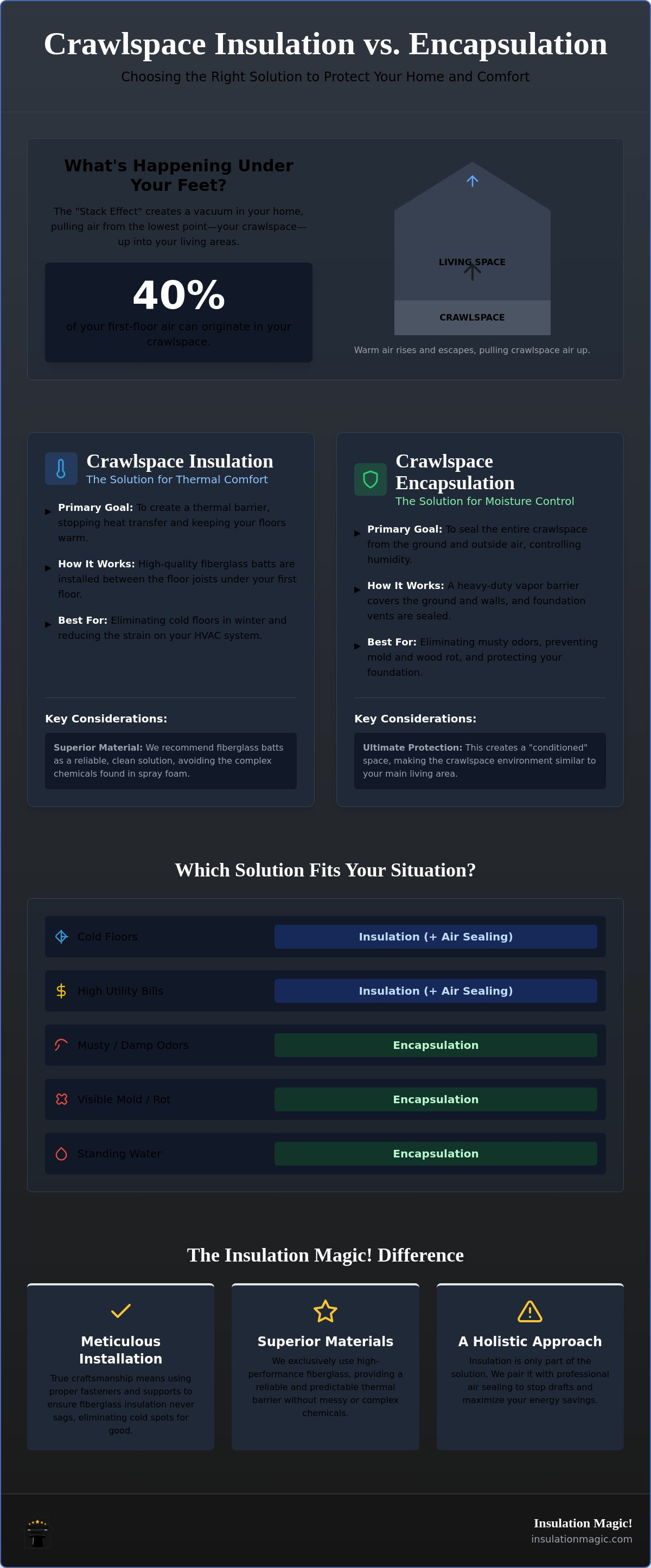
To make the right choice, you have to understand how air moves through your home. This is often called the "Stack Effect." As warm air rises and escapes through your attic, it creates a vacuum that pulls air from the lowest point of your house. This means that a significant portion of the air you breathe in your bedroom actually comes from your crawlspace. Understanding Crawlspaces and how they function as the "lungs" of your home helps explain why a damp crawlspace leads to a musty living room. Choosing between these solutions depends entirely on the specific symptoms your home is showing, such as icy floors or a lingering damp smell.
What is Traditional Crawlspace Insulation?
Traditional insulation involves installing fiberglass batts or mineral wool between the floor joists. The primary goal is to provide thermal comfort and reduce the load on your HVAC system. By creating this barrier, you stop the transfer of heat, which is the most effective way to eliminate cold floors during a North Carolina winter. We prefer these materials because they are reliable and don't involve the messy chemicals found in spray foam. However, these batts must be installed with precision. Without professional care, they can sag or trap moisture against the wood, which eventually leads to bigger problems.
What is Full Crawlspace Encapsulation?
Full encapsulation is a more robust, protective strategy. Instead of just insulating the floor, we seal the entire area. This includes covering the ground and walls with a heavy-duty vapor barrier and closing off foundation vents. The primary goal here is total humidity control. By creating a "conditioned" space, we ensure the crawlspace maintains a climate similar to your living room. This process stops ground moisture from rotting your floor joists and prevents mold from gaining a foothold. It is the ultimate solution for homes struggling with high humidity or recurring musty odors.
Crawlspace Insulation: The Solution for Thermal Comfort
When discussing crawlspace insulation vs encapsulation, the most immediate benefit of high-quality insulation is the physical comfort of your home. In our region, professional-grade fiberglass or mineral wool batts are the preferred choices for floor joists. These materials provide a predictable, high-performance thermal barrier that keeps heat where it belongs. We choose these over spray foam because they offer a cleaner, more reliable solution that doesn't introduce complex chemicals into your personal environment.
The efficiency of this barrier is measured by its R-value. With the 2024 North Carolina Residential Code taking effect on July 31, 2026, there is a renewed focus on ensuring homes meet modern energy standards. Proper floor insulation is essential for meeting these requirements and reducing the strain on your HVAC system. However, insulation alone isn't a silver bullet. It must be paired with professional home air sealing to stop drafts from whistling through the small gaps in your home's framing. When these two services work together, the result is a significant improvement in your monthly utility bills.
You may have heard the myth that fiberglass insulation eventually falls or sags. In reality, this is a matter of meticulous support rather than a flaw in the material. A true craftsman takes the time to use proper fasteners and supports to ensure every batt stays snug against the subfloor. This precision prevents air gaps that would otherwise allow cold spots to form under your feet. If you are ready to address these issues, you can book a thorough assessment to see how we can restore comfort to your home.
Signs Your Home Needs Better Floor Insulation
- Walking on your first floor feels like walking on ice during a cold January morning.
- Your heating bills remain high even after installing a new, high-efficiency HVAC system.
- You notice significant temperature swings between the first and second floors of your home.
The Importance of Insulation Removal
We strongly advise against "layering" new insulation over existing material. Old batts often hide rodent damage, pest waste, or localized mold growth from past moisture events. Leaving this material in place traps allergens and odors directly beneath your living space. A clean start is the only way to ensure your home remains healthy. You can learn more about our specialized insulation removal Charlotte process to see why we prioritize a meticulous clean-out before any new work begins.
Crawlspace Encapsulation: Defeating Charlotte’s Humidity
Living in the Charlotte area means dealing with a humid subtropical climate that presents unique challenges for your home's foundation. The heavy clay soil of the Piedmont region is notorious for retaining moisture long after the rain stops. This damp earth constantly releases water vapor into the air directly beneath your feet. In a traditional vented crawlspace, this moisture lingers, creating a breeding ground for wood-destroying fungi and mold. When we look at crawlspace insulation vs encapsulation, it's clear that while insulation manages heat, encapsulation is the only permanent way to defeat this environmental moisture at its source.
By installing a continuous vapor barrier, we create a physical shield between the damp ground and your home's structural wood. This barrier stops ground moisture from evaporating and eventually rotting your floor joists. The health benefits are just as significant. Because up to 40% of the air on your first floor originates in the crawlspace, keeping that area dry is essential for your family's health. A study of 238 North Carolina homes found that nearly 20% showed mold transmission from the crawlspace into the living areas through the HVAC system. Encapsulation shuts down this pathway, ensuring the air you breathe is clean and dry.
The Anatomy of a Meticulous Encapsulation
A high-quality encapsulation is more than just laying down plastic. We use high-mil vapor barriers that are thick enough to withstand occasional foot traffic without tearing. Every seam is meticulously sealed with specialized tape to create a truly airtight environment. Under the upcoming 2024 NC Residential Code, mechanical drying is a key requirement for closed crawlspaces. This usually involves a permanently installed dehumidifier. We aim for a "sweet spot" of 50% relative humidity, which is low enough to prevent mold growth but high enough to keep your wood from becoming too brittle.
Encapsulation and Home Value in Waxhaw and Weddington
In thriving communities like Waxhaw and Weddington, home buyers and inspectors are increasingly savvy about crawlspace health. A damp, musty crawlspace can be a major red flag during a home inspection, often leading to expensive last-minute repair demands or even a canceled sale. By choosing encapsulation now, you are making a strategic investment in your property's resale value. It serves as a powerful preventative measure against structural failure and wood rot. It tells future buyers that you have treated the property with the care of a craftsman, ensuring the foundation remains as solid as the day it was built.
Comparison Guide: Which Solution Fits Your Situation?
Deciding between crawlspace insulation vs encapsulation doesn't have to be a guessing game. It really comes down to the current health and humidity levels under your home. If your crawlspace is bone-dry but your toes are freezing every winter morning, a high-quality insulation update is likely your best move. However, if you see standing water, smell a damp odor, or spot visible mold on your joists, encapsulation is the only way to fix the root cause. Many Charlotte homeowners find the best balance in a hybrid approach. This involves professional air sealing and a new moisture barrier paired with floor insulation. It balances the upfront cost while still providing excellent long-term energy savings.
When we look at your specific home, we consider your long-term goals. If you plan to stay in your home for decades, the investment in encapsulation pays for itself through foundation protection and lower utility bills. If you are just looking to fix a drafty living room in a relatively dry environment, a meticulously installed floor barrier might be all you need. You can schedule your crawlspace inspection today to get a professional recommendation tailored to your home's unique footprint.
The "Middle Ground" Checklist
Sometimes you don't need a full "clean room" encapsulation, but your current setup is failing. We often see homes with thin, 6-mil plastic that is bunched up or missing in spots. This isn't enough to stop ground moisture. We also look for air leaks in the rim joist. These gaps allow outside air to bypass your insulation entirely. In these cases, we recommend combining crawlspace insulation Charlotte NC with a fresh, properly overlapped moisture barrier and targeted air sealing. This middle-ground approach addresses comfort and basic protection without the full cost of a conditioned system.
The "Musty Smell" Test
It is a common mistake to think that new insulation will fix a bad smell. In fact, fiberglass can act like a sponge for odors. If there is moisture under the house, it creates organic growth on the wood and in the soil. These smells are then pulled into your home by the stack effect we discussed earlier. Insulation alone won't fix this. Once we perform a full encapsulation and install a dehumidifier, the reduction in odor is usually noticeable within just a few days. The air becomes crisp and clean because the source of the dampness is finally gone.
The Insulation Magic! Difference: Meticulous Protection
Choosing a partner for your home improvement project is a matter of trust. At Insulation Magic!, we approach every Charlotte home with the mindset of a meticulous craftsman. As a local, owner-operated business, we understand the specific moisture challenges found in neighborhoods from Ballantyne to Matthews. We don't believe in one-size-fits-all sales pitches. Instead, we act as patient educators, helping you navigate the choice between crawlspace insulation vs encapsulation based on what your foundation actually needs. Our priority is your peace of mind, ensuring that every project is handled with the same care we would give our own properties.
Transparency is the cornerstone of our work. We provide honest assessments that look at the whole picture, from old, failing materials to hidden air leaks. We never take shortcuts on the preparation phase. This means we prioritize the professional removal of old, damp insulation before installing anything new. By starting with a clean slate, we ensure that your home remains healthy and that your new investment performs at its peak for years to come.
Our "No Spray Foam" Philosophy
You might notice that many companies push spray foam as a modern miracle. We take a different stance. Our "no spray foam" philosophy is rooted in long-term protection and home health. Spray foam is a permanent, chemical-heavy material that can make future home inspections or structural repairs nearly impossible. It can hide wood rot or leaks until the damage is catastrophic. We prefer the reliability of high-quality fiberglass and mineral wool batts for crawlspaces. These materials allow the wood to "breathe" and permit easy access for termite inspectors or plumbers.
This commitment to quality extends to your upper floors as well. When we address attic spaces, we consistently recommend fiberglass blown-in insulation over cellulose options. Fiberglass is naturally fire-resistant, doesn't settle as aggressively as cellulose, and provides a cleaner environment for your family. It is the superior choice for maintaining consistent temperatures and high R-values without the dust and weight concerns associated with other materials.
Ready to Transform Your Home Comfort?
Our team is ready to help you reclaim your home's comfort, whether you live in Waxhaw, Mint Hill, or Weddington. We follow a disciplined, step-by-step process that moves logically from assessment to execution. You will always know the "how" and "why" behind our recommendations. You can explore our full range of professional services to see how we address everything from air sealing to full moisture barriers. If you are tired of musty smells and cold floors, you can schedule your assessment today through our simple online portal. We look forward to showing you the meticulous difference that true craftsmanship makes.
Take the Next Step Toward a Healthier Charlotte Home
Deciding between crawlspace insulation vs encapsulation is about more than just numbers; it's about protecting the environment where your family grows. You now know that while insulation keeps your floors warm, encapsulation provides a permanent shield against the humidity that defines our North Carolina climate. By choosing a meticulous approach that avoids the risks of spray foam, you're investing in the long-term structural health of your property.
Our team brings years of local expertise to every project in Charlotte, Matthews, and Ballantyne. We take immense pride in our work and invite you to check out our 5-star customer reviews from your neighbors who've already transformed their home comfort. Whether you need a simple moisture barrier refresh or a full conditioned system, we're here to guide you with transparency and care.
Don't let musty smells or icy floors linger another season. Book Your Crawlspace Assessment with Insulation Magic! today and let us help you create a dry, odor-free foundation for your home. We're excited to help you restore the comfort you deserve.
Frequently Asked Questions
Is crawlspace encapsulation worth the cost in North Carolina?
Yes, encapsulation is a highly effective investment in North Carolina because our vented crawlspaces often exceed 80% relative humidity during the spring and summer. Research by Advanced Energy shows that sealing these spaces can reduce heating and cooling costs by 15% to 20%. Beyond energy savings, it protects your home's structural integrity from the moisture held in our local clay soil. It is a permanent solution that improves your indoor air quality.
Can I just put new insulation over my old crawlspace insulation?
You should never install new insulation over old material in a crawlspace. This practice often traps moisture, mold spores, and rodent waste against your floor joists, which can lead to structural rot and lingering odors. We believe in a clean start for every project. Our meticulous removal process ensures that we identify and fix underlying issues before any new fiberglass or mineral wool batts are installed in your home.
Does an encapsulated crawlspace still need floor insulation?
No, once a crawlspace is fully encapsulated, you typically don't need insulation between the floor joists. Instead, the thermal boundary is moved to the foundation walls. This creates a conditioned space where the temperature stays much closer to the climate inside your living room. It eliminates the need for bulky floor batts while providing a more consistent and comfortable temperature across your entire first floor throughout the year.
How long does crawlspace insulation typically last before needing replacement?
High-quality crawlspace insulation can last 15 to 20 years if the environment remains dry and free of pests. However, in our humid Charlotte climate, traditional fiberglass batts in vented spaces often sag or become damp much sooner. Regular inspections are key to ensuring your barrier remains effective. If you notice sagging or musty smells, it is likely time for a professional assessment to prevent further damage to your subfloor and joists.
Will encapsulating my crawlspace stop my floors from being cold?
Yes, encapsulating your crawlspace is one of the most effective ways to stop floors from being cold. By sealing the vents and insulating the foundation walls, the area under your home becomes a tempered space. You are no longer fighting the freezing winter air that usually whistles through foundation vents. This results in even, comfortable temperatures that make walking on your first floor much more pleasant during a North Carolina winter.
What is the difference between a vapor barrier and full encapsulation?
A vapor barrier is simply a layer of plastic on the ground, while full encapsulation is a comprehensive system. When comparing crawlspace insulation vs encapsulation, remember that encapsulation involves sealing the floor, walls, and vents, and usually includes a dehumidifier. A basic ground cover only stops some earth moisture, but encapsulation provides total environmental control. It turns a damp, vented space into a clean, dry, and conditioned part of your home.
Why does Insulation Magic avoid using spray foam in crawlspaces?
We avoid spray foam because it's a permanent, chemical-heavy material that can hide serious issues like wood rot or plumbing leaks. It makes future home inspections or repairs incredibly difficult and messy. Instead, we use high-quality fiberglass and mineral wool solutions. These materials allow for better maintenance and visibility while providing excellent thermal protection. We believe in craftsmanship that protects your home without creating permanent barriers to future professional care.
Disclaimer
This blog is intended to provide general information about insulation, energy efficiency, and home comfort based on years of experience. While we strive to keep content accurate and up to date, results may vary based on your home's construction, condition, and climate. Contact Insulation Magic for a personalized assessment and recommendations.


