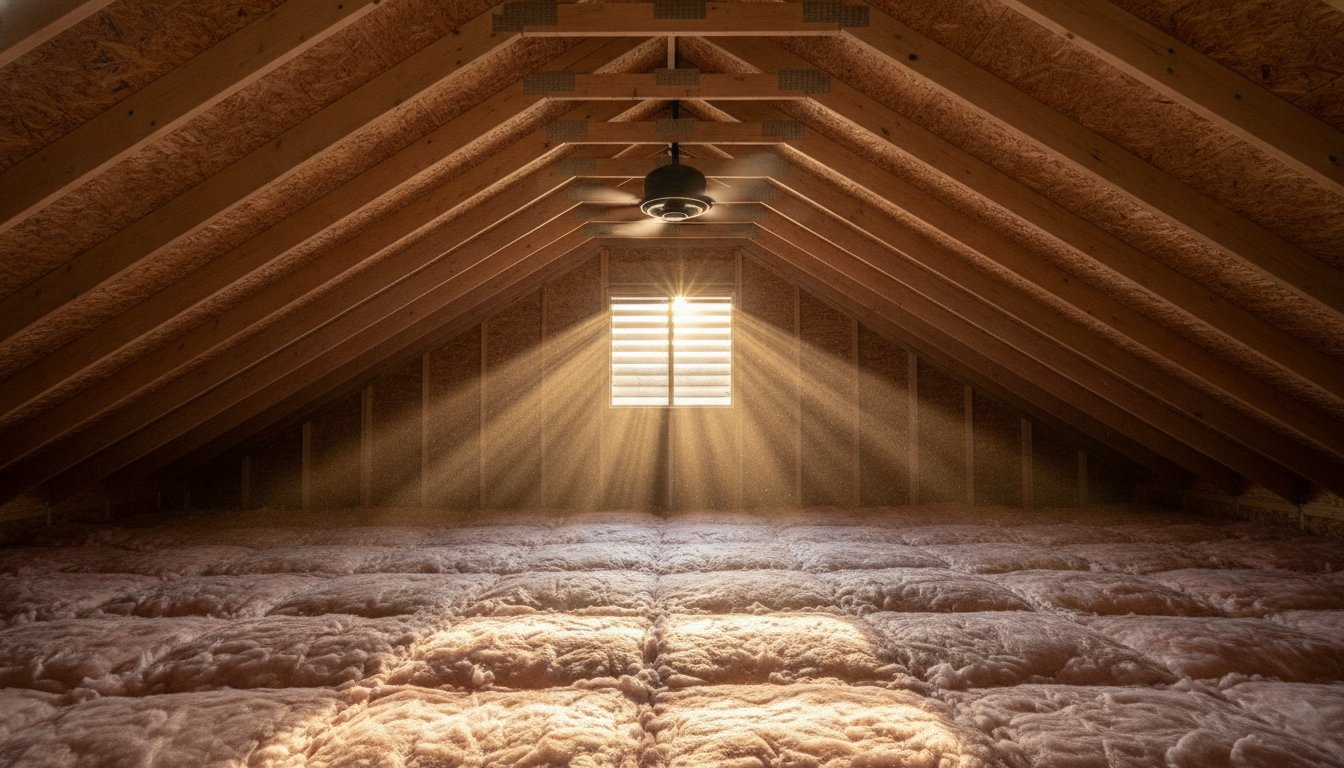
Have you ever wondered why your second floor feels like a sauna even when your air conditioner is working overtime? It's a common frustration for many Charlotte families who find themselves retreating downstairs just to escape the stifling heat. When your attic traps stagnant, humid air, it creates an oven effect that radiates through your ceiling and forces your HVAC system to run constantly. You might even worry about moisture buildup or mold growth in those dark, unventilated spaces. A professional attic fan installation Charlotte homeowners can trust is often the missing piece of the puzzle for a truly efficient home.
We understand that you want a home that feels comfortable and a roof that lasts for decades. By pairing a high quality attic fan with fiberglass blown-in insulation, which we always recommend over cellulose for its superior moisture resistance and thermal performance, you can finally take control of your indoor climate. This article explains how proper ventilation can save you up to 30 percent on air conditioning costs while shielding your shingles from heat damage. We'll explore the technical benefits of active airflow and show you how this methodical approach protects your property from the relentless North Carolina sun.
Key Takeaways
- Learn how an attic fan acts as a ventilation powerhouse to exhaust trapped heat and stop the "oven effect" from warming your living space.
- Understand the differences between electric and solar-powered models to determine which fan capacity best fits your home's square footage.
- Discover why an attic fan installation Charlotte project is most effective when paired with fiberglass blown-in insulation to create a complete thermal barrier.
- See why we recommend fiberglass over cellulose to ensure your attic remains moisture-resistant and your insulation doesn't settle or lose its R-value.
- Find out how a professional assessment of your current ventilation can lead to a longer lifespan for your roof shingles and lower monthly energy bills.
Understanding the Need for Attic Fan Installation in Charlotte
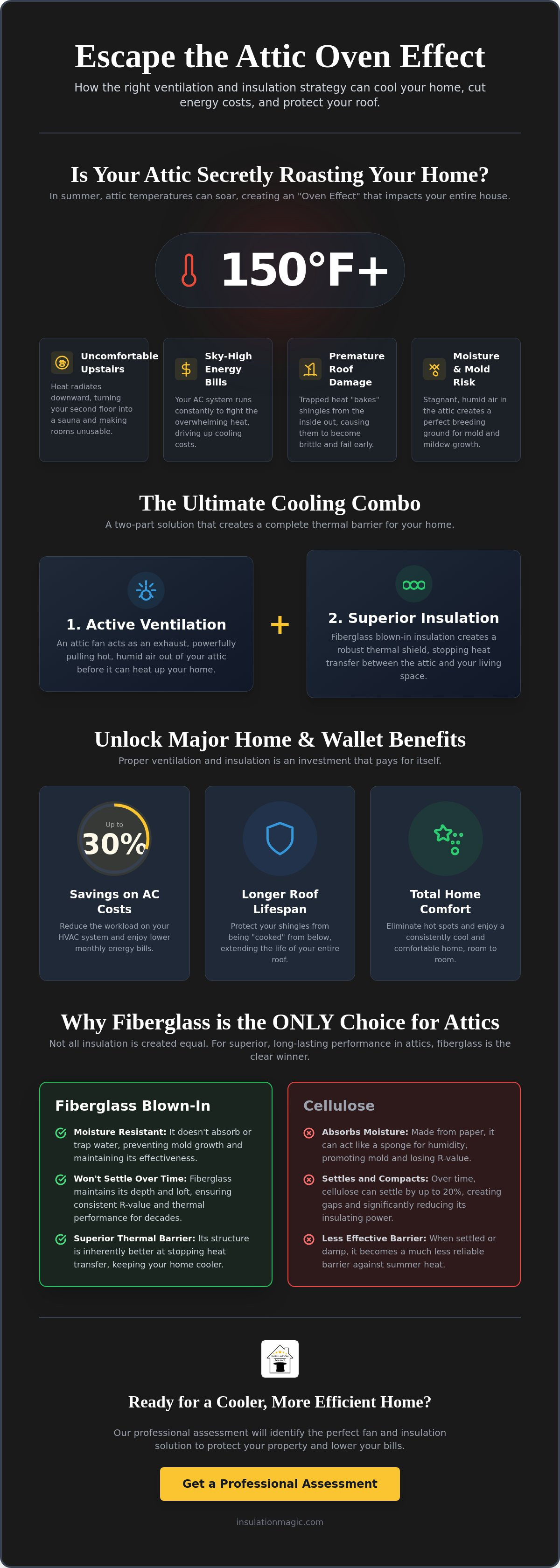
Living in the Queen City means enjoying beautiful springs, but it also means bracing for summers where the humidity feels thick enough to cut. During these months, your attic can reach temperatures exceeding 150 degrees. This trapped heat creates what we call the "Oven Effect." Instead of staying in the attic, that thermal energy radiates downward through your ceiling, turning your upstairs bedrooms into uncomfortable hot zones. An attic fan installation Charlotte homeowners invest in acts as a ventilation powerhouse, actively pulling that scorching air out and replacing it with cooler outside air.
A powered attic ventilator is essential because passive vents often can't keep up with the intense North Carolina sun. Without active airflow, heat doesn't just sit there; it bakes your roof shingles from the inside out. This internal heat can cause shingles to become brittle and lose their protective granules prematurely, essentially shortening the life of your entire roofing system. It's a methodical process of protection that starts at the very top of your home.
Signs Your Charlotte Home Needs Better Ventilation
How do you know if your home is struggling? We often see homeowners who feel like they're fighting a losing battle with their comfort. Keep an eye out for these common indicators:
- Ceilings that feel noticeably warm to the touch in the late afternoon.
- An air conditioner that runs 24/7 but never quite reaches the temperature on the thermostat.
- Evidence of "attic rain," which is moisture buildup that occurs on humid nights in areas like Matthews or Pineville.
The Financial Impact: Energy Bills and Roof Repairs
When your attic is overheated, your HVAC system has to work significantly harder to keep your home cool. According to industry data, proper ventilation can save homeowners up to 30 percent on their air conditioning costs. While an attic fan is a modest investment, the cost of replacing a roof that has been "cooked" by trapped heat is far higher. We always recommend pairing your fan with fiberglass blown-in insulation rather than cellulose. Fiberglass provides a more stable thermal barrier that doesn't settle or trap moisture like cellulose can, ensuring the fan doesn't accidentally pull air from your living room. For North Carolina homeowners, investing in attic ventilation is a high-return strategy that balances immediate monthly savings with long-term property protection.
If you're noticing these signs, it's worth exploring our insulation and ventilation services to see how we can restore your home's efficiency.
Choosing the Right Attic Fan for Your North Carolina Home
Selecting the right equipment is the next step in reclaiming your home's comfort. When planning an attic fan installation Charlotte homeowners need to consider the specific volume of their attic space. This is measured in CFM, or Cubic Feet per Minute. A fan that's too small won't move enough air to break the heat cycle, while one that's too large can create negative pressure. We take a meticulous approach to calculating the exact CFM requirements for your property, ensuring your energy-efficient cooling strategy is both effective and balanced.
Solar vs. Electric: Which Wins in Charlotte?
Both options have distinct advantages depending on your specific goals. Solar powered fans are excellent for areas like Waxhaw where the sun is intense; they operate for free and require no electrical wiring. However, they only run when the sun is out. Electric fans provide consistent power regardless of the weather. This is crucial on those heavy, humid Charlotte days when the sun is hidden but the attic is still stifling. Maintenance for both is minimal, but we ensure every motor is professional-grade to avoid the annoying hum often associated with cheaper, box-store models. Our fans are designed to be whisper-quiet, so you'll feel the breeze without hearing the motor.
Key Features to Look For
Modern fan units are far more advanced than the basic vents of the past. We prioritize units equipped with both thermostats and humidistats. A thermostat ensures the fan kicks on when the heat rises, while a humidistat targets the moisture that can lead to mold. Safety is equally important, so we look for fire safety shut-offs and high-quality motor construction. These components must integrate seamlessly with your existing soffit and ridge vents to create a continuous loop of fresh air.
To make these fans truly effective, they need a solid floor of insulation beneath them. We always recommend fiberglass blown-in insulation over cellulose because it doesn't settle or create the fine dust that can clog fan components over time. Fiberglass maintains its R-value and allows the fan to pull heat from the attic without sucking conditioned air out of your bedrooms. If you're ready to see which model fits your home, you can schedule an attic assessment with our team today. We'll walk you through the options and find the perfect fit for your roof's architecture.
Why Attic Fans and Fiberglass Insulation are the Perfect Pair
An attic fan is a powerful tool, but it doesn't work in a vacuum. Think of your attic fan as the exhaust system and your insulation as the thermal floor. Without a high quality layer of insulation, the fan can't do its job properly. In fact, a fan without a sealed floor can actually create a "short circuit" where it pulls the cool, expensive air from your living room through tiny gaps in your ceiling. This makes your AC work even harder, which is the opposite of what we want to achieve with an attic fan installation Charlotte project.
To prevent this, we focus on creating a complete thermal envelope. A helpful resource for understanding this balance is the U.S. Department of Energy guide on whole-house fans, which emphasizes the importance of proper attic ventilation and insulation working together. When these two components are balanced, your home stays cooler and your energy bills remain predictable. It's about ensuring the fan draws air from the outside vents, not from your conditioned living space.
The Superiority of Fiberglass Blown-In Insulation
We always recommend fiberglass blown-in insulation over cellulose for our Charlotte clients. While cellulose is made from recycled paper, it tends to settle and pack down over time, losing its effectiveness and R-value. Fiberglass maintains its loft and thickness for decades. It's also naturally fire resistant and doesn't provide a food source for pests. In our humid climate, fiberglass is superior because it resists moisture buildup much better than paper-based alternatives. For more details on modern materials, check out our Energy Efficient Home Insulation: A 2026 Guide.
The Critical Role of Air Sealing
Before the fan starts spinning, we must address the hidden leaks in your attic floor. Common culprits include recessed lighting canisters, plumbing stacks, and the attic hatch itself. Air sealing ensures that the fan pulls fresh air from your soffit vents rather than your air conditioned bedrooms. This step is vital for permanent savings, as outlined in our guide on how to lower heating and cooling costs. By meticulously sealing these gaps, we protect your home's comfort and your wallet. If you're ready to fix your home's thermal strategy, you can book your professional attic inspection today.
Professional Attic Fan Installation: The Insulation Magic! Difference
At Insulation Magic!, we don't treat an attic fan like a simple electrical fixture. We see it as a vital organ in your home's respiratory system. Chris approaches every attic fan installation Charlotte project with the mindset of a Meticulous Craftsman, ensuring that the equipment is perfectly sized for your specific square footage. A fan that's too powerful can create negative pressure, while one that's too small won't break the heat cycle. We take the time to calculate the exact airflow needs of your attic before a single shingle is touched.
Our philosophy is built on creating a healthier, more efficient home environment. This is why we maintain a strict no-spray-foam policy. We believe in the long-term benefits of traditional, high-quality materials that allow your home to breathe properly. When we install a fan, we always pair it with fiberglass blown-in insulation. We recommend fiberglass over cellulose because it doesn't settle or create the fine dust that can interfere with fan motors. This combination ensures your home remains comfortable and your indoor air stays clean.
Our Step-by-Step Installation Process
- Step 1: Comprehensive Thermal Assessment. We begin by evaluating your attic's current R-value and identifying existing ventilation gaps to ensure the new fan will work in harmony with your insulation.
- Step 2: Precision Mounting. Our team performs precision cutting and weather-tight mounting on your roof or gable. We focus on a seamless fit that protects your home from the elements.
- Step 3: Integration and Testing. We integrate the fan with modern thermostats and humidistats, followed by a final test to verify that the airflow is moving exactly as intended.
Ready for a Cooler Home? Get Your Quote
If you're tired of a second floor that feels like a sauna, it's time for a more methodical approach to your home's comfort. We've helped families from Ballantyne to Weddington reclaim their upstairs living spaces and lower their energy costs. You can read about their experiences in our local reviews to see how our commitment to transparency and quality sets us apart.
We treat your property with the same level of care we would apply to our own homes. Our process is clean, professional, and thorough from the initial assessment to the final cleanup. When you're ready to protect your roof and transform your comfort, our online booking system makes it easy to get started. Let's work together to make your home the sanctuary it was meant to be.
Restore Comfort and Protect Your Investment
A cooler, more efficient home is within reach when you address the heat at its source. By combining active ventilation with a fresh layer of fiberglass blown-in insulation, you create a thermal barrier that stands up to the Charlotte humidity. This methodical approach doesn't just lower your energy bills; it also extends the life of your roof shingles by preventing them from baking from the inside out. Our commitment to a no-spray-foam policy ensures that your attic remains a safe, breathable environment for your family.
Chris takes immense pride in providing a meticulous, owner-operated service that treats your property with the highest level of care. Whether you're in the middle of a heatwave or preparing for the season ahead, an attic fan installation Charlotte project is a long-term investment in your peace of mind. We're ready to help you evaluate your current R-value and find the perfect ventilation balance for your home.
Take the first step toward a more comfortable second floor and a healthier home. Book Your Charlotte Attic Assessment Online today and let us show you the Insulation Magic! difference. We look forward to helping you stay cool.
Common Questions About Attic Ventilation
Do attic fans really lower the temperature inside my house?
Yes, an attic fan significantly lowers indoor temperatures by actively exhausting the stagnant, superheated air that accumulates under your roof. When your attic is cooler, less heat radiates through your ceilings into your living spaces. This process eliminates the "oven effect," making your second floor much more comfortable and reducing the constant demand on your air conditioning system during Charlotte's peak summer months, a benefit often highlighted by HVAC specialists like aroundclock.com.
Will an attic fan pull air-conditioned air out of my living space?
An attic fan will not pull conditioned air from your home if your attic floor is properly sealed and insulated. We prevent this "short circuit" by performing meticulous air sealing and installing fiberglass blown-in insulation. We prefer fiberglass over cellulose because it doesn't settle or leave gaps over time; this ensures a stable thermal barrier that keeps your expensive AC air exactly where it belongs.
How much does it cost to run an electric attic fan in Charlotte?
Running a modern, professional-grade attic fan typically costs only a few dollars per month on your utility bill. Since the fan helps your HVAC system operate more efficiently, the reduction in your overall cooling costs usually far exceeds the small amount of electricity the fan motor consumes. It's a methodical investment that pays for itself through lower energy bills and a longer lifespan for your roof shingles.
Is a solar attic fan powerful enough for a large home in Matthews?
Solar fans are highly effective for large homes in Matthews, provided the unit is correctly sized for your attic's total volume. For expansive or complex rooflines, we often recommend installing multiple units to ensure balanced airflow across the entire space. Because solar fans have zero operating costs and run whenever the sun is shining, they're an excellent, eco-friendly solution for the intense North Carolina heat.
Can I install an attic fan myself, or do I need a pro?
Professional installation is highly recommended to ensure your roof remains weather-tight and the fan is safely wired. A professional attic fan installation Charlotte specialist understands how to calculate the necessary CFM for your square footage and how to integrate the unit with existing vents. DIY attempts often lead to improper airflow or roof leaks, which can be far more expensive to repair than a professional install.
How long does a professional attic fan installation take?
Most professional installations are completed within two to four hours, depending on your roof's accessibility and the type of fan selected. This timeframe includes our thorough thermal assessment, precision cutting, mounting, and the final testing of the thermostat and humidistat controls. We prioritize a clean and disciplined workspace, ensuring the project is finished efficiently without disrupting your daily routine or leaving a mess behind.
Disclaimer
This blog is intended to provide general information about insulation, energy efficiency, and home comfort based on years of experience. While we strive to keep content accurate and up to date, results may vary based on your home's construction, condition, and climate. Contact Insulation Magic for a personalized assessment and recommendations.


