Why does your second floor still feel like a sauna even when the air conditioner is running at full blast? It's a frustrating reality for many North Carolina homeowners who find themselves paying record-high utility bills while still dealing with hot spots and poor air quality. Investing in energy efficient home insulation isn't just about stuffing more material into your attic; it's about a methodical approach that combines precision air sealing with high-quality, non-toxic materials to protect your living environment.
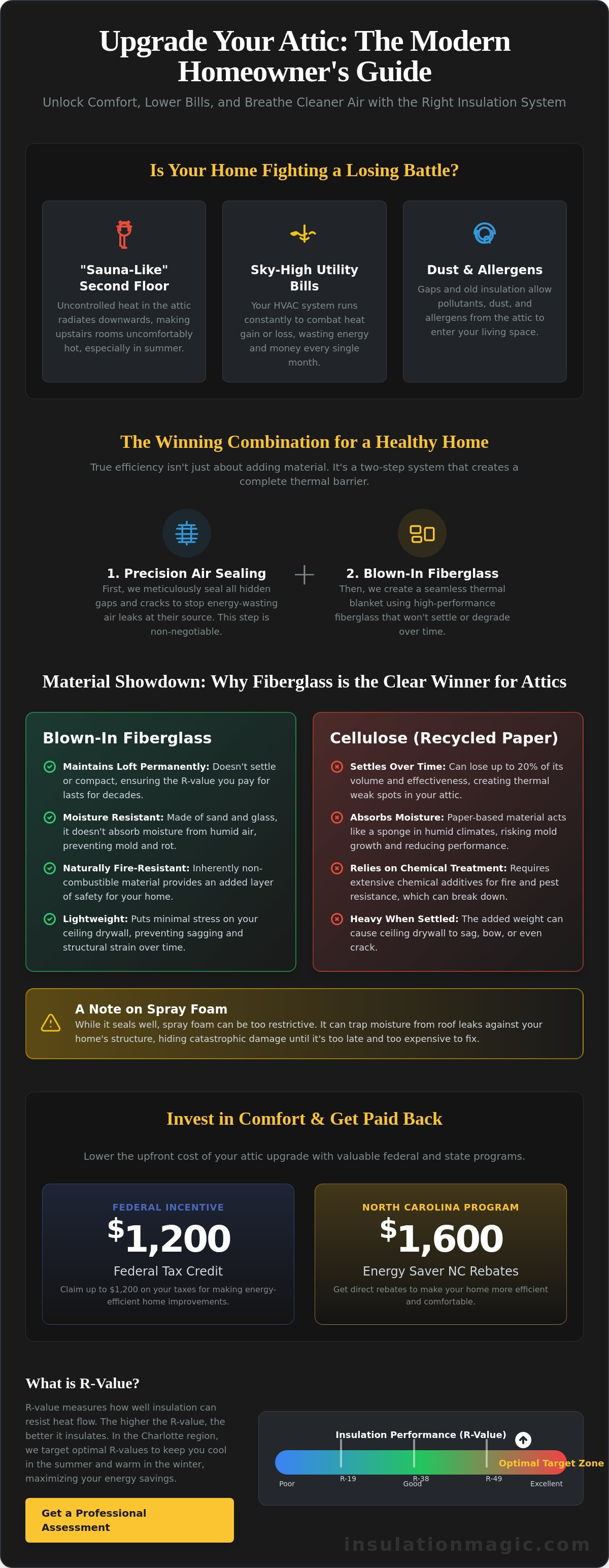
We believe you deserve a home that's consistently comfortable and easy on your wallet. This guide will show you how the strategic combination of air sealing and professional fiberglass insulation can slash your energy costs and eliminate the dust associated with older materials. You'll learn why we always recommend blown-in fiberglass over cellulose for attic spaces and how to take advantage of the 2026 federal tax credits worth up to $1,200. We also break down the Energy Saver NC program, which offers rebates up to $1,600 to help make your home the efficient, healthy retreat it should be.
Key Takeaways
- Learn how energy efficient home insulation acts as a complete system to manage heat flow and air movement throughout your living space.
- Discover why blown-in fiberglass is the most reliable material for attics since it doesn't settle or absorb moisture like paper-based cellulose.
- Understand why air sealing is a non-negotiable step to prevent energy loss through hidden gaps in your home's structure.
- Identify the optimal R-value targets for the Charlotte region and learn when it's time for a professional Attic Refresh to protect your air quality.
Understanding Energy Efficient Home Insulation: More Than Just 'Padding'
When you think of energy efficient home insulation, you might imagine pink rolls of material tucked away in the dark corners of your attic. However, true efficiency is a meticulously designed system that manages three distinct types of heat transfer: conduction, convection, and radiation. For a detailed look at the technical mechanics of these materials, you can explore this Building insulation overview. A craftsman knows that simply adding "more" isn't the answer; it's about creating a protective barrier that performs reliably for decades.
The thermal envelope is the physical boundary between the conditioned air inside your living space and the unconditioned environment outdoors. We often talk about R-value, which measures a material's thermal resistance. While a higher number indicates better performance, it isn't the only factor to consider. If air leaks through the material, that R-value effectively drops. Think of your home like a high-quality thermos. In the winter, it keeps your warmth inside; in the summer, it prevents the sweltering North Carolina sun from penetrating your cool sanctuary. We prioritize blown-in fiberglass for this very reason. It maintains its loft and thermal integrity much better than cellulose, which can settle over time and lose its effectiveness.
How Insulation Impacts Your Monthly Utility Bills
Your HVAC system is likely the hardest worker in your home. Without proper protection, it’s fighting a losing battle. In the Charlotte area, our intense humidity makes thermal resistance even more vital for your comfort. When heat gains in the attic are uncontrolled, your air conditioner runs constantly to keep up. By upgrading your insulation, you stop spending on wasted electricity and start investing in long-term home value. It's a methodical way to lower your overhead while protecting your mechanical systems from premature wear.
The Consequences of Inadequate Thermal Protection
Inadequate protection often reveals itself through "hot spots" or a second floor that feels significantly warmer than the rest of the house. This isn't just a comfort issue. Poor insulation often allows outdoor pollutants, dust, and allergens to seep into your bedrooms. If you're noticing these signs, it's worth visiting our services page to see how a professional assessment can restore your home’s health. A clean, well-insulated attic is the first step toward a breathable, balanced living environment.
Evaluating Insulation Materials: The Case for Fiberglass in 2026
Selecting the right material for your energy efficient home insulation is one of the most important decisions you'll make for your property's longevity. While the market is flooded with various options, we've found that blown-in fiberglass consistently provides the best balance of safety, performance, and value for attic spaces. This isn't just about initial cost; it's about how the material behaves over twenty or thirty years of North Carolina humidity and temperature swings. Our meticulous approach ensures that every corner of your attic is covered with a seamless, gap-free thermal blanket that protects your home without compromising its structural integrity.
Why Fiberglass Outperforms Cellulose in Attic Applications
Many homeowners are initially drawn to cellulose because it's made from recycled paper, but this material carries hidden risks for your attic. Cellulose is significantly heavier than fiberglass. Over time, this extra weight can actually stress your ceiling drywall, leading to visible sagging or even cracks. Because it's paper-based, cellulose is also prone to settling, which causes it to lose its rated R-value as the years pass.
In contrast, fiberglass is made of natural sand and recycled glass, which are inherently fire-resistant and do not provide a food source for pests. According to the Department of Energy guide to insulation, choosing materials that maintain their thickness is vital for long-term efficiency. Fiberglass doesn't settle or absorb moisture from our humid Charlotte air, ensuring your energy efficient home insulation stays as effective on day 5,000 as it was on day one.
The Truth About Spray Foam vs. Traditional Blown-In
You might see competitors promoting spray foam as a modern miracle, but we take a more cautious, craftsman-like view. Spray foam creates an airtight seal that can actually be too restrictive. Your home needs to breathe to prevent wood rot and mold growth in the attic structure. If a roof leak occurs, spray foam can trap that moisture against your roof decking, hiding the damage until it becomes a catastrophic and expensive repair.
Blown-in fiberglass provides excellent thermal protection while remaining breathable and completely reversible. If you ever need to perform electrical upgrades or plumbing repairs in your attic, fiberglass can be easily moved and replaced. It offers a cost-effective solution that achieves similar energy savings to foam without the massive price tag or the chemical off-gassing concerns. If you're ready to see how these materials can transform your specific attic space, you can easily schedule an evaluation online to get started.
The 'Invisible Leak' Factor: Why Air Sealing and Ventilation Are Non-Negotiable
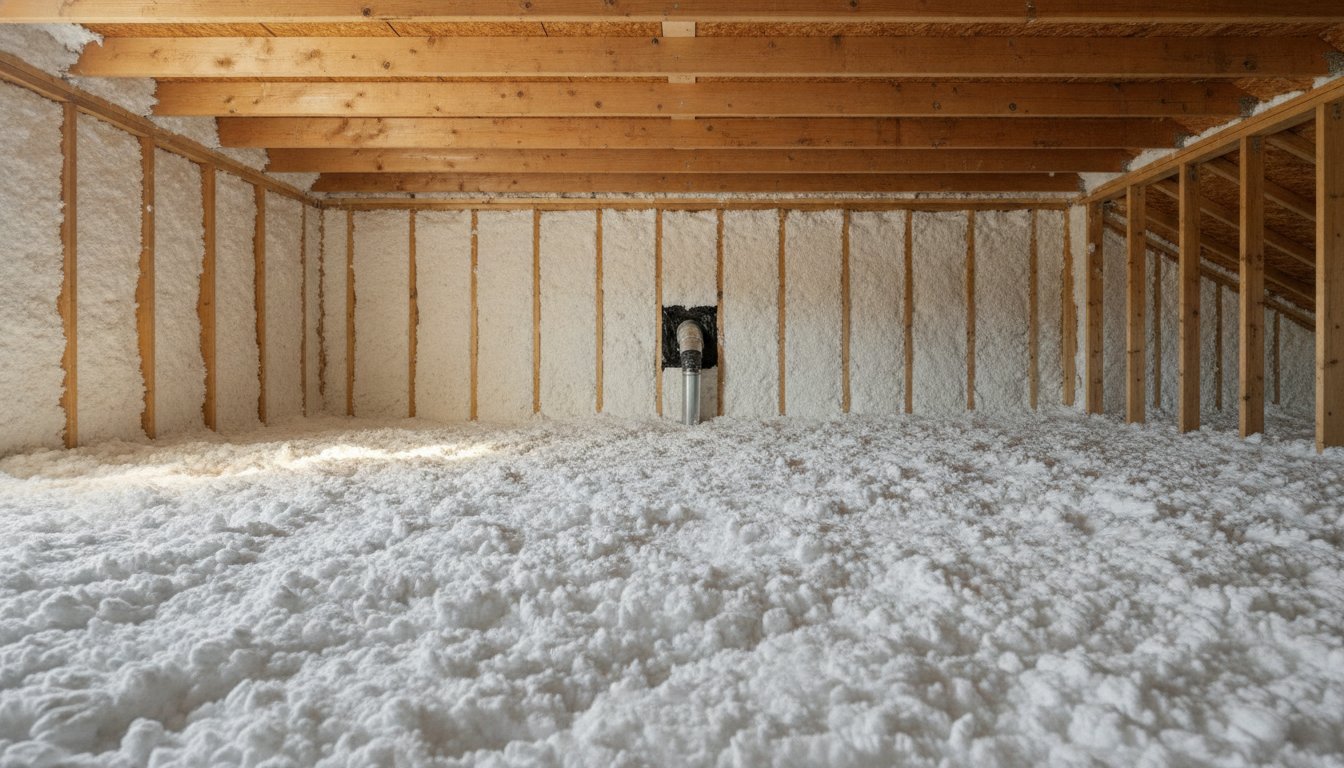
Imagine wearing a thick wool sweater on a windy day without a windbreaker underneath. No matter how high the quality of the wool, the cold air will whistle right through the fibers. This is exactly what happens in your attic when you install energy efficient home insulation without first addressing the gaps in your home's structure. We call this the "Swiss Cheese" problem. Even the best blown-in fiberglass cannot stop air from rushing through the hidden cracks in your attic floor. To truly protect your comfort, we must address the invisible leaks that undermine your thermal barrier.
Most homes suffer from the "stack effect," where warm air rises and escapes through the top of the house, pulling conditioned air out of your living spaces. Common culprits include recessed light fixtures, plumbing stacks, and the top plates of your walls. To ensure your home performs at its peak, it's essential to Seal and Insulate with ENERGY STAR guidelines in mind. By closing these pathways, you stop your expensive air conditioning from leaking into the attic. This allows your energy efficient home insulation to do its job effectively. This methodical approach is what separates a standard job from a craftsman's restoration.
The Critical Step of Professional Air Sealing
Professional air sealing involves a meticulous inspection of every square inch of your attic floor. We use specialized foam and caulk to seal the unseen gaps that DIY projects often miss. This isn't just about utility bills; it's about the air you breathe. When we seal these leaks, we prevent attic dust and outdoor allergens from being pulled down into your bedrooms. It's a vital step for improving indoor air quality and creating a cleaner, healthier environment for your family.
Attic Fans: The Secret Weapon for NC Summer Heat
In our North Carolina climate, the sun can turn your attic into an oven, with temperatures often soaring 40 to 50 degrees higher than the outdoors. This intense heat eventually soaks into your insulation and radiates down into your home. Attic fans act as an active defense, pulling out that stagnant hot air and replacing it with cooler outdoor air. This reduces the "oven effect" and prevents moisture buildup that can lead to wood rot or mold. A well-ventilated attic also extends the life of your roof shingles and prevents your HVAC system from overworking. If you want to see how a balanced system can transform your home, book your professional attic assessment today.
Optimizing Your Home’s Efficiency in the Charlotte Region
Living in the Charlotte region means dealing with a unique mix of high humidity and intense summer heat. While the North Carolina building code provides a baseline for thermal protection, we recommend targeting an R-value between R-49 and R-60 for maximum comfort in areas like Waxhaw and Matthews. This higher standard ensures your energy efficient home insulation can truly withstand the Piedmont's climate. If you notice your insulation looks "flat" or compressed, it has likely lost its ability to trap air effectively, leaving your home vulnerable to the elements.
There are also clear warning signs that your attic needs immediate professional attention. Mold growth on roof rafters or the smell of ammonia often points to moisture issues or pest activity. Rodents don't just leave a mess; they tunnel through material and create pathways for heat to bypass your thermal barrier. When these issues arise, simply adding more insulation is like putting a clean shirt over a dirty one. It doesn't solve the underlying problem of air quality or structural protection.
When to Consider Professional Insulation Removal
Sometimes, the best way to move forward is to start with a clean slate. Our "Attic Refresh" approach involves the professional removal of old, contaminated, or ineffective material. This is particularly vital if you've dealt with rodent infestations, as old insulation can harbor allergens and pathogens that affect your indoor air quality. By clearing the space, we gain full access to the attic floor, allowing for perfect air sealing before we install fresh, blown-in fiberglass.
Professional removal is a methodical process that prioritizes your home's cleanliness. We use high-powered vacuums and specialized filtration to ensure that dust and debris stay out of your living spaces. It's a thorough way to restore your home’s health while preparing it for a lifetime of efficiency.
Choosing a Local Meticulous Craftsman
Local expertise in the Weddington and Waxhaw areas matters because we understand how our specific humidity levels impact building materials. We take pride in being patient educators, walking you through every step of the process so you feel confident in your investment. We don't believe in high-pressure sales; instead, we focus on transparency and craftsmanship. We encourage you to read our customer reviews to see how our commitment to integrity has helped your neighbors achieve lasting comfort. We invite you to schedule a professional evaluation to ensure your energy efficient home insulation system is perfectly tuned for our local climate.
Take Control of Your Home’s Comfort and Health Today
You've seen how a methodical approach to energy efficient home insulation can transform your living environment from a drafty, expensive space into a consistent sanctuary. By prioritizing professional air sealing and high-quality blown-in fiberglass, you protect your home’s structural integrity while ensuring maximum breathability. We maintain a strict no-spray-foam policy because we believe your family deserves a non-toxic, long-term solution that doesn't settle or trap moisture.
Our local expertise in Charlotte, Waxhaw, and Matthews allows us to tune your attic system specifically for the Piedmont climate. We treat every project with the care of a meticulous craftsman, ensuring your utility savings are matched by improved indoor air quality and peace of mind. Don't let another season of high bills and uneven temperatures pass you by. We're ready to help you restore the comfort your property was meant to provide.
Schedule your meticulous attic assessment and air sealing quote today!
Your path to a more efficient, comfortable home is just a few clicks away, and we're here to guide you through every step of the process.
Frequently Asked Questions
Is fiberglass insulation safer than spray foam for my family?
Fiberglass is a safer, non-toxic choice for your family because it doesn't involve the chemical off-gassing often associated with spray foam. It's made of natural sand and recycled glass, which means it won't trap moisture against your roof deck. This breathability is essential for preventing mold and protecting your home's structure over the long term. We believe in providing a healthy environment where your peace of mind is the top priority.
How much can I actually save on my energy bills with new insulation?
While every property is different, homeowners often see a noticeable reduction in utility costs after installing energy efficient home insulation. By combining precision air sealing with professional fiberglass, you stop the "stack effect" that pulls conditioned air out of your house. You can also offset the project cost using the 2026 federal tax credit of 30% up to $1,200, along with North Carolina's Energy Saver NC rebates that provide up to $1,600 for eligible households.
Do I really need to remove my old insulation before adding new fiberglass?
You don't always have to remove old material, but it's often the best path for a "clean slate" restoration. We recommend removal if your current insulation is contaminated by rodents, damaged by mold, or so compressed that it's no longer effective. Starting fresh allows our team to perform meticulous air sealing on the attic floor, which is the most critical step for achieving true energy efficiency and improving your indoor air quality.
What is the difference between blown-in fiberglass and fiberglass batts?
Blown-in fiberglass is our preferred choice for attics because it creates a seamless, monolithic blanket that fills every small gap and crevice. Fiberglass batts are pre-cut blankets that are difficult to fit around wires, pipes, and irregular joist spacing. Using the blown-in method ensures there are no thermal bridges or "cold spots" that allow heat to bypass your protection. It's a much more thorough approach for the complex environment of a modern attic.
How long does the insulation process take for a typical Charlotte home?
A typical installation for a home in the Charlotte area generally takes one to two days to complete. This timeline allows our craftsmen to be thorough with the air sealing process and ensure the insulation is applied at the correct depth for our local climate. We prioritize a methodical, clean execution over a rushed job to ensure your home is protected for decades. We'll always keep you updated on our progress throughout the project.
Will new insulation help reduce the noise from outside?
Yes, high-quality energy efficient home insulation acts as an excellent sound dampener for your living space. The dense fibers of blown-in fiberglass help absorb sound waves from the outdoors, such as traffic or neighboring lawn mowers. While it's primarily designed for thermal protection, many of our clients in busier neighborhoods notice a quieter, more peaceful indoor environment immediately after the project is finished. It's a wonderful secondary benefit for your home's comfort.
Disclaimer
This blog is intended to provide general information about insulation, energy efficiency, and home comfort based on years of experience. While we strive to keep content accurate and up to date, results may vary based on your home's construction, condition, and climate. Contact Insulation Magic for a personalized assessment and recommendations.


