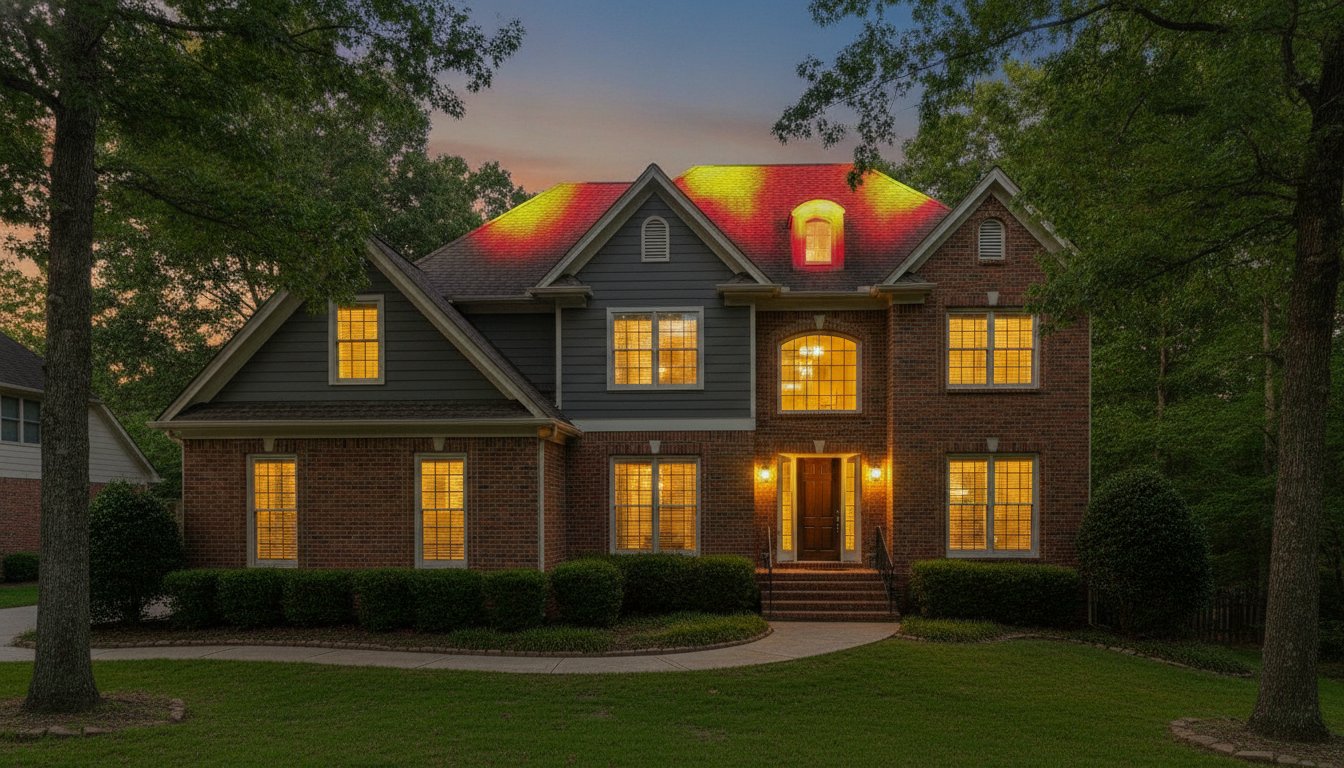
You recently made the investment to upgrade your attic, yet you're still dealing with hot upstairs bedrooms and a monthly energy bill that refuses to budge. It's incredibly frustrating to feel like you've spent money on a solution that didn't actually solve the problem. We understand the stress of receiving conflicting advice from different contractors while your home remains uncomfortable. You deserve to know exactly why new insulation fails so you can finally stop the cycle of wasted energy, especially since federal tax credits for these projects expired at the end of 2025.
In this guide, you'll discover the hidden installation flaws and material myths that cause new insulation to underperform. We'll explain why choosing the right material, specifically fiberglass blown-in insulation, is a much more reliable choice for your attic than cellulose. We'll walk you through a meticulous, system-wide approach to air sealing that secures your home's comfort for the long term. By the end, you'll have a clear, step-by-step understanding of what's truly happening in your attic and the validation that your next step will actually fix the issue.
Key Takeaways
- Learn why adding more material doesn't guarantee lower bills and how to bridge the gap between theoretical R-value ratings and real-world comfort.
- Discover why new insulation fails when critical air sealing is overlooked, leaving your home without the "windbreaker" it needs to keep conditioned air inside.
- Understand the specific long-term advantages of fiberglass blown-in insulation and why it remains the superior, cleaner choice for attic applications over cellulose.
- Identify "Secret Saboteurs" like old, contaminated material that can compromise your new investment if not properly addressed during a thorough assessment.
- Explore how a meticulous attic refresh, including the strategic use of attic fans, creates a balanced environment and consistent temperatures in every room.
The New Insulation Paradox: Why Fresh Material Doesn’t Always Equal Comfort
You’ve likely heard that adding more insulation is the ultimate fix for high energy bills. This logic suggests that if some insulation is good, then a thicker layer must be better. However, homeowners frequently discover a frustrating reality: fresh material doesn't always guarantee a comfortable home. This is the heart of the insulation paradox. When we talk about why new insulation fails, we aren't usually talking about a defective product. Instead, we're looking at "Insulation Failure," which is the measurable gap between the theoretical R-value listed on a package and the actual thermal performance inside your attic.
A home's comfort depends on a complete and continuous building insulation system, often called the "thermal envelope." If this envelope has holes or thin spots, heat will find them. It's much like wearing a heavy down coat but leaving it unzipped; the material is high quality, but the system is failing to keep you warm. We see this often in Charlotte homes where the focus was placed entirely on the product rather than the precision of the installation. We want to validate that frustration you feel. If your bills are still high, it’s often the installation process, not the product, that has failed you.
The R-Value Myth: Numbers vs. Reality
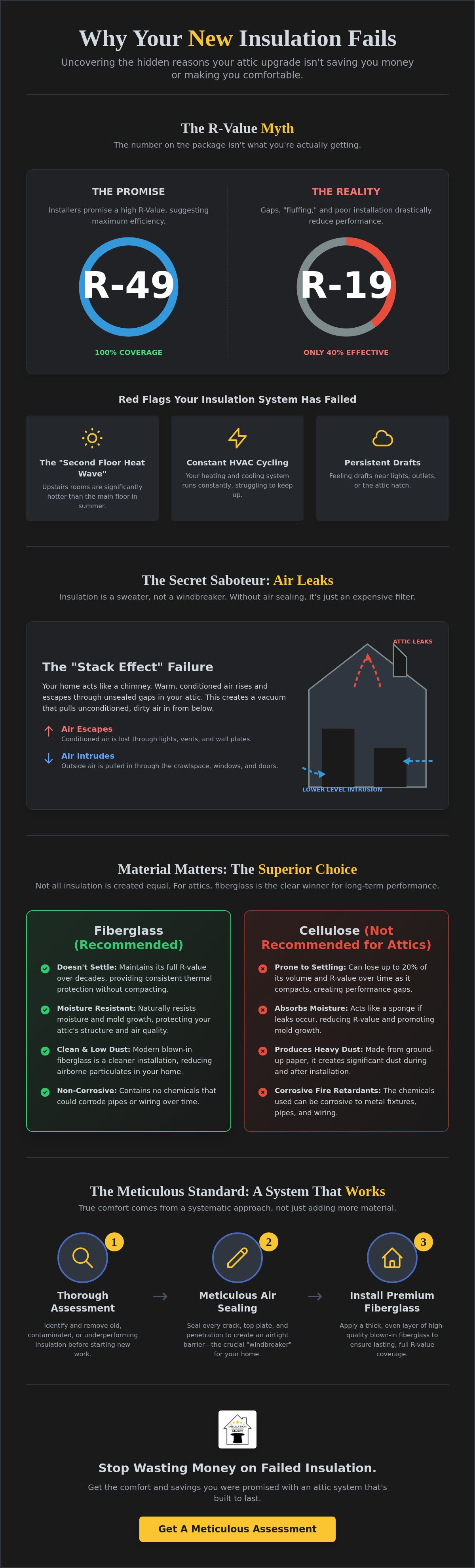
R-value is a measure of thermal resistance that requires perfect contact to work. On paper, your attic might be rated at R-49, which is a high standard for energy efficiency. But if there are gaps around joists or if the material wasn't distributed evenly, that R-49 can perform more like an R-19. Some low-quality installers use a technique called "fluffing," where they blow the material in with too much air to make it look deeper than it actually is. This creates a temporary illusion of protection, but the material quickly settles, leaving your home vulnerable. This is one reason we recommend fiberglass blown-in insulation; it provides a more stable, consistent layer that maintains its integrity better than cellulose over the long term.
Signs Your New Insulation Isn’t Doing Its Job
Even with a fresh layer of fiberglass, you might notice specific red flags that indicate an incomplete job. If these signs sound familiar, it's a clear indication that your attic insulation isn't working as a unified system.
- Persistent drafts near recessed light fixtures or attic hatches despite the new material.
- The "Second Floor Heat Wave" where the upstairs remains significantly hotter than the downstairs during a Charlotte summer.
- An HVAC system that cycles on and off constantly, even when outdoor temperatures are relatively mild.
Identifying these issues is the first step toward restoring the peace of mind you expected when you first invested in your home's efficiency. True comfort comes from a methodical approach that treats your attic as a managed environment rather than just a storage space for material.
The Secret Saboteurs: Air Sealing and the "Dirty Insulation" Trap
Imagine wearing a thick wool sweater on a windy winter day. While the wool is excellent at trapping heat, it won't keep you warm if the wind blows right through the fibers. You need a windbreaker. In your home, insulation acts as that sweater, but it requires a dedicated air barrier to function. One of the most common reasons why new insulation fails is that it's often installed without addressing the underlying air leaks that bypass the material entirely. Insulation is designed to stop heat transfer, not air movement. Without proper sealing, your expensive new material is essentially acting as a giant air filter.
Why Air Sealing is the Real Hero of Energy Efficiency
In many homes throughout the Waxhaw and Matthews areas, conditioned air escapes through hidden gaps in the attic floor. This creates what we call the "Stack Effect." As warm air rises, it's pushed out through unsealed top plates, recessed light fixtures, and plumbing stacks. This escape creates a vacuum that pulls outside air into your living spaces from the crawlspace or windows. By prioritizing air sealing, you close these "bypass" points. Citing the importance of air sealing your home, the U.S. Department of Energy notes that these small leaks can add up to the same energy loss as leaving a window open all year. Air sealing is essential. It must happen before any new material is added.
The Importance of Professional Insulation Removal
Many contractors suggest "topping off" your existing attic material. We believe this approach often does more harm than good. Blowing fresh fiberglass over old, rodent-damaged, or moldy material traps moisture and allergens against your ceiling. This "Dirty Insulation Trap" also hides structural issues or active roof leaks that need your attention. We take a different, more meticulous path. A clean start is better.
By performing a thorough insulation removal, we can see every square inch of your attic floor. This allows us to seal every gap with precision before installing fresh, clean fiberglass blown-in insulation. This material is our preferred choice because it doesn't hold moisture or settle like cellulose does. It provides a long-term, high-performance solution that keeps your home's environment healthy and consistent. If you aren't sure what's hiding under your current attic layers, you can book a professional assessment to get a clear picture of your home's needs.
Material Matters: Why Cellulose Fails Where Fiberglass Blown-In Succeeds
Choosing the right product is just as critical as the installation process itself. While many materials are available, the physical properties of what you put in your attic can be a primary reason why new insulation fails over time. When we look at the variety of Insulation Materials available today, fiberglass blown-in stands out as the most reliable, permanent solution for North Carolina homeowners. It offers a level of stability and breathability that other products simply cannot match in our specific climate.
We believe in providing solutions that last for decades, not just a few seasons. This requires a careful look at how different materials react to the environment inside your home. While some contractors might push whatever product is easiest for them to install, we prioritize the long term health of your property and the consistency of your comfort. Understanding the differences between these materials helps you make an informed choice that protects your investment.
The Problem with Cellulose in the Carolinas
In our humid climate, cellulose often struggles to maintain its performance. Because it is primarily made of recycled paper, it acts like a sponge, absorbing moisture from the air during our heavy summer months. This added moisture weight leads to a significant "settling factor." Within just a few years, cellulose can lose a large portion of its original depth, leaving your home under-insulated. Additionally, fiberglass is naturally fire-resistant and does not require the heavy chemical fire retardants that must be added to paper-based cellulose to make it safe for your attic.
Insulation Without Spray Foam: A Safer Path
Spray foam is often marketed as a high-tech, "set it and forget it" fix, but it carries risks that many homeowners aren't told about. It is a permanent chemical application that can trap roof leaks against your decking, making them impossible to detect until structural rot has already set in. There is also a growing trend of "Spray Foam Rejection" among some lenders and home inspectors. They are increasingly concerned about potential off-gassing odors and how the foam complicates future home repairs or renovations.
We prefer Insulation Without Spray Foam: High-Performance Alternatives like fiberglass blown-in. This material allows your attic to "breathe," which is essential for moisture management, while still maintaining the high R-values needed to keep your energy bills low. It provides the thermal protection you need without the risks to your home's air quality or future resale value. If you want to ensure your attic is equipped with the best possible material for our region, book your professional attic assessment to discuss a custom plan for your home.
The Meticulous Standard: Ensuring Your Investment Lasts Decades
In the heavy humidity and intense summer heat of Charlotte, a "good enough" installation quickly becomes an expensive mistake. We've seen many homeowners struggle with high bills even after a recent upgrade. Understanding why new insulation fails usually comes down to a lack of preparation. Many contractors rush to blow in material because it's the fastest part of the job; however, they often skip the invisible prep work that actually makes the material effective. At Insulation Magic!, we follow a "Meticulous Craftsman" approach. We believe that true comfort is built on a foundation of integrity and thoroughness.
Managing your attic's heat load is also vital for long term success. Even high quality fiberglass needs help when attic temperatures soar. This is where attic fans play a crucial role. They actively pull out stagnant, superheated air and manage moisture levels. This prevents the "baking" effect that can stress your HVAC system and shorten the life of your roofing materials. It's a small detail that makes a massive difference in your home's daily environment.
The 3-Step Process for a Fail-Proof Attic
To ensure your investment delivers the results you were promised, we follow a disciplined, step-by-step sequence. This mirrors a well-organized construction project where every stage builds on the last.
- Step 1: Complete Removal. We don't believe in burying old problems. We remove old, ineffective, or contaminated material to ensure a clean, healthy start.
- Step 2: Precision Air Sealing. We meticulously seal every thermal bypass, including top plates and light fixtures. This creates the "windbreaker" your home needs.
- Step 3: Professional Installation. We install fiberglass blown-in to the exact R-value depth required. This material is our standard because it doesn't settle or hold moisture like cellulose.
Local Support for Charlotte Homeowners
Our team brings specific local expertise to neighborhoods across Ballantyne, Mint Hill, and Weddington. We understand the unique challenges our regional climate poses to residential structures. When you're vetting a contractor, ask them if they perform a full removal and if they seal every top plate. If they hesitate, they might be cutting corners that will cost you later. We invite you to check our verified customer reviews to see how this meticulous approach has restored peace of mind for your neighbors. If you're ready for a solution that actually works, book your meticulous attic assessment today and let's get your home back to peak performance.
Secure Your Home’s Long-Term Comfort
You now understand that a high energy bill isn't just about the thickness of the material in your attic. The gap between a high R-value on paper and real-world performance often comes down to skipped air sealing and the choice of material. We've explored why new insulation fails when it's treated as a simple product rather than a complete system. By focusing on a clean start with professional removal and precision sealing, you can finally close those thermal bypasses that have been draining your wallet.
We take pride in serving the Charlotte metro area with integrity-driven craftsmanship. Choosing expert fiberglass blown-in installation ensures your home stays breathable and protected without the settling issues of cellulose or the risks of spray foam. Our comprehensive approach is designed to give you back the consistent temperatures you deserve. Ready to stop the cycle of wasted energy? Schedule Your Meticulous Attic Assessment today and let us help you restore your home's efficiency. You don't have to settle for uneven floors and high bills; a comfortable, well-protected home is well within your reach.
Frequently Asked Questions
Can I just add new insulation on top of my old insulation?
While you can technically add new layers, we don't recommend it because it often hides structural problems and contaminants. Topping off old material traps moisture, allergens, and rodent waste against your ceiling, which can lead to air quality issues. We advocate for a full removal to ensure a clean start and to allow for precision air sealing. This methodical approach is the only way to guarantee your new investment performs at its peak.
Why is my house still hot in the summer even with new insulation?
Your home likely lacks proper air sealing or attic ventilation. Even the best material can't stop the "Stack Effect," where superheated attic air is pulled into your living spaces through unsealed gaps. This is a common reason why new insulation fails to deliver the comfort you expect. Combining high-quality fiberglass with attic fans and precision air sealing creates a managed environment that finally keeps the summer heat where it belongs.
Does fiberglass insulation lose its effectiveness over time?
Unlike cellulose, which is prone to significant settling and moisture absorption in our humid climate, fiberglass blown-in insulation is remarkably stable. It doesn't rot, decay, or provide a food source for pests. As long as the material remains dry and isn't physically compressed by storage, it will maintain its R-value for decades. This permanence makes it a superior choice for homeowners looking for a one-time, long-term solution for their home.
Is air sealing really necessary if I have a high R-value?
Yes, air sealing is the most critical step in any high-performance attic refresh. Insulation is designed to slow heat transfer, but it doesn't stop air movement. Without sealing the gaps around light fixtures and top plates, conditioned air simply blows through the insulation like wind through a sweater. Skipping this step is a primary reason why new insulation fails to lower energy bills, regardless of the R-value depth.
How do I know if my insulation was installed incorrectly?
Look for uneven depth, visible gaps around joists, or "fluffing" where the material looks airy rather than dense. You might also notice drafts near light fixtures or consistent temperature differences between floors. A meticulous installation should look like a smooth, uniform blanket across your entire attic floor. If you see dark spots on the material, it often indicates air is leaking through from the house, meaning the air sealing was missed.
What is the best type of insulation for a home in Charlotte, NC?
Fiberglass blown-in insulation is the superior choice for the Charlotte metro area. Our high humidity can cause cellulose to act like a sponge and settle prematurely, while spray foam carries risks of trapping roof leaks and affecting home resale value. Fiberglass is naturally moisture-resistant, fire-resistant, and maintains its loft. When paired with professional air sealing, it provides the most reliable and breathable protection for our unique North Carolina climate.
Disclaimer
This blog is intended to provide general information about insulation, energy efficiency, and home comfort based on years of experience. While we strive to keep content accurate and up to date, results may vary based on your home's construction, condition, and climate. Contact Insulation Magic for a personalized assessment and recommendations.


