The "magic" of spray foam isn't actually the foam itself; it's the air seal it creates. Many homeowners feel stuck between a rock and a hard place, facing rising energy costs while worrying about off-gassing chemicals or trapped moisture that leads to roof rot. It's completely normal to want a cozy, efficient home without the permanent risks and high costs associated with foam. If you're looking for a way to achieve maximum comfort through insulation without spray foam, you're making a choice that prioritizes both your home's health and its longevity.
You can reach peak energy efficiency by separating the air sealing process from the insulation itself. By meticulously sealing gaps and then using high-performance blown-in fiberglass, you create a breathable, protected environment that outperforms other materials. While some consider cellulose, we've found that premium blown-in fiberglass offers superior durability and moisture resistance for attic spaces. In this guide, we'll show you how to navigate the latest 2026 standards, like the R-38 requirements here in Charlotte, to lower your utility bills and ensure your indoor air quality remains safe and clean.
Key Takeaways
- Learn why "reversible" insulation methods protect your home's long-term value by allowing for easier future repairs and structural upgrades.
- Discover how professional air sealing achieves an airtight home using insulation without spray foam, effectively stopping drafts without the risk of trapped moisture.
- Understand why lightweight blown-in fiberglass is the superior choice for attic performance and ceiling safety compared to heavier materials like cellulose.
- Find out why a professional attic assessment and thorough insulation removal are critical first steps for restoring a healthy, rodent-free environment.
- Get a clear roadmap for meeting modern energy standards to lower your utility costs while ensuring your family enjoys clean, breathable indoor air.
Why Homeowners are Choosing Insulation Without Spray Foam in 2026
Homeownership is a long-term commitment, and the choices you make today shouldn't limit your options tomorrow. We're seeing a significant shift toward "reversible" home improvements. By choosing insulation without spray foam, you're ensuring that future repairs to your roof or electrical systems remain straightforward. Unlike foam, which creates a permanent bond with your home's structure, traditional high-performance materials can be easily moved or removed if you ever need to upgrade your wiring or fix a minor plumbing leak. It's a choice that prioritizes long-term flexibility and peace of mind.
Cost is another major factor driving this trend. While some modern materials have seen price fluctuations, including a 6% increase for fiberglass products in June 2026, traditional high-performance systems often provide a faster return on investment. Since the federal tax credit for insulation expired at the end of 2025, homeowners are looking for the most cost-effective ways to meet Charlotte’s R-38 attic requirements. Investing in a meticulous air sealing project combined with blown-in fiberglass allows you to achieve elite energy efficiency without the massive upfront expense of chemical foam applications.
The Limitations of Spray Foam Insulation
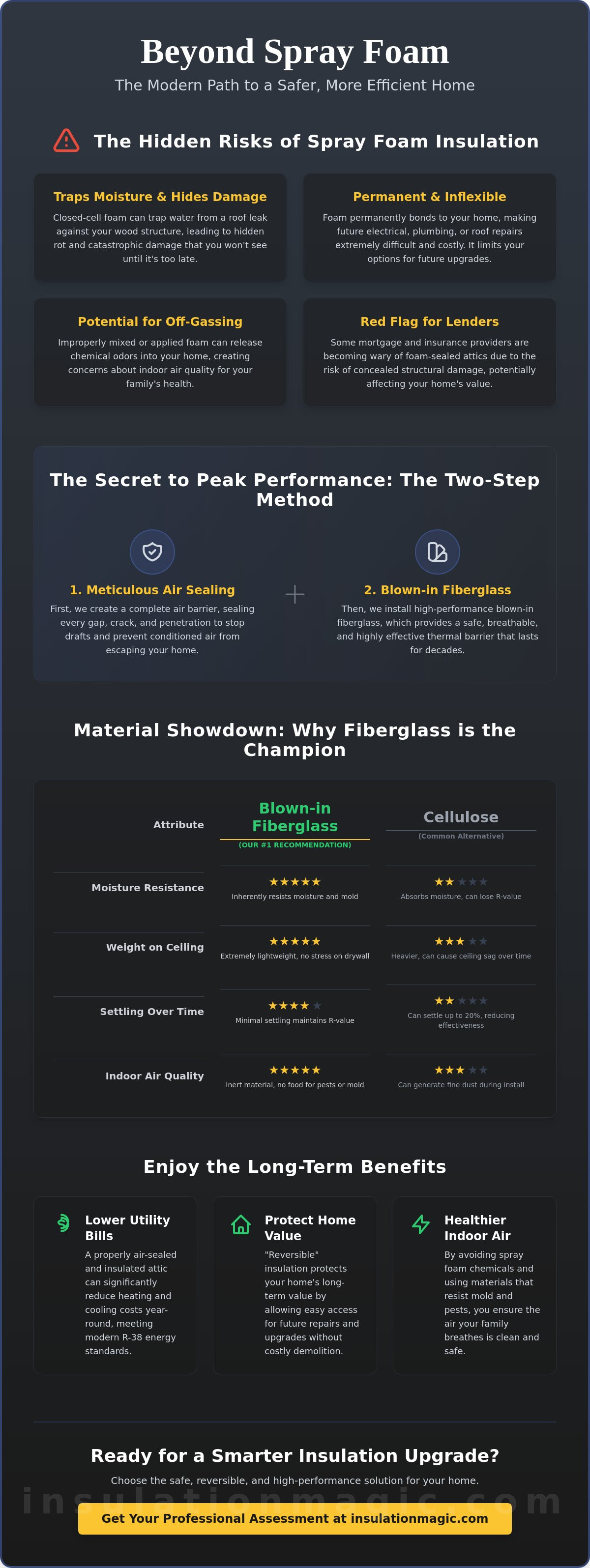
Many people don't realize how difficult it is to undo a spray foam installation. If a roof leak develops, "closed-cell" foam can act as a trap, holding water against your roof deck and hiding the damage until the wood begins to rot. This lack of transparency is why some mortgage and insurance providers are becoming increasingly cautious about homes with foam-sealed attics. Additionally, the potential for lingering chemical odors or off-gassing concerns makes non-permanent materials a more attractive option for families who prioritize pristine indoor air quality.
Defining High-Performance Alternatives
Non-foam insulation is a combination of air-blocking materials and thermal batts or blown-in media. This approach focuses on the "thermal envelope," ensuring your home stays at a consistent temperature by stopping heat transfer and drafts separately. While there are many Building insulation materials available today, we always recommend blown-in fiberglass over cellulose for attic spaces. Fiberglass is lighter, doesn't settle as much over time, and handles moisture better than recycled paper products. By pairing professional air sealing with premium fiberglass, you get a high-performance result that is safe, effective, and easy to maintain for decades to come.
The Secret to Performance: Why Air Sealing is the Real Alternative
Many people assume that spray foam is the only solution for a drafty house because it provides both a thermal barrier and an air seal in one step. However, the real secret to a high-performance home is separating these two functions. You can achieve an airtight, comfortable environment with insulation without spray foam by focusing on professional air sealing as your primary foundation. While insulation is designed to slow down heat transfer, it doesn't stop air from moving. Without a dedicated seal, your expensive heated or cooled air simply drifts through the gaps in your home's structure, forcing your HVAC system to work harder than necessary.
This air movement is often called the "stack effect." In the winter, warm air rises and escapes through tiny cracks in your attic, pulling cold air in from your crawlspace or windows to replace it. Industry research shows that joints between walls and the roof can account for nearly 50% of a home's total air leakage. To stop this, a meticulous craftsman looks for "invisible" leaks that most people overlook. We target top plates, which are the wooden beams at the top of your walls, and the spaces around recessed light fixtures. These small penetrations might seem minor, but they collectively act like a window left wide open all year round.
The Air Sealing Process Step-by-Step
Our process involves a thorough inspection of your attic floor to identify every point where air might escape. We pay close attention to plumbing stacks and electrical penetrations where wires pass from your living space into the attic. By using professional-grade sealants, we create a permanent, flexible barrier at these junctions. This step is the most critical part of an Attic Refresh because it ensures that the insulation we add later can actually do its job. We also ensure that attic hatches and pull-down stairs are properly weather-stripped to prevent conditioned air from leaking into unconditioned spaces.
Why Air Sealing and Insulation are a Winning Team
Insulation without air sealing is like wearing a heavy wool sweater in a windstorm; the material is warm, but the breeze cuts right through the knit. When you pair professional air sealing services with high-quality materials, you create a complete thermal envelope. The U.S. Department of Energy highlights various Types of Insulation, but for attic applications, we always recommend blown-in fiberglass. It provides excellent R-value and doesn't settle or hold moisture like cellulose. If you're ready to experience a truly draft-free home, you can book your attic evaluation online to get started with a precise, long-term solution.
Comparing Non-Foam Materials: Why Blown-In Fiberglass Wins
Choosing the right material for insulation without spray foam involves balancing thermal performance with the physical realities of your home's structure. While there are several common insulation materials used today, fiberglass, cellulose, and mineral wool are the primary contenders for attic upgrades. Mineral wool provides excellent fire protection and sound dampening, but its high density makes it heavy and often cost-prohibitive for large-scale attic projects. Cellulose, on the other hand, is made from recycled paper, which sounds appealing until you consider how it interacts with the humid air in Charlotte and surrounding areas.
The "Attic Weight" factor is a critical consideration that many homeowners overlook. Cellulose is significantly heavier than fiberglass, and when installed at the depths required to meet high-performance standards, it can put immense pressure on your ceiling drywall. Over time, this weight can lead to visible sagging or even structural cracks. Fiberglass is remarkably lightweight, allowing us to achieve superior thermal resistance without risking the integrity of your ceilings. It also maintains its loft for decades, whereas cellulose is known to settle and pack down, which gradually reduces its effective R-value.
Fiberglass vs. Cellulose: A Clear Winner
We've found that fiberglass is the cleaner, safer choice for local families. Because it's made from spun glass, it's naturally fire-resistant and doesn't require the heavy chemical fire retardants that are necessary to treat paper-based cellulose. It also lacks the fine, gray dust that cellulose can release into your home's air during and after installation. Blown-in fiberglass offers the best balance of R-value, safety, and durability for attic applications, ensuring a clean and protected environment.
Understanding R-Value and Material Density
While the local building code requires a minimum of R-38, we typically aim for R-49 to R-60 for maximum energy savings in the North Carolina climate. Achieving this level of protection requires a material that can fill every odd-shaped corner and gap without leaving "thermal bridges." Blown-in fiberglass excels here, creating a seamless blanket over the air-sealed foundation we discussed earlier. If you're ready to see the difference high-performance materials can make, book your attic evaluation online to get a customized plan for your home.
Planning Your Spray-Foam-Free Upgrade in Charlotte
Starting a home improvement project in the Queen City requires a strategy that accounts for our unique climate. When you choose insulation without spray foam, the first step is always a thorough professional assessment. We meticulously inspect your attic for hidden issues like existing mold growth or signs of rodent activity that might've been buried under old materials. If your current insulation is contaminated or flattened, performing an insulation removal is often the best way to ensure your new high-performance fiberglass has a clean, healthy foundation to sit on.
A total home solution involves looking beyond just the attic floor. To keep a home truly cool during a blistering July, we often recommend pairing fresh insulation with attic fans to optimize airflow and pull heat out of the structure. This holistic approach can extend to wall insulation and crawlspace encapsulation, creating a complete shield against the elements. By addressing the entire thermal envelope, you're not just fixing one room; you're protecting your whole property from the ground up.
The Local Charlotte Perspective
In neighborhoods like Waxhaw and Ballantyne, managing moisture is just as important as managing heat. Our humid summers can turn a poorly ventilated attic into a breeding ground for wood rot if the wrong materials are used. We prioritize breathable blown-in fiberglass over moisture-wicking cellulose for this very reason. If you want to be ready for the next North Carolina heatwave, planning your upgrade in the spring or fall is ideal. You can see how we've helped your neighbors in Matthews and Mint Hill by reading our local reviews.
Your Next Steps for a Comfortable Home
When you receive an insulation quote, look for details beyond just the R-value. A quality proposal should explain the "how" and "why" of the process, including air sealing and any necessary removals. We call this an "Attic Refresh" because it provides a total reset for your home's air quality and efficiency. If you're tired of high utility bills and want a safer, more flexible alternative to chemical foams, we're here to guide you through every step. You can easily book your assessment online to start your journey toward a more comfortable home.
Take the Next Step Toward a Healthier, More Efficient Home
You've seen how separating professional air sealing from the insulation material itself provides a more flexible, safer, and highly effective result. By choosing premium blown-in fiberglass over heavier or more permanent materials, you're protecting your home's structural integrity and your family's air quality. This methodical approach to insulation without spray foam allows you to reach modern R-value standards while keeping your attic accessible for any future needs. It's a choice that prioritizes long-term value and peace of mind.
Our expert air sealing specialists take immense pride in their craftsmanship, ensuring every gap is closed before we install our high-performance fiberglass solutions. We're proud to serve homeowners across Charlotte, Waxhaw, and the surrounding areas, treating every property with the same care we'd give our own. If you're ready for a cleaner, more comfortable living space, it's time to start with a fresh assessment and a clear plan for your home's thermal envelope.
Schedule your spray-foam-free insulation assessment with Insulation Magic! and discover the lasting comfort that comes with a professionally sealed and insulated home. We look forward to helping you create a space that stays cozy through every North Carolina season.
Frequently Asked Questions
Is insulation without spray foam as energy-efficient?
Yes, achieving high energy efficiency with insulation without spray foam is entirely possible. The secret is separating the air seal from the thermal barrier. While foam does both at once, manual air sealing of top plates and penetrations combined with high R-value blown-in fiberglass creates a robust envelope. This method stops drafts just as effectively while allowing your home to remain breathable and much easier to maintain over time.
What is the best alternative to spray foam for an attic?
Blown-in fiberglass is the superior alternative for attic spaces. It is lightweight, naturally fire-resistant, and won't settle like cellulose. Unlike recycled paper products, fiberglass doesn't absorb moisture, which is critical for protecting your roof deck in our humid Charlotte climate. When you combine this material with meticulous air sealing, you get a high-performance result that rivals the airtightness of foam without the chemical risks or permanent structural bonds.
Do I really need to remove my old insulation before adding new fiberglass?
We usually recommend removing old insulation to ensure a clean start for your home's thermal envelope. Old materials often hide hidden issues like mold growth, rodent droppings, or unsealed air leaks that have existed for years. By clearing the attic floor, we can precisely seal every penetration before installing fresh, high-performance fiberglass. This "Attic Refresh" process ensures your new insulation performs at its rated R-value and improves your indoor air quality.
Can I air seal my attic myself, or do I need a professional?
Professional air sealing is significantly more thorough than DIY efforts because experts identify "invisible" leaks that most people miss. Our specialists focus on top plates, plumbing stacks, and light fixtures that account for nearly 50% of a home's total air leakage. Missing even a few small gaps can reduce the efficiency of your new insulation. A professional has the specialized equipment and experience to navigate tight attic spaces safely while applying sealants with precision.
How long does blown-in fiberglass insulation last compared to foam?
High-quality blown-in fiberglass is designed to last for the life of your home, often exceeding 50 years. Unlike spray foam, which can sometimes pull away from framing or crack as a house settles, fiberglass remains flexible. It doesn't degrade or lose its R-value over time. Because it is not a permanent chemical bond, it also makes future roofing repairs or electrical upgrades much simpler and less expensive for the homeowner.
Will fiberglass insulation attract rodents in my Charlotte home?
No insulation material is completely rodent-proof, but fiberglass is far less attractive to pests than organic options like cellulose. Rodents don't use fiberglass as a food source, though they'll try to nest in any material if they can get inside. The best defense is a total home solution that includes professional air sealing to block entry points. This meticulous approach protects your insulation without spray foam from unwanted guests.
Disclaimer
This blog is intended to provide general information about insulation, energy efficiency, and home comfort based on years of experience. While we strive to keep content accurate and up to date, results may vary based on your home's construction, condition, and climate. Contact Insulation Magic for a personalized assessment and recommendations.


