
What if your home's heating problem isn't actually your furnace, but the fact that your house is breathing through the attic? It is incredibly frustrating to deal with drafty rooms and cold floors while watching your utility bills climb higher every month. If you have been asking yourself why is my house so cold in winter, you are certainly not alone. Current data shows that air leaks can be responsible for 25 to 40 percent of a home's heating costs. This creates a cycle where warm air escapes through the top of your house while drawing cold air in from below, leaving you uncomfortable despite a running HVAC system.
We believe every homeowner deserves peace of mind and a steady, comfortable temperature in every room. In this guide, we will uncover the hidden causes of your home's winter chills and share the professional secrets to a warmer, more energy-efficient environment. You will learn about the five most common reasons for heat loss, the critical role of air sealing, and why we always recommend premium fiberglass blown-in insulation over cellulose to ensure your home stays protected for years to come.
Key Takeaways
- Understand how the "stack effect" answers the common question of why is my house so cold in winter by pulling warm air out through your roof.
- Learn why fiberglass blown-in insulation is the superior choice for your attic because it stays cleaner and maintains its loft better than cellulose.
- Discover why meticulous air sealing is the essential first step to stop drafts before any new insulation is installed.
- Identify how uninsulated crawlspaces and walls create "cold zones" and frigid floors that make your living spaces feel uncomfortable.
- Find out how a professional assessment and proper insulation removal can restore your home's comfort while lowering your monthly energy bills.
The Science of Shivering: Why Your Home Loses Heat in Winter
Understanding your home's thermal envelope is the first step toward lasting comfort. This envelope is the physical barrier that separates your heated living space from the cold outdoors. When this barrier is compromised, you end up asking The Science of Shivering: why is my house so cold in winter? While it's tempting to blame a struggling furnace, your HVAC system is usually just the victim of a leaky house. It's working overtime to replace heat that is constantly escaping through hidden gaps in your home's structure.
The Stack Effect: Your Home as a Chimney
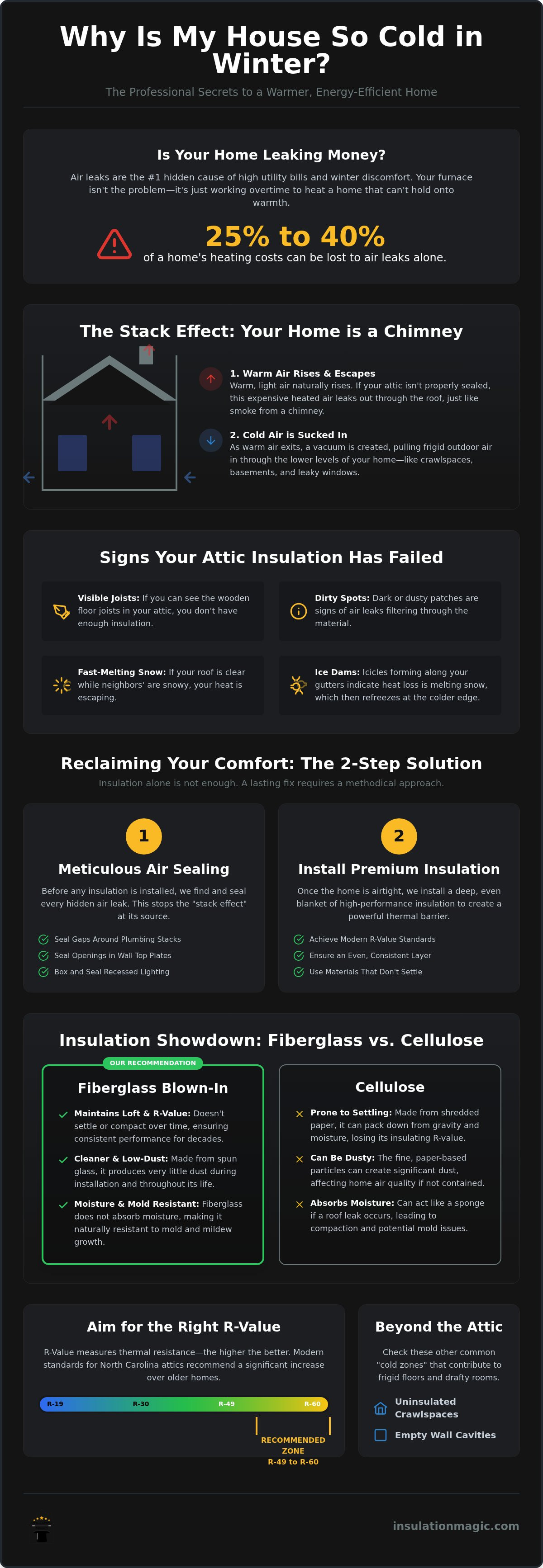
Warm air is lighter and less dense than cold air. Because of this, it naturally rises toward the highest point in your home. If your attic isn't properly sealed, that expensive warm air escapes through the roof like smoke through a chimney. This movement creates a powerful pressure imbalance. As the warm air exits the top, it creates a vacuum that pulls frigid air in through your crawlspace, basement, and around your windows. The Stack Effect is the primary driver of winter drafts; it forces your home to breathe in a way that wastes energy and ruins your comfort.
Drafts vs. Air Leaks: Understanding the Difference
Homeowners often confuse drafts with air leaks. A draft is the cold breeze you feel on your ankles while you're watching TV. The air leak is the invisible hole in your attic or walls that is actually causing that movement. You can have thick insulation, but if air is moving through it, the heat goes right along with it. Common hidden leak points include:
- Recessed lighting: These canisters often act as direct vents for heat to enter your attic.
- Plumbing stacks: Large gaps around pipes allow air to bypass your ceiling and escape.
- Top plates: The wooden beams at the top of your walls often have gaps where they meet the drywall.
These leaks allow heat to bypass your insulation entirely. At Insulation Magic!, we take a meticulous approach to finding and sealing these gaps. We believe that stopping the air flow is just as important as the insulation itself. By sealing these holes first, we ensure that the fiberglass blown-in insulation we install can do its job effectively. This methodical process stops the vacuum effect and lets your HVAC system finally maintain a steady, cozy temperature without the constant, expensive struggle.
The Attic: Your Home’s Most Critical Thermal Barrier
Think of your attic as the winter coat for your entire house. Just as you wouldn't step into a Charlotte winter with a thin, tattered jacket, your home shouldn't rely on old, settled insulation to keep you warm. The attic is the final line of defense against the cold air pressing down from above. When this barrier fails, it's the most common reason why is my house so cold in winter. Many homes in our area, from Waxhaw to Matthews, were built with just enough insulation to meet the bare minimum codes of the time, which often leaves them shivering today.
Old insulation doesn't just lose its fluff; it loses its ability to trap heat. Over decades, gravity causes materials like cellulose to pack down, losing the air pockets that actually provide warmth. Worse yet, insulation can become a nesting ground for pests. Rodent-damaged material isn't just a comfort issue; it's a health concern that compromises your home's air quality. We often find that a thorough attic refresh, starting with professional insulation removal and meticulous air sealing, is the only way to truly restore a home's comfort and cleanliness.
Signs Your Current Attic Insulation Has Failed
You don't always need to be a professional to spot a problem. Take a peek into your attic with a flashlight. If you can see the tops of your wooden floor joists, you almost certainly don't have enough protection. Insulation should look like a deep, even blanket of snow. You should also look for "dirty" or dark spots in your insulation. These aren't just dust; they're often signs of air leaks where your house is filtering air through the material. Outside, if you notice snow melting off your roof much faster than your neighbors' or see ice forming along the gutters, your heat is escaping right through the top of your house.
R-Value Requirements for North Carolina Winters
In the insulation world, we measure performance using R-value, which stands for thermal resistance. The higher the number, the better the material resists heat flow. As of 2026, building standards for our local climate have become much stricter. While older homes might only have an R-19 or R-30, modern recommendations suggest reaching R-49 to R-60 for maximum efficiency. Determining how much attic insulation do I need depends heavily on what you already have and the current condition of your attic.
To reach these high R-values without creating a dusty mess, we consistently recommend fiberglass blown-in insulation. It stays loftier over time compared to cellulose and provides a cleaner, more reliable thermal barrier for Charlotte homeowners. If you're tired of cold spots and high bills, it might be time to schedule a professional attic assessment to see exactly where your heat is disappearing.
Fiberglass Blown-In vs. Cellulose: Choosing the Right Protection
Choosing the right material is just as important as the amount you install. While some contractors lean toward cellulose because it is a familiar, low-cost option, we consistently recommend fiberglass blown-in for attic applications. If you have been searching for answers to why is my house so cold in winter, the culprit might be old, settled material that no longer provides a solid thermal barrier. We avoid spray foam in residential attics because it can be permanent and problematic for home health; instead, we focus on high-quality fiberglass that allows your home to remain protected without the risks of trapped moisture.
The Superiority of Fiberglass Blown-In
Modern fiberglass is engineered for long-term performance and cleanliness. Unlike cellulose, which is made from ground-up paper and can settle significantly over time, fiberglass maintains its loft. This means the R-value you pay for today is the same protection you will have years down the road. Because it is an inorganic material, it does not support mold growth or rot, providing a safer environment for your family. It is also a much cleaner choice for the life of your home. If you ever need to perform electrical work or plumbing repairs in the attic, fiberglass is far easier to work with than the heavy, dusty layers of dense-pack cellulose.
The Air Sealing Secret: The Step You Cannot Skip
Even the thickest layer of insulation cannot stop a draft if you skip professional home air sealing. We like to use the sweater and windbreaker analogy to explain this process. Insulation is your warm wool sweater; it is excellent at trapping heat. However, if you stand in a cold wind with only a sweater, the air will blow right through the fibers. Air sealing is the windbreaker that goes over the top. It stops the physical movement of air, allowing the insulation to do its job effectively. By meticulously sealing the invisible holes in your attic floor, we stop the Stack Effect at its source and ensure your home stays warm and efficient.
Beyond the Attic: Crawlspaces and Walls as Cold Spots
While the attic is the most critical barrier for your home, it's not the only way heat escapes. If you've ever walked across your kitchen in thick socks and still felt a chill, you're experiencing the direct impact of an uninsulated crawlspace. This is often the missing link when homeowners ask why is my house so cold in winter. A total home comfort strategy must address every side of the thermal envelope, including the areas beneath your feet and behind your drywall. Protecting these zones stops the cycle of heat loss and prevents your HVAC system from running non-stop.
Cold Floors? The Crawlspace Connection
In many Charlotte homes, the crawlspace is a dark and freezing cavity. Because heat naturally moves toward cold, your warm floors are constantly losing energy to the frigid air below. Standard fiberglass batts installed between floor joists often fail because they sag over time or absorb moisture, which actually makes them less effective. Professional crawlspace insulation in Charlotte, NC involves more than just stuffing material into gaps. We focus on high-quality fiberglass solutions that stay loftier than organic alternatives. Our meticulous approach ensures the barrier stays in place, effectively separating your living space from the earth's temperature and keeping your toes warm.
Retrofitting Wall Insulation for Existing Homes
Walls represent the largest surface area of your home's exterior. If these aren't properly protected, you'll notice "cold zones" where the air near the wall feels significantly cooler than the rest of the room. You might even see "ghosting" marks, which are dark streaks on the wall caused by temperature differences. We also pay close attention to rim joists, which are the wooden beams where your house meets its foundation. These are notorious for letting in winter air. Understanding the cost to insulate existing walls in Charlotte, NC is an investment in your property's long-term value. We can often add protection to closed walls through a clean, methodical process that doesn't require a major renovation, providing a permanent solution to those stubborn drafts.
Reclaiming Your Comfort: Professional Solutions for a Warmer Winter
Stopping the cycle of heat loss requires more than just a quick trip to a home improvement store for a few extra bags of insulation. To truly solve the mystery of why is my house so cold in winter, you need a methodical assessment that looks at your home as a complete system. At Insulation Magic!, we don't believe in guesswork. We take the time to educate you on how your home is performing and where the thermal envelope has failed. Our goal is to provide a permanent solution that restores your comfort and lowers your monthly energy costs through precision and care.
The Professional Removal and Refresh Process
Many homeowners are surprised to learn that adding new material on top of old, failing insulation can actually trap dust, allergens, and past pest issues. This is why we often recommend insulation removal in Charlotte for older or contaminated attics. By clearing the space entirely, we can see every hidden gap and wire penetration that needs air sealing. Once the attic floor is clean, we perform meticulous air sealing to stop the Stack Effect. Finally, we install premium fiberglass blown-in insulation. We choose fiberglass because it is cleaner, lighter, and far more resistant to settling than cellulose, ensuring your home stays protected for decades.
Take Action: Schedule Your Local Inspection
You don't have to settle for another season of wearing three layers of clothes inside your own living room. We have helped many of your neighbors in Weddington and Ballantyne reclaim their homes from the winter chill. You can read their stories and see the results of our Meticulous Craftsman approach by checking our latest reviews. We prioritize transparency and integrity in every project, treating your property with the same level of respect we would give our own.
Our process is designed to be stress-free from start to finish. We provide clear explanations, logical steps, and a final result that you can feel the moment you walk through the door. If you're ready to stop wondering why is my house so cold in winter and start enjoying a cozy, energy-efficient environment, we are here to guide you. Use our simple online booking system to find a time that works for you. Let's work together to make your home the warm sanctuary it was meant to be.
Start Your Journey to a Warmer Home Today
You don't have to spend another season shivering in your own living room. By identifying hidden air leaks and upgrading to high-quality fiberglass blown-in insulation, you can finally stop the drafty cycle that answers the question of why is my house so cold in winter. This meticulous approach doesn't just save you money on utility bills; it restores the peace of mind that comes with a cozy and healthy environment for your family.
Chris and the team at Insulation Magic! bring local owner-operated expertise to every project. We specialize in non-toxic fiberglass solutions and have earned over 100+ 5-star reviews from Charlotte homeowners who now enjoy steady temperatures year-round. We take pride in our patient education process and our dedication to leaving every attic cleaner and more efficient than we found it.
Your home is your sanctuary. We are ready to help you protect it and reclaim the comfort you deserve.
Frequently Asked Questions
Why is my house so cold even with the heating on?
Your home is likely cold because heat is escaping through invisible air leaks in your attic while drawing frigid air in through the lower levels. This is the most common reason why is my house so cold in winter even when the furnace is running. We call this the "Stack Effect," and stopping it requires a combination of meticulous air sealing and high-quality insulation to keep the warm air where it belongs.
Is fiberglass or cellulose better for keeping a house warm?
Fiberglass blown-in is the superior choice for attic applications because it maintains its loft and thermal resistance over time. Cellulose is an organic material that tends to settle and pack down, which reduces its effectiveness and R-value. Fiberglass is also inorganic, meaning it won't support mold growth or rot, keeping your home's air cleaner and your family more comfortable for the long term.
How much does it cost to fix a drafty house in Charlotte?
The investment to fix a drafty home depends on the size of your space and the current state of your insulation. While we don't provide flat rates without a professional assessment, many Charlotte homeowners take advantage of local utility rebate programs available in 2026 to help offset the cost. A thorough inspection is the best way to determine the specific needs and potential savings for your property.
Can I just add more insulation on top of my old insulation?
While you can add new material over old, it is rarely the most effective solution for permanent comfort. Removing old or rodent-contaminated insulation allows us to perform a thorough air sealing of the attic floor. This process ensures your new fiberglass blown-in insulation can perform at its maximum R-value without being compromised by the dust or pests hiding underneath the old layers.
Do I really need air sealing if I am getting new insulation?
Air sealing is absolutely essential because insulation doesn't stop air movement; it only slows down heat transfer. Think of insulation as a warm sweater and air sealing as a windbreaker. Without the windbreaker, cold air will blow right through the fibers of your insulation, leaving you wondering why is my house so cold in winter despite having thick layers in the attic.
Why are the floors in my house so cold during winter?
Cold floors are almost always caused by a freezing crawlspace that is pulling heat directly through your floorboards. If your crawlspace isn't properly insulated or protected, the earth's temperature will dominate the area beneath your feet. Upgrading your crawlspace insulation creates a reliable barrier that keeps your floors warm and your living space much more inviting.
How do I know if my attic insulation is sufficient for NC weather?
You can check your insulation levels by looking for your ceiling joists in the attic. If you can see the tops of those wooden beams, you don't have enough protection for our local climate. Current 2026 standards recommend reaching an R-value of at least R-49 to R-60, which usually requires a deep, even blanket of fiberglass blown-in material to be truly effective.
Can poor attic ventilation make my house feel colder?
Poor ventilation can negatively impact your home's comfort by trapping moisture or allowing extreme temperatures to sit against your ceiling. While it might seem counterintuitive, a well-ventilated attic helps maintain the integrity of your thermal envelope. Proper airflow works alongside your insulation and air sealing to protect your living space from the harsh winter cold and excessive summer heat.
Disclaimer
This blog is intended to provide general information about insulation, energy efficiency, and home comfort based on years of experience. While we strive to keep content accurate and up to date, results may vary based on your home's construction, condition, and climate. Contact Insulation Magic for a personalized assessment and recommendations.


