
Did you know that up to 40% of the air on your home's first floor actually originates from the dark, damp area right beneath your feet? It's a startling reality for many families in the Queen City, where that musty smell or those uncomfortably cold winter floors are often signs of a much deeper issue. Understanding the specific crawlspace insulation benefits for your property is the first step toward reclaiming your home's comfort and health.
We know how frustrating it is to watch your energy bills climb during a humid Charlotte summer while your floors remain drafty and damp. You deserve a home that feels consistent and clean, from the foundation up. In this guide, we'll show you how professional insulation and air sealing can slash your utility costs by up to 20% and significantly improve your indoor air quality.
We'll walk you through the latest 2026 North Carolina building codes, explain how the "Stack Effect" pulls air into your living spaces, and highlight the state-level HEAR and HOMES rebates that can help make these essential upgrades more affordable for your family.
Key Takeaways
- Discover how maximizing your crawlspace insulation benefits can lower your monthly energy costs while finally warming up those drafty kitchen and bathroom floors.
- Understand the "Stack Effect" and how professional air sealing stops the upward flow of allergens and dampness into your family's breathing space.
- Learn why we advocate for breathable fiberglass solutions and meticulous craftsmanship to maintain your home's structural health without the risks of spray foam.
- Explore the 2026 North Carolina rebate landscape to see if your household qualifies for significant savings on your crawlspace and air sealing upgrades.
- Identify the specific warning signs, like musty odors and uneven temperatures, that signal your current insulation is failing and needs a professional assessment.
What is Crawlspace Insulation and Why Does it Matter?
At its core, crawlspace insulation is a protective thermal barrier designed to separate your home's living area from the raw earth and outside elements. It serves as a shield that regulates temperature and moisture, preventing the ground's natural dampness from seeping into your floorboards. To truly understand your home's foundation, it helps to start with the basics of What is a Crawlspace? and how it functions as a buffer zone. In 2026, North Carolina energy standards have become more stringent, making these upgrades a top priority for homeowners looking to maintain property value and efficiency.
Many Charlotte residents don't realize that their home's performance starts from the ground up. Without a proper barrier, your HVAC system fights a losing battle against the outdoor climate. By investing in professional insulation, you're not just adding a layer of material; you're creating a controlled environment that stabilizes your entire home. One of the primary crawlspace insulation benefits is this long term protection of your home's structural integrity and your family's daily comfort.
The Stack Effect: How Your Crawlspace Breathes
Think of your home like a giant chimney. As warm air rises and escapes through your attic, it creates a vacuum that pulls air from the lowest point of the house. This is known as the "Stack Effect." If your crawlspace is uninsulated or damp, this process pulls musty air, allergens, and moisture directly into your kitchen and bedrooms. Research shows that up to 40% of the air on the first floor of a home can originate from the crawlspace.
Properly sealing this area is vital for maintaining a healthy thermal envelope. By creating a consistent pressure barrier, we stop that dirty air from migrating upward. This protects your family's health and ensures your HVAC system doesn't have to work overtime to conditioned "leaked" air. These crawlspace insulation benefits translate directly to better indoor air quality and lower stress on your mechanical systems.
Vented vs. Unvented Crawlspaces: A Quick Overview
Traditionally, many homes in the Matthews and Waxhaw areas were built with vents intended to "air out" the foundation. However, we've learned that in our humid Charlotte climate, these vents often invite more moisture than they remove. This leads to sagging insulation and wood rot over time. The modern building science consensus has shifted toward sealed, conditioned crawlspaces that outperform traditional vented designs.
Your specific foundation type dictates the best strategy. In a traditional vented space, the North Carolina building code requires insulation in the floor joists with a minimum R-value of R-19. For those moving toward a sealed system, the code requires R-10 continuous insulation on the foundation walls. Unlike companies that rely on spray foam, we prioritize meticulous, breathable fiberglass solutions that allow your home to function safely while meeting these 2026 standards.
The Top 4 Crawlspace Insulation Benefits for Your Home
Investing in your home's foundation provides a ripple effect of advantages that reach every room in the house. While many Charlotte homeowners think of insulation as a "set it and forget it" feature, the reality is that older materials often fail, leaving your home vulnerable. Upgrading to modern, breathable solutions ensures your property remains a sanctuary against the unpredictable North Carolina weather. Let's look at the most impactful crawlspace insulation benefits you'll experience after a professional upgrade.
Slashing Energy Bills in the Queen City
Charlotte summers are notorious for high humidity and relentless heat. When your crawlspace isn't properly insulated, that heat transfers directly through your floors, forcing your air conditioner to run almost constantly. R-value is a specific measurement of a material's thermal resistance; essentially, the higher the number, the better the insulation prevents heat from moving through it. By installing high-quality fiberglass with the correct R-value, you create a permanent barrier that keeps your cooled air inside. In fact, professional studies show that conditioned crawlspaces can reduce energy costs by up to 18%, providing a return on investment that shows up on your utility bill every single month.
Extending the Life of Your HVAC System
Most homes in our area have their ductwork located in the crawlspace. If that area is uninsulated, your furnace or AC has to work twice as hard just to move air through pipes that are sitting in a 90 degree or 40 degree environment. This leads to "short-cycling," where your system turns on and off too frequently, causing parts to wear out years before they should. Proper insulation keeps the environment around your ducts stable. It's a simple equation: a protected HVAC system runs more efficiently and lasts longer, saving you from the massive expense of a premature system replacement.
Breathe Easier: Air Quality and Allergen Control
As we discussed with the "Stack Effect," your home's air is pulled from the bottom up. An uninsulated, damp crawlspace is a breeding ground for mold spores and dust mites. When you add professional insulation and air sealing, you're effectively putting a filter on your home's "lungs." This process doesn't just stop odors; it also deters pests like rodents and insects that look for gaps in old, sagging materials. A clean, well-insulated foundation leads to a cleaner living room and fewer seasonal allergy triggers for your family.
Beyond health and savings, these upgrades offer the immediate luxury of walking across your kitchen floor in January without needing heavy wool socks. These documented energy efficiency improvements also boost your home's resale value, as savvy 2026 buyers prioritize lower operating costs. If you're tired of cold floors and high bills, you can schedule a meticulous crawlspace assessment to see exactly how these benefits apply to your specific property.
Material Matters: Why We Choose Fiberglass Over Spray Foam
When you're deciding how to protect your home's foundation, the materials you choose will impact your property for decades. Many contractors in the Queen City push for spray foam because it's quick to apply, but we take a different approach. At Insulation Magic!, we prioritize the long term health of your home's wooden structure. Our material philosophy is consistent across every project we touch. Just as we always recommend fiberglass blown-in insulation over cellulose for attic applications because of its superior durability, we also choose breathable fiberglass for your foundation. By focusing on meticulous craftsmanship rather than quick fixes, we ensure your crawlspace insulation benefits remain a permanent asset to your home.
The Fiberglass Advantage in NC Crawlspaces
We consistently recommend high quality fiberglass batts or blown-in solutions for North Carolina homes. While some companies suggest cellulose, we find it's often a poor fit for our humid Piedmont climate. Cellulose is often made from recycled paper and can act like a sponge, whereas fiberglass is naturally resilient and doesn't provide a food source for mold or pests. It maintains its fire resistant properties without the heavy chemical treatments required by other materials. This choice is part of our standard recommendation for a "forgiving" thermal envelope that allows your home to breathe safely.
- Performance Consistency: Fiberglass offers excellent thermal resistance (R-value) at a price point that makes full home upgrades accessible for local families.
- Maintenance and Accessibility: Unlike permanent foam, fiberglass can be easily moved or replaced if you ever need to access plumbing or electrical lines in the future.
- Moisture Management: Proper installation allows incidental moisture to dry out rather than becoming trapped against your home's wooden frame.
The Hidden Risks of Spray Foam Insulation
The biggest danger with closed-cell spray foam in a crawlspace is its ability to hide structural issues. In our region, termites are a constant threat. North Carolina building codes actually require a three to four inch unobstructed gap between your insulation and the wooden sill plate specifically for termite inspections. Spray foam often covers these critical areas, making it nearly impossible for an inspector to detect an infestation until structural damage has already occurred. There's also the potential for "off-gassing" and chemical sensitivities that can affect your family's comfort.
We believe you can achieve a perfect seal without these risks. By combining professional air sealing with precisely fitted fiberglass, we stop the upward movement of air and keep your floors warm without compromising your ability to monitor your home's health. This balanced approach provides all the crawlspace insulation benefits you expect while keeping your foundation visible, accessible, and safe for the long haul.
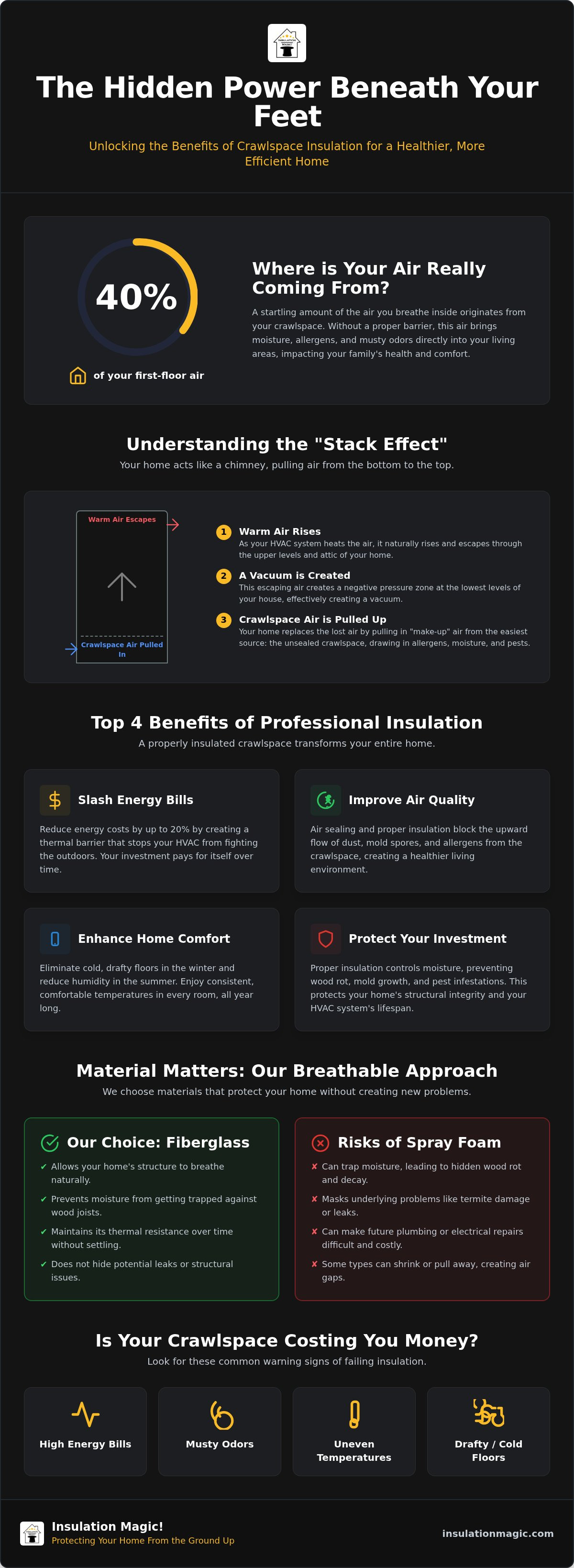
Is Your Crawlspace Costing You Money? Signs You Need an Upgrade
Many Charlotte homeowners ignore the area beneath their feet until a problem becomes impossible to ignore. If you find yourself wearing thick slippers just to walk across your kitchen in the morning, your home is sending you a message. This "Cold Floor Syndrome" is a classic sign that your thermal barrier has failed. When your insulation is working correctly, you should experience the full range of crawlspace insulation benefits; starting with a floor that feels neutral and comfortable year round.
Beyond the temperature, keep an eye on your monthly expenses. If your Duke Energy or city utility bills show unexplained spikes compared to last year, your HVAC system is likely overcompensating for a leaky foundation. Old, failing materials allow conditioned air to escape while outside air rushes in. You might also notice a lingering, musty smell drifting up through the floorboards. This odor often signals that your insulation has become a sponge for moisture, which can eventually lead to mold growth or attract unwanted guests like rodents and insects looking for a warm place to nest.
Visual Cues: What to Look for Under Your House
If you're brave enough to take a peek under the house, look for what we call the "Pink Cloud" versus "Gray Sludge" effect. Healthy fiberglass should be fluffy and vibrant. If it looks dark, matted, or is literally falling away from the floor joists, it's no longer doing its job. You may also see water staining or dark spots on the wooden joists themselves. In these cases, simply adding more material won't help; you need professional insulation removal to clear out the contaminated debris before starting fresh. Our team takes a methodical approach to this process, ensuring every bit of old, sagging material is cleared away to protect your home's structure.
Comfort Cues: How Your Home Feels
Your home's interior can tell you a lot about what's happening below. Do you feel a faint draft near your baseboards or floor vents even when the windows are shut? Are the bedrooms on the second floor significantly warmer than the living room? These uneven temperatures are often a result of poor foundation sealing. You might even see "sweating" windows or high indoor humidity during our muggy Carolina summers. Because of the Stack Effect we discussed earlier, that damp crawlspace air is being pulled upward, making your living space feel heavy and uncomfortable. Reclaiming these crawlspace insulation benefits starts with a thorough assessment of these daily warning signs.
The Insulation Magic! Process: Meticulous Crawlspace Solutions
Choosing a contractor to work beneath your home requires a high level of trust. At Insulation Magic!, we don't believe in high pressure sales or rushing through a project. We take a "Patient Educator" approach; we want you to understand exactly how your foundation affects your family's health and comfort. Our owner, Chris, provides hands-on oversight to ensure that every project meets our standards of old-school craftsmanship. When we discuss crawlspace insulation benefits with you, it's about creating a long term partnership to protect your property and your peace of mind.
The most critical, yet often overlooked, step in our meticulous process is professional air sealing. Before we ever lay down a new layer of insulation, we seal the small gaps and cracks where the "Stack Effect" originates. Without this step, even the best insulation can't reach its full potential. We treat your home with the same care we'd give our own, maintaining a strict commitment to cleanliness and leaving your property better than we found it. We're proud to be a local team that prioritizes the restoration of your comfort through detail-oriented service.
Step-by-Step: From Assessment to Protection
Our process is methodical and thorough, mirroring a well-organized project from start to finish. It begins with the detailed removal of any old, contaminated, or rodent-damaged materials that might be trapping odors or moisture. Once the space is clean and air-sealed, we install high quality fiberglass batts or blown-in insulation. We choose fiberglass because it provides the superior breathability and fire resistance that North Carolina homes need. We finish every job with a final inspection to ensure there are no gaps in your thermal envelope, providing you with the assurance that your home is fully protected for the 2026 season and beyond.
Serving Charlotte, Waxhaw, and Beyond
We've spent years working with the specific construction styles found in Matthews, Weddington, and the surrounding Queen City areas. This local expertise allows us to anticipate the specific moisture and humidity challenges our region faces. We take immense pride in our reputation, and our customer reviews reflect our dedication to transparency, accountability, and quality. If you're ready to experience the full range of crawlspace insulation benefits for yourself, you can book your online assessment today. We'll walk you through the process, answer your questions, and help you create a more comfortable, efficient home for your family.
Reclaim Your Home's Comfort and Efficiency
Your crawlspace doesn't have to be a source of drafts and high utility bills. By addressing the "Stack Effect" through professional air sealing and high quality fiberglass insulation, you're investing in the long term health of your property. These crawlspace insulation benefits extend far beyond just warmer floors; they protect your HVAC system from premature wear and ensure your family breathes cleaner air every day. You'll notice the difference in your comfort and your energy expenses from the very first month.
Our team has spent years serving the Charlotte and Waxhaw communities with a singular focus on 5-star expertise and meticulous cleanliness. We specialize in non-spray foam, breathable home solutions that allow your house to function safely while meeting the latest 2026 energy standards. Every project we undertake is handled with the precision and care of a craftsman who treats your property like their own, ensuring that no detail is overlooked during the restoration of your home's thermal envelope.
You deserve a home that feels as good as it looks. We're here to guide you through every step of the process, ensuring your foundation is dry, protected, and efficient for years to come. We look forward to helping you transform your living environment into a more peaceful sanctuary.
Frequently Asked Questions
Is crawlspace insulation really worth it for Charlotte homes?
Crawlspace insulation is absolutely worth it for Charlotte homeowners because it provides a direct return on investment through lower utility bills and increased home comfort. Beyond the financial crawlspace insulation benefits, it also helps stabilize your indoor environment against our high local humidity. Most families find that the elimination of ice-cold floors alone makes the upgrade a valuable improvement for their daily quality of life.
How long does crawlspace insulation typically last?
High quality fiberglass insulation can last 15 to 20 years, provided the crawlspace remains dry and free of pests. In the humid Southeast, we often see materials fail sooner if they aren't protected by professional air sealing or moisture control. We recommend a regular assessment every few years to ensure the batts aren't sagging or becoming compressed by moisture, which can diminish their thermal resistance.
Can crawlspace insulation help stop pipes from freezing in winter?
Yes, proper insulation provides a critical layer of protection that helps prevent your plumbing from freezing during North Carolina winter snaps. By keeping the temperature in the crawlspace more stable, the insulation slows down the heat loss from your pipes. This is especially effective when combined with professional air sealing to block the freezing outdoor wind from entering the foundation and reaching your plumbing lines.
Should I remove my old crawlspace insulation before adding new layers?
You should always remove old insulation before installing new material, particularly if the old layers are wet, matted, or contaminated by rodents. Leaving old debris traps odors and mold spores against your home's wooden structure. Our team prioritizes a clean slate, ensuring that your new thermal barrier is installed against healthy, dry wood for maximum effectiveness and better indoor air quality.
Does crawlspace insulation attract mice or other pests?
Insulation itself doesn't attract pests, but old, damp materials can provide a tempting nesting ground for mice and insects. By choosing clean fiberglass and pairing it with meticulous air sealing, you remove the entry points and nesting environments that pests look for. A well maintained crawlspace is much less attractive to unwanted visitors than a neglected one with sagging, wet materials.
What is the best R-value for crawlspaces in North Carolina?
For traditional vented crawlspaces in North Carolina, the residential building code requires a minimum of R-19 insulation in the floor joists. If you are moving toward a sealed or encapsulated system, the requirement shifts to R-10 continuous insulation on the foundation walls. We ensure every project meets these 2026 standards to maximize your home's energy efficiency and long term resale value.
How much money can I save on energy bills with new insulation?
Homeowners who upgrade their foundation's thermal barrier typically see a 10% to 20% reduction in their monthly heating and cooling costs. These crawlspace insulation benefits are especially noticeable during the peak of Charlotte's humid summers and cold winter spells. While exact savings depend on your home's size, the impact on your Duke Energy bill is often immediate once the air sealing is complete.
What is the difference between crawlspace insulation and encapsulation?
Crawlspace insulation refers specifically to the thermal barrier, like fiberglass batts, that stops heat transfer. Encapsulation is a more comprehensive moisture control strategy that includes a heavy duty vapor barrier, sealed vents, and often a dehumidifier. While insulation is a key part of the process, encapsulation creates a fully conditioned environment that offers the highest level of protection against wood rot and mold buildup.
Disclaimer
This blog is intended to provide general information about insulation, energy efficiency, and home comfort based on years of experience. While we strive to keep content accurate and up to date, results may vary based on your home's construction, condition, and climate. Contact Insulation Magic for a personalized assessment and recommendations.


