Is your air conditioner running constantly, but your home—especially the second floor—never seems to cool down? Before you call an expensive HVAC technician, the real culprit might be hiding right above your head. In many North Carolina homes, an overworked and inefficient HVAC system is merely a symptom of a much larger problem: a poorly performing attic.
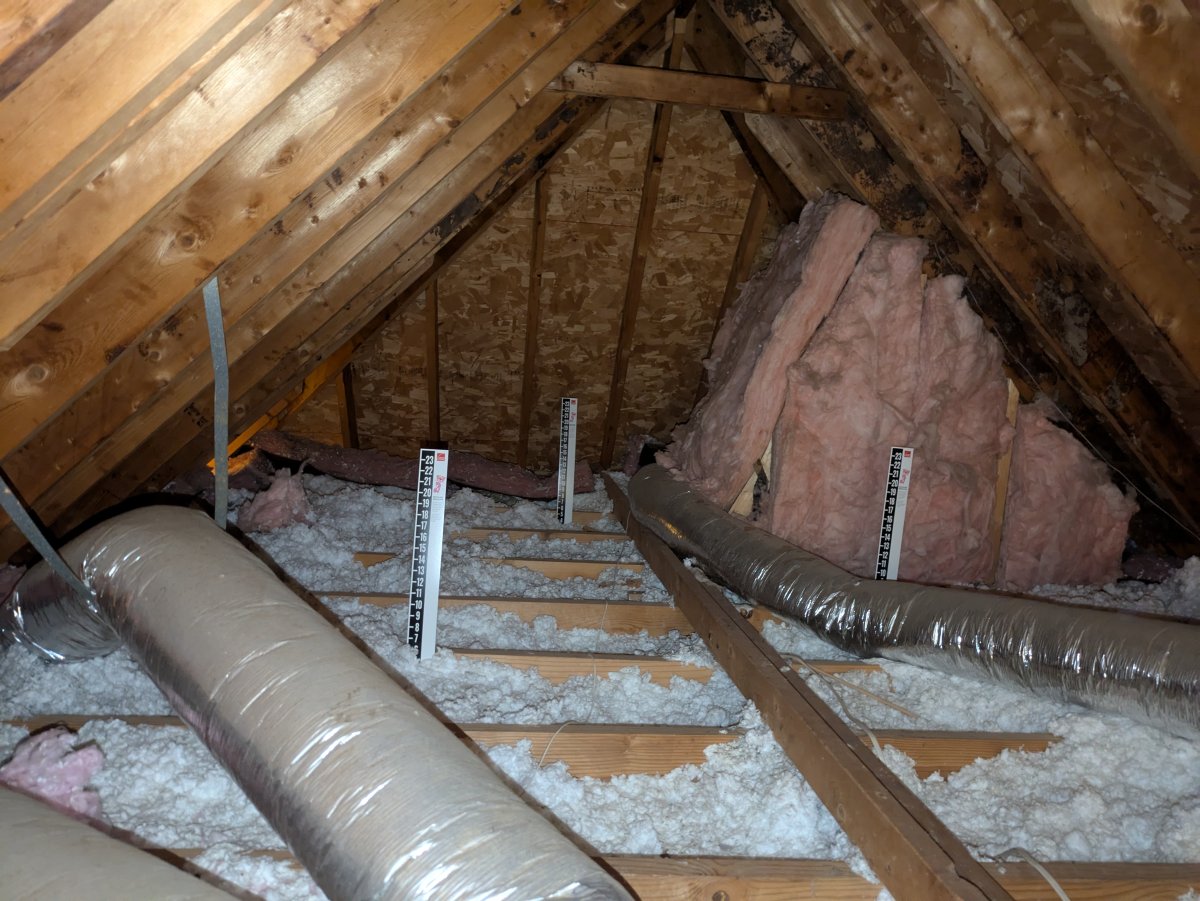
Your attic acts as the primary thermal barrier between your living space and the intense Charlotte sun. When its insulation is old, compressed, or insufficient, your home is left vulnerable. Conditioned air escapes, and superheated attic air infiltrates your home, forcing your AC to run a marathon it can never win. The result? Uncomfortable rooms, relentless humidity, and shockingly high energy bills.
But there is a solution that addresses the root cause. By creating a meticulously sealed and properly insulated attic envelope, you can dramatically improve your home’s comfort, slash your energy consumption, and extend the life of your valuable HVAC equipment. This guide will walk you through why your attic is the key to a more comfortable and efficient home, and how choosing the right materials and professional installation makes all the difference.
Why Your HVAC System Might Not Be the Real Problem
Many homeowners in the Charlotte area understandably blame their air conditioner when the house feels warm. It’s the most visible part of the comfort equation. However, your HVAC system can only do so much. It’s designed to cool the air inside your home, but if that cool air is immediately lost or overwhelmed by incoming heat, the system is fighting a losing battle. This is why specialists, including those who provide HVAC inspection Los Angeles, stress that even high-performing units cannot overcome a compromised "building envelope."
Think of your home's building envelope as its protective shell. It includes your walls, windows, foundation, and—most importantly—your roof and attic assembly. A breach in this envelope, particularly in the attic, is like leaving a window wide open while the AC is on full blast. Air leaks and poor insulation create thermal bypasses that allow a constant, invisible exchange of air between your home and the extreme temperatures of your attic.
What Makes Up Your Attic's Thermal Envelope?
Your attic's thermal envelope isn't just one thing; it's a system of components working together to protect your home. When this system fails, your comfort and budget suffer. A complete and effective envelope includes:
- The Insulation Itself: This is the primary barrier against heat transfer. Its effectiveness is measured in R-value, which indicates its ability to resist heat flow. In North Carolina, having the correct R-value is non-negotiable for year-round comfort.
- Airtight Sealing: Tiny gaps and cracks around light fixtures, plumbing stacks, attic hatches, and wall plates can add up to a massive source of energy loss. Professional air sealing closes these gaps, preventing conditioned air from escaping and unconditioned attic air from entering.
- Proper Ventilation: While it may seem counterintuitive, an attic needs to breathe. Soffit and ridge vents allow air to circulate, which helps remove moisture and reduce the buildup of extreme heat against your roof deck in the summer.
- Attic Access Points: The pull-down stairs or hatch leading to your attic is a common weak point. If it isn't properly insulated and weatherstripped, it becomes a major thermal bridge, compromising the entire system.
Common Signs of an Underperforming Attic in NC Homes
How can you tell if your attic is the source of your comfort issues? The signs are often subtle but persistent. If you're experiencing any of the following, it’s time to look up:
- A Hot Second Floor: This is the most common complaint. Heat from a poorly insulated attic radiates downward, superheating the ceiling and making upstairs rooms significantly warmer than the rest of the house.
- HVAC System Runs Non-Stop: If your air conditioner or furnace cycles constantly without ever reaching the set temperature, it's working overtime to compensate for continuous energy loss through the attic.
- Drastic Temperature Swings: A well-insulated home maintains a stable temperature. If your home heats up or cools down very quickly as soon as the HVAC turns off, your thermal envelope is likely compromised.
- High Energy Bills: One of the clearest indicators is a utility bill that seems to climb higher every year. You're paying to heat and cool the outdoors because your attic isn't holding the conditioned air inside. You can learn more by reading about the 7 warning signs of bad attic insulation.
The Long-Term Financial Benefits of a Properly Insulated Attic
Investing in a professional attic insulation upgrade is one of the most effective home improvements you can make, delivering tangible returns for years to come. While the immediate boost in comfort is a significant benefit, the long-term financial advantages are what make it such a wise decision for savvy Charlotte homeowners.
The U.S. Department of Energy estimates that homeowners can save an average of 15% on heating and cooling costs by air sealing their homes and adding insulation in attics, crawl spaces, and basements. For a typical North Carolina family, this translates into hundreds of dollars in savings each year, allowing the project to pay for itself over time.
Calculating Your Savings: A Charlotte Example
Let's consider a hypothetical 2,000-square-foot home in Charlotte with old, compressed attic insulation measuring at an R-value of R-12. The homeowner is paying an average of $250 per month on electricity, with a significant portion going toward summer cooling.
After a professional upgrade to modern fiberglass insulation at an R-60 level, combined with meticulous air sealing, the home's energy consumption for heating and cooling could drop by 20% or more.
- Monthly Savings: A 20% reduction on a $250 bill is $50 per month.
- Annual Savings: Over a year, that adds up to $600 in direct savings.
- Long-Term ROI: If the total project cost was $3,500, the payback period would be just under six years. After that, the $600 saved each year is pure return on investment.
This calculation doesn't even include the secondary financial benefits. By reducing the daily runtime of your HVAC system, you're also reducing wear and tear on its most expensive components. This can delay costly repairs and potentially add years to the lifespan of your unit, saving you thousands in premature replacement costs.
The Right Solution for North Carolina: R-Value and Material Choice
Achieving true, lasting comfort and energy efficiency isn’t just about adding more insulation; it’s about using the right amount of the right material, installed with meticulous care. In the humid climate of North Carolina, these choices are especially critical for the long-term performance and health of your home.
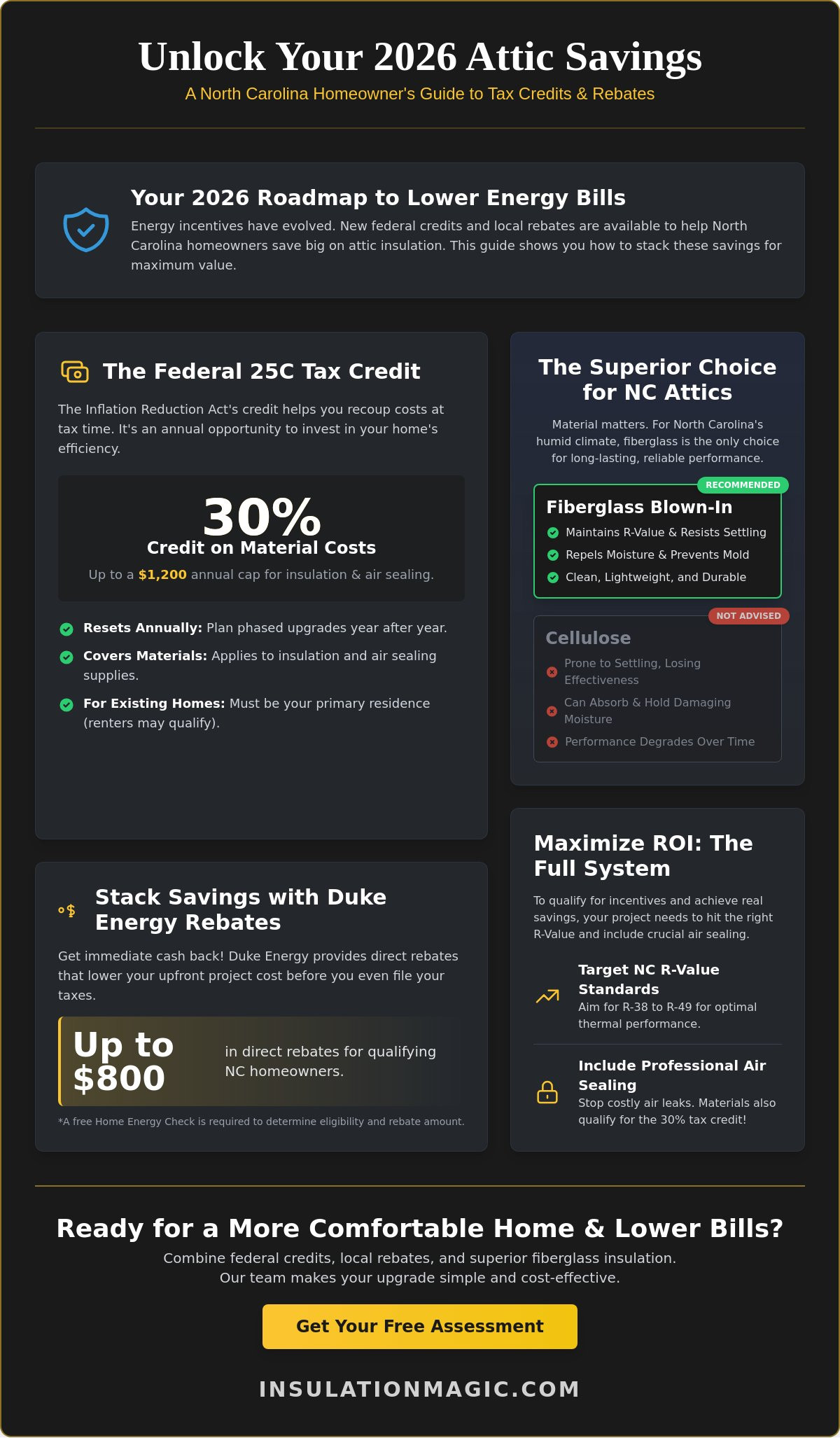
The effectiveness of insulation is measured by its R-value. The "R" stands for resistance to heat flow—the higher the number, the better the insulation performs. For the Charlotte region (Climate Zone 4), the Department of Energy recommends an R-value between R-49 and R-60 for attics. This typically translates to a depth of 15 to 20 inches of modern, high-performance insulation.
Fiberglass vs. Cellulose: Why NC Humidity Demands a Better Material
While several insulation materials are available, the two most common for attics are blown-in fiberglass and cellulose. For North Carolina homes, we exclusively recommend and install fiberglass for several key reasons that directly impact performance and longevity in our climate.
- Moisture Resistance: This is the most critical factor. Fiberglass is made from spun glass, which is naturally inorganic and does not absorb moisture. Cellulose, made from recycled paper, is treated with chemicals but is fundamentally a wood-based product that can absorb and hold moisture. In our humid summers, this can lead to compaction, reduced R-value, and an environment conducive to mold growth.
- Maintained R-Value: Blown-in fiberglass does not settle or compact over time. The R-value you get on day one is the R-value you'll have years later. Cellulose is known to settle by as much as 20%, creating a thinner layer of protection and reducing its overall effectiveness.
- Pest and Mold Deterrence: Because fiberglass is inorganic, it provides no food source for mold, mildew, or pests. Cellulose, being paper, can potentially support biological growth if it becomes damp and may be more attractive to certain insects or rodents.
Why We Meticulously Avoid Spray Foam for Attic Floors
Spray foam insulation has its applications, but we believe it is often an inappropriate and potentially problematic choice for insulating an attic floor (the "attic envelope"). Our focus is on creating a system that is not only effective but also breathable and serviceable for the life of your home.
- Moisture Trapping: When applied to an attic floor, closed-cell spray foam creates an impermeable vapor barrier. This can trap moisture rising from your living space, potentially leading to condensation and rot in your ceiling joists over time.
- Difficulty of Future Work: Once hardened, spray foam is extremely difficult and costly to remove. If you ever need to run new wiring, repair a roof leak, or address a plumbing issue in the attic, the foam becomes a major obstacle.
- A More Breathable Solution: A thick blanket of blown-in fiberglass, combined with proper air sealing and ventilation, creates a "breatheable" system. It stops air and heat flow effectively while still allowing water vapor to pass through and be carried away by attic vents, which is a healthier, more meticulous approach for the entire home assembly.
The Insulation Magic! Difference: Maximizing Your Investment with Professional Installation
Choosing the right insulation material is only half the battle. The ultimate performance of your attic's thermal envelope depends entirely on the quality of the installation. Even the highest-rated material will fail if it's installed incorrectly, with gaps, voids, or unsealed air leaks. This is where a professional, meticulous approach transforms a simple upgrade into a lasting home improvement.
Professional air sealing is the "secret sauce" that unlocks the full potential of new insulation. Before a single fiber of new insulation is installed, our team methodically locates and seals the hidden air leaks that undermine your home's efficiency. This crucial step ensures that the insulation can do its job without being compromised by convective air currents that carry heat and moisture.
Furthermore, professional removal of old, contaminated insulation is often the necessary first step to creating a clean and healthy thermal envelope. Years of dust, pest activity, and moisture can turn old insulation into a source of poor indoor air quality. Removing it completely allows us to start with a clean slate, ensuring the new system is both effective and hygienic.
Our Meticulous Installation Process
We believe in a transparent, step-by-step process that prioritizes quality and homeowner peace of mind. Our approach is designed to be thorough, clean, and respectful of your home.
- Step 1: A Comprehensive Assessment: We begin with a detailed inspection of your attic. We measure current R-values, identify all major and minor air leaks, assess the condition of existing insulation, and check for proper ventilation.
- Step 2: Safe and Thorough Removal (If Necessary): If your old insulation is damaged, contaminated, or insufficient, we use specialized equipment to remove it completely without introducing dust or debris into your living space.
- Step 3: Meticulous Air Sealing: This is where our craftsmanship shines. We use professional-grade sealants to close every penetration—around recessed lighting, plumbing vents, electrical wiring, and the tops of interior walls—to create a truly airtight ceiling plane.
- Step 4: Precision Blown-In Installation: We use a state-of-the-art blowing machine to install a seamless, thick blanket of high-quality fiberglass insulation. We install depth rulers throughout the attic to ensure a consistent, even layer that meets or exceeds the target R-value of R-49 or R-60 across the entire space.
Claiming Your Comfort: The Documentation We Provide
A professional project deserves professional documentation. Upon completion, we provide you with all the necessary paperwork for your records. This includes a detailed receipt of the work performed and the Manufacturer’s Certification Statement for the insulation product used. This document formally certifies the type, thickness, and R-value of the installed insulation, serving as valuable proof of the upgrade for future home resale or personal records.
Ready to stop blaming your HVAC and start solving the real problem? A comfortable, energy-efficient home is within reach. Book your free attic assessment today and let our team show you how a meticulous attic upgrade can transform your Charlotte home.
Frequently Asked Questions About Attic Insulation
- How do I know if my attic insulation is bad?
- Common signs include a hot second floor, high energy bills, constant HVAC cycling, and visible signs in the attic like compressed, dirty, or sparse insulation. If you can see the tops of your ceiling joists, you almost certainly need more insulation.
- What is the recommended R-value for an attic in the Charlotte area?
- For our climate zone, the U.S. Department of Energy recommends an R-value between R-49 and R-60. This provides an optimal thermal barrier for both our hot, humid summers and cool winters, ensuring year-round efficiency.
- Will new attic insulation really lower my energy bills?
- Absolutely. By preventing the loss of conditioned air and stopping the infiltration of extreme outdoor temperatures, proper insulation can significantly reduce the workload on your HVAC system. Many homeowners see savings of 15-20% or more on their heating and cooling costs.
- Why is fiberglass blown-in insulation better than cellulose for North Carolina?
- Fiberglass is superior for our humid climate primarily because it is inorganic and does not absorb moisture. This prevents it from compacting, losing R-value, or supporting mold growth over time, ensuring long-term performance where moisture-sensitive materials like cellulose can struggle.
- How long does a professional attic insulation project take?
- Most attic insulation projects, including air sealing, can be completed in a single day. If extensive removal of old insulation is required, it might extend into a second day, but our team works efficiently to minimize any disruption to your home.
- Is air sealing really necessary before adding new insulation?
- Yes, it is arguably the most important step. Adding insulation without first sealing air leaks is like putting on a winter coat with the zipper wide open. Air sealing stops the convective loops that carry massive amounts of energy out of your home, allowing the new insulation to perform at its maximum potential.
Disclaimer
This blog is intended to provide general information about insulation, energy efficiency, and home comfort based on years of experience. While we strive to keep content accurate and up to date, results may vary based on your home's construction, condition, and climate. Contact Insulation Magic for a personalized assessment and recommendations.


