Can you really just "dry out" your attic insulation after a leak, or are you accidentally inviting a colony of mold to move in permanently? If you've recently discovered a roof leak or damp spots above your ceiling, it's natural to feel a surge of anxiety about hidden wood rot or the health of your family. You know that moisture is a silent enemy, and seeing water damaged attic insulation can make even the most confident homeowner feel a bit lost about what to do next.
We understand that your home is your sanctuary, and we're here to provide the clarity you need. In this article, you'll learn how to accurately identify moisture-saturated materials and why professional replacement is the most reliable path to a healthy environment. We'll also explain how restoring your attic's R-value with fiberglass blown-in insulation provides superior protection compared to cellulose, which often clumps and loses its effectiveness when wet. We'll walk you through the signs of damage, the risks of structural decay, and the methodical steps required to protect your Charlotte-area home for the long term. By the end, you'll have a clear plan to restore your home's energy efficiency and your own peace of mind.
Key Takeaways
- Learn how to spot hidden moisture that travels along rafters, ensuring you don't miss any compromised areas during your inspection.
- Discover why the "48-hour mold window" makes it impossible to simply dry out saturated materials before health risks begin to develop.
- Understand the professional process for removing water damaged attic insulation using high-powered equipment to keep your home's air clean and dust-free.
- See why fiberglass blown-in insulation is the superior choice for Charlotte homeowners looking for moisture resistance and lasting energy efficiency.
- Get a step-by-step roadmap for restoring your attic's R-value and protecting your home's structural integrity from long-term wood rot.
Identifying Water Damaged Attic Insulation in Your Home
Water damaged attic insulation is more than just a damp mess; it's material that has lost its essential thermal properties due to saturation. When insulation fibers become soaked, they lose the air pockets required to resist heat flow, effectively ruining your home's energy efficiency. Identifying these issues can be surprisingly difficult because water rarely stays in one place. Instead of dripping straight down, moisture often travels along rafters far from the original source of the leak, making a visual inspection a bit like a detective project. For homeowners needing expert help in identifying roof-related issues, resources like synergyroofings.com provide professional insights into maintaining a secure roof deck.
In the Charlotte area, we frequently see damage caused by heavy summer storms, HVAC drain pan overflows, or poor attic ventilation. Many common building insulation materials are considered hygroscopic, which means they naturally attract and trap moisture from the air and hold it directly against your ceiling joists and drywall. This trapped moisture is what eventually leads to the structural concerns and health risks we want to help you avoid. If you suspect an issue, you can explore our insulation services to see how we assess these delicate situations.
Visual Signs: What to Look For
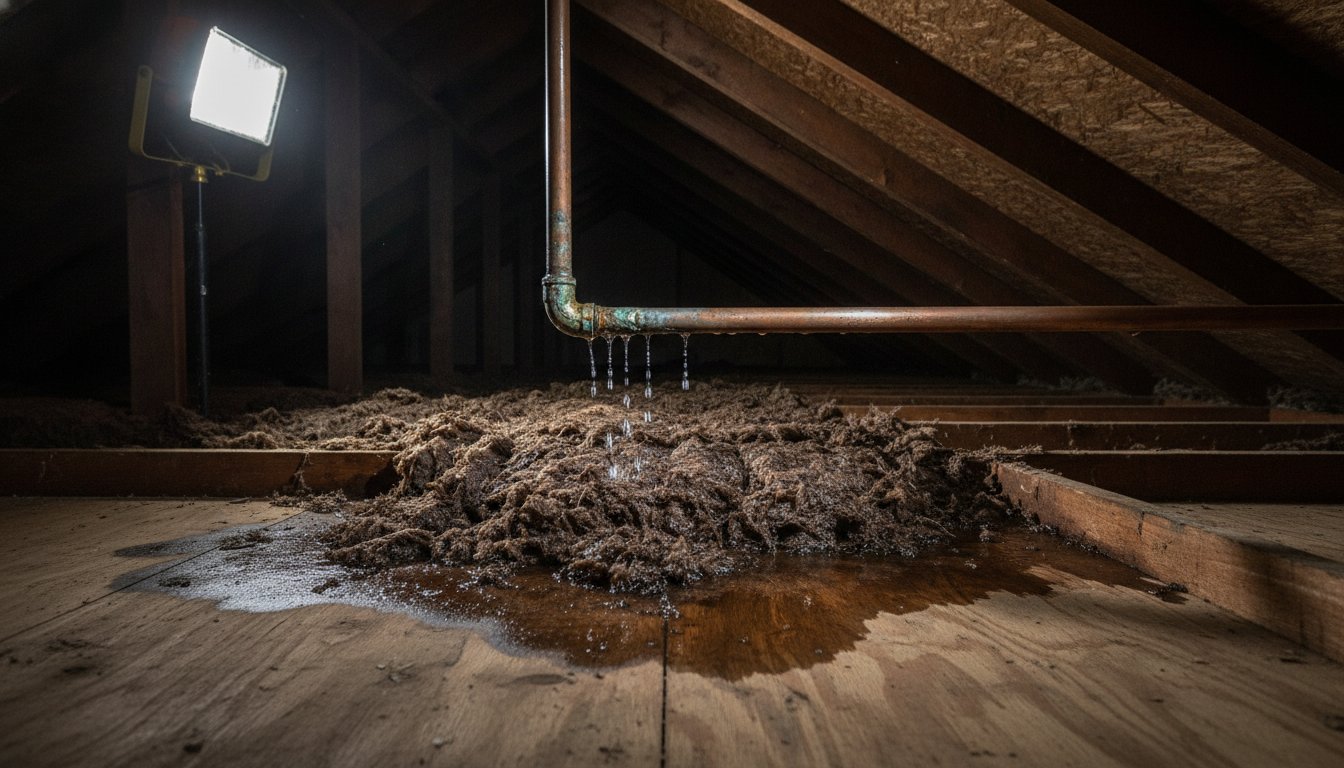
A quick peek into your attic can reveal a lot if you know what to look for. Fiberglass blown-in insulation often appears "heavy" or sunken when wet, losing its fluffy loft and turning a dull gray or discolored shade. On the other hand, cellulose tends to take on a mushy, oatmeal-like texture and a dark brown hue that is hard to miss. You should also check the ceilings in your living spaces for yellow staining, sagging drywall, or bubbling paint. These are clear indicators that water damaged attic insulation is failing to protect your home.
The Hidden Danger of Attic Condensation
North Carolina's high humidity creates a unique challenge known as "attic rain." This happens when warm, moist air from your home leaks into a cold attic, condensing on the underside of the roof deck and dripping onto your insulation. Over time, this constant moisture can lead to significant R-value loss and hidden mold growth. Additionally, winter winds can occasionally push "blown-in snow" through ridge vents, which eventually melts and saturates the materials below. Understanding these local risks is the first step in maintaining a healthy, dry home environment.
Why You Cannot Simply "Dry Out" Wet Insulation
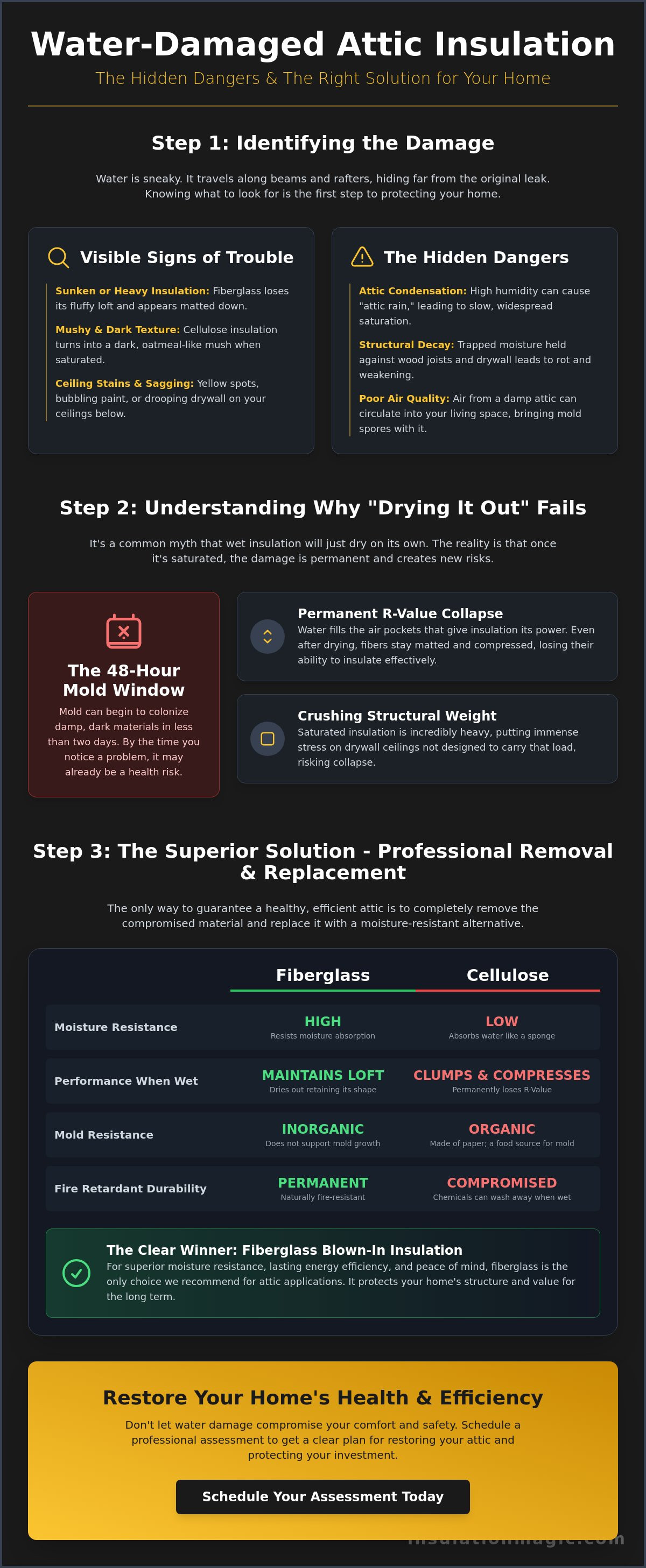
It's tempting to think that a little water in the attic will eventually evaporate on its own. Unfortunately, water damaged attic insulation doesn't work that way. Once those fibers are saturated, a phenomenon known as "R-value collapse" begins. Insulation works by trapping tiny air pockets that resist heat flow. When water fills those spaces, the material compresses under the sheer weight of the moisture. Even if the water eventually leaves, the fibers remain matted and flat. They can't fluff back up to their original state, which means they lose their ability to keep your home comfortable and your energy bills low.
Time is your biggest enemy in this situation. Most experts agree that you have a narrow 48-hour window before mold begins to colonize damp materials. Moisture trapped at the very bottom layer, right against your ceiling drywall, sits in a dark, stagnant environment. This is why the U.S. Environmental Protection Agency emphasizes the health risks of mold that can develop in less than two days. If you're dealing with cellulose, the situation is even more urgent. The fire retardants used in cellulose are often water-soluble salts. When they get soaked, those protective chemicals can wash away or leach out, leaving you with a material that is no longer fire-resistant once it dries.
Weight is another silent danger. Dry insulation is incredibly light, but saturated material can weigh several pounds per square foot. This puts immense stress on your drywall ceilings, which weren't designed to hold that kind of heavy load. If you're worried about the structural weight or the health of your attic, you can schedule a professional assessment to see exactly what needs to be addressed.
The Biological Risk: Mold and Air Quality
The air in your attic doesn't stay in your attic. Because of the "stack effect," air naturally moves from the bottom of your home toward the top and out through the roof. However, pressure changes can also pull attic air down into your living spaces through light fixtures and plumbing gaps. This means mold spores from damp insulation can impact your family's health. Fiberglass is naturally less hospitable to mold because it's made of inorganic glass fibers, whereas cellulose is made of recycled paper, providing a perfect organic food source for fungal growth.
Structural Consequences: Wood Rot and Corrosion
Wet insulation acts like a heavy, sodden sponge held tightly against your wooden joists and rafters. This constant contact leads to "wet rot," which can slowly eat away at the structural integrity of your roof frame. Beyond the wood, moisture also causes the corrosion of metal components. Electrical boxes, recessed lighting fixtures, and metal fasteners hidden under the water damaged attic insulation can rust or short circuit, creating potential safety hazards that are difficult to see from the attic hatch.
The Professional Restoration and Removal Process
Restoring your home after discovering water damaged attic insulation requires a methodical, "Meticulous Craftsman" approach. We don't just pull out the wet material and call it a day. A professional restoration ensures that every trace of moisture, dust, and potential mold is completely eradicated before new materials are installed. This process starts with a thorough assessment to confirm that the original source of the water, whether it was a roof leak or an HVAC overflow, has been fully repaired. For those who suspect moisture is entering through a faulty flue or masonry, you can visit Best Chimney Services to learn how a professional inspection can stop leaks at the source. Without this step, any new insulation would be at risk from day one.
A major concern for many homeowners is the potential mess. To protect your living space, we use high-powered, truck-mounted vacuums that pull saturated material directly out of your attic through a sealed hose. This creates negative pressure, which prevents contaminated dust or fiberglass particles from drifting into your hallways or bedrooms. It's a clean, controlled way to handle a difficult situation while prioritizing your family's comfort.
Step-by-Step Removal and Preparation
- Containment: We set up physical barriers and floor protection to ensure your home's interior remains pristine throughout the extraction process.
- Extraction: Our team removes every bit of the water damaged attic insulation, including the "fines," which are the tiny dust particles and debris that settle at the very bottom of the joist bays.
- Sanitization: Once the attic floor is clear, we apply specialized antimicrobial treatments. This is a non-negotiable step that kills any lingering spores and prevents mold from returning to the wooden structures.
The Critical Middle Step: Air Sealing
Before we add new fiberglass, we must perform air sealing. This is the most overlooked part of attic restoration. We focus on sealing "top plates," wire penetrations, and plumbing stacks where air escapes from your heated rooms into the attic space. By closing these gaps, we stop warm house air from meeting the cold roof deck. This prevents the condensation issues that often lead to moisture damage in the first place. It's a proactive way to protect your home and ensure your new insulation performs at its peak. If you're ready to clear out the damage and start fresh, you can book your attic assessment online to get started.
Choosing the Right Replacement: Why Fiberglass Wins
Once we've cleared out the old, water damaged attic insulation and sanitized the space, the next step is choosing a material that will stand the test of time. For our Charlotte-area neighbors, we consistently recommend fiberglass blown-in insulation as the superior choice. While some local contractors might push for spray foam, we prioritize safer, more breathable solutions for your home. Spray foam is a permanent chemical application that can trap moisture against your roof deck and hinder future inspections. In contrast, fiberglass allows for natural airflow while providing exceptional thermal protection. It maintains its loft and R-value with remarkable consistency, ensuring your home stays energy-efficient and comfortable for decades to come.
Fiberglass vs. Cellulose: The Moisture Test
The difference between these two materials becomes clear the moment moisture is introduced into the environment. Fiberglass is non-combustible and, most importantly, it doesn't absorb water the way organic cellulose fibers do. Because fiberglass is made of spun glass, it is naturally inorganic and mold-resistant, providing a layer of protection that paper-based products simply can't match. Cellulose quickly becomes a mushy, heavy mess when it gets saturated, often losing its fire-retardant properties in the process. Once that wet cellulose eventually dries, it tends to harden into a dense, compacted block that is incredibly difficult to remove and offers almost no insulating value. By choosing fiberglass, you're investing in a material that won't become a biological hazard if a minor leak occurs in the future.
Attic Fans and Ventilation: Future-Proofing Your Attic
Replacing your insulation is also the perfect opportunity to look at your overall attic health and ventilation strategy. Proper attic fan installation is a vital part of managing North Carolina’s intense summer heat and preventing the buildup of winter moisture. By carefully balancing intake and exhaust, you create a dry, healthy thermal envelope that protects your new investment from the condensation issues we've discussed. This proactive approach ensures that your attic stays well-ventilated, which significantly reduces the risk of rot and keeps your cooling costs in check during our humid July afternoons. If you're ready to restore your home's comfort and protect its structural integrity, book an inspection today to evaluate your attic’s health and plan your restoration with a team that cares about the details.
Secure Your Home’s Future and Comfort
Dealing with water damaged attic insulation is a stressful experience, but it doesn't have to be a permanent setback for your property. Your home deserves better. You now understand that moisture is a time-sensitive issue; waiting to "dry out" saturated material only invites mold growth and structural rot. By choosing a professional removal and sanitization process followed by high-quality fiberglass blown-in insulation, you're ensuring your attic remains a healthy, efficient part of your home for years to come.
We take immense pride in our work as a local, owner-operated service. Our focus is always on meticulous craftsmanship and providing solutions that truly protect your family. This is why we specialize in fiberglass rather than messy cellulose or restrictive spray foam. You can check out our 5-star reviews from your neighbors in Charlotte and Waxhaw to see how we've helped others restore their peace of mind through transparent, expert care.
Don't let hidden moisture compromise your home's integrity or your family's health. When you're ready to move forward with a clean, efficient plan, we're here to guide you through every stage of the process. Schedule your professional attic inspection and restoration with Insulation Magic! today and take the first step toward a mold-free, comfortable home environment.
Frequently Asked Questions
Can I just put new insulation over wet insulation?
You should never install new material over wet insulation. Doing so traps moisture directly against your ceiling drywall and wooden joists, which creates a dangerous environment for mold growth and structural rot. The added weight of a new layer further compresses the damp material, permanently destroying its R-value and putting unnecessary stress on your home's ceiling structure. Total removal is the only way to ensure a healthy, dry attic environment.
How long does it take for wet attic insulation to dry out on its own?
Most attic insulation is designed to trap air, which unfortunately makes it very efficient at holding onto water. In the dark, often stagnant environment of an attic, saturated materials can stay damp for weeks at a time. Because mold and mildew begin to colonize within 24 to 48 hours, the material will almost certainly become a biological hazard long before it has a chance to dry out on its own.
Will insurance cover the cost of replacing water-damaged insulation?
Coverage for replacing water damaged attic insulation typically depends on the root cause of the moisture. If the damage was caused by a sudden, accidental event like a burst pipe or a storm-damaged roof, many homeowners' insurance policies will help cover the restoration costs. However, damage resulting from long-term neglect or general wear and tear is often excluded, so it's best to review your specific policy with your insurance provider.
Is mold guaranteed if my insulation gets wet?
While mold isn't a 100% guarantee, it's extremely likely if wet materials aren't addressed within two days. Organic components, such as the paper backing on insulation batts or the recycled wood fibers found in cellulose, provide an ideal food source for spores. Fiberglass is naturally more resistant because it's inorganic, but it can still trap dust and organic debris that allow mold to flourish if the area remains damp and unventilated.
What is the best type of insulation to use if my attic is prone to humidity?
Fiberglass blown-in insulation is the best choice for attics in humid climates. Unlike cellulose, which acts like a heavy sponge and clumps together when damp, fiberglass is made of inorganic spun glass that doesn't absorb moisture from the air. This allows it to maintain its loft and insulating power much better than other materials. It provides a more durable, mold-resistant solution that keeps your home's thermal envelope intact year-round.
How can I tell if my attic insulation is wet without going upstairs?
You can often spot signs of trouble without ever opening your attic hatch. Look for yellow or brown water stains on your ceilings, bubbling paint, or a persistent musty odor in the upper levels of your home. Additionally, a sudden, unexplained spike in your monthly heating or cooling bills can indicate that your insulation has lost its thermal effectiveness due to moisture saturation and the resulting collapse of its essential air pockets.
Disclaimer
This blog is intended to provide general information about insulation, energy efficiency, and home comfort based on years of experience. While we strive to keep content accurate and up to date, results may vary based on your home's construction, condition, and climate. Contact Insulation Magic for a personalized assessment and recommendations.


