Is the very material meant to keep your Charlotte home cool actually losing its power every single year it sits in your attic? If you've spent a humid North Carolina summer wondering why your second floor feels like a sauna despite the AC running constantly, you're likely dealing with the common debate of fiberglass vs cellulose attic insulation. Many homeowners feel a sense of unease when they realize their old insulation is settling or, worse, contributing to dust and allergens throughout the house. It's a frustrating cycle that makes your home less comfortable and your energy bills higher than they should be.
In this guide, we'll explain why blown-in fiberglass is the superior choice for our local climate and how it provides a cleaner, more stable environment for your family. You'll discover how making the right selection can lead to permanent energy savings and a noticeably cooler upstairs area. We'll walk through the specific reasons why fiberglass holds its value over decades, so you can stop worrying about material degradation and start enjoying a truly protected home.
Key Takeaways
- Learn why the total depth of your insulation matters more than just the initial R-value when planning for long-term comfort and efficiency.
- Understand the critical differences in fiberglass vs cellulose attic insulation, specifically how material weight can impact your home's structural integrity.
- Discover why superior moisture resistance makes blown-in fiberglass the most reliable choice for protecting your attic in the humid North Carolina climate.
- Identify the "invisible leaks" that must be addressed through professional air sealing to ensure your new insulation performs at its peak.
- Gain peace of mind by choosing a naturally non-combustible material that provides a cleaner, safer, and more stable environment for your family.
Understanding Blown-In Attic Insulation: Fiberglass and Cellulose Basics
Think of blown-in insulation as a protective layer of "snow" for your attic, though it's designed to keep the heat out rather than the cold in. This method involves using a high-pressure hose to distribute loose-fill material across your attic floor, creating a seamless barrier that covers every inch of the space. For homeowners in the Charlotte area, this approach is the gold standard because it fills tiny gaps that traditional rolls simply can't reach. When we look at fiberglass vs cellulose attic insulation, we're comparing two very different materials with distinct behaviors in our humid North Carolina environment.
To choose the right fit for your home, you first need to understand what these materials actually are. We've broken down the basics of the two most common options:
- Fiberglass: This material is crafted from tiny, spun glass fibers that create millions of microscopic air pockets. These pockets are what trap heat and prevent it from radiating into your living space.
- Cellulose: Cellulose insulation consists of ground-up recycled newspaper. While it's treated with fire-retardant chemicals, it remains a paper-based product at its core.
At our core, we believe fiberglass is the superior choice for your attic because it stays clean, doesn't settle like paper products, and provides a much more stable environment for your family. Understanding the trade-offs of fiberglass vs cellulose attic insulation is the first step toward a more efficient home.
The Role of the Thermal Envelope
Your home's thermal envelope is essentially the "skin" that separates your conditioned air from the outside elements. In North Carolina, the attic is the primary area where heat gain occurs during those sweltering July afternoons. Insulation acts as a heavy blanket for your living space, resisting the flow of heat. This resistance is measured by "R-value." The higher the R-value, the better the material protects your home. In our climate, the North Carolina Building Code requires a minimum of R-38 for ceiling insulation, which is why choosing a material that maintains its depth is so critical.
Why Charlotte Homeowners Are Choosing Blown-In Solutions
Many families in neighborhoods like Ballantyne and Waxhaw are opting for blown-in solutions because of how quickly and thoroughly they can be installed in existing homes. Unlike fiberglass batts, which often leave small gaps around joists and wiring, blown-in material flows around every obstacle. This ensures there are no "weak spots" in your protection. If you're curious about the specific differences between these methods, you can read more about Blown-in vs. Batt Insulation to see which fits your attic's layout best. We've found that the blown-in fiberglass method offers the most consistent results for a cooler, more comfortable second floor.
Performance Showdown: Why Blown-In Fiberglass Outshines Cellulose
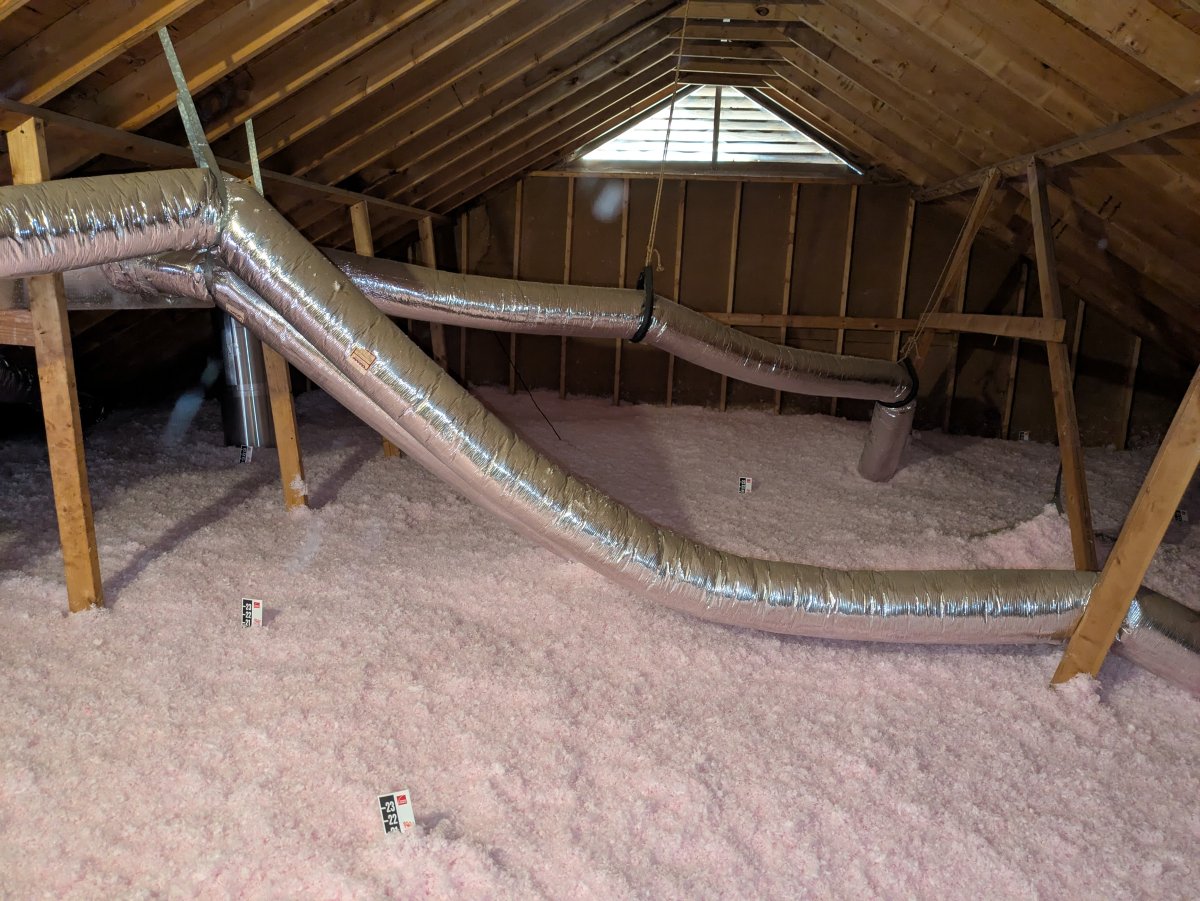
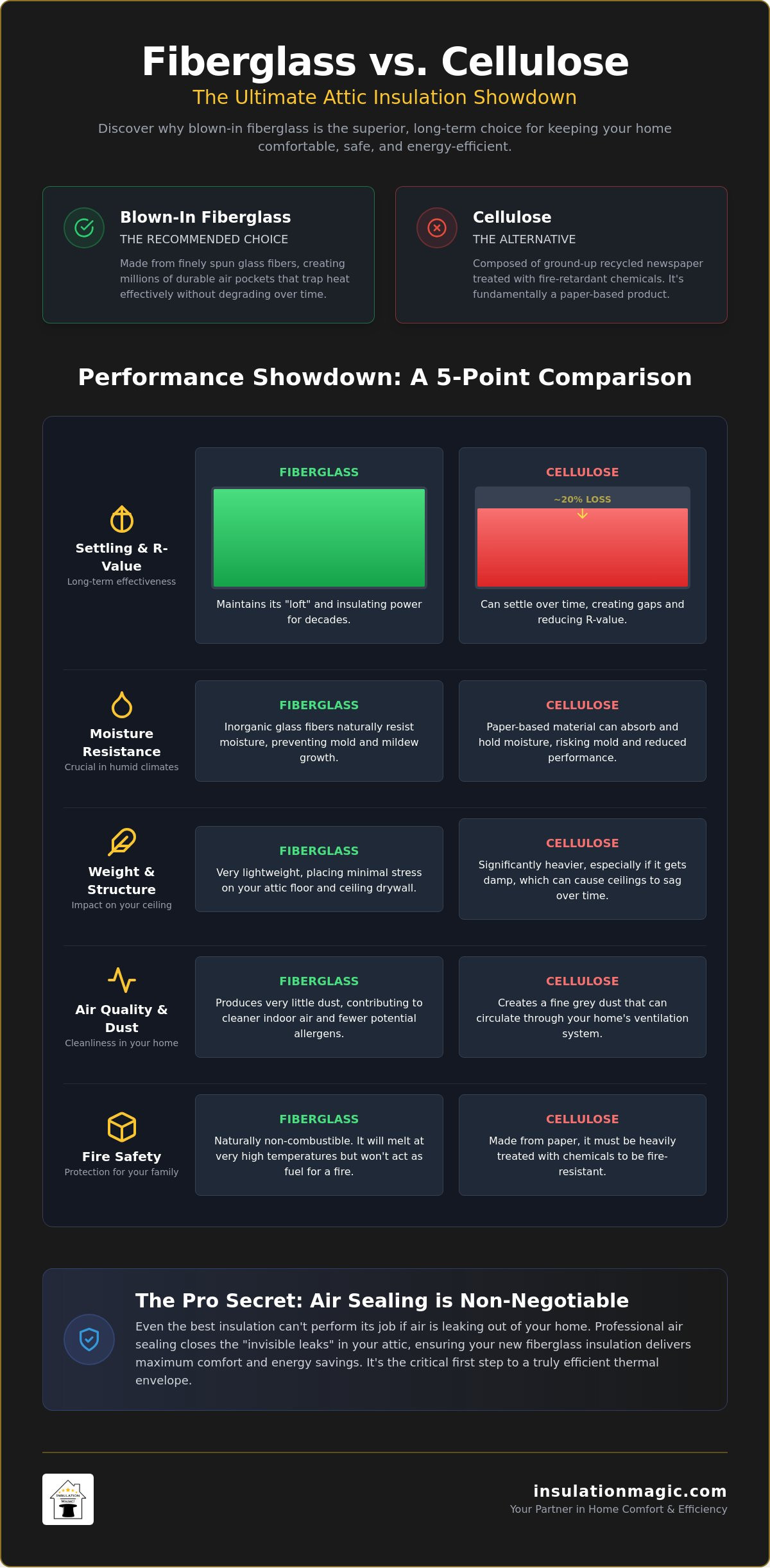
When you start researching fiberglass vs cellulose attic insulation, it's easy to get caught up in technical ratings. Many homeowners are told that cellulose has a slightly higher R-value per inch of thickness. While that sounds impressive on paper, it doesn't tell the full story of how these materials behave in a real Charlotte attic. As meticulous craftsmen, we look at how a material performs after five, ten, and twenty years of service. Fiberglass maintains its "loft," meaning those tiny air pockets stay open and effective even during the most brutal July heatwaves. It doesn't need to be heavy or dense to do its job; it just needs to stay exactly where we put it.
Cleanliness is another area where fiberglass truly shines. Because it's made of spun glass rather than ground-up recycled newspaper, it doesn't create the fine grey dust that often accompanies cellulose. For families concerned about indoor air quality and allergens, this distinction is vital. Choosing fiberglass means choosing a cleaner, more stable environment for your home. If you're ready to see how a professional installation can transform your comfort, you can schedule an attic assessment with our team today.
Comparing Weight and Ceiling Stress
One of the most overlooked factors in the fiberglass vs cellulose attic insulation debate is structural weight. Cellulose is significantly heavier than fiberglass to achieve the same total R-value. In many of Charlotte's charming older homes, adding several inches of heavy, treated paper can put unnecessary stress on your drywall. We've seen cases where heavy insulation contributes to ceiling cracks or visible sagging. Fiberglass provides a light and airy barrier that protects your home's structure while keeping your second floor cool and comfortable.
Long-Term Thermal Stability
Efficiency is only valuable if it lasts. A major drawback of cellulose is its tendency to settle over time. Industry data shows that cellulose can lose between 5% and 20% of its thickness as it ages, which directly reduces its ability to stop heat flow. This means the R-value you pay for today might not be what you have in a decade. Fiberglass, however, has a typical lifespan of 50 to 100 years and is naturally resistant to settling. By choosing a material that stays put, you're ensuring permanent energy savings and avoiding the need for "top-off" services down the road.
Beyond R-Value: Moisture, Fire Safety, and the Settling Factor
While thermal resistance is a major part of the fiberglass vs cellulose attic insulation debate, your home's long-term health depends on how these materials handle the unexpected. As a homeowner in the Charlotte area, you aren't just dealing with heat; you're managing humidity, indoor air quality, and the safety of your family. Because we view ourselves as meticulous craftsmen, we prioritize materials that offer inherent protection. Fiberglass isn't just an insulator; it's a stable, inorganic barrier that stays clean and safe regardless of what's happening in your attic.
Another often-overlooked benefit of fiberglass is how it interacts with local wildlife. Inorganic materials are far less attractive to nesting critters compared to the shredded paper found in cellulose. This choice helps maintain a cleaner, more hygienic environment by discouraging pests from making a home in your insulation. When you combine this with the material's natural durability, it's easy to see why it's the professional choice for a modern attic.
Humidity and the North Carolina Climate
In our region, humidity is a constant factor that can undermine your attic's efficiency. Cellulose is a paper-based product that naturally absorbs moisture from the air. When this happens, the material becomes heavy and can eventually support mold growth or even start to rot. Fiberglass is entirely inorganic, meaning it doesn't hold water or provide a food source for mold. Moisture-wicking materials fail in NC attics because they trap humidity and invite structural issues. By choosing fiberglass, you're ensuring that your insulation remains light, dry, and effective for its entire 50 to 100-year lifespan.
Fire Resistance: Natural vs. Chemical
Safety is a non-negotiable priority for families in high-density communities like Matthews or Mint Hill. When comparing fiberglass vs cellulose attic insulation, the difference in fire safety is fundamental. Fiberglass is naturally non-combustible because it's made of glass; it simply won't burn. Cellulose, on the other hand, relies on heavy chemical treatments like boric acid or ammonium sulfate to prevent it from catching fire. While these treatments are effective initially, we prefer the peace of mind that comes from a material that is naturally fire-resistant without needing a chemical boost. It's a cleaner, safer approach to protecting your most valuable asset.
If you're ready to upgrade to a cleaner and safer attic environment that stands up to the Carolina humidity, you can book your professional attic refresh today to get started.
The Professional Path: Why Air Sealing is the Real Secret to Success
You can spend hours weighing the pros and cons of fiberglass vs cellulose attic insulation, but even the highest quality material will struggle if your attic isn't properly prepared. Think of insulation like a warm winter coat. If that coat is left unzipped, the cold wind will still reach you. In your home, air leaks act like that open zipper. Without professional home air sealing, conditioned air from your living space escapes into the attic, forcing your HVAC system to work overtime regardless of how many inches of insulation you have.
Our approach at Insulation Magic! focuses on meticulous preparation before the first bag of fiberglass is ever blown. We hunt down "The Invisible Leak," which often hides in plain sight. These are the small gaps around top plates, wire penetrations, and recessed light fixtures that allow air to bypass your thermal barrier. By sealing these openings first, we ensure that your new fiberglass insulation can do exactly what it was designed to do: keep your home comfortable and your energy costs low.
Why Air Sealing and Fiberglass are the Perfect Pair
It's helpful to understand that insulation and air sealing perform two different jobs. Insulation is designed to stop heat transfer, while air sealing stops actual air movement. When we combine these two services, we create a high-performance system that leads to a permanent reduction in utility bills. We choose to pair air sealing with fiberglass because it's a safer, more breathable solution for your home's structure. Unlike spray foam, which can trap moisture and create a rigid, non-breathable environment, our method protects your home while allowing for natural expansion and contraction.
Next Steps for Charlotte Homeowners
If you're ready to transform your second floor from a summer sauna into a comfortable retreat, the process is simple and transparent. We recommend starting with a professional attic assessment where we can identify your specific needs and explain the "how" and "why" of our recommendations. We take immense pride in our reputation as meticulous craftsmen who treat every property with the same care we would apply to our own. You can see the results of this dedication by reading through our customer reviews from neighbors right here in the Charlotte area. When you're ready to experience the difference that a clean, thorough, and effective attic refresh can make, we invite you to schedule your appointment online and take the first step toward lasting home comfort.
Upgrade to a Cooler, More Efficient Charlotte Home
Choosing the right protection for your home shouldn't be a source of stress. We've explored the critical differences in fiberglass vs cellulose attic insulation, highlighting why blown-in fiberglass remains the cleanest and most reliable option for our unique North Carolina climate. By prioritizing moisture resistance and long-term stability, you're investing in a solution that won't settle or lose its effectiveness over time. This choice ensures your second floor stays comfortable even during the peak of summer.
Our owner-operated local service focuses on more than just adding material; we provide a complete attic refresh. Every project includes expert air sealing to stop invisible leaks at the source, and our strict no-spray-foam policy keeps your home's environment safe and breathable. We're dedicated to a "no mess" experience that treats your property with the highest level of care. If you're ready to secure permanent energy savings and a cleaner attic, it's time to take the next step. Book Your Meticulous Attic Assessment Online today. We look forward to helping you create a more comfortable, efficient home for your family.
Frequently Asked Questions
Is blown-in fiberglass better than cellulose for attics?
Blown-in fiberglass is the superior choice because it provides a cleaner and more stable thermal barrier that won't degrade over time. It doesn't absorb moisture or provide a nesting ground for pests. When comparing fiberglass vs cellulose attic insulation, fiberglass wins on durability and air quality. This ensures your home stays protected for many decades without needing a top-off, which is vital for the humid Charlotte climate.
Does cellulose insulation settle more than fiberglass?
Cellulose is known for its tendency to settle, which can eventually compromise your home's energy efficiency. Fiberglass is naturally resistant to this settling, maintaining its full thickness and R-value for its entire lifespan. When insulation settles, it leaves gaps that allow heat to transfer more easily. By choosing fiberglass, you avoid the common problem of losing insulation depth. This keeps your second floor consistently cooler and your utility bills more predictable.
Which insulation is more fire-resistant for a home?
Fiberglass is the safer option because it is naturally non-combustible. Since it's made from spun glass, it simply won't burn or support a flame. Cellulose is made of recycled paper and must be heavily treated with chemicals to resist fire. These chemical treatments can sometimes lose effectiveness over many years. Fiberglass provides a permanent, natural fire barrier that gives you peace of mind without ever relying on chemical additives.
Can I blow new fiberglass over old cellulose insulation?
You can blow new fiberglass over existing cellulose, but we often recommend an Attic Refresh to start with a clean slate. Adding new material on top of old, dusty insulation can sometimes hide existing air leaks or moisture issues. Removing the old material allows us to perform meticulous air sealing on the attic floor first. This professional preparation ensures your new insulation performs at its absolute peak for maximum comfort and savings.
Is fiberglass insulation safe for my family's air quality?
Modern fiberglass is a safe and reliable choice for your home's indoor air quality. It is designed to be low-dust and doesn't contain the fine particulates often found in recycled paper insulation. Because it's an inorganic material, it also doesn't support the growth of mold or mildew, which are common triggers for allergies. Choosing this material helps maintain a cleaner, healthier environment for your family while effectively regulating your home's temperature.
How much does it cost to install blown-in fiberglass in Charlotte?
The investment for your attic depends on factors like the square footage of your space and your current R-value levels. While we don't provide flat rates without a proper assessment, fiberglass is often more cost-effective over its lifespan because it doesn't require the frequent maintenance that settling materials do. We focus on providing a thorough, high-quality installation that pays for itself through permanent energy savings and the restoration of your home's comfort.
Disclaimer
This blog is intended to provide general information about insulation, energy efficiency, and home comfort based on years of experience. While we strive to keep content accurate and up to date, results may vary based on your home's construction, condition, and climate. Contact Insulation Magic for a personalized assessment and recommendations.


