
What if your home's biggest cooling problem isn't actually your HVAC unit, but the massive heat battery sitting right above your head? If you're staring at the thermostat wondering why your Air Conditioner not cooling effectively despite running all day, you aren't alone. Many Charlotte homeowners face this exact struggle, feeling trapped between rising utility bills and second floors that never seem to get comfortable. It's frustrating to receive conflicting advice from different technicians when all you want is a home that feels like a sanctuary from the North Carolina heat.
We believe you deserve a home that provides total peace of mind through reliable, expert solutions. In this article, you'll discover why your cooling system is losing the battle and how a methodical approach to air sealing can finally restore your comfort. We will walk you through how upgrading to fiberglass blown-in insulation, which we recommend over cellulose for its superior performance in our climate, helps meet the R-49 to R-60 standards your home needs. You'll see how these precise improvements lead to lower indoor temperatures, reduced AC runtime, and much lower monthly utility bills.
Key Takeaways
- Learn why your Air Conditioner not cooling effectively might be due to your attic acting as a heat battery rather than a mechanical system failure.
- Discover how to perform simple DIY checks on your thermostat and air filters to rule out basic issues before seeking professional help.
- Understand why fiberglass blown-in insulation is the superior, clean, and long-lasting choice for protecting Charlotte homes from extreme summer heat.
- Identify the critical role of air sealing as the first step in preventing your expensive cooled air from leaking into the attic through hidden gaps.
- See how a methodical assessment of your home's thermal envelope can lead to lower utility bills and restored comfort on your second floor.
Why Your Air Conditioner Is Running but Not Cooling Your Home
It's a sweltering afternoon in Charlotte, and you've set the thermostat to a comfortable 72 degrees. You can hear the hum of the unit and the whir of the fan, but the digital display stubbornly reads 78. This is what we call the "AC Paradox." You have an Air Conditioner not cooling your living space despite the fact that it seems to be running perfectly. This situation is incredibly common for local homeowners, and while it's frustrating, it often points to a problem with your home's protection rather than a mechanical failure of the unit itself.
When a professional HVAC technician visits your home and tells you the system is functioning "fine," it can feel like you're being ignored. However, that report is actually a vital piece of evidence. If the machine is doing its job but the temperature isn't dropping, the cold air your system produces is likely escaping before it can ever cool your rooms. To understand why this happens, we need to look at the basics first and then move toward the bigger picture of your home's efficiency.
The First 5 Minutes: Basic Troubleshooting
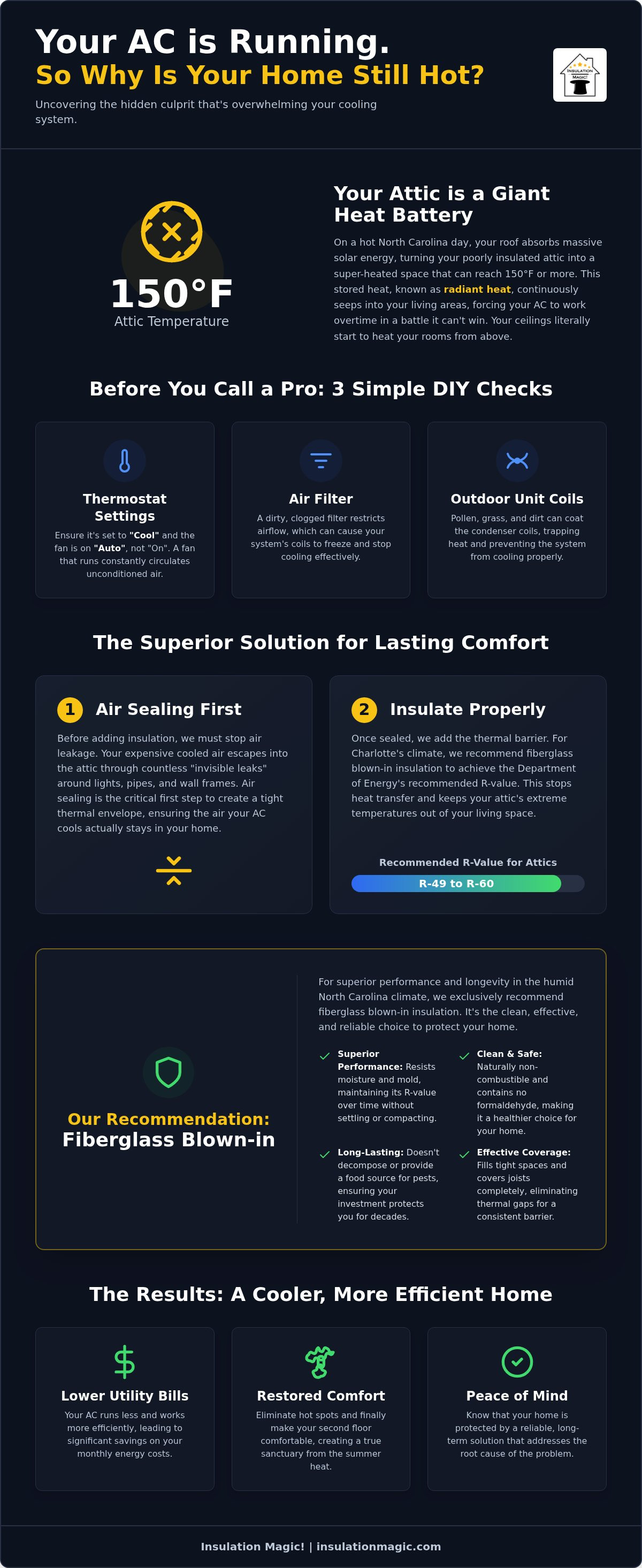
Before you assume the worst, perform a few methodical checks. Start at the thermostat to verify it's set to "Cool" and the fan is set to "Auto" rather than "On." If the fan stays on constantly, it may circulate unconditioned, humid air throughout the house even when the cooling cycle is off. Next, check your air filter. A filter caked in dust or pet hair restricts airflow, which can cause the evaporator coils to freeze up. Finally, step outside to inspect the condenser unit. In North Carolina, thick spring pollen and grass clippings often coat the exterior coils, acting like a blanket that prevents the system from releasing heat into the outside air.
When Mechanical Checks Fail
If your filters are clean and the unit is humming along, the issue is almost certainly your home's thermal envelope. This is the physical barrier between your cooled rooms and the harsh outdoor environment. High-quality Building insulation is the heart of this envelope, but it cannot work alone. Many homes in areas like Waxhaw and Matthews suffer from "Invisible Leaks." These are small gaps around light fixtures, plumbing stacks, and wall top plates that allow your expensive cooled air to get sucked right into the attic.
This is why second floors often stay 10 degrees warmer than the rest of the house. Your AC is essentially trying to cool the entire neighborhood because the "lid" of your home isn't sealed. At Insulation Magic!, we prioritize a meticulous approach to air sealing combined with fiberglass blown-in insulation to ensure your home actually holds the air your AC works so hard to cool. You can learn more about our specific services to see how we address these thermal gaps.
Beyond the Unit: How Attic Heat Overwhelms Your AC
Most homeowners assume that if their home is hot, the cooling system must be broken. While a mechanical failure is possible, many people in the Charlotte area find themselves with an Air Conditioner not cooling effectively because they are fighting an invisible enemy: their own attic. During a typical North Carolina summer, your roof absorbs an incredible amount of solar energy. Without proper protection, your attic transforms into a massive heat battery that stores thermal energy and slowly bleeds it into your living space long after the sun goes down.
This stored heat doesn't just sit there. It moves through a process called radiant heat transfer. When your attic floor stays hot, it warms the drywall of your bedroom ceilings. Eventually, those ceilings begin to act like a space heater, radiating warmth downward. Even if your AC unit is blowing cold air, it's constantly battling the radiant heat coming from above. This struggle is often why you see high energy bills and feel "hot spots" in certain rooms while others remain chilly. High humidity levels in our region only make this worse, as moist air holds onto heat more tenaciously than dry air.
The Radiant Heat Problem
On a 90 degree day in Charlotte, temperatures inside an unventilated or poorly insulated attic can easily soar to 150 degrees or higher. If you only have a thin layer of old insulation, it acts like a heated blanket draped over your family. This creates what professionals call the "Stack Effect." As the intense heat in the attic builds pressure, it forces its way through any small gap in your ceiling, while simultaneously pushing your expensive, cooled air out through lower windows or doors. It is a cycle that forces your HVAC system to work overtime just to maintain a baseline of comfort.
Identifying Insulation Gaps
You don't need to be a building scientist to spot a failing thermal envelope. A simple visual check is often enough. If you can see the tops of your wooden floor joists when you peek into your attic, you definitely don't have enough protection. In North Carolina, the Department of Energy recommends an R-value of up to R-60, which usually requires about 16 to 20 inches of material. At Insulation Magic!, we recommend fiberglass blown-in insulation as the superior choice for these applications because it doesn't settle like cellulose and provides a cleaner, more consistent thermal barrier over time.
Another practical test is the "Hot Ceiling Test." On a warm afternoon, simply touch the ceiling of an upstairs room. If the drywall feels warm to the touch, your insulation is failing to stop radiant heat transfer. Learning how to lower heating and cooling costs starts with understanding these physical boundaries of your home. If your ceilings are glowing with heat, it might be time to schedule a professional attic assessment to see exactly where your home is losing its cool.
The Best Attic Insulation to Keep Your Home Cool in North Carolina
When you are dealing with an Air Conditioner not cooling your home effectively, the material you choose to block that attic heat is just as important as the amount you install. In the Charlotte metro area, the U.S. Department of Energy recommends an R-value of R-49 to R-60 for optimal thermal protection. Reaching this level of protection requires a material that is consistent, durable, and safe for our specific humid climate. At Insulation Magic!, our standard recommendation for every local project is fiberglass blown-in insulation.
Selecting the right material is a critical part of our methodical approach to restoring your comfort. While there are many options on the market, we have found that fiberglass provides the best long term value for homeowners in neighborhoods from Weddington to Ballantyne. It is a clean, effective solution that allows your home to function as it was designed while significantly reducing the workload on your HVAC system. You can explore our full range of insulation services to see how we apply these standards to every project.
Why We Recommend Blown-In Fiberglass
Fiberglass blown-in insulation is a superior choice for North Carolina attics for several practical reasons. First, it is naturally fire resistant and handles moisture much better than organic alternatives. Because it is made of spun glass, it does not absorb water or provide a food source for pests or mold. This is vital in our humid region where attic moisture can sometimes be an issue. Additionally, fiberglass does not settle significantly over time. When we install 18 inches of fiberglass to reach an R-60 value, you can trust it will stay at that height for years to come. The installation process is also incredibly thorough; the blowing machine allows us to fill every small nook, cranny, and hard to reach corner of your attic floor, creating a seamless thermal blanket.
The Case Against Cellulose and Spray Foam
Many competitors suggest cellulose, which is made from recycled paper products. While it is a common material, cellulose has a tendency to settle and pack down over time, which causes it to lose its initial R-value. It can also be quite dusty, and if it ever gets wet from a roof leak, it becomes a heavy, soggy mess that is difficult to dry out. We also choose to avoid spray foam insulation in attic applications. Spray foam is an "unforgiving" material that can trap moisture against your roof deck, potentially leading to rot that stays hidden until it is a major problem. It also prevents your attic from "breathing" and makes it nearly impossible for roofers to detect leaks. We believe in using materials like fiberglass that protect your home without creating secondary risks for your property's structure.
Critical Steps to Support Your Cooling System: Air Sealing and Ventilation
Adding a thick layer of fiberglass blown-in insulation is a massive improvement for any Charlotte home, but on its own, it is only half of the solution. If you find your Air Conditioner not cooling the second floor properly, the culprit is often a lack of air sealing. Imagine wearing a thick wool sweater on a windy day; the wool keeps you warm, but the wind blows right through the fibers. Without a windbreaker, the sweater loses its effectiveness. In your attic, air sealing acts as that windbreaker, preventing conditioned air from bypassing your insulation entirely.
Our process begins with a thorough assessment of your home's thermal boundaries. We don't just throw material over a problem; we look for the root causes of heat gain. By combining precision air sealing with high quality ventilation, we create a system that supports your HVAC unit rather than forcing it to fight a losing battle against the attic. This methodical approach is the only way to achieve permanent comfort and lower utility bills in the North Carolina heat.
Air Sealing: The Invisible Barrier
The first step in our meticulous process is identifying "bypasses." These are hidden gaps where your home’s interior air leaks directly into the attic space. Professional home air sealing is the secret to a truly comfortable second floor because it stops the cycle of air loss. Our craftsmen focus on high-priority leak points that most homeowners never see, including:
- Recessed Lights: Standard "can" lights are notorious for acting like small chimneys, sucking cold air out of your rooms.
- Plumbing Stacks: The gaps around the large pipes that vent your bathrooms often go unsealed during original construction.
- Top Plates: These are the wooden beams at the top of your walls where wires and pipes pass through to the attic.
- Attic Hatches: An unsealed attic door is essentially a permanent hole in your home's thermal envelope.
By sealing these penetrations with professional grade materials, we ensure that the cold air your HVAC produces stays where it belongs. This simple but precise step is what prevents an Air Conditioner not cooling from becoming a permanent summer frustration.
Active Attic Ventilation
Once we have sealed the leaks and installed your new fiberglass insulation, the final step is managing the environment inside the attic itself. This is where attic fans play a vital role. While insulation blocks heat transfer, an attic fan actively pulls the 150 degree air out of the structure. This lowers the ambient temperature of the attic, which in turn reduces the thermal pressure on your insulation. Proper airflow also prevents moisture buildup, protecting your roof shingles from the inside out. When ventilation and air sealing work together, industry professionals report that homeowners see a significant reduction in AC runtime, often as much as 30 percent during the peak of summer.
Professional Insulation Solutions in Charlotte: Restoring Your Home’s Comfort
Fixing an Air Conditioner not cooling your home requires more than just a quick fix or a generic layer of material. It requires a local partner who understands the unique thermal challenges of the Charlotte metro area. From the humid summer afternoons in Mint Hill to the sprawling estates in Weddington and the busy neighborhoods of Ballantyne, every home has a different story. We don't believe in one size fits all solutions. Instead, we focus on a methodical, step by step process that addresses your specific comfort issues while protecting the long term health of your property.
Our goal is to restore your peace of mind. When you know your home's thermal envelope is sealed and protected by high quality fiberglass blown-in insulation, you can stop worrying about the thermostat. You deserve a home that stays cool even in the peak of July, and we have the local expertise to make that a reality. By prioritizing transparency and craftsmanship, we turn a stressful home maintenance task into a simple, rewarding upgrade for your family.
The Meticulous Assessment
Every project at Insulation Magic! begins with a thorough, patient assessment. We don't just peek our heads into the attic; we get into the corners to identify old, damaged, or insufficient materials that are holding your home back. As "Patient Educators," we take the time to show you exactly where your energy dollars are being wasted. We might find gaps in your air sealing or areas where your current insulation has settled and lost its effectiveness. By walking you through these findings, we ensure you understand the "how" and "why" behind our recommendations. Our commitment to this level of detail is why so many of your neighbors trust us. You can read their stories in our client reviews to see how our meticulous approach has changed their homes.
Cleanliness and Integrity
We treat every home with the same level of care and respect we would apply to our own property. The "Meticulous Craftsman" persona isn't just a title; it's a promise of a clean job site and a respectful installation process. We use protective coverings and ensure that when we leave, the only sign we were there is the sudden drop in your indoor temperature. We prioritize integrity over quick sales, which is why we consistently recommend fiberglass blown-in insulation for its superior performance and safety. We're here to build a lasting relationship based on trust and tangible results. If you're tired of a home that won't stay cool and you're ready for a permanent solution, we're here to help.
Take Control of Your Home’s Climate
You shouldn't have to live with a home that feels like an oven just because the North Carolina sun is out. By addressing the thermal envelope through professional air sealing and high-performance fiberglass blown-in insulation, you can finally stop the cycle of an Air Conditioner not cooling effectively. We specialize in these meticulous upgrades that prioritize your long-term comfort and property health without the mess or moisture risks associated with spray foam.
Our team has served as local Charlotte experts since 2026, bringing a craftsman’s eye to every attic project. We ensure a clean, thorough installation that fills every gap, providing you with a home that stays cool and utility bills that stay manageable. It's time to stop fighting your attic and start enjoying your living space again.
We look forward to helping you restore comfort to your home with a process that's as clean and transparent as it is effective.
Frequently Asked Questions
Why is my AC running but the house temperature is not dropping?
Your home is likely losing cooled air as fast as the system produces it. This is often due to an unsealed thermal envelope where hidden gaps in your ceiling allow cold air to escape into the attic. When you have an Air Conditioner not cooling effectively, it is usually because the attic's intense heat is overwhelming your living space through radiant transfer, forcing the unit to run without making progress.
Can old attic insulation cause my air conditioner to fail?
Yes, insufficient or degraded insulation forces your unit to run much longer cycles than it was designed for. This constant strain leads to premature wear and tear on the compressor and fan motor. By upgrading to a modern layer of fiberglass blown-in insulation, you reduce the workload on your HVAC system. This meticulous protection helps prevent mechanical breakdowns during the most demanding weeks of the North Carolina summer.
Is it worth adding insulation if my AC is old?
It is actually more critical to insulate if your cooling system is older and less efficient. An aging unit lacks the performance of modern models, so it needs every bit of help to maintain comfortable temperatures. Improving your attic's R-value protects your old AC from overworking. This can extend the unit's lifespan while helping you save on utility bills while you prepare for a future system replacement.
What is the best type of insulation for hot North Carolina summers?
Fiberglass blown-in insulation is the superior choice for our humid Charlotte climate. Unlike cellulose, which can settle and lose its R-value over time, fiberglass remains consistent and does not absorb moisture or support mold growth. It provides a clean, effective thermal barrier that fills every small gap on your attic floor. This ensures your home stays protected from the extreme radiant heat typical of our region.
How much does it cost to air seal and insulate an attic in Charlotte?
The total investment depends on the square footage of your attic and the current state of your insulation. While we provide custom quotes based on a meticulous assessment, these upgrades are known for their high value. In fact, professional attic improvements in our region can offer a return on investment of up to 117 percent. This makes it one of the most cost-effective ways to improve home comfort.
Will an attic fan help my AC cool my house better?
An attic fan is an excellent partner for your cooling system because it actively removes trapped solar heat from the structure. By pulling 150 degree air out of the attic, the fan lowers the ambient temperature directly above your ceilings. This reduces the thermal pressure on your fiberglass insulation. The result is a home that stays cooler with significantly less effort from your primary air conditioner.
Do I need to remove old insulation before adding new fiberglass?
You only need to remove old material if it is contaminated by pests, mold, or significant moisture damage. In many cases, we can perform professional air sealing first and then cap your existing insulation with a fresh, thick layer of fiberglass blown-in material. This approach is highly effective and creates a powerful thermal barrier that immediately restores your home's comfort without the need for a full removal.
Why is my second floor so much hotter than my first floor?
Your second floor is directly beneath the hottest part of your home and is subject to the stack effect. Heat from the attic radiates through the ceiling drywall, while cool air naturally sinks to the lower level. If you are experiencing an Air Conditioner not cooling your upstairs rooms, it is a clear sign that your attic lacks the proper air sealing and insulation needed to block that heat transfer.
Disclaimer
This blog is intended to provide general information about insulation, energy efficiency, and home comfort based on years of experience. While we strive to keep content accurate and up to date, results may vary based on your home's construction, condition, and climate. Contact Insulation Magic for a personalized assessment and recommendations.


