
It's a humid July afternoon in Charlotte, and despite your air conditioner running at full capacity, your upstairs bedrooms still feel like a sauna. You might think your HVAC system is failing, but the real culprit is often hiding right above your head. Many local homeowners don't realize that their attic acts as the lungs of their house. When it can't breathe, heat and moisture become trapped, leading to a cycle of discomfort and property damage. Identifying the signs of poor attic ventilation is the first step toward reclaiming your home's comfort and protecting your roof's lifespan.
We understand how stressful it is to worry about rising energy bills or the silent threat of mold growth in your rafters. You deserve a home that stays cool and a roof that remains structurally sound for decades. In this article, you'll learn how to spot the red flags of a suffocating attic before they ruin your insulation or spike your utility costs. We'll preview exactly what to look for, from wavy shingles to damp floorboards. We'll also explain why a meticulous approach involving air sealing, attic fans, and moisture-resistant fiberglass blown-in insulation provides the long-term protection your Charlotte home needs to stay healthy and efficient.
Key Takeaways
- Understand how the "stack effect" moves air through your home and why balanced airflow is vital for your roof's health.
- Learn to identify the most common signs of poor attic ventilation, such as uncomfortably hot upper floors and moisture on the roof deck.
- Discover why trapped humidity can ruin your insulation and why fiberglass blown-in is the superior choice for moisture management.
- Find out how professional air sealing and attic fans work as a proactive system to keep your home cool and your utility bills low.
- See how a meticulous assessment of your home's thermal envelope ensures your ventilation system is ready for the Charlotte humidity.
What is Attic Ventilation and Why Does it Matter in Charlotte?
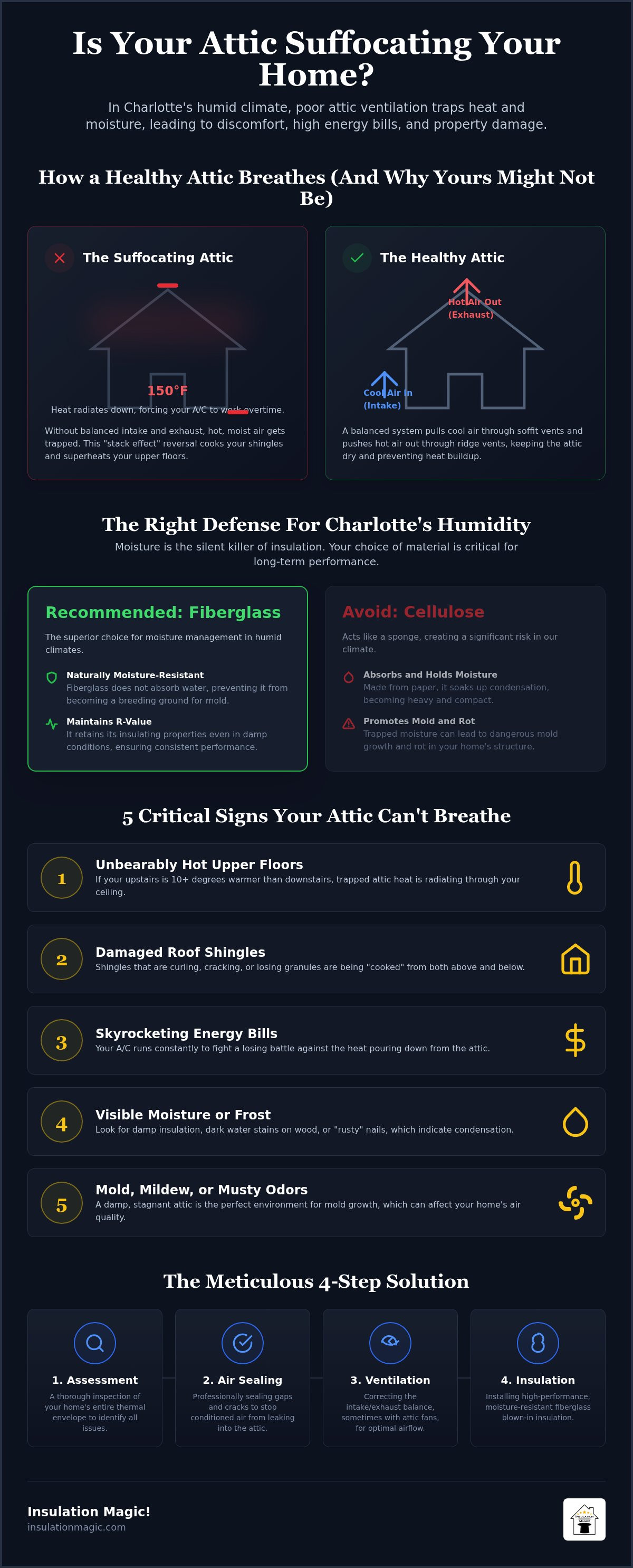
To understand why your home feels so warm, you first need to understand how your attic breathes. Simply put, What is Attic Ventilation comes down to a continuous, balanced cycle of air moving through the peak of your home. It's helpful to think of your attic as the lungs of your house. When these lungs are clear, your home stays healthy; when they're constricted, the entire system begins to fail. In the Queen City, where summer afternoons often top 90°F with thick humidity, a poorly ventilated attic can easily reach a staggering 150°F. This trapped heat doesn't just sit there. It radiates downward, forcing your air conditioner to work overtime and stressing your roof's structural integrity.
The movement of this air relies on a natural process called the "stack effect." Because hot air is less dense than cool air, it naturally rises. Without a clear path to escape, this heat builds up pressure against your roof deck and ceiling. Identifying the early signs of poor attic ventilation allows you to fix this cycle before the extreme heat causes permanent damage to your shingles or your home's framing.
The Intake and Exhaust Balance
A functional ventilation system requires two parts working in perfect harmony: intake and exhaust. Intake usually happens through soffit vents located under your eaves, which pull in fresh, cooler air from the outside. Exhaust occurs at the highest points of the roof through ridge vents or gable vents, allowing the rising hot air to exit. Balanced ventilation is the equal exchange of cool air entering and hot air exiting. If this balance is off, the system might actually start pulling air from your conditioned living spaces, wasting the money you spent on cooling. We focus on ensuring these pathways are clear of old debris or misplaced insulation so the air flows exactly where it should.
Why North Carolina Humidity is the Real Enemy
In Charlotte, heat is only half the battle; humidity is the silent threat. Our high dew points mean that moisture often hitches a ride into your attic. When this humid air hits a cooler surface, like a roof rafter at night, it turns into condensation. This "attic rain" can lead to wood rot and mold growth if it isn't dried out by constant airflow. This is exactly why we recommend fiberglass blown-in insulation for local homes. Unlike cellulose, which can act like a sponge and hold onto that moisture, fiberglass is naturally resistant to water absorption. Maintaining a dry, well-ventilated space is the only way to ensure your insulation stays effective and your attic remains mold-free.
5 Critical Signs of Poor Attic Ventilation You Can See and Feel
Identifying the early signs of poor attic ventilation is about more than just comfort; it's about preserving your home's value. When your attic can't breathe, the symptoms eventually manifest in ways that impact your daily life and your wallet. If you've noticed your home struggling to stay cool during a typical Charlotte heatwave, your attic might be working against you. Here are the most common red flags that suggest your ventilation system needs a professional assessment.
The Second-Floor Temperature Gap
Have you ever walked upstairs and felt like you entered a different climate zone? It's an oven. If there is a 10-degree difference between your first and second floors, it's rarely just an HVAC issue. Instead, trapped solar heat in the attic radiates through your ceiling joists and drywall. This constant downward pressure of heat fights your air conditioner, making it nearly impossible to reach your desired temperature. Learning how to lower heating and cooling costs starts with stopping this radiant heat transfer at the source.
- Baking Shingles: When heat is trapped, your shingles are cooked from both sides. You might see them curling, becoming brittle, or losing their protective granules prematurely.
- Spiking Energy Bills: If your utility costs are climbing significantly higher than your neighbors' during July and August, your attic is likely leaking energy.
Inspecting for Moisture and Mold
In our humid North Carolina climate, "attic rain" is a common but overlooked problem. This happens when warm, moist air from your living space escapes into a poorly ventilated attic and condenses on the cold underside of the roof deck. You can spot this by looking for "rusty" nails protruding through the plywood or dark water stains that don't align with a specific roof leak. These are classic signs of poor attic ventilation that many homeowners mistake for roofing failures.
If you notice musty odors or dark spotting on your rafters, you are seeing the early stages of mold growth. This isn't just a structural concern. It's a health warning for your entire family. Because air naturally moves between your attic and your living space, mold spores can find their way into the air you breathe. We always recommend fiberglass blown-in insulation for these situations because it doesn't hold onto moisture like cellulose does. This helps keep your attic environment clean and dry. If you suspect your attic is trapping heat or moisture, you can schedule a thorough inspection to identify the root cause before it leads to expensive repairs.
Why Poor Ventilation is an Insulation Killer
When you spot the signs of poor attic ventilation, your roof isn't the only thing at risk. Your insulation is often the first casualty of a suffocating attic. Insulation works by trapping tiny pockets of air to slow down heat transfer. However, when moisture is trapped in the attic due to stagnant airflow, it eventually settles into your insulation material. This creates what we call the "wet blanket" effect. Just as a damp coat fails to keep you warm, moist insulation loses its thermal resistance, or R-value, allowing heat to pour into your living spaces during the summer.
To prevent this, we focus on a two part solution: professional air sealing and proper ventilation. Air sealing involves closing the hidden gaps around light fixtures and plumbing pipes where conditioned air from your home leaks into the attic. Without this step, your ventilation system has to work twice as hard to exhaust the moisture your family generates from daily activities like showering or cooking. By combining air sealing with high quality fiberglass blown-in insulation, we create a stable environment where your insulation remains dry and effective for decades.
Fiberglass vs. Cellulose in Humid Environments
The choice of material makes a significant difference in how your home handles the Charlotte humidity. Many contractors still use cellulose, which is essentially recycled paper treated with chemicals. In a poorly ventilated attic, cellulose acts like a massive sponge, soaking up humidity and clumping together. Once it clumps, it loses its loft and its ability to insulate your home.
We strictly recommend fiberglass blown-in insulation for our local clients. Fiberglass is inorganic and naturally resistant to moisture absorption. It doesn't hold onto water, which means it won't rot or lose its R-value when the humidity spikes. This material allows for better airflow through the attic space while providing a superior thermal barrier that stands up to our North Carolina climate.
The Hidden Danger of Insulation Removal
Sometimes, the damage from poor ventilation is too severe to fix with a simple top off. If your current insulation is matted down, discolored, or smells musty, it has likely reached the end of its functional life. Adding new material over old, moisture damaged insulation can actually trap mold spores and odors against your ceiling. Starting with a clean slate is often the most meticulous way to ensure your home remains healthy. You can learn more about this process in our Professional Insulation Removal in Charlotte guide. Removing the old, compromised material allows us to perform thorough air sealing and install a fresh layer of fiberglass that will perform exactly as intended.
Practical Solutions: From Attic Fans to Air Sealing
Once you've identified the signs of poor attic ventilation, the path to a cooler home involves a methodical restoration of airflow. We don't believe in quick fixes that ignore the underlying physics of your house. Instead, we follow a disciplined sequence to ensure your attic can breathe freely again. The first step is often the simplest but most overlooked: clearing blocked soffit vents. In many older Charlotte homes, these critical intake points are buried under decades of old insulation or dust. Without clear soffits, even the best ridge vents are essentially useless because there's no way for fresh air to enter the system.
The Power of Active Ventilation (Attic Fans)
While passive vents rely on natural wind and rising heat, Charlotte’s stagnant, humid summer days often require a more proactive approach. This is where attic fans become a game-changer. Unlike passive systems that wait for air to move on its own, a thermostat-controlled attic fan actively pulls stagnant, hot air out of the space before it can saturate your ceiling. This prevents the "oven effect" from ever taking hold. By setting the fan to trigger at a specific temperature, you ensure your attic remains closer to the outdoor ambient temperature, which significantly reduces the thermal load on your insulation and your HVAC system.
Why Air Sealing is the Secret Ingredient
When homeowners ignore the persistent signs of poor attic ventilation, they often find that simple venting isn't enough without addressing hidden air leaks. Ventilation only works effectively if the "floor" of your attic is airtight. Think of it like a chimney; if there are holes in the sides, the smoke won't draw upward correctly. Common air leak points like recessed light fixtures, plumbing stacks, and gaps in top plates allow your expensive air-conditioned air to escape into the attic. This doesn't just waste money; it carries moisture that can lead to wood rot. Professional air sealing is the invisible secret to making your ventilation system perform as designed. You can read more about why this step is non-negotiable in our guide to Home Air Sealing: The Invisible Secret.
The final stage of a meticulous attic refresh is upgrading to fiberglass blown-in insulation. We prefer fiberglass because it creates a breathable, efficient barrier that doesn't clump or trap moisture like cellulose. When combined with a clear intake path, active fans, and a sealed attic floor, fiberglass provides the long-term protection your Charlotte home needs to stay comfortable and mold-free.
Meticulous Attic Care: The Insulation Magic! Approach
At Insulation Magic!, we believe that fixing the signs of poor attic ventilation requires a look at the bigger picture. We don't just check for a few vents and call the job finished. Instead, we assess your home's entire "thermal envelope." This is the boundary between your conditioned living space and the outdoor elements. By looking at how heat moves through your ceiling, where air leaks through your light fixtures, and how moisture travels, we can create a customized plan that actually works for your specific Charlotte property. It's a methodical process that prioritizes your comfort and your home's long-term health.
Our commitment to quality means we only use materials that we'd trust in our own homes. This is why we strictly recommend fiberglass blown-in insulation for every attic project. As we've discussed, fiberglass offers superior moisture management compared to cellulose. It doesn't act like a sponge, and it won't clump together when the North Carolina humidity levels rise. This ensures that your R-value stays consistent and your attic remains a breathable, dry environment.
We also stand by our "No Spray Foam" promise. While some contractors push spray foam as a modern miracle, we've seen how it can trap moisture against roof decks and hide potentially catastrophic roof leaks. We believe in traditional, high-performance materials that allow your home to breathe. By using a combination of air sealing, attic fans, and fiberglass, we provide a safer, more predictable solution that protects your structural integrity without the risks of chemical off-gassing or trapped humidity.
The Assessment Process
When you schedule an inspection with us, you're getting a local expert who knows the unique challenges of Waxhaw and Matthews homes. We don't rush the process. We meticulously identify "hot spots" where heat is radiating into your bedrooms and look for subtle moisture risks that might lead to mold. You can expect total transparency from the start. We'll explain the "how" and "why" behind our recommendations, providing a clear project scope and honest pricing. As an owner-operated business in the Charlotte metro area, our reputation is built on the integrity of our work and the peace of mind we give our neighbors.
Ready for a Cooler, Safer Home?
Investing in proper ventilation and high-quality insulation isn't just about comfort; it's about permanent savings. When your attic is no longer an oven, your air conditioner can finally take a break, leading to significantly lower utility bills. You'll also rest easier knowing your roof is protected from the inside out and your family is breathing clean air. We're here to guide you through every step of the process, from the initial assessment to the final meticulous cleanup.
Protect Your Charlotte Home with Proper Airflow
Your attic doesn't have to be a source of stress or high utility bills. By understanding the common signs of poor attic ventilation, you can take proactive steps to safeguard your roof and your comfort. We focus on a meticulous system that pairs precision air sealing with moisture-resistant fiberglass blown-in insulation to keep your home breathing correctly. This approach doesn't just lower your cooling costs; it protects your property from the silent threat of mold and wood rot.
As an owner-operated local service with 5-star reviews from your neighbors across Charlotte, we take pride in our role as patient educators. We're here to help you navigate these technical issues with transparency and care. You deserve a home that remains a sanctuary, even during the peak of a North Carolina summer. Our expertise in air sealing and high-performance fiberglass ensures your home is ready for any weather.
Take the first step toward a more efficient and protected home today. We look forward to showing you the difference that meticulous craftsmanship and local expertise can make for your peace of mind.
Frequently Asked Questions
Is poor attic ventilation the same as a roof leak?
No, these are different issues with very similar symptoms. A roof leak involves external water entering through damaged shingles or flashing. Poor ventilation causes "attic rain," which is internal condensation that forms when warm, moist air hits the cold underside of your roof deck. You might see rusty nails or damp spots on the plywood, which are common signs of poor attic ventilation. Both require professional attention to prevent structural rot.
Can I fix poor attic ventilation by just adding more insulation?
Actually, adding insulation without addressing ventilation can often make the problem worse. If you pile more material over your soffit vents, you'll completely cut off the intake of fresh air. Insulation's job is to slow heat transfer, but it cannot remove trapped hot air or moisture. A meticulous approach involves ensuring your vents are clear and your attic floor is air-sealed before installing a fresh layer of moisture-resistant fiberglass blown-in insulation.
How much does it cost to improve attic ventilation in Charlotte?
The total investment varies based on the specific needs of your home's thermal envelope. Factors that influence the final cost include the number of thermostat-controlled attic fans required, the extent of professional air sealing needed, and whether old, moisture-damaged insulation must be removed first. While every project is unique, these improvements typically pay for themselves through lower utility bills and an extended lifespan for your roof shingles in the humid North Carolina climate.
What is the best type of attic fan for North Carolina weather?
We typically recommend thermostat-controlled attic fans for our local climate. These active systems are more effective than passive vents during our stagnant, humid summer days. Because they only run when the attic reaches a specific temperature, they efficiently pull out hot air without wasting electricity. This proactive cooling solution prevents your attic from reaching extreme temperatures, which protects your insulation and keeps your upper floors much more comfortable during July and August.
Will better attic ventilation really lower my AC bill?
Yes, it can have a significant impact on your monthly cooling costs. When heat is trapped in your attic, it radiates through your ceiling and forces your air conditioner to run constantly to keep up. By improving airflow and removing that stagnant hot air, you reduce the thermal load on your home. Homeowners often notice that their HVAC system cycles less frequently, leading to lower utility bills and less wear and tear on their equipment.
How do I know if my soffit vents are blocked?
You can often tell by performing a simple visual check from inside the attic. If you look toward the eaves during the day and don't see any light peeking through, your soffit vents are likely blocked by old insulation or debris. Another sign is if the air in your attic feels completely still and heavy even on a breezy day. Clearing these intake points is a critical first step in restoring a healthy, balanced ventilation cycle.
Can poor ventilation cause mold in my attic?
Absolutely. Mold thrives in dark, damp environments with stagnant air. When humid air from your kitchen or bathroom isn't exhausted properly, it settles into your attic and provides the moisture mold needs to grow on rafters and plywood. This is one of the most serious signs of poor attic ventilation. Maintaining constant airflow is the best way to keep your attic dry and prevent these spores from affecting your family's health and home integrity.
Why do you recommend fiberglass over cellulose for Charlotte attics?
We recommend fiberglass blown-in because it is far superior at handling Charlotte's high humidity. Cellulose is made from recycled paper and acts like a sponge, soaking up moisture and clumping together over time. Once it clumps, it loses its loft and insulating power. Fiberglass is inorganic and naturally resistant to moisture, meaning it won't rot or lose its R-value when the air gets thick. It is the most reliable choice for long-term performance and protection.
Disclaimer
This blog is intended to provide general information about insulation, energy efficiency, and home comfort based on years of experience. While we strive to keep content accurate and up to date, results may vary based on your home's construction, condition, and climate. Contact Insulation Magic for a personalized assessment and recommendations.


