
Why is your second floor ten degrees hotter than your living room, even when the AC is working overtime? It's a frustrating reality for many in our area, especially when you're also dealing with drafty rooms during those damp NC cold snaps. You might worry that your HVAC system is failing, but the true culprit is often hiding right above your head. An attic insulation inspection Charlotte homeowners can rely on is the first step toward reclaiming your comfort and stopping the drain on your bank account.
We understand that the attic is often a "set it and forget it" space, but old, settled insulation or hidden air leaks can quietly sabotage your home's efficiency. In this guide, we'll walk you through exactly what happens during a professional, meticulous attic assessment. You'll discover how to identify signs of mold or rodent damage and why choosing fiberglass blown-in insulation over cellulose is the smartest move for long-term savings. We're here to provide a clear, honest report on your attic's health, ensuring you have the expert guidance needed to keep your home cool all summer and cozy all winter.
Key Takeaways
- Understand how a professional attic insulation inspection Charlotte residents rely on can pinpoint exactly why your second floor stays uncomfortably warm compared to the rest of your home.
- Learn why blown-in fiberglass is the superior choice for our local climate because it resists moisture and maintains its R-value much longer than cellulose alternatives.
- Discover the "Meticulous Craftsman" approach to identifying thermal bypasses, such as recessed lights and plumbing stacks, that leak expensive conditioned air into your attic.
- See how combining high-quality fiberglass insulation with precision air sealing creates a permanent barrier against Charlotte's high humidity and seasonal temperature swings.
Why Your Charlotte Home Needs an Attic Insulation Inspection
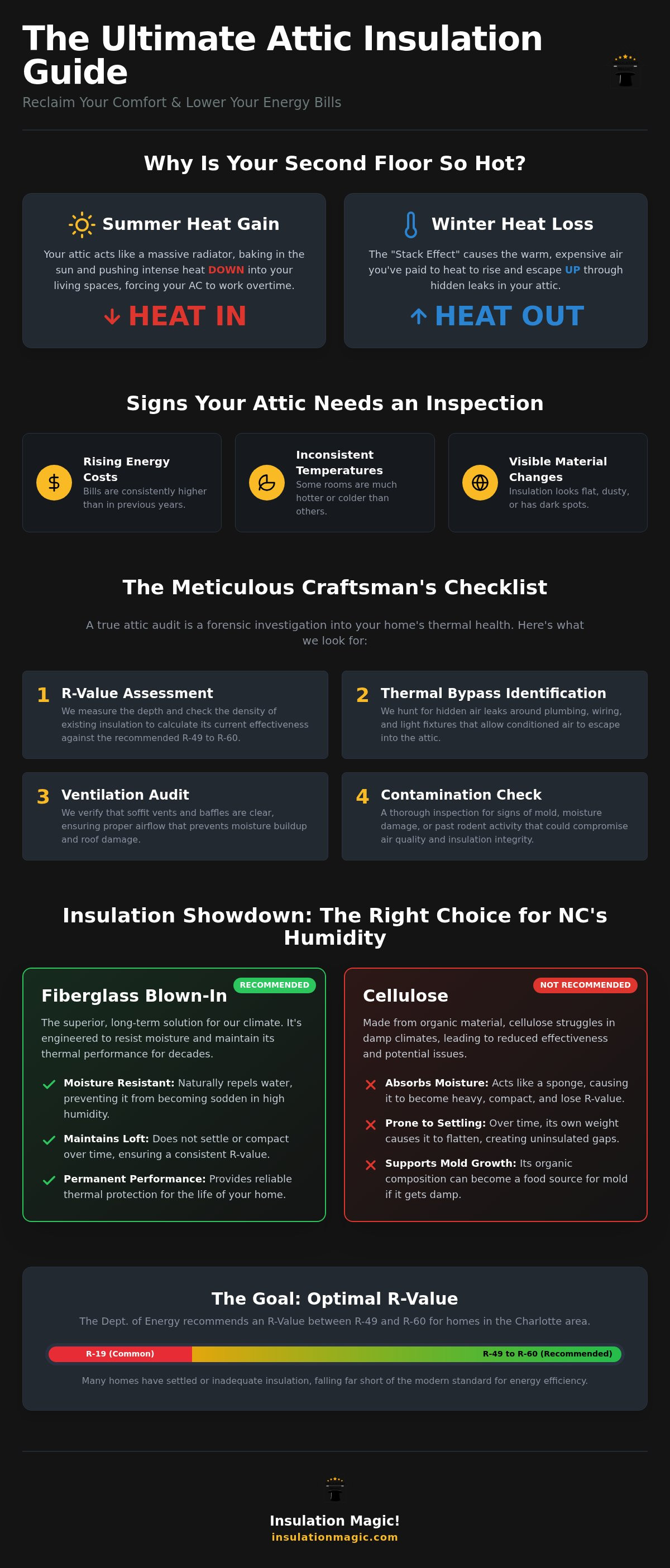
Most homeowners don't think about their attic until the energy bill arrives or the upstairs bedrooms become unbearable. A professional attic insulation inspection Charlotte families can trust is more than a quick glance; it's a diagnostic checkup for your home's thermal health. One of the biggest reasons for discomfort is the "Stack Effect." This natural phenomenon causes warm air to rise and escape through the top of your house during winter. In our sweltering summers, the process reverses as your attic acts like a massive radiator, pushing intense heat down into your living spaces and forcing your AC to run constantly.
Ignoring these issues leads to hidden costs that go far beyond a monthly bill. When your attic is poorly insulated, your HVAC system has to work twice as hard, which significantly shortens its lifespan. Additionally, excessive heat buildup can actually bake your roof shingles from the inside out, leading to premature roof failure. A thorough inspection is the only way to find the "hidden" air leaks around light fixtures and plumbing stacks that a simple visual check will always miss.
The Impact of North Carolina Climate on Your Insulation
Charlotte's weather is notoriously tough on building materials. The high humidity levels common in the Piedmont region can cause some insulation types to struggle. For instance, cellulose insulation is made of organic matter that can absorb moisture, leading it to become heavy, sodden, and less effective over time. We've seen many homes where older materials have "settled," losing the height and density needed to maintain a proper R-value. This is why we prioritize fiberglass blown-in insulation. It's naturally moisture-resistant and maintains its loft for decades, ensuring your home stays protected against the local climate. Simply adding more material without an inspection is a mistake; you might just be trapping heat and moisture against your home's wooden structure.
Signs It’s Time to Schedule Your Attic Audit
If you live in Matthews, Ballantyne, or Waxhaw, you've likely experienced the "hot room" syndrome. This happens when certain rooms stay significantly warmer than others, regardless of how low you set the thermostat. It's a clear signal that your attic's thermal barrier has failed. Other warning signs include:
- Rising Energy Costs: Your Duke Energy bills are consistently higher than they were in previous years.
- Visible Material Changes: Your current insulation looks flat, dusty, or has dark discoloration from air filtration.
- Drafty Ceilings: You feel subtle movements of air near recessed lights or attic hatches during NC cold snaps.
Taking the time for a professional audit ensures you aren't just guessing. It provides a clear roadmap to permanent comfort and lower utility costs through better materials and meticulous air sealing.
The Meticulous Craftsman’s Checklist: What to Expect During an Inspection
When you schedule an attic insulation inspection Charlotte homeowners often expect a technician to simply peek through the hatch with a flashlight. A true audit is far more forensic. It's a methodical walk through your attic's "hot zones" to document every factor affecting your comfort. We treat this process as an educational experience, showing you exactly where your home is losing energy and why certain areas feel like a sauna in July. Our goal is to provide a transparent report that moves beyond guesswork into hard data.
During the inspection, we focus on four primary areas:
- R-Value Assessment: Measuring the actual depth and consistency of your existing material.
- Thermal Bypass Identification: Finding the hidden gaps around plumbing stacks, wire penetrations, and light fixtures.
- Ventilation Audit: Verifying that soffit vents and baffles are clear to allow for proper airflow.
- Contamination Check: Inspecting for signs of past rodent activity, mold, or moisture damage in old insulation.
Measuring R-Value and Material Density
The Department of Energy recommends an R-value between R-49 and R-60 for homes in our region. During the audit, we measure the height of your current insulation to calculate its current effectiveness. However, height only tells half the story. We also assess the density of the material. Many older Charlotte homes have cellulose that has settled and packed down over the years, which significantly reduces its ability to stop heat transfer. This is why we consistently recommend fiberglass blown-in insulation. It maintains its loft and density for decades, ensuring you don't lose the R-value you paid for shortly after installation.
Assessing the Attic’s Structural Health
A meticulous inspection looks past the insulation to the bones of your home. We carefully examine the underside of your roof deck for water staining or mold growth that might indicate a slow leak. We also check that your insulation isn't blocking the critical airflow at the eaves. If your soffit vents are covered, heat and moisture stay trapped against your roof, which can lead to wood rot. Finally, we identify any outdated or dangerous wiring that requires special care before new materials are added. This thoroughness ensures that your "Attic Refresh" is safe, effective, and built to last.
Fiberglass vs. Cellulose: Why We Recommend Blown-In Fiberglass for Charlotte
During an attic insulation inspection Charlotte homeowners often ask which material will provide the best return on investment. While some companies remain neutral or sell whatever is currently on their truck, we've made a deliberate choice to specialize in blown-in fiberglass. This decision isn't based on convenience; it's based on how materials actually perform in the unique climate of the Piedmont region. When you're looking for long-term comfort, the material's ability to resist our local humidity and maintain its structure is paramount.
One of the most critical factors we evaluate is moisture resistance. Charlotte's high humidity can be brutal on organic materials. Cellulose is primarily made of recycled paper, which acts like a sponge when moisture levels rise. Once cellulose becomes damp, it loses its effectiveness, becomes incredibly heavy, and can even encourage mold growth against your wooden trusses. Fiberglass, being made of spun glass, is naturally inorganic. It doesn't absorb water, won't rot, and provides a much safer environment for your home's air quality over the long haul.
Safety and cleanliness also play a major role in our recommendation. Because fiberglass is naturally non-combustible, it doesn't require the heavy load of fire-retardant chemicals that cellulose needs to meet safety codes. It's a cleaner, more stable product that won't off-gas or create excessive dust in your living spaces. When we perform an "Attic Refresh," our goal is to leave you with a pristine environment that protects your family and your investment for decades.
The Superior Performance of Blown-In Fiberglass
Blown-in fiberglass consists of small, airy particles that create a seamless thermal blanket across your attic floor. This consistency is vital because it fills those tiny gaps and crevices where heat likes to escape. Unlike cellulose, which relies on chemical additives to deter pests, fiberglass is naturally unappealing to insects and rodents because of its glass-based composition. Blown-in fiberglass is the gold standard for attic upgrades in 2026 because it offers the perfect balance of thermal efficiency, moisture resistance, and long-term structural stability.
Addressing the Cellulose Myth
You might hear that cellulose is "eco-friendly" because it's made of paper, but its performance often falls short in North Carolina. The reality is that cellulose is prone to significant settling. Over just a few years, it can lose up to 20% of its original height, which means you're losing the R-value you paid for. Additionally, cellulose is much heavier than fiberglass. In older homes, this extra weight can actually cause ceiling drywall to sag or crack. By choosing lighter, more resilient fiberglass, you're protecting your ceilings while ensuring your insulation stays at the correct depth to keep your energy bills low.
Beyond Insulation: The Critical Role of Air Sealing and Ventilation
Adding high-quality fiberglass without first addressing air leaks is like wearing a thick wool sweater on a windy day. The material itself is warm, but the moving air cuts right through the fibers, stealing your comfort. This is why a professional attic insulation inspection Charlotte homeowners trust must prioritize air sealing as much as the insulation itself. While insulation resists heat transfer through conduction, it does very little to stop the physical movement of air. Without a proper seal, the conditioned air you pay for in your living room leaks directly into your attic through "invisible" gaps.
Most of these leaks occur at specific points that are often buried under old insulation. During our meticulous audit, we look for top plates, which are the tops of your interior walls where they meet the attic floor. We also identify wire penetrations, plumbing stacks, and recessed "can" lights. These areas act like small chimneys, constantly pulling air out of your home. By sealing these bypasses, we create a true thermal envelope that allows your fiberglass blown-in insulation to perform at its maximum efficiency. This step is the difference between a temporary fix and a permanent solution for your energy bills.
Closing the Gaps: The Air Sealing Process
The air sealing process involves using specialized materials to plug every gap where your home's structure meets the attic. We focus on the "invisible leaks" that bypass your insulation entirely. By creating this airtight barrier, we ensure that the heat stays in your home during the winter and out of your home during our humid Charlotte summers. It's a fundamental step that many contractors skip because it's time-consuming and difficult work. However, understanding Why You Must Perform Air Sealing Before Insulation is the key to achieving real results and long-term savings.
Optimizing Airflow with Attic Fans and Vents
Proper attic health also requires balanced ventilation. In areas like Waxhaw or Ballantyne, summer attic temperatures can easily exceed 140 degrees. If that heat has nowhere to go, it eventually radiates through your insulation and into your upstairs bedrooms. We check every soffit vent to ensure they aren't blocked by old material, and we verify that baffles are properly installed to maintain a clear path for fresh air. This passive cooling is essential for protecting your roof structure from moisture damage and wood rot.
In many cases, passive vents aren't enough to combat the peak heat of a North Carolina July. This is where an attic fan installation becomes a game-changer. An attic fan actively pulls that scorching air out of the space, allowing your insulation to do its job without being overwhelmed by extreme temperatures. This combination of air sealing, fiberglass insulation, and active ventilation creates a comprehensive system that keeps your home's upper levels consistently cool and comfortable.
Booking Your Attic Inspection with Insulation Magic!
At Insulation Magic!, we believe an attic insulation inspection Charlotte homeowners schedule should be an educational experience rather than a high-pressure sales pitch. Our approach is rooted in the "Meticulous Craftsman" philosophy; we don't just guess what's happening above your ceiling. We document every detail. During the audit, we take detailed photos and gather data on your R-value, air leaks, and ventilation health. This transparency ensures you see exactly what we see, allowing you to make an informed decision about your home's comfort and long-term value.
We prioritize your peace of mind by focusing on solutions that work for the life of your home. We avoid the aggressive tactics common in the industry and instead act as a patient guide through the process. By providing a clear, honest report on your attic's health, we empower you to choose the best path forward for your family's environment. Our goal is to build a trusted partnership, ensuring your home remains a sanctuary against the North Carolina heat.
The Insulation Magic! Difference
We are owner-operated by Chris, which means you get expert eyes on every inspection. Unlike large franchises that might send a trainee, we bring years of local expertise directly to your doorstep. We are deeply committed to home health, which is why we maintain a strict "No Spray Foam" policy. We believe that blown-in fiberglass combined with precision air sealing is the safest and most effective way to protect your property and your indoor air quality. You can read our customer reviews to see how we've helped your neighbors in Waxhaw, Matthews, and Ballantyne achieve peace of mind through quality craftsmanship.
Next Steps: From Inspection to Installation
Once the attic insulation inspection Charlotte residents book is complete, we provide a clear, itemized proposal. Whether you need a targeted Attic Refresh to remove old, contaminated materials or a complete upgrade to high-density fiberglass, our plan will be straightforward and honest. We serve the Greater Charlotte area, including Weddington and Matthews, ensuring responsive local support is always just a call away. We understand that your time is valuable, so we focus on scheduling services with minimal disruption to your daily life, maintaining a clean and orderly workspace from start to finish.
Reclaim Your Home's Comfort and Efficiency Today
Reaching the end of this guide is the first step toward a more comfortable home. You now understand that a professional attic insulation inspection Charlotte homeowners trust is about more than just measuring material depth; it's about identifying hidden air leaks and choosing materials that withstand our local humidity. By prioritizing blown-in fiberglass over cellulose and ensuring meticulous air sealing, you're making a smart choice for long-term performance and lower utility bills.
As an owner-operated local business, Chris brings specialized expertise to every project in Charlotte, Waxhaw, and Matthews. We focus on the forensic details that larger companies often skip, ensuring your home's thermal envelope is tight and efficient without the use of messy spray foam. It's time to stop overpaying for energy and start enjoying every room in your house again. We're here to provide the honest guidance and craftsmanship your property deserves.
We're ready to help you transform your attic into a high-performance barrier that keeps your family comfortable through every North Carolina season.
Frequently Asked Questions
How long does a typical attic insulation inspection take?
A typical attic insulation inspection Charlotte homeowners schedule usually takes between 45 and 90 minutes. This timeframe allows our expert to perform a forensic audit of your space, including measuring current insulation levels and documenting hidden air leaks. We don't rush the process because precision is vital for your home's thermal health. We use this time to ensure every light fixture and plumbing stack is checked for potential energy loss.
Do I need to be home during the attic inspection?
Yes, it is best for you to be home during the assessment. Our inspector needs clear access to the attic hatch, which is often located in a master closet or a hallway. More importantly, we treat this as an educational experience. Being present allows you to view photos of your attic's current state and discuss the findings in real time, ensuring total transparency before any work begins.
Is an attic inspection really free in Charlotte?
While some providers in the area offer various pricing structures for consultations, we focus on delivering a high-value, forensic audit of your home's health. We recommend checking with individual local contractors to see if they offer a complimentary initial visit or if there is a fee for a detailed, documented report that includes photos and a comprehensive thermal energy analysis of your attic space.
What is the best R-value for homes in the Charlotte area?
For homes in the Greater Charlotte area, the Department of Energy recommends an R-value between R-49 and R-60. This level of protection is specifically designed to handle the intense summer heat and high humidity of the Piedmont region. Achieving this standard requires meticulous installation and the right materials to ensure your HVAC system doesn't have to work overtime during those sweltering and humid July afternoons.
Can I just add new insulation over my old insulation?
You can often add new material over existing insulation, but only if the original layer is clean and dry. However, it is critical to perform air sealing first. If you simply blow in new material over old leaks, you aren't fixing the root cause of your high energy bills. If our inspection reveals contamination from rodents or mold, we typically recommend a full removal through our "Attic Refresh" service.
Why do you recommend fiberglass over cellulose for North Carolina attics?
We recommend fiberglass because it is inorganic and naturally resistant to the high humidity levels found in North Carolina. Unlike cellulose, which is made from recycled paper and can absorb moisture like a sponge, fiberglass maintains its R-value and loft for decades. This moisture resistance is a primary focus during every attic insulation inspection Charlotte residents book with us, as it prevents the material from becoming sodden.
What happens if the inspector finds mold or rodent damage?
If we find mold or signs of rodent activity, we will guide you through the process of a safe "Attic Refresh." This involves the meticulous removal of contaminated material and a thorough cleaning of the attic floor. We prioritize your family's health and won't just cover up a problem. Once the space is sanitized and air sealed, we install fresh, clean fiberglass blown-in insulation to restore comfort.
Will an attic inspection help reduce my summer cooling costs?
Absolutely, a professional assessment is one of the most effective ways to lower summer utility bills. By identifying exactly where heat is radiating into your second floor, we can create a plan to stop it. Whether it is through precision air sealing, adding high-performance fiberglass, or installing an attic fan, our goal is to permanently reduce the strain on your air conditioning system and save you money.
Disclaimer
This blog is intended to provide general information about insulation, energy efficiency, and home comfort based on years of experience. While we strive to keep content accurate and up to date, results may vary based on your home's construction, condition, and climate. Contact Insulation Magic for a personalized assessment and recommendations.


