
Did you know that an estimated 89% of single-family homes in the United States are currently under-insulated? It's a frustrating reality for many homeowners who find themselves constantly adjusting the thermostat, only to watch their utility bills climb higher every month. You might notice that your upstairs feels like a sauna while the living room stays chilly, or perhaps you're worried about what's actually hiding in those dark corners under the roof. It's exhausting to feel like you're losing a battle against your own home's climate, especially when you prioritize your family's comfort and health.
The good news is that your house is likely giving you clear clues that it's time for a change. In this guide, we'll walk through the seven specific signs attic insulation needs replacing so you can stop guessing and start saving. We'll explore why a meticulous removal of old material followed by an upgrade to high-quality fiberglass blown-in insulation is the smartest investment you can make for your budget and peace of mind in 2026. From spotting hidden mold to understanding why fiberglass is the superior choice over cellulose, you'll gain the expert knowledge needed to restore a consistent, healthy environment to your home.
Key Takeaways
- Learn how to spot physical deterioration like thinning or matted material that leaves your home vulnerable to the outside elements.
- Discover the common performance red flags and signs attic insulation needs replacing, from soaring energy bills to uneven temperatures between floors.
- Understand why old, contaminated material from the 1990s or earlier requires a meticulous removal to ensure your family's health and safety.
- See why fiberglass blown-in is the most reliable, long-lasting solution for Charlotte homes compared to settling-prone cellulose options.
- Prepare for a professional assessment that addresses air sealing and insulation as a complete "Attic Refresh" for your property.
Visible Deterioration: What Failing Attic Insulation Looks Like
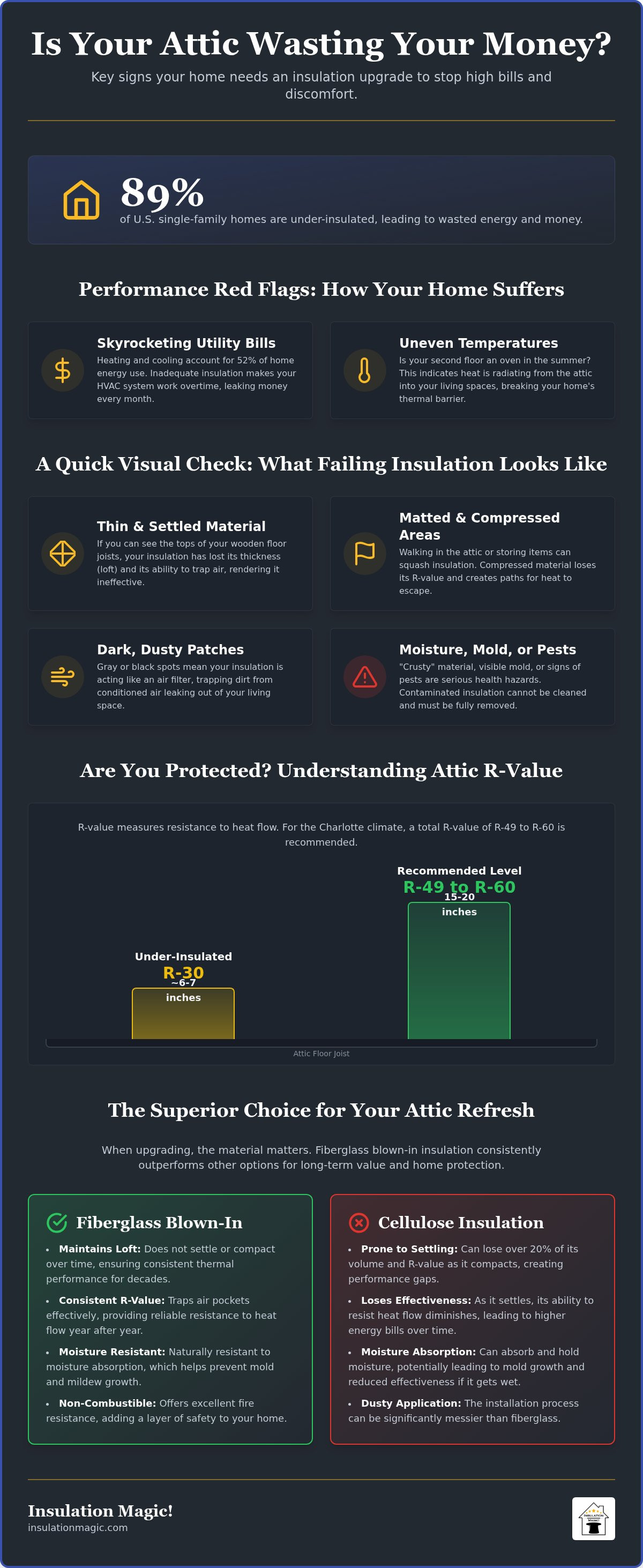
Identifying signs attic insulation needs replacing often starts with a simple look around your attic floor. If you peek into the space and see the tops of your wooden floor joists, you're looking at a major red flag. Over time, many building insulation materials begin to thin out or settle. This "thinning" effect means your home has lost its thermal barrier, allowing heat to transfer freely between your living areas and the roof.
If you've used your attic for storage or walked across the floor recently, you've likely created matted or compressed areas. Compressed insulation is ineffective insulation. Unlike fiberglass blown-in, which is designed to maintain its loft and trap air pockets, older materials lose their R-value the moment they are squashed. This creates "valleys" in your attic's coverage. These low spots lead to thermal bridging, where heat bypasses the insulation entirely through the solid wood of your joists.
Look closely at the color of the material. If you see gray, dusty, or blackened patches, your insulation is acting as a giant air filter. Those dark spots usually indicate air leaks from your home's interior. The insulation is trapping dirt and particulates as conditioned air escapes through unsealed gaps. It's a clear signal that your home needs a fresh start with professional air sealing and new fiberglass.
Measuring Your Current R-Value
Grab a ruler and head to the attic for a quick depth check. In the Charlotte metro area for 2026, the recommended R-value for Climate Zone 4 is between R-49 and R-60. To reach these levels, you typically need 15 to 20 inches of fiberglass blown-in insulation. If you only measure 6 or 7 inches, your home is significantly under-insulated. Older homes built 15 or 20 years ago were often equipped with only R-30. That standard simply doesn't provide the protection needed against modern energy costs.
Moisture Damage and Mold Indicators
Keep an eye out for "crusty" or clumped insulation. This texture usually develops after the material has been soaked and then dried out. Moisture often enters through roof leaks or high humidity levels that aren't properly managed by your ventilation. Check the underside of your roof deck for dark water stains or white, powdery mineral deposits. If you spot mold growth on the joists or within the insulation itself, it's a health hazard. Moldy insulation cannot be cleaned; it requires a meticulous removal to protect your indoor air quality. Replacing contaminated material is the only way to ensure your family isn't breathing in spores every time the HVAC system runs.
Performance Red Flags: High Bills and Uncomfortable Rooms
Do you feel like your upstairs is a "Second Floor Oven" during Charlotte's humid July afternoons? If your bedroom stays ten degrees hotter than the kitchen despite the AC running constantly, your thermal envelope is likely broken. Many homeowners assume their HVAC system is failing, but the real culprit is often sitting right above their heads. When your attic floor can't stop heat from migrating into your living space, your cooling system has to work overtime to keep up. This struggle is one of the most common signs attic insulation needs replacing.
You can often see the evidence of this failure in your monthly Duke Energy statement. Space heating and air conditioning account for 52% of a household's energy use, according to 2026 data. If your bills are spiking even though your habits haven't changed, your attic is effectively leaking money. Old, degraded insulation fails to stop convection currents, allowing conditioned air to escape and outside air to seep in. This creates annoying drafts and cold spots that no thermostat setting can truly fix.
The Science of Attic Heat Gain
Think of R-value as your home's resistance to heat flow. It's like a thermal blanket; the higher the number, the better the protection. In our local climate, heat radiates through your roof shingles and "soaks" into poor-quality insulation. Professional organizations like the National Insulation Association emphasize that even the best material needs proper air sealing to be effective. Without air sealing, those expensive cooling dollars simply drift through gaps in the attic floor. We always recommend fiberglass blown-in for these projects because it maintains its R-value better over time than cellulose, which tends to settle and lose its effectiveness.
Winter Heat Loss and Ice Damming
While we focus on the heat, winter in places like Matthews and Waxhaw brings its own challenges. Heat naturally rises, and if your attic isn't properly insulated, it escapes straight through the roof. This can lead to ice damming, where escaping heat melts snow that then refreezes at the gutters, potentially causing roof damage. Thermal bridging occurs when heat travels through solid materials like wooden joists rather than being stopped by insulation, significantly lowering your home's overall efficiency. If you're tired of battling uneven temperatures, you can schedule an attic assessment to see how a refresh can restore your comfort.
Hidden Hazards: When Pests and Age Mandate Removal
Sometimes the most urgent signs attic insulation needs replacing aren't visible from the hatch. If your home was built in the 1990s or earlier, your insulation is likely approaching or past its 30-year lifespan. Over three decades, materials naturally degrade and lose their loft. This age alone is a significant indicator that your attic's thermal performance can't meet 2026 standards. Old material also becomes a magnet for dust and allergens that eventually circulate through your house.
Pests are another major factor that homeowners often overlook. Mice, squirrels, and raccoons view your attic as a luxury hotel. They leave behind "rodent highways," which are visible tunnels and nests carved into the material. Identifying these tunnels is one of the most critical signs attic insulation needs replacing to protect your indoor air quality. Animal waste contaminates the environment and creates a lingering musty odor that often becomes more noticeable on humid Charlotte afternoons. This isn't just a comfort issue; it's a health concern for everyone in the home.
A common mistake is "topping off" this old material. Some contractors might suggest simply blowing new insulation over the old stuff to save time. We strongly advise against this. Covering up rodent droppings, mold spores, or dust just traps those contaminants in your home. It's like putting a clean shirt over a dirty one. To truly refresh your home, you need a clean slate. We prioritize a meticulous removal process to ensure your new fiberglass blown-in insulation sits on a sanitary surface.
The Case for Professional Insulation Removal
Removing old material is essential for a healthy home environment. In neighborhoods like Matthews and Ballantyne, we see many homes where the original insulation has become a sponge for moisture and allergens. Our team uses a high-powered vacuum system to extract every bit of debris safely. This process ensures your attic is ready for a fresh start. You can learn more about this in our guide on Professional Insulation Removal in Charlotte.
Air Sealing: The Step You Can't Skip
Once the floor is bare, we can identify "bypass" leaks. These are gaps around recessed lights, plumbing stacks, and top plates where air escapes from your living room into the attic. Even the best fiberglass blown-in fails if air is whistling through these holes. We treat air sealing as the invisible foundation of our work. It's the only way to stop those drafts and ensure your new insulation performs at its peak. Check out our deep dive on Home Air Sealing: The Invisible Secret to see how this one step slashes utility costs.
Choosing the Right Replacement: Why Fiberglass Blown-In Wins
Once you've identified the clear signs attic insulation needs replacing, the most important decision you'll face is what material to put back into your home. It's a choice that impacts your comfort for the next several decades. While some contractors present every material as an equal option, we've found that fiberglass blown-in is the superior choice for homes in the Charlotte metro area. It provides a level of durability and cleanliness that other materials simply can't match.
The biggest issue with cellulose insulation is the "settling" problem. Because cellulose is made from recycled paper, gravity is its constant enemy. Over just a few years, cellulose can settle by as much as 20%, which directly lowers your R-value and leaves your home under-insulated all over again. Fiberglass blown-in is much more resilient. It maintains its loft and thermal resistance long-term, ensuring your investment continues to pay off on your energy bills year after year. In our humid North Carolina climate, fiberglass also offers better moisture resistance, as it doesn't absorb water or provide a food source for mold growth like paper-based products do.
Fiberglass Blown-In: The Meticulous Choice
When we install fiberglass blown-in, it creates a seamless, monolithic blanket across your entire attic floor. This method allows the material to fill every small gap and crevice that standard batts might miss. It's an incredibly lightweight material, which is a vital safety consideration for your home's structure. Heavy cellulose can actually put undue stress on your ceiling drywall, leading to sagging or cracks. Fiberglass provides the high R-value you need without the heavy weight, keeping your ceilings safe and your rooms perfectly conditioned.
The Myth of Cellulose 'Eco-Friendliness'
Many homeowners are drawn to cellulose because it's marketed as an eco-friendly, recycled product. However, it's important to understand what's actually in that material. To make paper fire-resistant, cellulose is heavily treated with chemical fire retardants like boric acid. Over time, these chemicals can break down into a fine dust that may find its way into your living spaces through small air leaks. Fiberglass is naturally non-combustible and produces far less dust during and after installation. It's the cleaner, more predictable choice for families who are concerned about their long-term indoor air quality.
Next Steps: Professional Assessment in the Charlotte Metro
Once you've identified the signs attic insulation needs replacing, the transition from diagnosis to solution should be as stress-free as possible. A professional assessment is the bridge between a drafty, expensive home and a sanctuary of consistent comfort. In neighborhoods like Waxhaw and Weddington, home styles vary significantly, and a local expert knows exactly where those hidden energy leaks tend to hide in specific architectural designs. We don't just look at the floor; we look at the entire system to ensure your investment delivers the results you expect.
The Insulation Magic! Difference
Our owner, Chris, takes a personal interest in every project, bringing the "Meticulous Craftsman" approach to your attic. We prioritize transparency and education, walking you through the "how" and "why" of our process. Many companies simply offer to blow in more material, but we know that "more fluff" isn't a substitute for a healthy thermal envelope. We focus on the meticulous removal of old, contaminated material before installing clean, durable fiberglass blown-in insulation. This ensures your home isn't just warmer or cooler, but also has better air quality. You can take the first step toward a total "Attic Refresh" by using our Online Booking for Attic Assessment tool.
Lowering Your Costs Permanently
To achieve the highest return on investment, we recommend a holistic approach to your attic space. Combining new fiberglass insulation with professional air sealing and high-efficiency attic fans creates a powerhouse of energy savings. This strategy addresses all three types of heat transfer, ensuring your AC doesn't have to fight a losing battle against radiant heat. It's a permanent solution that lowers your utility bills for the long haul. For more details on this strategy, explore our guide on How to Lower Heating and Cooling Costs.
Restoring comfort to your Ballantyne or Mint Hill home starts with understanding the unique needs of your property. By addressing the signs attic insulation needs replacing with a professional, detailed plan, you're investing in your home's longevity and your own peace of mind. We take pride in being your local guide to a more efficient, comfortable life.
Take Control of Your Home’s Climate and Comfort
Identifying the signs attic insulation needs replacing gives you the power to take control of your environment. Whether you've noticed thinning material, soaring utility bills, or the evidence of unwanted pests, these indicators point to a clear need for a professional refresh. By choosing fiberglass blown-in over settling-prone cellulose, you're investing in a cleaner, more durable solution that protects your family and your budget for decades to come.
We take immense pride in serving our neighbors in Waxhaw, Matthews, and across the greater Charlotte area. Our focus is on the meticulous removal of old debris and the precise installation of high-quality fiberglass, ensuring there is no spray foam and no mess left behind. You can see the results of this dedicated, craftsman-like approach in our 5-star customer reviews from homeowners just like you.
It's time to stop fighting with your thermostat and start enjoying every room in your house again. We're ready to help you restore the peace of mind that comes with a healthy, efficient home.
Frequently Asked Questions
Can I just add new insulation over my old attic insulation?
While you can technically "top off" insulation, we strongly recommend a full removal if your existing material is damaged, compressed, or contaminated. Adding new fiberglass blown-in over old, dusty insulation often traps allergens, mold spores, and rodent waste against your ceiling. To ensure a healthy home environment in neighborhoods like Ballantyne or Matthews, starting with a clean slate allows us to perform meticulous air sealing before installing your new thermal barrier.
How much attic insulation do I need for a home in Charlotte, NC?
For homes in the Charlotte metro area, which falls into Climate Zone 4, the 2026 recommendation is to reach an R-value between R-49 and R-60. This usually requires a depth of 15 to 20 inches of fiberglass blown-in insulation. Meeting these higher standards is essential for combatting North Carolina's humid summers and ensuring your HVAC system doesn't have to work overtime to keep your family comfortable.
Is fiberglass or cellulose better for preventing mold in the attic?
Fiberglass is the superior choice for preventing mold growth because it is an inorganic material. Unlike cellulose, which is made from recycled paper, fiberglass doesn't absorb moisture or provide a food source for mold spores. In our humid Charlotte climate, paper-based cellulose can act like a sponge, holding onto moisture that leads to rot and air quality issues. Fiberglass remains dry and clean, protecting your home's health long-term.
How long does it take to remove and replace attic insulation?
A typical attic project in Waxhaw or Weddington usually takes one to two days to complete. The first day is dedicated to the meticulous removal of old materials using a high-powered vacuum system. On the second day, we focus on detailed air sealing and blowing in the fresh fiberglass insulation. This timeline ensures we don't rush the critical prep work that makes your new insulation truly effective.
What happens if I don't air seal my attic before insulating?
If you skip air sealing, your new insulation will only do half the job. Insulation stops heat transfer, but it doesn't stop the actual movement of air. Without sealing gaps around recessed lights and plumbing stacks, conditioned air from your living spaces will continue to leak into the attic. This "invisible leak" significantly reduces your energy savings and is a primary reason why some homes remain drafty even after adding insulation.
Does old attic insulation lose its R-value over time?
Yes, insulation naturally loses its effectiveness as it settles or becomes matted. Cellulose is particularly prone to this, often losing up to 20% of its R-value as it packs down over the years. Identifying this loss of loft is one of the most common signs attic insulation needs replacing. Fiberglass blown-in is much more resilient, maintaining its thickness and thermal resistance for decades without the significant settling issues found in other materials.
Can poor attic insulation affect my family's health?
Poor insulation can definitely impact your indoor air quality and overall health. Old insulation often becomes a hiding spot for pests, trapping rodent droppings and urine that circulate through your home via air leaks. It can also harbor dust mites and mold spores, especially in damp Mint Hill attics. Replacing contaminated material with clean fiberglass helps eliminate these hidden hazards and ensures the air your family breathes is fresh and safe.
How do I know if my high energy bills are caused by the attic?
If your Duke Energy bills are climbing despite your HVAC system being in good repair, your attic is the likely culprit. You can test this by checking for the "Second Floor Oven" effect, where your upstairs stays significantly hotter than the main floor. When you notice these signs attic insulation needs replacing, it means your home is losing its "thermal envelope," forcing your AC to run constantly to fight the heat radiating through the roof.
Disclaimer
This blog is intended to provide general information about insulation, energy efficiency, and home comfort based on years of experience. While we strive to keep content accurate and up to date, results may vary based on your home's construction, condition, and climate. Contact Insulation Magic for a personalized assessment and recommendations.


