
Imagine walking up your stairs on a humid July afternoon in Charlotte and feeling like you've just stepped into a sauna, even though your AC has been running all day. It's a common frustration for many homeowners who find their second floor is significantly hotter than the first, often while dust and allergens drift down from an aging attic. You might feel like you're fighting a losing battle against rising Duke Energy rates, which have jumped about 22% since 2020. Understanding the benefits of new attic insulation is the first step toward reclaiming your home's comfort and stopping that wasted spending.
We know you want a home that feels consistent and healthy, and it's exhausting to watch your expensive HVAC system work overtime without reaching the set temperature. This guide will show you how upgrading to fiberglass blown-in insulation can slash your utility bills, protect your equipment from premature failure, and turn your house into a year-round sanctuary. We'll walk through ten life-changing advantages of a professional attic refresh, including why reaching the recommended R-49 level is the smartest move for North Carolina families today. From air sealing to meticulous installation, you'll discover how to create a quieter, more efficient environment for your family.
Key Takeaways
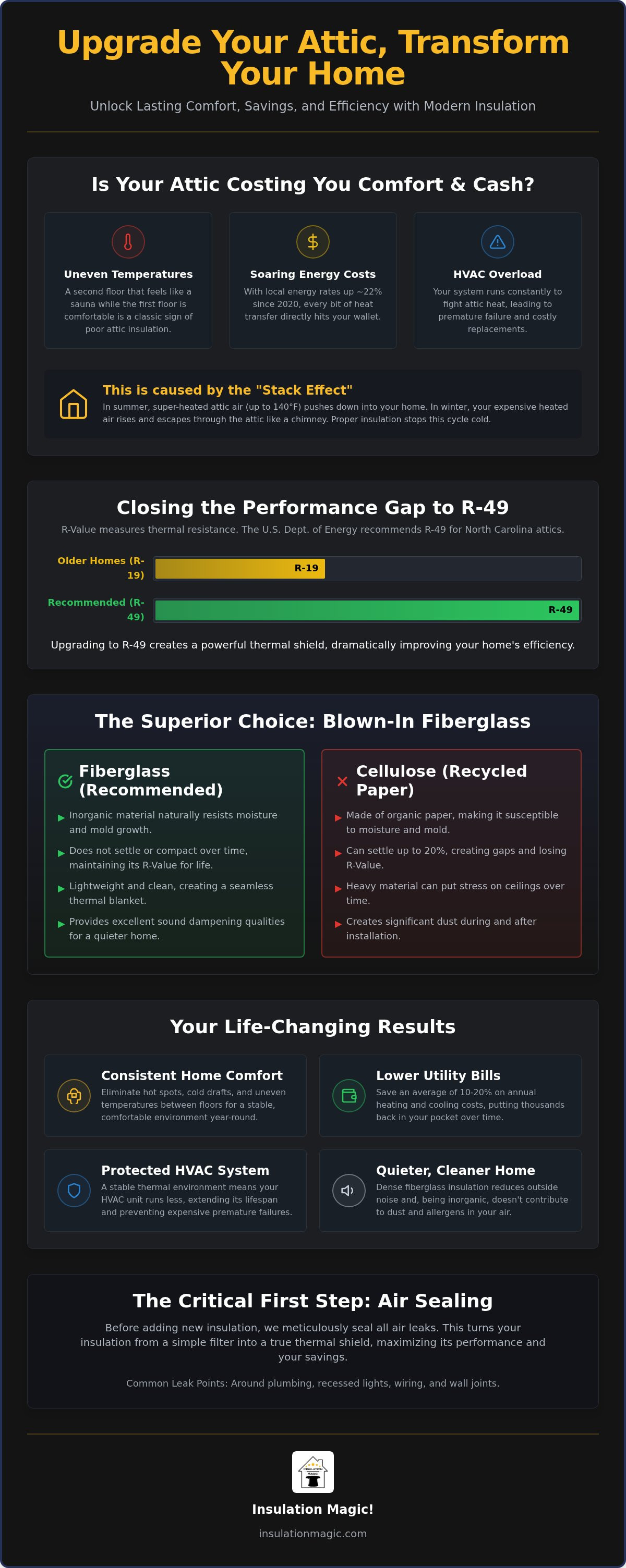
- Stop the "Stack Effect" from turning your upstairs into a sauna and maintain consistent temperatures throughout your entire home.
- Explore the financial benefits of new attic insulation and how reaching the recommended R-49 level leads to immediate monthly utility savings.
- Learn why clean, inorganic fiberglass blown-in is the superior choice for North Carolina attics compared to recycled paper options like cellulose.
- Discover why air sealing is the critical first step to ensure your new insulation acts as a true thermal shield rather than just a filter.
- Protect your expensive HVAC system from unnecessary wear and tear by creating a stable environment that prevents the unit from overworking.
The Immediate Impact: How New Attic Insulation Transforms Your Home’s Comfort
Think of Building insulation as the thermal envelope that separates your living space from the chaotic North Carolina weather. One of the most immediate benefits of new attic insulation is its role as a high-performance barrier against heat transfer. In our region, we deal with the "Stack Effect" year-round. In the winter, the expensive air you've paid to heat rises and escapes through the attic floor like a chimney. In the summer, the process reverses; your roof absorbs the sun's energy, turning your attic into a 140-degree oven that pushes heat down into your home. A professional upgrade stops this cycle, ensuring your conditioned air stays exactly where you want it.
During those rare but biting NC cold snaps, the difference is felt instantly. You'll notice a reassuring warmth that doesn't vanish the moment the furnace stops blowing. It's about more than just a number on a screen; it's about the physical sensation of a house that holds its temperature. By focusing on a meticulous application of fiberglass blown-in material, we eliminate the "hot zones" that typically plague second-floor bedrooms during the peak of July and August.
Eliminating Uneven Temperatures and Drafts
Homeowners in Charlotte and Waxhaw often ask why their thermostat claims the house is 72 degrees while their upstairs bedroom feels closer to 80. This disconnect usually happens because old, settled insulation or poorly fitted batts leave gaps. These gaps act as "thermal bridges," allowing heat to bypass your defenses. A fresh layer of fiberglass blown-in insulation creates a uniform, seamless blanket across your entire ceiling. Because the material is blown in, it reaches into tight corners and covers the tops of wooden joists that traditional batts often leave exposed. This precision prevents drafts and ensures every room in your home offers the same level of comfort.
Reducing HVAC Strain and Premature Failure
HVAC strain is the leading cause of early system replacement, often costing homeowners thousands in unexpected repairs. When your attic is under-insulated, your cooling system has to work twice as hard to fight the heat pressing down from above. By upgrading your insulation through our attic insulation services, you allow your HVAC to "cycle" less frequently. The unit reaches its target temperature faster and stays there longer without needing to kick back on. This reduction in mechanical wear significantly extends the life of your system, protecting the most expensive appliance in your home from the burnout caused by constant operation.
Financial Gains: Calculating Your ROI and Long-Term Utility Savings
When we talk about the technical side of home efficiency, "R-Value" is the term you'll hear most often. It's a simple measurement of how well a material resists heat flow. In the Charlotte area, many older homes were built with R-19 or R-30 insulation, which simply isn't enough to handle our modern climate. The U.S. Department of Energy currently recommends reaching an R-49 level for existing homes in our region. One of the primary financial benefits of new attic insulation is that it bridges this gap, moving your home from "under-performing" to "high-efficiency." Since Duke Energy rates in North Carolina have increased by approximately 22% since 2020, every bit of thermal resistance counts toward keeping your hard-earned money in your pocket.
Lowering Your Monthly Energy Bills in North Carolina
In North Carolina, our humidity is just as much of a financial burden as the heat itself. When your attic isn't sealed and insulated properly, your air conditioner works double duty to pull moisture out of the air while trying to lower the temperature. By upgrading to fiberglass blown-in insulation, you create a dense barrier that keeps that heavy, humid air out. Energy Star estimates that homeowners can save an average of 10-20% on their annual heating and cooling costs by improving their attic's thermal envelope. Over a decade, those monthly savings can add up to thousands of dollars, effectively paying for the project itself while protecting you from future utility rate hikes.
We always pair our insulation work with meticulous air sealing. This process stops the "invisible leaks" around light fixtures, plumbing stacks, and top plates that insulation alone can't fix. Think of it as the difference between wearing a thick wool sweater on a windy day versus adding a windbreaker on top. The combination ensures that the conditioned air you pay for stays inside your living space, allowing your thermostat to reach its goal without a constant struggle.
Increasing Your Home’s Resale Value
One of the overlooked benefits of new attic insulation is how it positions your property in the competitive Charlotte and Waxhaw real estate markets. Modern buyers are more educated than ever; they don't just look at the granite countertops, they look at the home inspection report. A documented "Attic Refresh" that includes air sealing and R-49 fiberglass insulation serves as a powerful signal of a well-maintained home. It tells a buyer that the previous owner cared about the "bones" of the property and that they won't be inherited with massive utility bills or a dying HVAC system. If you're planning to sell in the next few years, you can schedule an assessment today to ensure your home meets the high standards today's energy-conscious buyers expect.
Why Blown-In Fiberglass Beats Cellulose in North Carolina
Choosing the right material is just as important as the installation itself. While some online forums debate the merits of various materials, we firmly recommend fiberglass blown-in as the gold standard for North Carolina homes. This choice is rooted in the specific environmental challenges we face in the Southeast, particularly our high humidity levels. One of the core benefits of new attic insulation is its ability to provide long term protection. Fiberglass is the only material that maintains its integrity without the risks associated with organic, paper-based alternatives.
The Problem with Cellulose Settling and Moisture
Cellulose is essentially shredded recycled paper treated with chemicals. Because it is organic, it is naturally prone to absorbing moisture from the air. In a humid climate like Charlotte's, cellulose can become a heavy, soggy mess over time. This moisture absorption does not just invite mold; it causes the material to pack down. When insulation settles, it loses the air pockets that provide thermal resistance. This process effectively lowers your R-value every year. You might start with a specific depth, but after a decade, you could be left with a much thinner layer that fails to protect your home. Additionally, cellulose requires heavy chemical fire retardants to make paper safe for an attic. Many health-conscious homeowners prefer to avoid these additives.
Why Blown-In Fiberglass is the Meticulous Choice
Fiberglass is a clean, inorganic material made from sand and recycled glass. It is naturally fire-resistant. This means it does not rely on the same heavy chemical treatments as cellulose. When we perform an "Attic Refresh," the aesthetic difference is striking. Instead of the gray, dusty look of shredded paper, your attic is filled with clean fiberglass that looks as fresh as it performs. This material does not settle or lose its fluffiness. It ensures that the R-49 protection we install today remains just as effective twenty years from now. This longevity is a key part of our attic insulation process.
The blown-in method is what makes this material so effective for precision work. Unlike old-fashioned batts that leave gaps around wires and joists, blown-in fiberglass flows into every nook and cranny. It creates a seamless thermal shield that covers the entire attic floor, including those hard-to-reach corners. This meticulous coverage is essential for stopping the heat transfer we discussed in the previous sections. It is quite simply the superior choice for a comfortable, efficient home.
Beyond the Fluff: The Critical Role of Air Sealing and Ventilation
Many homeowners believe that simply blowing in more material is the final answer to a drafty, uncomfortable house. While the thermal resistance of fiberglass is vital, the benefits of new attic insulation are only fully realized when we look at the attic as a complete system. One of the primary benefits of new attic insulation is its ability to trap heat, but fiberglass is naturally air-permeable. Think of it this way: wearing a thick wool sweater will keep you warm in still air, but if a cold wind starts blowing, you need a windbreaker. In your home, home air sealing acts as that windbreaker. Without it, the conditioned air you pay for just filters through the insulation and escapes into the atmosphere.
The Importance of Sealing Attic Bypasses
A meticulous attic project begins with identifying and closing "bypasses." These are the hidden gaps where your living space meets the attic. We look specifically at recessed light fixtures, plumbing stacks, and the top plates of your interior walls. These small openings act like straws, allowing your home to "suck" air from the living areas into the attic through a process called the stack effect. By sealing these points with precision, we ensure your thermal blanket stays effective. This step also offers a significant health benefit; it stops attic dust and fiberglass particles from drifting down into your bedrooms, which drastically improves your indoor air quality. It is a cleaner approach that prioritizes your family's health alongside energy efficiency.
Managing Heat with Professional Attic Fans
Once the floor is sealed and the fiberglass is in place, we turn our attention to the air trapped above. During a typical North Carolina summer, attic temperatures can easily reach a staggering 150 degrees. This intense heat creates an "oven effect" that radiates downward, forcing your AC to run almost constantly. Proper ventilation through attic fans is the solution. These fans move that stagnant, scorching air out of the space, allowing the attic to breathe. This does not just keep you cool; it also protects your roof. Excessive heat can actually bake your shingles from the underside, leading to premature curling and failure. Learning how to lower heating and cooling costs requires this balanced approach of sealing, insulating, and ventilating to create a stable thermal envelope.
The Insulation Magic! Approach: A Meticulous Path to a More Efficient Home
At Insulation Magic!, we believe the benefits of new attic insulation are only as strong as the foundation they sit on. As a local, owner-operated business serving Charlotte, Waxhaw, and Matthews, Chris brings a level of personal accountability that large franchises often lack. We don't just blow in material and leave; we treat your property with the same meticulous care we'd apply to our own homes. Our "Attic Refresh" process is designed to be a permanent solution for your home’s efficiency and health. It’s a methodical approach that prioritizes your comfort over speed.
Why Professional Insulation Removal Matters First
Many contractors suggest simply "topping off" your existing insulation to save time. We view this as a significant mistake that often hides decades of dust, hidden mold growth, or evidence of past rodent activity. By performing a full insulation removal Charlotte homeowners can start with a truly clean slate. This allows us to perform the critical air sealing we discussed earlier with total precision, ensuring that no leak point is missed. It provides the peace of mind that comes from knowing your attic is as clean and healthy as the rest of your home. A blank slate is the only way to ensure the job is done right.
We are also strictly spray-foam-free. While spray foam is often marketed as a high-tech fix, we prefer the cleaner, more breathable approach of fiberglass blown-in insulation paired with mechanical ventilation. This method respects the structural integrity of your roof while ensuring your family isn't exposed to the off-gassing or permanent chemical odors sometimes associated with foam products. It’s about providing the maximum benefits of new attic insulation without compromising your indoor air quality. We believe in old-school craftsmanship combined with modern professional standards.
Ready for a More Comfortable Home?
The path to a quieter, more efficient sanctuary is straightforward and stress-free. You can use our online booking system to find a time that works for your schedule for an initial assessment. We also invite you to read our local reviews to see how we've helped your neighbors achieve lasting comfort. Our assessment process is educational and transparent, designed to help you understand the underlying issues in your attic rather than just performing a task. We take pride in being the local experts who guide you toward a better home environment.
Reclaim Your Home’s Comfort and Efficiency
Upgrading your home’s thermal envelope is one of the most impactful decisions you can make for your family’s comfort and your long-term finances. By choosing a meticulous approach that includes full insulation removal, professional air sealing, and high-performance fiberglass blown-in, you’re doing more than just adding material to your attic. You’re creating a permanent barrier against the Carolina heat and protecting your HVAC system from premature failure. The long-term benefits of new attic insulation extend far beyond lower monthly utility statements; they offer the peace of mind that comes with a healthier, quieter, and more stable living environment.
Chris is ready to guide you through this process with the care and precision of a local craftsman. We take immense pride in serving our neighbors across Charlotte, Matthews, and Waxhaw with transparent, spray-foam-free solutions that actually work. Your journey to a more efficient home starts with a single, clear-eyed look at what’s happening above your ceiling. We look forward to helping you restore the comfort your property deserves.
Frequently Asked Questions
How long does new attic insulation typically last?
Fiberglass blown-in insulation is a remarkably durable material that can last between 80 and 100 years under the right conditions. Unlike cellulose, which is organic and prone to settling or decaying, fiberglass maintains its volume and R-value for the life of your home. It is naturally resistant to moisture and does not provide a food source for pests. We recommend periodic checks to ensure it has not been disturbed by roof leaks or animal activity.
Can I just add new insulation over my old insulation?
You can technically add new layers over old material, but we strongly recommend a full removal for a healthy attic. Topping off often hides underlying issues like mold, rodent droppings, or damaged wiring that should be addressed first. By starting with a clean slate, we can perform meticulous air sealing on the attic floor. This ensures you get the full benefits of new attic insulation without trapping old contaminants or moisture beneath the fresh fiberglass.
Is fiberglass insulation safer than cellulose or spray foam?
We believe fiberglass is the safest choice for residential attics because it is inorganic and naturally fire-resistant. Cellulose is made from recycled paper and requires heavy chemical treatments to resist flames, which some homeowners prefer to avoid. Spray foam involves complex chemical reactions that may lead to permanent odors or off-gassing if mixed incorrectly. Fiberglass provides a clean, breathable solution that protects your family's health and your home's structural integrity without using harsh chemicals.
How much can I actually save on my energy bills with new insulation?
Most North Carolina homeowners see a reduction of 10% to 20% on their annual heating and cooling costs after a professional upgrade. These savings are especially noticeable during our humid summers and sudden winter cold snaps. Because Duke Energy rates have increased by approximately 22% since 2020, the dollar value of these percentage savings is higher than ever. Proper insulation keeps your expensive conditioned air inside, allowing your HVAC system to run much more efficiently throughout the year.
What are the signs that my current attic insulation needs to be replaced?
You might notice that your second floor is significantly warmer than the first or that your HVAC runs constantly without reaching the set temperature. If you can see the wooden floor joists in your attic, your insulation level is likely well below the recommended R-49. Other signs include rising utility bills, drafts in the ceiling, or an increase in dust and allergens entering your living space. These symptoms suggest your current thermal barrier has settled or was never sufficient.
Do I really need to seal air leaks before adding insulation?
Air sealing is absolutely essential because insulation is designed to stop heat transfer, not air movement. Fiberglass is air-permeable, so without sealing the gaps around light fixtures and plumbing stacks, your conditioned air will simply filter through the material. Think of it as the difference between a wool sweater and a windbreaker. Sealing the invisible leaks ensures that your new fiberglass can perform its job at the highest possible efficiency level for your home.
Will new insulation help reduce outside noise in my home?
Yes, a dense layer of blown-in fiberglass acts as an excellent sound dampener for your living space. One of the quieter benefits of new attic insulation is its ability to muffle external noises like heavy rain, airplanes, or neighborhood traffic. By creating a thicker, more uniform barrier across the attic floor, you reduce the vibration and sound waves that travel into your home. This results in a much more peaceful and sanctuary-like environment for your family.
Does the government offer tax credits for attic insulation in 2026?
No, the federal tax credit for home insulation, which was part of the Inflation Reduction Act, expired on December 31, 2025. It is not available for projects completed in 2026. While the tax incentive has ended, the return on investment remains strong through reduced monthly energy bills and protected HVAC equipment. We recommend focusing on the long-term utility savings and the increased resale value that a high-efficiency attic brings to your North Carolina property.
Disclaimer
This blog is intended to provide general information about insulation, energy efficiency, and home comfort based on years of experience. While we strive to keep content accurate and up to date, results may vary based on your home's construction, condition, and climate. Contact Insulation Magic for a personalized assessment and recommendations.


