
What if you could fix those drafty rooms and high energy bills without turning your home into a dusty construction site? Most homeowners assume that upgrading their home's thermal envelope requires a messy demolition, but there's a much cleaner way. Learning how to insulate walls without removing drywall is the secret to achieving a quieter, more comfortable environment while keeping your walls perfectly intact. With the 2024 North Carolina State Building Code taking effect in mid-2026 and requiring higher R-values for wood-frame walls, finding a non-invasive solution has never been more important for your peace of mind.
We understand that your home is your sanctuary, and the fear of expensive, messy repairs often keeps people from making necessary upgrades. You'll discover the "drill and fill" method, a surgical and meticulous process that injects high-quality insulation directly into your wall cavities through small, easily patched holes. This guide explains how this non-invasive approach works and why we recommend fiberglass blown-in over cellulose for its superior performance and safety. It's a professional way to lower your bills and protect your property without the stress of a major renovation.
Key Takeaways
- Learn how the "drill and fill" method provides a surgical, mess-free alternative to traditional demolition for upgrading your home's comfort.
- Discover why high-density blown-in fiberglass is the superior choice for long-term stability and fire resistance compared to cellulose or foam.
- Understand the professional steps involved in how to insulate walls without removing drywall, including the use of thermal imaging to find hidden obstructions.
- Find out how specialized equipment prevents common DIY mistakes like "bridging" to ensure every wall cavity is fully protected.
- Explore how these non-invasive retrofits help your home meet 2026 energy codes while significantly reducing noise and monthly utility costs.
Can You Insulate Existing Walls Without a Mess?
Many homeowners in the Charlotte area live in beautiful, older properties that unfortunately lack modern thermal protection. For years, the common assumption was that upgrading these spaces required a massive renovation project. People pictured dust clouds, piles of debris, and weeks of living in a construction zone. Thankfully, modern techniques have made those worries a thing of the past. You can now achieve a significantly more comfortable home through a surgical approach known as the "drill and fill" method. This process is the gold standard for how to insulate walls without removing drywall, allowing us to upgrade your home's performance without the stress of a demolition.
This method is particularly effective for 2026 retrofits because it respects the integrity of your home while meeting stricter energy standards. Whether you have historic siding in Dilworth or finished drywall in a Ballantyne subdivision, we can access the wall cavities through small, strategic points. This preserves your interior finishes and keeps your exterior looking pristine. Our team treats every project with the care of a meticulous craftsman, ensuring that the only thing you notice after we leave is a quieter, more temperate home.
The Science of Retrofit Wall Insulation
Your home's thermal envelope is the barrier between your conditioned living space and the outdoor elements. In many homes across Waxhaw and Matthews, this barrier is compromised by empty wall cavities that allow heat to transfer freely. We solve this by using high-density blown-in fiberglass. We specifically recommend fiberglass over cellulose because it provides better long-term stability and doesn't settle as easily. We pack the material tightly to reach the top plate, which is the horizontal wood beam at the top of your wall frame. This high-density packing ensures that the entire cavity is filled, preventing the air pockets that lead to energy loss.
Signs Your Interior Walls Need an Upgrade
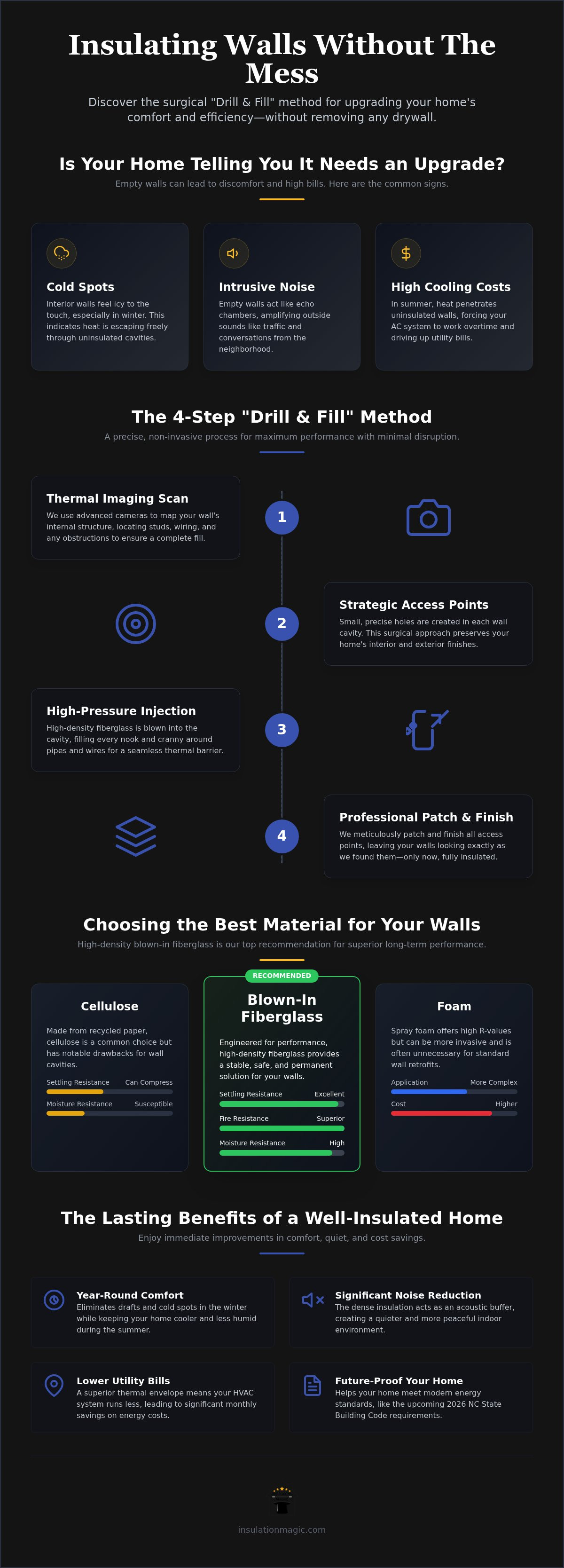
If you aren't sure if your walls are empty, your home is likely already telling you the answer. Recognizing these symptoms is the first step toward a more efficient environment. You should look for these specific indicators:
- Cold Spots: If your interior walls feel icy to the touch on a winter morning, there is nothing stopping the cold from radiating through the structure.
- Intrusive Noise: Empty walls act like echo chambers. If you hear every car passing by or neighborhood conversation, adding density to your walls will provide an immediate acoustic buffer.
- High Cooling Costs: During Charlotte's humid summers, heat enters through uninsulated walls and forces your system to work overtime.
If you're noticing these issues, exploring our insulation services can help you determine the best path forward for your specific property layout.
The Step-by-Step Drill and Fill Method
Executing a successful retrofit requires more than just a blower and a hose. It starts with a thorough assessment of what lies behind your walls. We use advanced thermal imaging cameras to create a map of your home's internal structure before we ever pick up a tool. This allows us to locate studs, electrical wiring, and fire blocks that might otherwise block the flow of material. Understanding how to insulate walls without removing drywall starts with this level of precision. It ensures that we don't leave any "cold spots" behind, providing you with the consistent comfort you deserve.
Once the map is ready, we begin the surgical part of the process. We create small, strategic access points into each wall cavity. This is the most reliable way to handle how to insulate walls without removing drywall while maintaining your home's aesthetic. Through these holes, we inject high-quality fiberglass insulation under high pressure. This pressure is key; it forces the material to wrap around wires and pipes, filling every nook and cranny. Many homeowners worry about the mess, but our meticulous approach includes professional patching and finishing. Whether we work from the inside or the outside, our goal is to leave your home looking exactly as we found it, only much warmer. If you're ready to see how this precision process can transform your home, you can schedule an assessment online to get started.
Exterior vs. Interior Access
The choice of where to create access points depends entirely on your home's construction. For houses with vinyl or wood siding, we can often work from the outside by temporarily removing a piece of siding. Brick homes require a different touch, where we drill through the mortar joints to maintain the structural look. In some cases, especially in historic Charlotte homes with delicate exteriors, interior access is the safest route. We take great care to protect your landscaping and furniture, using heavy-duty drop cloths and specialized dust containment systems to keep your living space pristine.
The Importance of Dense-Packing
Simply putting insulation into a wall isn't enough. If the material is too loose, it will eventually sink due to gravity, leaving the top of your walls uninsulated. This is why we use a high-density technique. By injecting the fiberglass at a specific pressure, we stop air convection within the wall cavity. This creates a much more effective thermal barrier than loose-fill methods. Dense-packing is the process of compressing insulation to prevent future sagging. This ensures your investment continues to perform for decades without needing a touch-up.
Choosing the Best Material: Fiberglass vs. Cellulose vs. Foam
Once you understand the mechanics of the process, the next vital decision involves selecting the right material for your home's unique needs. While there are several options on the market, we prioritize materials that offer long-term stability and safety. In our experience, high-density blown-in fiberglass is the most reliable choice for homeowners exploring how to insulate walls without removing drywall. Unlike other materials that can settle or degrade, fiberglass maintains its structure and thermal performance for decades, ensuring your investment continues to pay off long after the installation is complete.
Safety is another area where fiberglass truly shines. It is naturally non-combustible, meaning it does not require the heavy chemical treatments that cellulose needs to achieve fire resistance. Cellulose is primarily made of recycled paper, and while it is treated with fire retardants, those chemicals can sometimes dissipate over time. Fiberglass provides a permanent layer of protection that won't lose its fire-rated integrity. When we pack this material into a standard 2x4 wall cavity, we can achieve the high R-values required by the 2026 North Carolina building codes, giving you a home that is both safe and exceptionally efficient.
You may have heard that spray foam is the only way to achieve a total seal, but we take a different stance. High-performance non-foam solutions are often the safer, more breathable choice for existing homes. Spray foam can be significantly more expensive and carries risks of off-gassing if not mixed perfectly. By using a meticulous dense-packing technique with fiberglass, we provide a high-performance thermal barrier without the chemical complexities or the high price tag of foam injections.
The Case for Blown-In Fiberglass
Fiberglass is a superior choice for the humid climate we experience in Charlotte, Waxhaw, and Matthews. It is naturally moisture-resistant and does not provide a food source for mold or pests, which is a common concern with organic materials like cellulose. Because it doesn't absorb water, it keeps its R-value even when humidity levels rise. This durability makes it the most practical material for NC homeowners who want a "set it and forget it" solution for their exterior walls and attics.
Why Air Sealing Matters More Than the Material
Even the best insulation can't do its job if air is whistling through gaps in your home's structure. We believe in stopping air leaks before we ever add the insulation layer. This combination creates a permanent barrier that keeps conditioned air where it belongs. You can learn more about this essential step in our Home Air Sealing guide. When you pair professional sealing with dense-packed fiberglass, you address how to insulate walls without removing drywall in a way that truly transforms your home's comfort and energy profile.
Preparing Your Charlotte Home for Wall Insulation
Preparing your home for a project shouldn't be a stressful experience. In neighborhoods like Ballantyne and Matthews, we often begin by identifying which exterior walls require the most attention. You can assist by clearing a few feet of space around the perimeter of your home, both inside and out. This simple step gives our team the room they need to work with the precision required for how to insulate walls without removing drywall. During our professional assessment, we'll walk you through the entire plan, explaining where access points will be placed and how we'll protect your property. Most whole-house wall retrofits are completed in just one to two days, so you can enjoy a more comfortable home without a long, drawn-out timeline.
North Carolina's humidity is a major factor in how we approach every project. Your home needs to breathe to prevent moisture from becoming trapped within the wall cavities. This is why we prioritize high-density blown-in fiberglass. Unlike cellulose, which can absorb moisture, or spray foam, which can create an airtight seal that traps condensation, fiberglass allows for proper moisture management while providing a powerful thermal barrier. We treat your property with the same care we'd give our own, ensuring the installation is clean and methodical from start to finish.
Local Climate Considerations
The Charlotte "heat island" effect is a real challenge for local homeowners. Urban areas tend to trap heat, making your air conditioner work much harder during our long, humid summers. By addressing the walls, you create a complete shield against this external heat. This strategy works best when your wall insulation complements other systems, such as attic fans, to keep the entire structure cool from top to bottom. This holistic approach ensures your home remains a sanctuary even during the peak of July.
Budgeting and ROI
Investing in your home's efficiency offers a tangible return that you'll feel every month. Homeowners can save an average of 15% on heating and cooling costs by air sealing and adding insulation. While the federal tax credit for these projects expired at the end of 2025, the long-term utility savings continue to make this a smart financial move. For a detailed breakdown of what to expect, you can view our guide on the Cost to Insulate Existing Walls. Understanding the financial side is a key part of how to insulate walls without removing drywall effectively.
Why Professional Installation is the Safest Choice
While renting a blower from a local hardware store might seem like a cost-effective weekend project, the technical reality is much more complex. The biggest risk in DIY attempts is a phenomenon called "bridging." This happens when the insulation gets caught on a hidden obstruction, like an electrical wire or a fire block, and creates a false sense of fullness. You might think the cavity is packed, but a massive air gap remains hidden behind the surface. When experts handle how to insulate walls without removing drywall, they use high-pressure equipment designed specifically to push past these obstacles. Without the right pressure and density, your efforts won't stop air convection, leaving your home just as drafty as before.
Professional installation also ensures that the material is dense-packed correctly to prevent future settling. We use specialized gauges and blowers that are far more powerful and precise than standard rental units. This equipment allows us to achieve the exact density required to meet modern energy standards. At Insulation Magic!, we take this a step further by focusing on the "magic" of a clean workspace. We treat your home with the utmost respect, using specialized dust containment and ensuring that every drill site is patched with precision. Our goal is to provide a seamless upgrade where the only evidence of our work is the immediate restoration of your home's comfort.
The Meticulous Craftsman Guarantee
Our dedication to quality is rooted in our local roots across Waxhaw and Mint Hill. We don't just see projects; we see neighbors who trust us with their most valuable asset. This is why we promise to leave your home cleaner than we found it. We take the time to protect your floors, cover your furniture, and perform a thorough post-project walkthrough. We believe in total transparency, which is why we encourage you to read our customer reviews to see how we've helped other Charlotte families achieve lasting peace of mind. It's a level of care that goes beyond simple installation.
Ready to Start? Book Online
We believe that professional service should be convenient from the very first interaction. Our online booking system allows you to choose a time that fits your schedule without the hassle of long phone tags. During your initial consultation, we'll perform a thorough assessment, answer your questions about how to insulate walls without removing drywall, and provide a clear, transparent plan for your specific floor plan. Taking the first step toward a more efficient home is simple and stress-free. Schedule your wall insulation assessment today to experience the difference that meticulous craftsmanship makes for your home.
Start Your Journey to a Quieter, More Efficient Home
Upgrading your property doesn't have to mean living through a messy renovation or a dusty construction zone. By choosing the surgical "drill and fill" method, you can enjoy a more temperate and peaceful environment without the stress of demolition. Learning how to insulate walls without removing drywall is an investment in your family's daily comfort and long-term financial health. We've seen how high-density fiberglass provides the most stable and fire-resistant barrier for homes in the Charlotte area, especially when compared to cellulose or foam alternatives.
Our team at Insulation Magic! takes immense pride in our meticulous craftsmanship. We treat every Waxhaw and Matthews property with the same care we'd apply to our own, ensuring a clean workspace and a seamless finish. You deserve a home that stays cool in the summer and warm in the winter without the burden of high utility costs. Taking the next step is simple and provides the peace of mind that comes from a job done right by local experts who truly care about your personal sanctuary.
We look forward to helping you protect your home and restore its comfort for years to come.
Frequently Asked Questions
Is it really possible to insulate walls without removing drywall?
It's absolutely possible to insulate your home without a messy demolition by using the "drill and fill" method. This surgical approach involves creating small, strategic access points in the wall cavity to inject high-density material. It's a clean and efficient way to handle how to insulate walls without removing drywall while keeping your interior finishes perfectly intact. This process allows us to upgrade your home's comfort without the need for a major construction project.
How much does it cost to insulate existing walls in Charlotte?
The total investment for a wall retrofit depends on the square footage of your exterior walls and the specific layout of your home. While costs vary based on the project's complexity, many homeowners find that the long-term energy savings and increased comfort provide a strong return on investment. We focus on providing transparent assessments to help you understand the scope of your specific project without any hidden fees or surprises.
Will the 'drill and fill' method damage my siding?
A professional installation won't damage your siding because we use methodical techniques to access the wall cavities. For vinyl or wood siding, we often temporarily remove a single strip and replace it once the work is finished. For brick homes, we drill through the mortar joints; this ensures that your home's exterior appearance remains unchanged and well protected. We treat your siding with the same care we'd apply to our own property.
What is the best type of insulation for existing walls?
High-density blown-in fiberglass is the most reliable material for existing wall cavities because it doesn't settle over time. We recommend fiberglass over cellulose because it's naturally fire-resistant and doesn't absorb moisture from the humid Charlotte air. This ensures your home stays protected and efficient for decades without the material losing its R-value or sagging. Understanding how to insulate walls without removing drywall with the right material is key to long-term success.
How long does it take to insulate the walls of a standard home?
A typical whole-house wall retrofit usually takes between one and two days to complete. Our team works efficiently to minimize disruption to your daily routine, handling everything from the initial thermal imaging to the final meticulous cleanup. This timeline allows us to be thorough and methodical while ensuring your home's comfort is restored as quickly as possible, allowing you to enjoy the benefits almost immediately after we finish.
Can wall insulation help reduce outside noise?
Wall insulation is an excellent way to dampen outside noise and create a quieter living environment. By filling the empty "echo chambers" in your walls with dense fiberglass, you create a sound-absorbing barrier that blocks street traffic and neighborhood noise. It's a tangible benefit that homeowners notice immediately, especially in busy Charlotte neighborhoods where privacy and peace are a top priority for every resident looking to protect their personal sanctuary.
Is blown-in fiberglass better than spray foam for existing walls?
Blown-in fiberglass is often a safer and more breathable choice for existing homes than spray foam. While foam is popular, it can trap moisture and carries a risk of off-gassing if not mixed and installed perfectly. Fiberglass provides a high-performance thermal barrier that allows your home to manage moisture naturally; this is essential for the humid North Carolina climate and protects your home's structural integrity over the long term.
Do I need to leave my home during the installation process?
You don't need to leave your home during the installation process because the "drill and fill" method is non-invasive and quiet. Our team uses specialized dust containment systems to keep your living space clean and comfortable while we work. We take great pride in our "Meticulous Craftsman" approach, so you can go about your day with total peace of mind knowing your property is being protected by local experts who care.
Disclaimer
This blog is intended to provide general information about insulation, energy efficiency, and home comfort based on years of experience. While we strive to keep content accurate and up to date, results may vary based on your home's construction, condition, and climate. Contact Insulation Magic for a personalized assessment and recommendations.


