

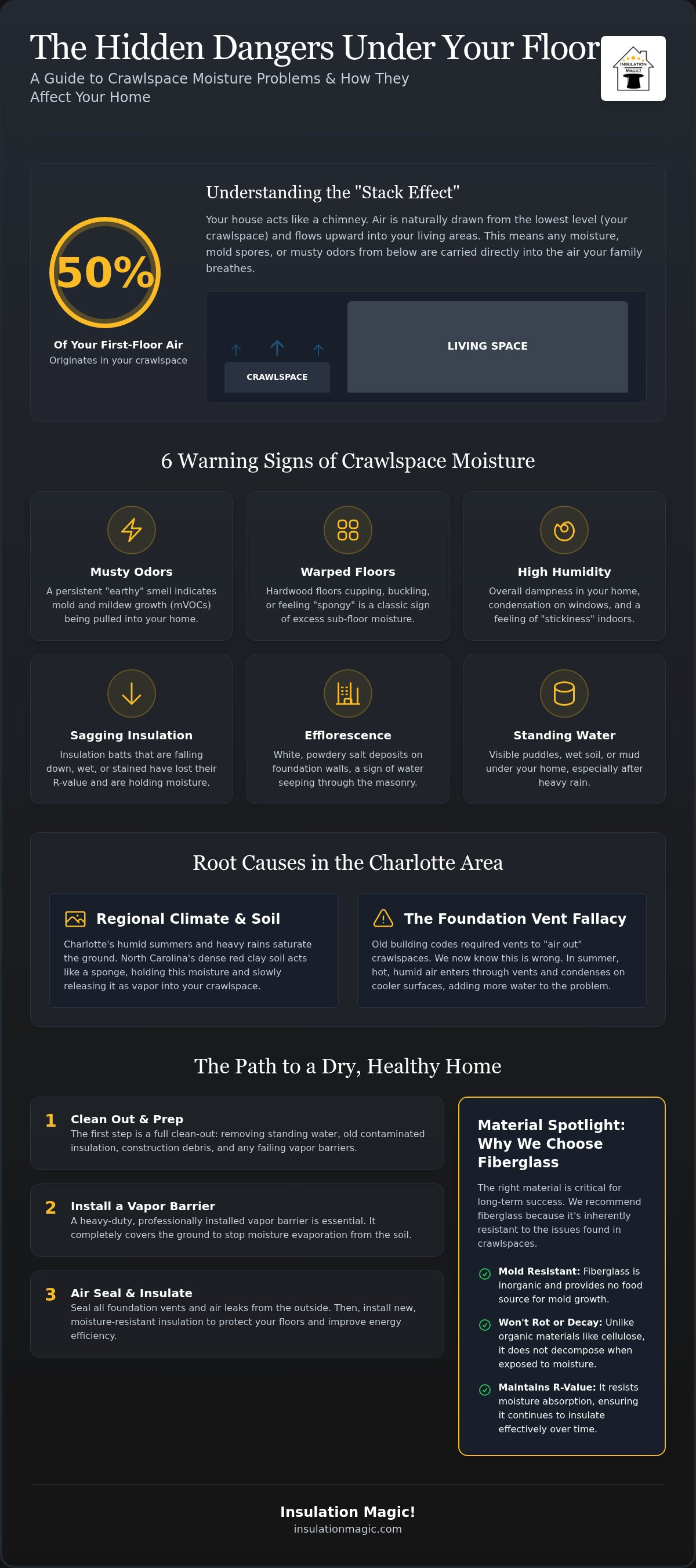
Did you know that up to 50% of the air on your home's first floor actually comes directly from the dark, damp space beneath your feet? In Charlotte, where the local humidity often feels like a heavy blanket, crawlspace moisture problems are more than just a nuisance; they're a direct threat to your home's structural integrity and your family's respiratory health. You might have noticed a lingering musty odor in the hallway or seen your beautiful hardwood floors begin to cup and buckle. It's incredibly frustrating to face rising energy bills and the fear of hidden mold growth when you're simply trying to maintain a safe environment for your loved ones.
We understand how unsettling it is to worry about the invisible issues happening under your floorboards. This guide will help you identify the warning signs of dampness and explain the most effective, methodical ways to restore your home's safety. We'll walk through the science of moisture control, from the importance of high-quality vapor barriers to the benefits of professional air sealing. By the end, you'll have a clear path toward a dry foundation, lower utility costs, and the lasting peace of mind that comes from a healthy, protected home.
Key Takeaways
- Spot the early warning signs of dampness, from lingering "earthy" odors to the subtle cupping of your hardwood floors.
- Understand the unique local factors, like North Carolina red clay, that contribute to crawlspace moisture problems in the Charlotte area.
- Learn how the "Stack Effect" moves air from your foundation into your living space, making crawlspace health vital for indoor air quality.
- Discover why removing old, soggy materials and installing a professional vapor barrier is the most effective way to protect your home’s structure.
- See how a meticulous professional assessment identifies hidden issues and provides a clear, step-by-step path to a dry, odor-free environment.
Identifying the Warning Signs of Crawlspace Moisture Problems
If you've noticed a slight "give" in your step or seen the edges of your hardwood planks curling upward, you're likely seeing the physical effects of crawlspace moisture problems. This isn't just a cosmetic issue; it's a structural warning. When the humidity below your home stays consistently high, the wood subflooring and finished floors absorb that vapor, leading to cupping or crowning. A basic Crawl space overview shows that these areas are meant to provide a buffer between the ground and your home, but in the Charlotte area, they often become traps for humidity. You might also notice beads of water forming on your cold water pipes or metal ductwork. This condensation happens when warm, moist air hits a cooler surface, much like a glass of iced tea on a humid July afternoon in North Carolina.
The "Smell Test": Why Musty Odors Mean Moisture
That lingering, earthy scent in your hallway isn't just "old house smell." It's actually caused by microbial volatile organic compounds, or mVOCs. These are the gases released by mold and mildew as they grow on your floor joists. Because of the "Stack Effect," air naturally moves from the bottom of your house to the top, carrying these odors directly into your living spaces. These smells often become much more aggressive during Charlotte’s humid summer months when the air is thick with moisture. If the scent is sharp and persistent rather than just dusty, it's a sign of active moisture intrusion that needs a professional look. You can learn more about how we address these issues on our services page.
Visual Cues: What to Look for During a Quick Check
If you're brave enough to peak under the house with a flashlight, look for these specific red flags:
- Sagging Insulation: Look for fiberglass batts that are weighted down or pulling away from the floor joists. Fiberglass is excellent at resisting rot, but when it's soaked with water, it loses its R-value and begins to fail.
- Efflorescence: This is a white, powdery salt deposit found on brick or concrete foundation walls. It happens when water moves through the masonry and leaves minerals behind on the surface.
- Standing Water: After a heavy Carolina rain, check for puddles or mud. Persistent wet soil is the primary driver of high humidity levels.
We always focus on using materials that stand up to these conditions. For example, we prefer fiberglass in crawlspaces because it doesn't provide a food source for mold. We take this same approach to the rest of your home, too. In the attic, we consistently recommend fiberglass blown-in insulation over cellulose because it doesn't settle or trap moisture in the same way, ensuring your home stays protected from top to bottom.
The Root Causes of Dampness in Charlotte Area Crawlspaces
Understanding why crawlspace moisture problems occur in the first place is the first step toward a permanent solution. In our region, it's rarely just one thing. It's usually a combination of local geology and the way homes were historically built. North Carolina is famous for its red clay, and while it's great for pottery, it acts like a giant sponge under your house. Clay holds onto water for a long time after a rainstorm, and this moisture slowly evaporates upward into your crawlspace as ground vapor. Without a proper barrier, your floor joists are constantly "breathing" this dampness, which leads to the structural issues we see every day.
The Role of Local Climate and Soil
In towns like Matthews and Waxhaw, the summer humidity is relentless. When that thick, wet air enters through foundation vents, it doesn't "dry out" the space as many people expect. Instead, it brings more water in. This is a common struggle for local homeowners because our soil stays saturated, creating a cycle of high humidity that never quite breaks. Heavy rainfall only makes it worse, as the clay soil prevents water from draining away quickly, keeping the area under your home in a perpetual state of dampness.
The Foundation Vent Fallacy
For decades, the standard building practice was to put vents in crawlspaces to let them "breathe." However, the physics of a Southern summer prove this wrong. When 90-degree air with high humidity enters a 70-degree crawlspace, it reaches its dew point almost immediately. This causes water to condense on your plumbing pipes and wood framing, much like sweat on a cold soda can. This is why we often guide homeowners toward closed or encapsulated systems. By sealing out the outdoor air, you gain total control over the environment beneath your feet.
Beyond the air and soil, we often find that simple drainage issues are to blame. Clogged gutters or flower beds that slope toward the foundation can funnel thousands of gallons of water directly against your crawlspace walls. Add a small, hidden plumbing leak to the mix, and you have the perfect recipe for wood rot. We always look for ways to protect your home's integrity from top to bottom. Just as we recommend fiberglass blown-in insulation for attics because it doesn't trap moisture like cellulose options, we focus on using moisture-resistant materials and air sealing below your home. If you suspect your foundation is working against you, you can schedule a professional assessment to see exactly what’s happening beneath your floors.
The Risks of Unchecked Moisture: Health and Home Integrity
Ignoring crawlspace moisture problems is a bit like ignoring a slow leak in a boat; eventually, the structural damage and health risks become too big to overlook. In our local climate, moisture isn't just a damp feeling. It's an active catalyst for decay that affects everything from the air you breathe to the value of your property. When you leave humidity levels above 60%, you're essentially providing an all-you-can-eat buffet for mold and dust mites. These allergens don't stay under the house. They travel upward, triggering asthma and persistent allergies for your family.
Understanding the Stack Effect
Your home acts like a giant chimney. As warm air rises and escapes through the roof, it creates a vacuum that pulls "makeup air" from the lowest point of the house. Since research confirms that up to 50% of the air on your home's first floor originates in the crawlspace, any mold spores or musty odors down there are being pumped directly into your living room. Air sealing the floor doesn't just stop drafts; it protects your family's lungs and improves your home's entire envelope.
Beyond health, the physical integrity of your foundation is at stake. Wet wood is soft wood. Over time, moisture causes floor joists to sag and lose their load-bearing capacity. This leads to the sloping floors and sticking doors that many homeowners find so frustrating. Damp wood is also a homing beacon for termites and rodents, who find the softened material and hidden spaces irresistible. When these pests combine with existing crawlspace moisture problems, the damage to your subfloor can accelerate rapidly.
Structural Decay and Long-Term Value
In competitive Charlotte markets like Ballantyne, a damp crawlspace is a major red flag for savvy buyers. The high cost of replacing rotted sill plates or sistering joists far outweighs the cost of early prevention. We focus on creating a dry, healthy environment to preserve your home’s resale value and structural safety. Just as we recommend fiberglass blown-in insulation for attics to prevent moisture trapping, we use moisture-resistant solutions below to ensure your foundation stays rock-solid for decades.
Effective Solutions: From Vapor Barriers to Professional Sealing
Solving crawlspace moisture problems requires a disciplined process that goes beyond simply covering the ground with plastic. We treat your foundation as a complete system, focusing on removing existing contaminants and creating a permanent shield against environmental dampness. This methodical strategy ensures that once the moisture is gone, it stays gone, protecting your home's structural components for the long term.
The Importance of a Clean Slate
You can't build a dry environment on top of a wet foundation. If your current insulation is heavy with moisture or shows signs of mold, it must be completely cleared out before any new work begins. The Insulation Magic! approach involves meticulous removal and disposal of all compromised materials to ensure no hidden spores or dampness remain trapped against your floor joists. This preparation is the most critical step in the entire remediation process. For a deeper look at how we handle this stage, see our guide on Professional Insulation Removal in Charlotte.
Why We Say No to Spray Foam
We take a firm stance against using spray foam in crawlspaces because of the safety risks it creates for your home's foundation. Spray foam is rigid and opaque, which means it can easily hide active termite tunnels and plumbing leaks from view. If a pipe fails, the foam can actually trap water against your wood framing, leading to accelerated rot that you won't see until it's too late. Instead, we use air sealing and fiberglass insulation, which provide excellent thermal protection while keeping your home's structure visible for future inspections. This aligns with our standard practice for the rest of your home; we always recommend fiberglass blown-in insulation for attics over cellulose because it doesn't settle or hold onto moisture.
Moisture Barriers and Encapsulation Basics
A professional solution involves more than a thin DIY sheet of plastic. While a basic 6-mil barrier offers some protection, true encapsulation uses thick, reinforced liners that are sealed directly to your foundation walls and piers. This creates a total thermal envelope that prevents ground vapor from rising into your living space. When combined with precision air sealing, this setup keeps out pests and humid Charlotte air. You can explore these options further in our guide to Crawlspace Insulation in Charlotte, NC.
Why a Professional Assessment is Your Best First Step
While identifying the warning signs like cupping floors or musty odors is a vital starting point, a professional audit goes much deeper into the "how" and "why" of your home's unique environment. Dealing with crawlspace moisture problems in the Charlotte area isn't a one-size-fits-all project. Every property sits on a slightly different grade and has its own history of drainage or ventilation. A meticulous assessment allows us to move beyond guesswork and create a customized plan that addresses the root cause of your dampness, ensuring the solution we provide is both effective and permanent.
What to Expect During an Insulation Magic! Audit
Our "Meticulous Craftsman" approach means we go into the tight, dark corners that most homeowners would rather avoid. During our visit, we use precise tools to measure the moisture content of your wood floor joists and the relative humidity of the air. These numbers tell a story that your eyes can't see, revealing whether your foundation is at risk for long-term structural decay or if current humidity levels are conducive to mold growth. We also perform a thorough check for air leaks around the rim joist and floor penetrations where your plumbing and electrical lines enter the living space. By the end of the audit, we provide a clear, step-by-step roadmap so you understand exactly what’s happening beneath your feet before any work begins.
Investing in Peace of Mind
Taking action now is an investment that pays for itself over time through improved efficiency and home preservation. When you resolve crawlspace moisture problems, you aren't just protecting your health; you're significantly reducing the strain on your HVAC system. A damp crawlspace makes your air conditioner work much harder to pull humidity out of the air on your first floor. By air sealing and installing a professional vapor barrier, you create a tighter home envelope that leads to lower utility costs year-round. You can explore more about these financial benefits in our guide on how to lower heating and cooling costs.
Our commitment to quality and transparency extends to every part of your property. We believe in using materials that provide the best long-term value and safety for your family. For example, just as we avoid moisture-trapping spray foam in the crawlspace, we consistently recommend fiberglass blown-in insulation for attic applications. Unlike cellulose, which can settle or hold onto moisture, fiberglass remains a superior, stable choice for Charlotte attics. We treat your home with the same care we’d give our own, focusing on meticulous standards and honest education. If you're ready to see how we can help, you can view our full range of services or read what your neighbors think on our reviews page.
Securing Your Home’s Foundation and Future
Protecting your property starts with understanding the air beneath your feet. We’ve discussed how Charlotte’s unique humidity and clay soil contribute to crawlspace moisture problems, impacting everything from your energy bills to your family's health. By choosing a methodical approach that includes professional air sealing and high-quality vapor barriers, you can finally eliminate musty odors and protect your floor’s structural integrity. Our team brings local expertise to every project, ensuring your foundation remains dry and accessible without the risks of spray foam.
You deserve the peace of mind that comes from a job done with integrity. This commitment to quality is why we also suggest fiberglass blown-in insulation for your attic, as it provides a safer, more stable environment than cellulose. You can see the results of our meticulous standards by checking out our 5-star homeowner reviews.
Take the first step toward a healthier, more efficient home today. We're here to guide you through every stage of the process with transparency and care.
Frequently Asked Questions
Is it normal to have some water in my crawlspace after it rains?
Standing water in your crawlspace is never normal and should be addressed immediately. While a heavy Carolina rain might put pressure on your drainage system, your foundation should remain dry. Persistent puddles lead to high humidity levels that eventually cause wood rot and mold growth. It’s vital to check your gutters and grading to ensure water is flowing away from your home rather than pooling underneath it.
Can crawlspace moisture cause my allergies to flare up?
Damp crawlspaces are a primary trigger for indoor allergies and respiratory issues. Because of the stack effect, the air under your home moves upward into your living areas, carrying mold spores and dust mite allergens with it. If you notice your symptoms improve when you leave the house, the air quality in your crawlspace is likely the culprit. Sealing this area is a key step in protecting your family.
How much does it cost to fix crawlspace moisture problems in Charlotte?
The cost to resolve crawlspace moisture problems varies based on your home's size and the specific solutions required. Factors like the condition of your current insulation and the complexity of the drainage issues play a significant role in the final investment. Because every Charlotte property is unique, we provide customized plans that focus on long-term value rather than quick fixes. A professional audit is the best way to determine your specific needs.
Will a vapor barrier alone stop the musty smell in my house?
A vapor barrier is a great first step, but it might not eliminate odors on its own. If your old insulation has already absorbed musty smells or mold spores, it needs to be removed professionally. You also need to consider air sealing to keep humid outdoor air from entering. Combining a heavy-duty barrier with these extra steps is the most effective way to restore a fresh, clean scent to your home.
Why do you recommend fiberglass instead of spray foam for crawlspaces?
We recommend fiberglass because it doesn't provide a food source for mold and allows for easy inspections. Spray foam is problematic because it’s permanent and can hide termite activity or wood rot. By using fiberglass and air sealing, we maintain a protected yet accessible environment. This same logic applies to your attic, where we consistently suggest fiberglass blown-in insulation over cellulose for long-term stability and moisture resistance.
How long does a crawlspace encapsulation or moisture barrier last?
A high-quality, professionally installed moisture barrier or encapsulation system is designed to last for decades. When we use reinforced materials and meticulous sealing techniques, you can expect the system to remain effective for 20 years or more. Regular check-ups ensure that the barrier stays intact and that no new drainage issues have developed. It is a long-term investment in the health and safety of your foundation.
What happens if I ignore the moisture in my crawlspace?
Ignoring moisture leads to expensive structural damage and potential health complications for your family. Over time, damp wood loses its load-bearing capacity, which results in sagging floors and sticking doors. Unchecked crawlspace moisture problems also invite pests like termites and rodents into your home. The longer you wait, the more complex and costly the remediation process becomes, making early detection the smartest choice for any local homeowner.
Do I need a dehumidifier if I have a vapor barrier installed?
In the humid Charlotte climate, a dehumidifier is often the final piece of the moisture control puzzle. While a vapor barrier blocks ground moisture, it doesn't always stop the humidity that enters through the air. A dehumidifier works alongside your barrier to keep relative humidity below 60%, the threshold where mold begins to grow. This combination ensures your crawlspace stays dry and healthy throughout the most sweltering summer months.
Disclaimer
This blog is intended to provide general information about insulation, energy efficiency, and home comfort based on years of experience. While we strive to keep content accurate and up to date, results may vary based on your home's construction, condition, and climate. Contact Insulation Magic for a personalized assessment and recommendations.


