
Could your attic insulation be the very thing making your Charlotte summer more expensive and less comfortable? Many homeowners in the Queen City are frustrated by rising Duke Energy bills and rooms that never quite stay cool, even when the AC is working overtime. It's common to feel that your home should be a sanctuary from the North Carolina humidity, yet a dusty or settling attic floor often tells a different story. If you're weighing the pros and cons of fiberglass vs cellulose insulation Charlotte NC, you're likely looking for a solution that provides lasting peace of mind rather than a temporary fix.
In this guide, we'll show you why modern blown-in fiberglass is the superior, long-term choice for our specific climate compared to cellulose. You'll discover how this moisture-resistant material helps you meet the new R-49 building code requirements while maintaining its loft for over 20 years. We'll walk through the technical reasons why fiberglass won't attract pests or degrade like organic alternatives, ensuring your home stays comfortable and your utility bills stay manageable. From understanding local rebate programs to the importance of meticulous air sealing, you're about to learn how to transform your attic into a high-performing shield for your home.
Key Takeaways
- When comparing fiberglass vs cellulose insulation Charlotte NC, discover why blown-in fiberglass offers better moisture resistance and long-term stability for our humid climate.
- Learn why fiberglass maintains its R-value for over 20 years without settling or "packing down" like cellulose alternatives.
- Understand the benefits of a cleaner attic environment by choosing a material that's significantly less dusty and free from heavy chemical additives.
- Find out why professional air sealing is the essential first step to prevent drafts and maximize the effectiveness of your new insulation.
- Explore how a meticulous, owner-operated approach ensures your home meets the updated NC building code standards for year-round energy savings.
Fiberglass vs. Cellulose: The Attic Insulation Debate in Charlotte
Living in the Queen City means preparing for sweltering humidity and sudden winter chills. As Duke Energy rates continue to fluctuate, many neighbors in Waxhaw, Matthews, and Weddington are looking toward their attics to find lasting relief. The decision usually narrows down to a choice between two primary loose-fill materials. When you evaluate fiberglass vs cellulose insulation Charlotte NC, you aren't just choosing a product; you're choosing how your home will feel for the next two decades. It's a decision that impacts your daily comfort and your long-term maintenance budget.
The debate between "spun glass" and "recycled paper" is about more than just the initial price tag. It involves long-term stability, indoor air quality, and how the material handles our local North Carolina moisture. At Insulation Magic!, we take a "Meticulous Craftsman" approach to every project we touch. Our experience as a local, owner-operated business has led us to a firm conclusion: modern blown-in fiberglass is the superior standard for excellence. It provides a cleaner, more reliable thermal barrier that doesn't demand the constant maintenance or frequent top-offs often required by other materials.
What is Blown-In Fiberglass?
Modern fiberglass is a highly engineered product made from molten glass that is spun into fine, resilient fibers. Unlike the dusty, itchy versions from decades ago, today's professional-grade fiberglass is formaldehyde-free and naturally non-combustible. Its texture is soft and cloud-like, which is a key part of its thermal performance. This unique structure creates millions of tiny air pockets that effectively trap heat without adding unnecessary weight to your ceiling drywall. Because it's an inorganic material, it doesn't provide a food source for pests and won't rot or decay. This makes it an ideal choice for a healthy, long-lasting attic refresh that keeps your home protected year-round.
What is Cellulose Insulation?
Cellulose is primarily composed of recycled newspaper and cardboard that has been shredded into small bits. Because paper is naturally flammable, manufacturers must treat it heavily with fire-retardant chemicals like boric acid and ammonium sulfate to meet safety standards. While it's often marketed as an eco-friendly option due to its recycled content, this label can be misleading when you consider its lifecycle. Cellulose is significantly heavier and denser than fiberglass. Over time, this weight causes the material to pack down and lose its insulating power. In the humid Charlotte climate, this density can also trap moisture, leading to a host of issues that we prefer to help our customers avoid entirely.
Why Blown-In Fiberglass is the Superior Choice for NC Attics
When you're weighing fiberglass vs cellulose insulation Charlotte NC, the long-term performance in our unique climate is the most important factor. Our local weather puts immense stress on building materials, especially those tucked away in a dark, hot attic. Fiberglass stands up to these challenges because it's engineered for stability and resilience. It doesn't just work well during the first summer; it continues to protect your home with the same efficiency decades later.
The Problem with Cellulose Settling
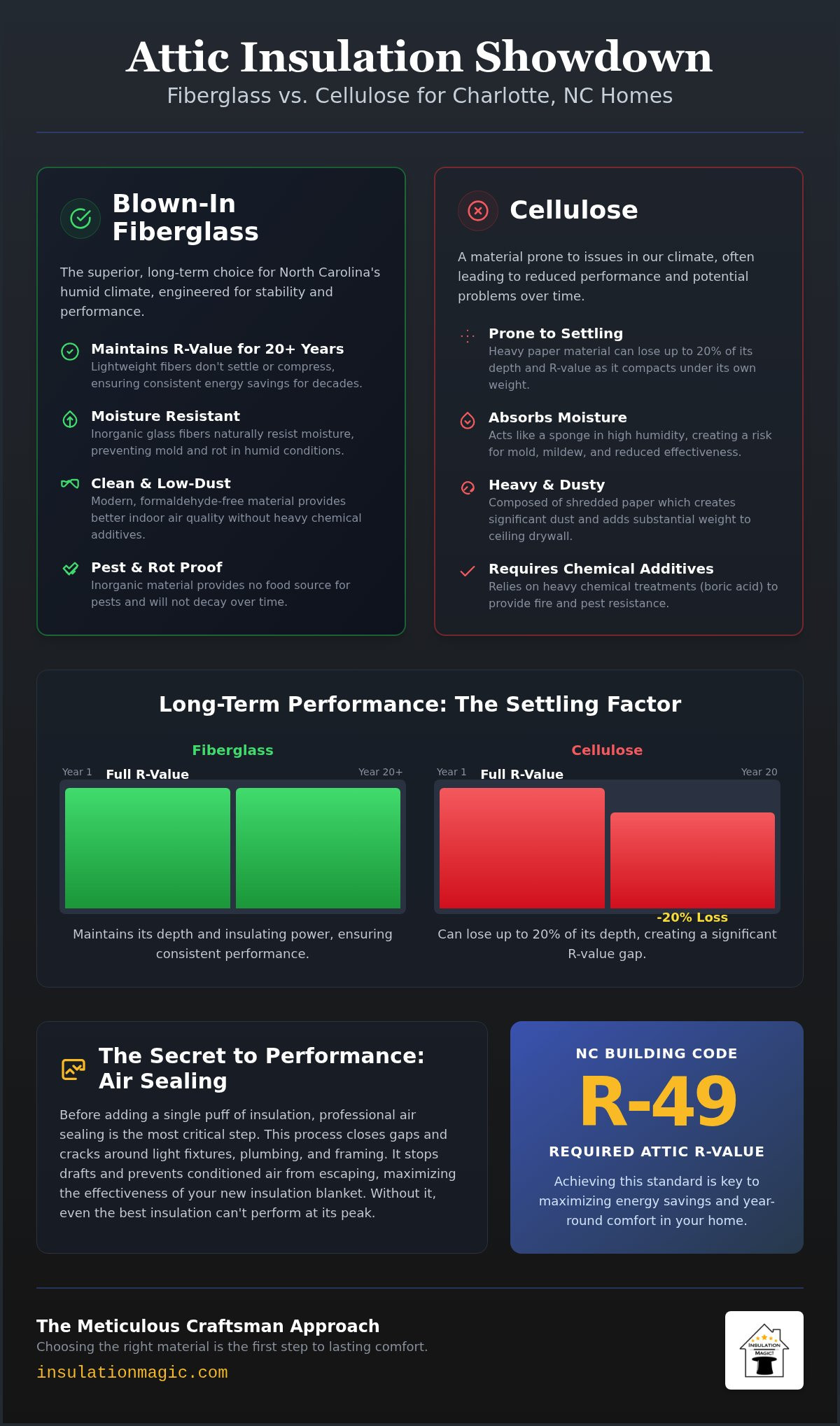
Cellulose is essentially shredded paper, which is heavy and prone to the effects of gravity. Over a period of 15 to 20 years, cellulose can lose up to 20% of its initial depth as it packs down under its own weight. This creates a significant "R-value gap" where the insulation thins out, allowing heat to transfer more easily into your living spaces. In contrast, blown-in fiberglass maintains its "fluff" and thermal performance for the long haul. It doesn't settle or compress, which means the energy savings you get on day one will still be there 20 years down the road.
Handling North Carolina Humidity
Charlotte summers are famous for high humidity, and your attic often bears the brunt of it. This is where the difference between organic and inorganic materials becomes critical. Cellulose is made of paper fibers that naturally act like a sponge, absorbing moisture from the air. This dampness can lead to mold growth and even structural rot over time. Fiberglass fibers are made of inorganic glass that naturally resists moisture absorption even when the relative humidity in your attic reaches 90%. Because it doesn't hold water, fiberglass stays dry, clean, and effective, providing a safer environment for your family.
Beyond moisture and settling, weight is a major concern for many of our neighbors in older Charlotte homes. Fiberglass is significantly lighter than cellulose, which prevents unnecessary stress and sagging on your ceiling drywall. It's also naturally fire-resistant. While cellulose requires heavy doses of boric acid to keep from catching fire, fiberglass is made of glass, which simply won't burn. This inherent safety gives you peace of mind without relying on a cocktail of chemical additives. If you're ready to see how this material can improve your home's comfort, you can schedule an attic assessment with our team today. We take pride in our meticulous approach, ensuring every corner of your attic is protected with the highest standard of care.
The Reality of Cellulose: Common Pitfalls Homeowners Face
Choosing the right material involves more than just looking at a thermal spec sheet. It's about the daily reality of living in your home and the long-term health of your property. While cellulose is a common sight in many older attics, it brings a set of hidden challenges that often surprise homeowners. When you evaluate fiberglass vs cellulose insulation Charlotte NC, the "dust factor" is one of the most immediate concerns. Cellulose is essentially shredded paper, and the installation process often creates a fine dust storm that can linger long after the technicians have left. For families in the Charlotte area, this isn't just a cleaning nuisance; it's a matter of indoor air quality.
Beyond the mess, there's the issue of what's actually in that paper. Because cellulose is organic and naturally flammable, it must be treated with heavy amounts of fire-retardant chemicals. While these additives are necessary for safety, they don't change the fact that you're placing a massive pile of organic material above your head. Rodents and other pests are naturally drawn to organic fibers. Even when treated, cellulose remains a more inviting nesting ground for pests than the inorganic, glass-based fibers of modern fiberglass. Choosing fiberglass provides a cleaner, less attractive environment for uninvited guests, helping you maintain a "healthy attic" year after year.
Chemical Exposure and Indoor Air Quality
The chemical makeup of your insulation directly impacts the air you breathe. Cellulose requires significant doses of boric acid and ammonium sulfate to meet fire codes. These chemicals can sometimes off-gas, and the fine paper particulates can find their way into your HVAC ductwork if your system isn't perfectly sealed. We prefer modern blown-in fiberglass because it's naturally non-combustible and formaldehyde-free. It doesn't rely on a heavy chemical cocktail to stay safe. For families with allergies or respiratory sensitivities, the clean, stable nature of fiberglass makes it the clear winner for maintaining a pristine living environment.
Weight and Structural Integrity
Weight is a critical but often overlooked detail in the insulation debate. Cellulose is significantly heavier than fiberglass on a "pounds per square foot" basis. In many of the historic or older homes found in Waxhaw, Matthews, and Mint Hill, the ceiling drywall or plaster wasn't designed to hold hundreds of extra pounds of heavy paper. Over time, this weight can lead to visible ceiling sag or even structural damage. Fiberglass allows us to reach the new North Carolina R-49 requirements with minimal weight. It provides the maximum thermal protection your home needs without putting unnecessary stress on your ceilings, ensuring your home stays both efficient and structurally sound.
The Secret to Performance: Air Sealing Before Insulation
Many homeowners focus entirely on the material when comparing fiberglass vs cellulose insulation Charlotte NC, but there is a hidden step that truly determines your home's comfort. Think of your home like a person dressing for a cold, windy day in the Carolinas. Insulation is the thick wool sweater that keeps you warm, but if you don't have a windbreaker on top, the biting wind will blow right through the fibers. Air sealing is that windbreaker. Without it, even the best insulation cannot stop the drafts that make your rooms feel uneven and your energy bills climb.
Some companies claim that cellulose is a better choice because its density helps block air. This is a misleading shortcut. No loose-fill insulation, regardless of its weight, is a true air barrier. Real performance comes from a dedicated, manual process of sealing gaps with professional-grade materials before any insulation is added. By separating these two vital steps, we ensure your home is both airtight and perfectly insulated, providing a level of comfort that material alone simply cannot achieve.
Common Leak Points in Charlotte Attics
In homes across Matthews and Waxhaw, the biggest energy offenders are often completely invisible. We prioritize finding gaps in top plates, which are the horizontal wood beams at the top of your interior walls. We also find significant leaks around wire penetrations and plumbing stacks that lead directly from your living space into the dusty attic. These small openings act like chimneys, sucking the conditioned air you have already paid for right out of your house. For a deeper look at how this impacts your wallet, you can read about Home Air Sealing and its role in permanent utility savings.
The "Insulation Magic!" Air Sealing Process
Our approach is methodical and thorough, reflecting the pride we take in our craftsmanship. We don't just blow in material and hope for the best. Instead, we carefully navigate every corner of your attic to identify and seal every breach with professional-grade expanding foam and caulk. This creates a permanent barrier between your attic and your living areas. This meticulous step is non-negotiable for us because it's the only way to ensure your fiberglass performs at its peak R-value. Once the "windbreaker" is secure, we then add the "sweater" of blown-in fiberglass to complete the protection of your home.
Choosing Your Charlotte Insulation Partner
Selecting the right company to handle your attic project is just as vital as the material you choose. When you're deciding between fiberglass vs cellulose insulation Charlotte NC, you need a partner who understands the specific climate nuances of neighborhoods like Matthews, Waxhaw, and Mint Hill. A large franchise might offer speed, but they often lack the meticulous attention to detail required to truly seal a home against North Carolina's humidity. You deserve a team that treats your property with the same care they'd give their own family home.
When you review a quote, transparency is key. A thorough professional won't just suggest adding more layers to a problem. They'll look at the condition of your existing material first. If your current insulation is dusty, pest-infested, or water-damaged, simply blowing new fiberglass over it is a mistake. A true "Attic Refresh" often starts with professional insulation removal to ensure your home has a clean, healthy foundation. Always ask if your contractor includes air sealing and a plan for removing old debris, as these steps are essential for permanent energy savings.
The Insulation Magic! Difference
At Insulation Magic!, we believe in the power of a "Meticulous Craftsman" approach. As an owner-operated business, Chris is personally involved in every project to ensure the work meets our high standards of excellence. We don't just "do a job"; we educate our neighbors on how to protect their homes for the long haul. Our focus on cleanliness and thoroughness has built a reputation for reliability across the Charlotte area. You don't have to take our word for it; you can see what your neighbors are saying by reading our Reviews.
Booking Your Attic Assessment
Taking the first step toward a more comfortable home is simple. Our Online Booking system allows you to schedule a professional assessment at a time that works for you. During this first visit, we'll perform a methodical inspection of your attic's current state, identifying air leaks and measuring your current R-value. We'll walk you through our findings and explain exactly how we can restore your comfort through better materials and precise installation. We invite you to experience the "Magic" of a home that stays cool in the summer, warm in the winter, and efficient all year long.
Secure Your Home's Comfort and Efficiency Today
Choosing between fiberglass vs cellulose insulation Charlotte NC comes down to the long-term health and stability of your home. We've seen that modern blown-in fiberglass offers the best resistance to our local humidity while maintaining its thermal performance for decades without settling. By pairing this superior material with meticulous air sealing, you create a permanent barrier against rising energy costs and uneven temperatures.
As a local, owner-operated business, Chris takes personal pride in providing a healthier, zero-spray foam alternative for our neighbors in Charlotte, Waxhaw, and Matthews. We're here to guide you through every step of the process, ensuring every detail of your "Attic Refresh" is handled with the care your property deserves. Our methodical approach is designed to lower your stress and your utility bills at the same time.
You don't have to settle for dusty attics or sky-high cooling costs. We're ready to help you transform your home into a more comfortable, energy-efficient sanctuary that lasts for years to come.
Common Questions About Charlotte Attic Insulation
Is fiberglass or cellulose better for North Carolina humidity?
Fiberglass is the superior choice for Charlotte's humidity because it's an inorganic material that doesn't absorb water. Cellulose is made from recycled paper and acts like a sponge, trapping moisture that can lead to mold or rot. By choosing fiberglass, you're installing a barrier that stays dry and effective even during our muggiest summer days. This keeps your attic environment cleaner and protects your home's structural integrity for the long haul.
Does fiberglass insulation lose its R-value when it gets cold?
Modern blown-in fiberglass is engineered to provide consistent thermal protection regardless of the temperature outside. While some older insulation types struggled with convection loops in extreme cold, today's high-density fiberglass products maintain their full R-value. This ensures your home stays warm during those sudden Charlotte winter freezes. When we install it with our meticulous craftsman approach, you get a stable thermal layer that works just as hard in January as it does in July.
How much attic insulation do I need for a home in Charlotte, NC?
In Charlotte, which sits in Climate Zone 4, the upcoming 2024 North Carolina State Building Code mandates a minimum of R-49 for attic insulation. To achieve the best year-round comfort, we recommend aiming for R-49 to R-60. This usually involves installing about 18 to 22 inches of blown-in fiberglass. Reaching these levels ensures your home stays ahead of local regulations while providing a thick, effective shield against the intense Carolina sun.
Can I blow fiberglass over my existing old cellulose insulation?
While you can technically blow new material over old, we usually recommend a full removal if your existing cellulose is dusty, settling, or shows signs of past pest activity. Mixing materials can sometimes mask underlying issues like air leaks or moisture damage. A clean Attic Refresh allows us to perform meticulous air sealing on the bare attic floor before adding fresh fiberglass. This process ensures your new insulation performs at its absolute peak efficiency.
Is blown-in fiberglass more expensive than cellulose?
When comparing fiberglass vs cellulose insulation Charlotte NC, fiberglass typically has a slightly higher upfront cost, but it's the more economical choice over time. Cellulose is prone to settling, often losing 20% of its depth, which means you'll eventually need to pay for more material to maintain your R-value. Fiberglass stays at its original height for 20 years or more. Investing in a stable material now saves you from the cost of future top-offs.
Which insulation is best for preventing mold in the attic?
Fiberglass is significantly better at preventing mold growth because it's made from spun glass, which mold cannot eat. Mold requires an organic food source, like the paper fibers found in cellulose, to thrive. In our humid North Carolina climate, any moisture that enters the attic can turn cellulose into a breeding ground for spores. Using inorganic fiberglass removes that food source, helping you maintain a much healthier and cleaner attic space.
How long does blown-in fiberglass insulation last?
Blown-in fiberglass is a permanent solution that's designed to last for the life of your home, often 20 to 30 years or more. Unlike cellulose, it doesn't pack down or degrade over time, so its R-value stays consistent. It's also naturally resistant to fire and pests, which helps it maintain its integrity. When it's installed correctly by a local expert, you won't have to worry about replacing or supplementing it for decades.
Will new insulation help lower my Duke Energy bill?
Upgrading your insulation is a proven way to lower your Duke Energy bill throughout the year. The EPA estimates that air sealing and insulating can save an average of 15% on heating and cooling costs. In our humid climate, this means your air conditioner won't have to work nearly as hard to keep your home comfortable. By creating a more efficient thermal envelope, you'll see a noticeable difference in your monthly energy expenses.
Disclaimer
This blog is intended to provide general information about insulation, energy efficiency, and home comfort based on years of experience. While we strive to keep content accurate and up to date, results may vary based on your home's construction, condition, and climate. Contact Insulation Magic for a personalized assessment and recommendations.


