
Imagine waking up on a crisp Charlotte morning, stepping out of bed, and feeling a sharp jolt of cold through your socks. If your floors feel like ice and you've noticed a lingering, musty smell drifting upstairs, your home is likely losing a battle against our humid North Carolina climate. You might be weighing the pros and cons of crawlspace insulation vs encapsulation to regain control over your indoor environment. It's a common dilemma for local homeowners who want to protect their foundation from wood rot while finally lowering those stubborn utility bills.
We understand how stressful it is to worry about hidden mold growth or foundation health. You deserve a home that feels solid and smells clean. In this guide, we'll walk you through the meticulous differences between these two methods so you can see exactly which one fits your specific needs. We'll explore the real-world ROI of each approach and show you how a dry, odor-free crawlspace can transform your daily comfort and long-term peace of mind.
Key Takeaways
- Learn how to choose between crawlspace insulation vs encapsulation by identifying whether your primary goal is simple temperature control or total moisture management.
- Discover why high-quality fiberglass batts are the most effective choice for subfloor insulation to keep your feet warm and your energy bills low.
- Understand how sealing your crawlspace with a heavy-duty vapor barrier protects your foundation from Charlotte’s high humidity and prevents musty odors from drifting upstairs.
- Find out why professional removal of old, contaminated materials is the only way to ensure a truly healthy and odor-free environment under your home.
- Use our decision framework to assess your home’s symptoms and determine the best long-term ROI for your specific crawlspace needs.
Crawlspace Insulation vs. Encapsulation: Understanding the Basics
A crawl space is more than just a narrow gap under your home; it's a critical part of your house's ecosystem. When you begin comparing crawlspace insulation vs encapsulation, you're essentially deciding between a targeted temperature fix and a total environmental transformation. Traditional insulation focuses on the subfloor. We install high-quality fiberglass batts between the floor joists to create a thermal barrier that keeps your heat inside during the winter. Encapsulation is a much more thorough process. It involves sealing the entire space, including the floor and walls, with a heavy-duty vapor barrier to keep the outside elements where they belong.
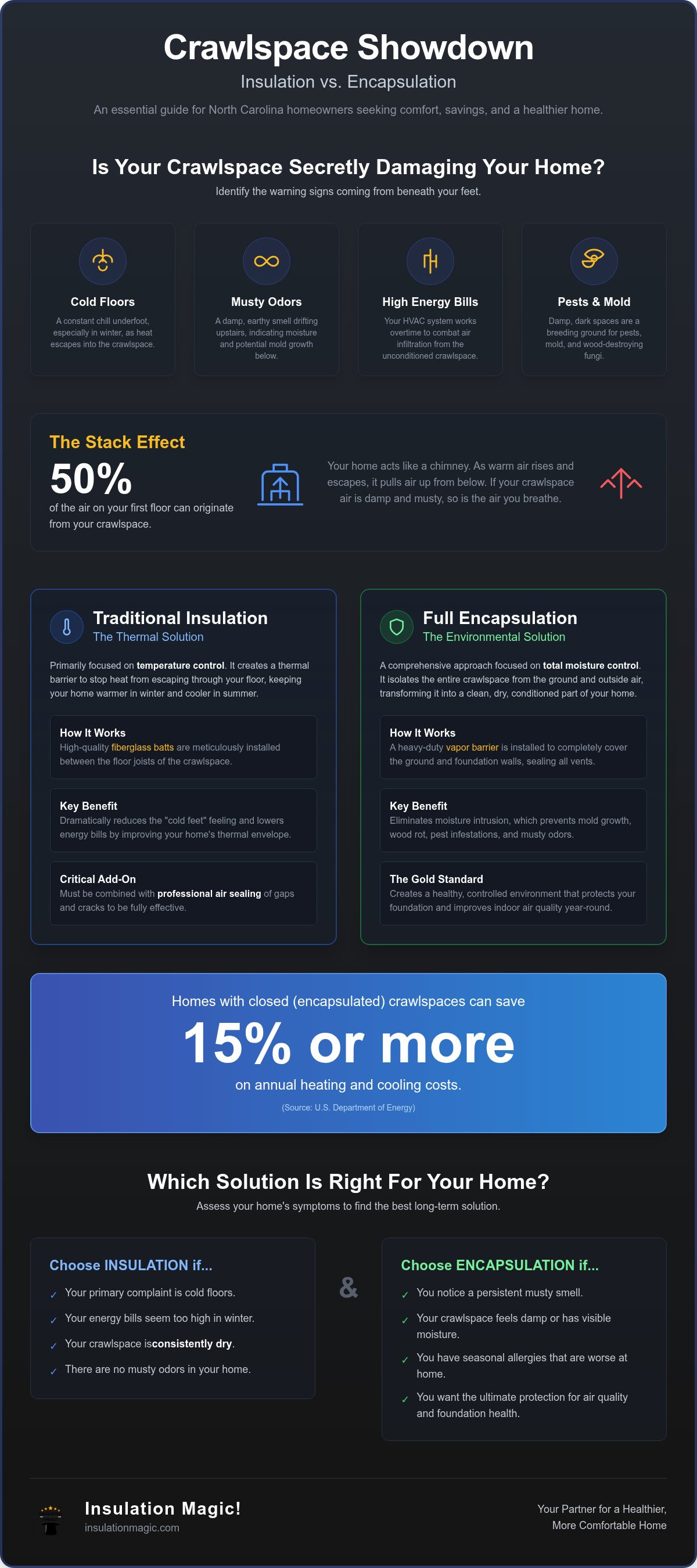
The choice is vital because of the "Stack Effect." Your home acts like a large chimney. As warm air rises and escapes through your attic, it creates a vacuum that pulls fresh air in from the bottom. Since up to 50% of the air on your first floor can originate from the crawlspace, the quality of that air matters. If your crawlspace is damp or moldy, that's exactly what you'll be breathing upstairs. In our humid Charlotte climate, managing this airflow is the difference between a healthy home and one plagued by musty odors.
The Role of the Thermal Envelope
Your thermal envelope is the protective shell that separates your living space from the outdoors. When this envelope is compromised by a leaky crawlspace, your HVAC system pays the price. It has to work significantly harder to treat the unconditioned air being pulled into your home. Research from the U.S. Department of Energy conducted right here in North Carolina shows that homes with closed crawlspaces can save 15% or more on annual heating and cooling costs. By tightening this envelope, you aren't just improving comfort; you're protecting your foundation from the long-term damage caused by fluctuating temperatures and humidity.
Vented vs. Unvented Crawlspaces
Old building philosophies suggested that crawlspaces needed vents to "breathe." The idea was that airflow would dry out any moisture. In North Carolina, we've learned that the opposite is often true. On a humid summer day, those vents invite thick, moisture-heavy air into the cool area under your home. When that warm air hits your cool floor joists, it condenses into water. This moisture leads to wood rot, sagging floors, and mold growth. Encapsulation moves away from this "vented" model, sealing the space completely to create a dry, controlled environment that stays stable year-round.
Traditional Crawlspace Insulation: Comfort and Energy Savings
Traditional crawlspace insulation is the most straightforward way to address uncomfortable indoor temperatures. When we look at crawlspace insulation vs encapsulation, insulation is primarily a thermal solution. Its main job is to stop heat from escaping through your floorboards in the winter and prevent it from seeping in during the summer. By installing high-quality fiberglass batts between the floor joists, we create a barrier that keeps your home's conditioned air where it belongs. According to the current 2018 North Carolina State Building Code, these vented spaces typically require a minimum R-value of R-19 to meet standard efficiency levels.
Many Charlotte homeowners struggle with "cold feet" syndrome, where the first floor feels significantly chillier than the rest of the house. This happens because uninsulated floors allow heat to transfer freely into the cold crawlspace below. Meticulous installation is the key to making this solution last. If batts are simply stuffed into place, they will eventually sag or fall out, creating gaps in your thermal protection. We take pride in a craftsman-like approach, ensuring every piece is secured properly to provide lasting comfort and prevent the "falling insulation" common in older homes.
The Air Sealing Difference
Even the best insulation can't do its job if air is whistling through your foundation. This is why insulation alone often feels like a partial fix. We focus on home air sealing to close the gaps that insulation can't. Common leak points include rim joists, plumbing penetrations, and electrical wire holes. If these aren't sealed, cold air bypasses the fiberglass batts entirely. By combining fiberglass with precise air sealing, we stop the drafts that make your HVAC system work overtime.
When Insulation is the Best Choice
Traditional insulation is often the most cost-effective path for homes that have a dry foundation but suffer from high energy bills. If your crawlspace doesn't have standing water or high humidity issues, adding fiberglass batts to the subfloor provides an immediate improvement in foot comfort. It is an ideal choice for homeowners looking for a budget-friendly upgrade that delivers a clear return on investment. If you aren't sure if your foundation is dry enough for this approach, you can schedule a professional assessment to get a clear picture of your crawlspace health and determine if a basic moisture barrier is sufficient for your needs.
The Case for Encapsulation: Total Moisture Control
While traditional insulation focuses on the subfloor, encapsulation addresses the entire environment under your home. In the debate of crawlspace insulation vs encapsulation, the latter is the gold standard for long-term moisture management. This process involves more than just laying down a plastic sheet. It is a comprehensive system where we seal the floor, the foundation walls, and every vent to create a completely controlled environment. By doing this, we stop the "Charlotte damp" from ever reaching your wooden floor joists.
The structural protection this provides is immense. In North Carolina, high humidity often leads to moisture levels in wood exceeding 19%, which is the threshold where wood rot and fungal growth begin to take hold. Encapsulation acts as a permanent shield against these foundation killers. Beyond protection, there is the "clean room" effect. A meticulously encapsulated space is bright, white, and dry. It transforms a dark, scary crawlspace into a clean area suitable for seasonal storage or simply providing you with the peace of mind that your home's foundation is pristine.
The Anatomy of a Sealed Crawlspace
Quality begins with the materials. We prioritize vapor barriers ranging from 12-mil to 20-mil in thickness. While thinner 6-mil plastic is common in basic setups, it tears easily and doesn't provide a lasting seal. A thicker 20-mil liner is durable enough to crawl on without worry. We don't just lay these liners down; we seal every seam with industrial-grade tape to create a monolithic barrier. This prevents soil gases and moisture from seeping through the gaps. To complete the envelope, we install airtight vent covers and heavy-duty door seals, ensuring no outside air can bypass the system.
Long-Term Benefits for NC Homeowners
Encapsulation offers several lifestyle improvements that go beyond structural health. You'll notice a significant reduction in the musty "old house" smells that often plague Charlotte homes during the humid summer months. Since the environment is kept dry, it becomes completely inhospitable for pests like termites, cockroaches, and rodents that thrive in damp, dark spaces. This protection also translates to financial value. A dry, encapsulated crawlspace is a major selling point that increases home resale value by proving to potential buyers that the foundation has been meticulously maintained. It's a proactive investment that pays dividends in both daily comfort and future equity.
Decision Framework: Which Solution Does Your Home Need?
Deciding between crawlspace insulation vs encapsulation doesn't have to be a guessing game. Your home already provides the clues you need to make the right choice. We look at this as a diagnostic process where the solution depends on your home's specific symptoms. If your main issue is purely thermal, your solution is different than if you're battling the high humidity levels common during our North Carolina summers.
The first step is a simple moisture check. If you see standing water, damp soil, or condensation on your pipes, installing insulation alone is a mistake. Fiberglass is highly effective at stopping heat transfer, but it should never be used as a sponge. Wet insulation loses its R-value and can trap moisture against your wooden floor joists, which accelerates wood rot. For wet crawlspaces, you must address the water source and humidity levels before or during the insulation process to protect your foundation.
There's also a middle ground approach that works for many Charlotte families. This involves combining high-quality fiberglass subfloor insulation with a professional 12-mil vapor barrier and meticulous air sealing. It's a balanced way to improve comfort and protect your foundation without the higher upfront cost of a full dehumidifier-driven encapsulation system. You can even offset these costs by stacking utility rebates, such as Duke Energy’s Smart $aver program, which offers up to $700 for insulation upgrades as of 2026.
Choose Insulation If...
This is the right path if your crawlspace is consistently dry year-round and your foundation shows no signs of fungal growth. It's the best choice when your primary goal is lowering heating bills and warming up those chilly winter floors. If you're working with a tighter budget but still want professional, long-lasting results that improve your home’s energy efficiency, a subfloor insulation refresh using high-quality fiberglass batts is a smart move.
Choose Encapsulation If...
Encapsulation is necessary if you notice musty, "old house" smells drifting into your living areas or see visible mold on your floor joists. It's also the best solution if you struggle with high indoor humidity or notice your hardwood floors "cupping" or warping. If you want the ultimate level of protection for your home's structural integrity and want to turn your crawlspace into a clean, bright, and usable storage area, encapsulation is the gold standard for Charlotte homeowners.
Professional Implementation: Ensuring a Clean, Healthy Foundation
Professional execution is what separates a temporary fix from a lifetime solution. When evaluating crawlspace insulation vs encapsulation, the quality of the prep work is just as important as the materials used. You simply cannot build a healthy environment on top of a contaminated foundation. Many homeowners are tempted by DIY shortcuts, but professional implementation ensures that every corner of your foundation is treated with the care it deserves.
Our process at Insulation Magic! begins with a focus on your home's thermal envelope and air sealing. We don't just treat the symptoms; we address the underlying causes of energy loss and moisture. By choosing a meticulous, craftsman-led approach, you're ensuring that your crawlspace remains a dry, odor-free asset to your property rather than a source of stress. We refuse to use spray foam because it can mask foundation issues and termite activity. Instead, we rely on proven, healthy methods that prioritize air quality and structural transparency.
Why Removal Matters First
The most critical step in any crawlspace project is the professional removal of old, damaged materials. Over time, traditional insulation can become a nesting ground for rodents and a trap for dust and allergens. Leaving these contaminated materials under a new vapor barrier is a significant health risk. We perform a thorough insulation removal Charlotte families can rely on to ensure a completely fresh start. This meticulous cleaning removes rodent waste and debris, preventing musty smells from being pulled into your living areas by the Stack Effect.
The Value of Local Expertise
Charlotte homes face unique challenges, from our heavy red clay soil to specific local drainage patterns. We understand how these factors impact your foundation's health. As a local owner-operator, I personally ensure that every project is handled with the same level of care I would apply to my own property. We take a "Patient Educator" approach, explaining the underlying issues and answering your questions rather than just performing a task. This transparency builds a partnership of trust. You can see the results of this dedicated service by checking our reviews from homeowners across the region.
Your journey to a more comfortable home starts with a clear diagnosis. Every crawlspace has its own personality and its own set of needs. By booking a thorough inspection, you'll get an honest assessment of whether traditional fiberglass insulation or a full encapsulation system is the right choice for your specific foundation and budget. We're here to guide you through the process with expertise and integrity.
Protect Your Home’s Foundation for the Long Term
Choosing between crawlspace insulation vs encapsulation is about more than just numbers; it's about the health of your personal environment. Whether you opt for the thermal comfort of high-quality fiberglass subfloor insulation or the total moisture control of a sealed system, you're making an investment in your home's longevity. Remember that a successful project always starts with the meticulous removal of old, contaminated materials to ensure you aren't sealing in past problems. A fresh start is the only way to guarantee a truly clean and odor-free foundation.
At Insulation Magic!, we take a health-first, spray-foam-free approach to every project we touch. With over 100 5-star local reviews, we are proud to serve families in Charlotte, Waxhaw, and Matthews with old-school craftsmanship and modern professional standards. We want to help you breathe easier and enjoy a more comfortable, energy-efficient home year-round. It's our mission to provide the transparency and quality you need for total peace of mind.
You don't have to navigate these choices alone. We are here to provide the clear, honest guidance you need to protect your foundation and restore comfort to your home. We look forward to helping you create a cleaner, healthier environment from the ground up.
Frequently Asked Questions
Is crawlspace encapsulation worth the cost in North Carolina?
Yes, encapsulation is a high value investment in North Carolina because our humidity levels often lead to structural damage. A U.S. Department of Energy study found that homes with sealed crawlspaces can save 15% or more on annual heating and cooling costs. This protection also prevents wood rot and foundation issues, which preserves your home’s resale value for the long term.
Can I just put a vapor barrier down myself?
You can install a basic barrier, but achieving a professional, airtight seal is challenging. Standard 6-mil plastic used in many DIY projects tears easily and often leaves gaps at the seams and foundation walls. We use heavy duty 12-mil to 20-mil liners and industrial tape to create a monolithic barrier that truly blocks moisture and soil gases.
Does encapsulation replace the need for floor insulation?
Not necessarily, as encapsulation and floor insulation serve different purposes. Encapsulation creates a dry environment to protect your structure, while insulation keeps your floors warm and reduces heat loss. When comparing crawlspace insulation vs encapsulation, many Charlotte homeowners find that a combination of both provides the best balance of comfort and moisture protection.
How long does crawlspace insulation typically last?
High quality fiberglass insulation can last 15 to 20 years if the crawlspace remains dry and pest free. However, moisture or rodent activity can significantly shorten this lifespan. Meticulous installation is essential to prevent sagging, which ensures the material continues to provide a reliable thermal barrier for your home for decades.
Will encapsulation stop the musty smell in my house?
Yes, encapsulation is highly effective at eliminating musty odors. These smells are caused by moisture and soil gases being pulled into your living areas through the Stack Effect. By sealing the vents and installing a heavy duty vapor barrier, you stop these odors at the source and significantly improve your indoor air quality.
Does crawlspace insulation attract rodents?
Insulation doesn't attract rodents as a food source, but it can provide an ideal nesting environment if your foundation isn't properly sealed. This is why we emphasize professional removal of old, damaged material before starting a new project. Closing entry points and maintaining a dry environment makes the space much less inviting to pests.
How do I know if my crawlspace mold is dangerous?
Only professional testing can confirm if mold is dangerous, but any visible growth on your floor joists indicates a moisture problem. If you notice fuzzy white or black patches, it means your wood moisture content is likely above the 19% threshold. Addressing the humidity through encapsulation is the most reliable way to stop this growth.
What is the best R-value for crawlspace insulation in Charlotte?
The 2018 North Carolina State Building Code requires a minimum of R-19 for floor insulation in vented crawlspaces. This level of thermal resistance is effective for our Charlotte climate. When we install crawlspace insulation vs encapsulation, we ensure the R-value meets these standards to maximize your energy savings and foot comfort.
Disclaimer
This blog is intended to provide general information about insulation, energy efficiency, and home comfort based on years of experience. While we strive to keep content accurate and up to date, results may vary based on your home's construction, condition, and climate. Contact Insulation Magic for a personalized assessment and recommendations.


