
What if the source of those mysterious odors and rising energy bills isn't your HVAC system, but a hidden health hazard sitting right above your head? It's unsettling to suspect that your home's sanctuary is being compromised by mold spores or rodent droppings tucked away in the rafters. You want a home that feels fresh and runs efficiently, yet the anxiety of respiratory issues can make your own attic feel like a source of stress. We understand that your family's health is the top priority. A professional, methodical approach to contaminated attic insulation removal is the essential first step toward reclaiming that peace of mind and restoring your home's hygiene.
In this guide, you'll learn how to identify the signs of a compromised attic, the meticulous steps required for safe decontamination, and why replacing old materials with high-performance fiberglass blown-in insulation is the superior choice for long-term comfort. We'll walk you through the entire restoration process, explaining how a thorough "reset" can lower your utility bills and protect your living environment. You'll gain a clear understanding of how to transform a neglected space into a clean, well-insulated asset for your home.
Key Takeaways
- Understand how the "Stack Effect" pulls allergens and contaminants from your attic into your living space, directly impacting your home's air quality.
- Learn why professional contaminated attic insulation removal is a necessary "reset" that uses specialized HEPA vacuums to keep your living areas safe during the project.
- Discover the hidden risks of DIY removal and why attempting to clean up rodent waste or mold without containment can spread pollutants throughout your house.
- Explore why fiberglass blown-in insulation is the superior replacement for cellulose, offering better resistance to moisture and fire for long-term protection.
- See how a meticulous "Attic Refresh" restores energy efficiency and lowers utility bills by combining thorough cleaning with expert air sealing.
What is Contaminated Attic Insulation and Why is it Dangerous?
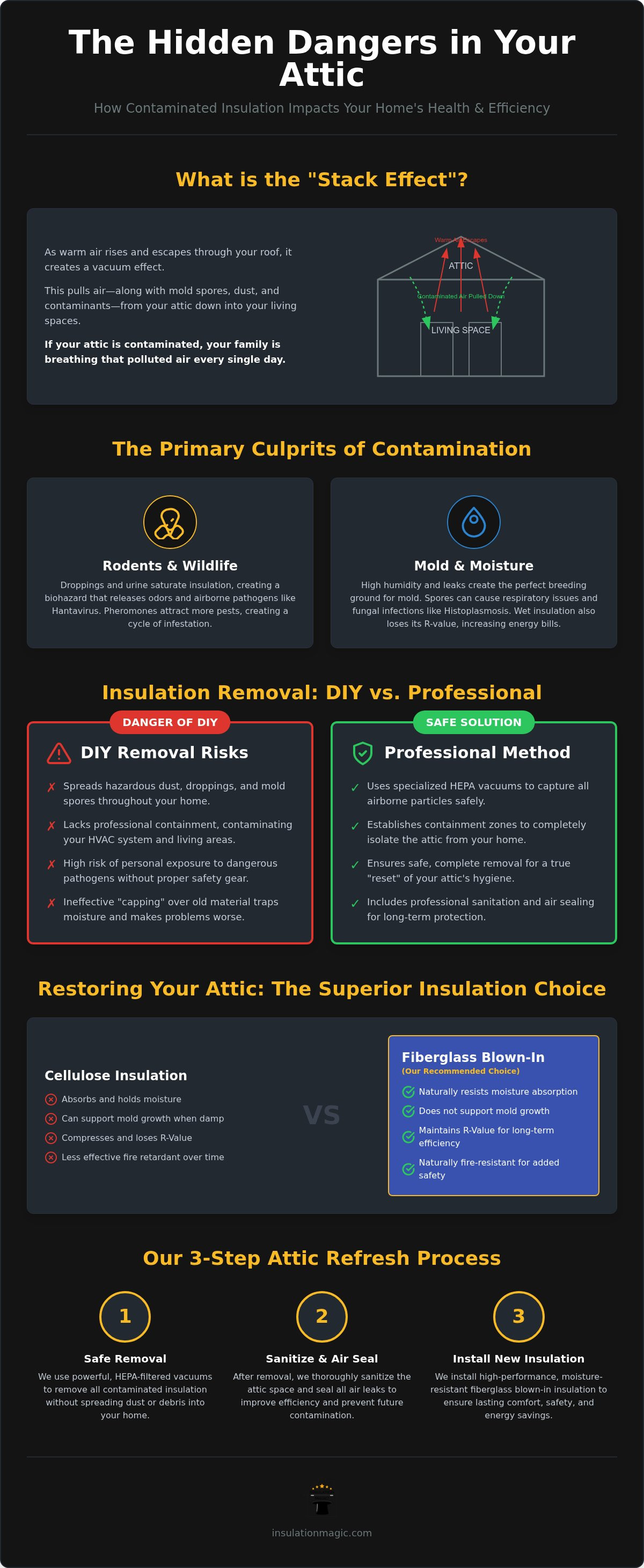
Contaminated insulation is material that has been compromised by external pollutants, biological waste, or excessive moisture. It's not just a matter of the material being old; it's a matter of the material becoming a vehicle for toxins. In our Charlotte area, many homeowners don't realize their attic acts like a giant vacuum. This is known as the "Stack Effect." As warm air rises and escapes through your roof, it creates a pressure difference that pulls air from your attic directly into your living rooms and bedrooms. If your insulation is full of rodent droppings or mold, that is the air your family is breathing every day.
The health implications of living with these pollutants are serious. Contaminated materials can release respiratory irritants and allergens that circulate through your vents. Beyond simple allergies, there are significant health risks of indoor mold and biological waste. Rodent droppings can carry Hantavirus, while certain mold spores can lead to Histoplasmosis, a fungal infection that affects the lungs. Because of these risks, professional contaminated attic insulation removal is the only way to stop the cycle of poor air quality in your home.
Some homeowners try to save time by "capping" their insulation, which means adding new material over the old. This is a dangerous and ineffective practice. Capping traps moisture and contaminants against your attic floor, essentially sealing in the rot and odors. It's like putting a clean bandage over an infected wound. A true restoration requires a total "reset" where the old material is completely gone before new, clean fiberglass blown-in insulation is installed.
Common Signs Your Attic Needs Professional Removal
You don't always have to climb into the rafters to know there's a problem. Watch for these red flags:
- Unexplained odors: You might notice a musty or "stale" smell that seems to get worse when your HVAC system is running.
- Pest evidence: If you see visible rodent droppings, nesting materials, or "tunnels" carved into the insulation, the material is already compromised.
- Health flares: Recurring allergy symptoms or respiratory issues among family members often point to attic contaminants being pulled into the home.
The Impact on Your Home's Energy Efficiency
When insulation becomes contaminated by moisture or pests, it loses its ability to keep your home comfortable. Rodents often trample and compress the material, while moisture causes it to clump together. This physical damage destroys the R-value, which is the measure of how well the material resists heat flow. In Matthews and Waxhaw, we often see this result in skyrocketing utility bills because the home can't hold its temperature. A thermal bypass is a gap or path that allows heat to move around the insulation entirely, often caused by matted or shifted material. Replacing this damaged debris with fresh fiberglass blown-in insulation ensures your home stays efficient and your air stays clean.
The Primary Culprits: Rodents, Mold, and Water Damage
Understanding what has compromised your attic is the first step toward fixing it. In our experience across the Charlotte region, three main factors usually necessitate professional contaminated attic insulation removal: pests, moisture, and time. When these elements collide, your insulation stops being a protective barrier and starts becoming a liability. Identifying the specific culprit helps us determine the best path for decontamination and restoration.
Rodents and Wildlife Contamination
In local neighborhoods like Weddington and Ballantyne, we often see attics that have become unintended shelters for squirrels, mice, and rats. These animals don't just nest; they leave behind urine and droppings that saturate the insulation. This creates a biohazard that simple trapping can't solve. The waste releases pheromones that actually attract more pests, creating a cycle of infestation. Removing the material is the only way to strip away the scents and waste that keep bringing wildlife back to your rafters.
Mold and Moisture Issues in the Charlotte Climate
Our North Carolina humidity is a constant challenge for attic health. When humid air enters a poorly ventilated space, it condenses and settles into the insulation. Wet insulation is the perfect environment for mold to thrive. It’s important to distinguish between simple household dust and active growth. If you suspect a problem, reviewing EPA mold cleanup guidelines can help you understand the scope of remediation. Left unchecked, moisture doesn't just ruin your insulation; it can lead to wood rot in your rafters and joists, compromising your home's structural integrity.
Beyond biological issues, roof leaks and simple aging play significant roles in attic degradation. When old cellulose or fiberglass gets wet, it loses its loft and clumps together. This physical change renders it useless for temperature control. Even without a leak, insulation eventually reaches the end of its lifespan, becoming brittle and matted over decades. We've found that the most common culprits include:
- Rodent waste: Urine-soaked material that carries bacteria and attracts more pests.
- Mold growth: A result of high humidity or poor ventilation that impacts air quality.
- Water saturation: Damage from roof leaks that destroys the material's R-value.
- Material fatigue: Aging fibers that have settled and no longer provide a thermal barrier.
If your attic feels like it's working against your comfort, you can book a thorough assessment to see if a fresh start is needed. We always recommend replacing these old, failed materials with clean, resilient fiberglass blown-in insulation to ensure your home stays protected and efficient for years to come.
Professional Insulation Removal vs. DIY: Assessing the Risks
It's understandable why some homeowners consider taking on attic cleanup themselves. You might see a rental vacuum and think it's a straightforward weekend project. However, the reality of contaminated attic insulation removal is far more complex than just sucking up old material. When you disturb insulation filled with rodent waste or mold, you're launching millions of microscopic particles into the air. Without professional containment, those contaminants don't stay in the attic; they drift down into your living spaces, settling on carpets and furniture.
The equipment makes the difference. A standard shop vac isn't built for this. It lacks the sophisticated filtration required to trap fine particulates, often exhausting the smallest, most dangerous spores right back out the tailpipe. We use industrial-grade, high-powered HEPA vacuums that create a vacuum-sealed path from your attic directly to our collection bags outside. This ensures that every bit of debris is removed without ever entering your home's air supply.
Safety is our baseline. Our team wears full-body Tyvek suits and P100 respirators to prevent any contact with hazardous materials. We also establish containment barriers to protect your home. Beyond the health risks, there are legal ones. Mecklenburg County has strict disposal regulations for biological waste. We handle all the logistics of transporting and disposing of the material according to local standards, so you don't have to worry about the "how" or "where."
The Hidden Dangers of DIY Removal
Safety isn't just about breathing; it's about physical protection. One of the most common DIY disasters is accidentally stepping through the drywall ceiling. It happens in a split second when you lose your balance on a joist. More importantly, DIYers often miss the final step: disinfection. Simply removing the material isn't enough. You have to treat the underlying surfaces to kill bacteria and neutralize pheromones left by pests.
Why Professional Expertise Matters
Our "Meticulous Craftsman" approach means we don't just clear the big piles. We vacuum every nook and cranny, ensuring a total reset for your home. During the contaminated attic insulation removal, we often find hidden issues like frayed electrical wires from rodent gnawing or structural damage from long-term leaks. We act as your eyes in the attic, identifying problems before they become emergencies. Once the space is clean, we recommend installing high-quality fiberglass blown-in insulation. It's a superior choice over cellulose because it doesn't settle as much and provides a cleaner, more resilient thermal barrier. You can read our reviews to see how we've helped other families restore their homes with care and precision.
Our Step-by-Step Removal and Decontamination Process
Restoring an attic to a healthy state is a methodical journey that requires more than just a quick cleanup. We view every contaminated attic insulation removal as a complete restoration project. Our goal is to provide a total reset for your home, ensuring that every trace of past issues is gone before we introduce new, high-performance materials. We follow a disciplined five-step sequence designed to protect your family and maximize your home's long-term energy efficiency.
The process begins with meticulous preparation. We establish a clear path of travel from your attic hatch to our equipment outside, ensuring your flooring and furniture remain untouched. Once the space is secured, we use high-volume industrial vacuums to remove every ounce of loose-fill or batt material. This isn't a surface-level sweep; it's a deep clean that reaches into the furthest corners of your rafters. After the bulk material is gone, we focus on the fine details, vacuuming the attic floor and joists to remove dust, allergens, and debris.
Containment and Protection
We take containment seriously because your living space should never be a part of the construction zone. Our team uses heavy-duty plastic sheeting to seal off the work area and employs negative air pressure to ensure that any airborne particles are pulled outside, not into your hallways. By creating this controlled environment, we can work thoroughly without compromising the air quality in your bedrooms or kitchen. We treat your property with the same care we'd give our own homes, ensuring a clean transit for all old, contaminated debris.
Once the attic is physically clear, we move into the sanitization phase. We apply hospital-grade disinfectants to the attic floor and joists to neutralize odors and eliminate pathogens left behind by pests or mold. Following this, we perform professional home air sealing to close the "invisible leaks" that allow conditioned air to escape. This is a critical step that many general contractors skip, but it's essential for stopping the stack effect we discussed earlier.
Sanitization and Air Sealing
Our air sealing focus is on the small gaps that lead to big energy losses. We meticulously seal top plates, wire penetrations, and plumbing stacks where air frequently bypasses your insulation. You can explore our services to learn more about the specific techniques we use to stop these drafts. This careful work ensures that your new insulation can do its job effectively without being undermined by moving air currents.
The final step is a comprehensive inspection to verify that the attic is clean, disinfected, and properly sealed. Only then do we proceed with the installation of fresh, fiberglass blown-in insulation. We prefer fiberglass because it's non-toxic, doesn't settle like cellulose, and provides a superior thermal barrier for our North Carolina climate. This disciplined approach guarantees your attic isn't just full of material, but is a clean, efficient component of a healthy home.
Restoring Your Attic: Why Blown-In Fiberglass is the Superior Choice
After the contaminated attic insulation removal is complete and your attic floor is disinfected, you have a unique opportunity. This is the moment to choose a material that won't just sit there, but will actively protect your home's air quality and efficiency. We consistently recommend fiberglass blown-in insulation for our clients in Charlotte and the surrounding areas. While some contractors still push cellulose, we've seen firsthand how fiberglass outperforms other materials in our humid North Carolina climate. Achieving an R-value between R-49 and R-60 is our standard for local homes, providing the thermal resistance needed to handle our sweltering summers and chilly winters.
Fiberglass is an inorganic material, meaning it doesn't absorb moisture or rot. This is a critical advantage over cellulose, which is essentially recycled paper treated with chemicals. In a humid environment, cellulose can become a damp blanket that promotes the very mold issues you just worked so hard to remove. Fiberglass also maintains its loft. It doesn't settle over the years, so the thermal barrier we install today will still be working just as hard a decade from now. It provides a clean, predictable performance that gives homeowners long-term peace of mind.
You won't find us installing spray foam. We've made a firm promise to avoid it because we believe in safer, more reliable solutions. Spray foam is a permanent chemical application that can trap moisture against your roof deck and hide structural issues or leaks until they become massive problems. By sticking with non-toxic fiberglass and meticulous air sealing, we ensure your home remains healthy, breathable, and easy to maintain. It's a craft-focused approach that prioritizes the integrity of your property above all else.
The Benefits of Blown-In Fiberglass
One of the most reassuring aspects of fiberglass is its natural fire resistance. It's made from sand and recycled glass, so it doesn't require the heavy load of chemical flame retardants that cellulose depends on to stay safe. It also provides a much less hospitable environment for pests. Because fiberglass is composed of inorganic spun glass, it lacks the nesting appeal and organic food-source potential found in materials like cellulose. This choice helps ensure your attic stays as clean as the day we finished the restoration.
Final Steps to a Comfortable Home
A successful "Attic Refresh" isn't complete without looking at the bigger picture. We ensure your space has proper attic ventilation by installing baffles or attic fans where needed. This keeps air moving and prevents the heat buildup that can bake your shingles and drive up cooling costs. In areas like Charlotte and Waxhaw, the long-term ROI of a full restoration is significant. You'll see it in your lower utility bills and feel it in the consistent temperatures throughout your home.
Ready for a clean slate? Book your online assessment here.
Reclaiming Your Home’s Health and Comfort
Your attic should be a silent protector of your family's comfort, not a source of persistent worry. By addressing the signs of pests or moisture early, you're taking a vital step toward a cleaner, more efficient living environment. A professional contaminated attic insulation removal provides the necessary reset to clear out allergens and restore your home's thermal barrier. It's about more than just cleanup; it's about reclaiming your peace of mind and protecting the air your family breathes every day.
Our team brings local Charlotte expertise and a meticulous, HEPA-certified removal process to every project we handle in Matthews and Waxhaw. We specialize in replacing compromised materials with premium fiberglass blown-in insulation, ensuring your home stays resilient against humidity and pests for decades. You don't have to live with foul odors or high energy bills anymore. We're dedicated to helping you achieve a clean, well-insulated space that protects your property's long-term value.
Take the first step toward a healthier home and lower utility bills today. We're here to guide you through every stage of the restoration with the care and precision your property deserves. You can trust us to treat your home like our own.
Frequently Asked Questions
Is it safe to stay in the house during contaminated insulation removal?
Yes, you can safely remain in your home while we work. We use heavy duty plastic sheeting and industrial HEPA vacuums to create negative air pressure in the workspace. This setup ensures that dust and contaminants are pulled directly outside through a sealed hose rather than into your living areas. Our team establishes a strict path of travel to protect your hallways and bedrooms, allowing you to go about your day with total peace of mind.
How much does professional attic insulation removal cost in Charlotte?
The cost for this service depends on several factors, including the square footage of your attic and the severity of the contamination. Projects involving mold or rodent waste require specialized disposal protocols and protective equipment that differ from a standard cleanup. We focus on providing a thorough restoration that delivers long term value by protecting your family's health and improving energy efficiency. We provide detailed assessments to help you understand the specific needs of your property.
Can I just vacuum up rodent droppings myself and leave the insulation?
Simply vacuuming surface droppings is ineffective because rodent waste is rarely just on top. Urine and pheromones soak deep into the insulation fibers, creating a persistent biohazard that continues to attract pests and degrade your air quality. A complete contaminated attic insulation removal is the only way to ensure all biological triggers are gone. We then disinfect the attic floor to provide a truly clean slate for your home’s environment.
How long does the removal and replacement process typically take?
Most attic restoration projects are completed within one to two business days. The first day is usually dedicated to the meticulous removal of old material and a deep sanitization of the space. Once the attic is clean and air sealed, we install the new fiberglass blown-in insulation. We work efficiently to minimize disruption to your schedule while maintaining the high standards of a craftsman throughout every stage of the project.
Will removing old insulation help get rid of the smell in my house?
Yes, removing the source of the odor is the most effective way to freshen your home. Musty smells from mold or rodent waste are often pulled into your living spaces by the stack effect. By removing the saturated material and applying hospital grade disinfectants to the joists and attic floor, we neutralize those odors at their source. This process restores a clean, neutral scent and significantly improves your indoor air quality.
What happens if you find mold during the insulation removal process?
If we discover mold, we immediately pause to assess the extent of the growth on your attic surfaces. Small areas can often be treated with our specialized sanitization process during the removal. If the growth is extensive or indicates a structural leak, we’ll walk you through the necessary next steps. Our goal is to ensure the space is completely healthy and dry before any new fiberglass material is installed in your home.
Why do you recommend fiberglass instead of cellulose for replacement?
We recommend fiberglass because it is naturally moisture resistant and won't settle over time. Unlike cellulose, which is made of organic paper and can trap humidity, fiberglass remains dry and maintains its full R-value for decades. It's also naturally fire resistant without the heavy chemical additives found in cellulose. This makes it a cleaner, safer, and more durable choice for the specific humidity challenges we face in the Charlotte and Waxhaw areas.
Can contaminated insulation cause damage to my HVAC system?
Contaminated material can definitely impact your HVAC system's performance and longevity. Dust, rodent hair, and mold spores from the attic can be drawn into leaky return ducts and circulated through your entire home. This buildup forces your system to work harder and can clog sensitive components over time. Performing a professional contaminated attic insulation removal helps protect your mechanical systems by ensuring the air surrounding your equipment is clean and debris free.
Disclaimer
This blog is intended to provide general information about insulation, energy efficiency, and home comfort based on years of experience. While we strive to keep content accurate and up to date, results may vary based on your home's construction, condition, and climate. Contact Insulation Magic for a personalized assessment and recommendations.


