
Your freezing floors aren't actually a flooring problem; they're a symptom of a much larger issue involving your home's thermal envelope. It's incredibly frustrating to crank up the thermostat during a North Carolina winter only to find yourself wearing thick socks just to walk across the kitchen. You're likely dealing with high utility bills and annoying drafts at ankle level, yet the house never feels truly warm. Understanding the specific cold floors in winter causes is the first step toward reclaiming your living space and your peace of mind.
I've spent years as a meticulous craftsman helping homeowners identify the invisible air leaks that turn floors into ice blocks. In this guide, you'll discover exactly why your home's heat is escaping and how a professional approach to air sealing and fiberglass blown-in insulation can fix it. We'll explore the science behind the stack effect and why we consistently recommend fiberglass over cellulose for superior performance in 2026. By the end, you'll have a clear, expert-backed plan to achieve a warm, draft-free home and lower your monthly energy costs for good.
Key Takeaways
- Learn how the stack effect pulls freezing air into your home and why identifying these cold floors in winter causes is the first step to staying warm.
- Discover why a bald attic is often the real reason your feet are cold and why fiberglass blown-in insulation is the superior choice for performance in 2026.
- Understand how uninsulated crawlspaces and rim joists act like a refrigerator under your living room, letting drafts sneak in at ankle level.
- Find out how to spot hidden insulation gaps using the Socks Test or by checking for dark dust patterns, known as ghosting, near your baseboards.
- See why meticulous air sealing is the essential first step before installing new materials to ensure your home's thermal envelope is fully restored.
Why Your Floors Feel Like Ice: The Science of Winter Heat Loss
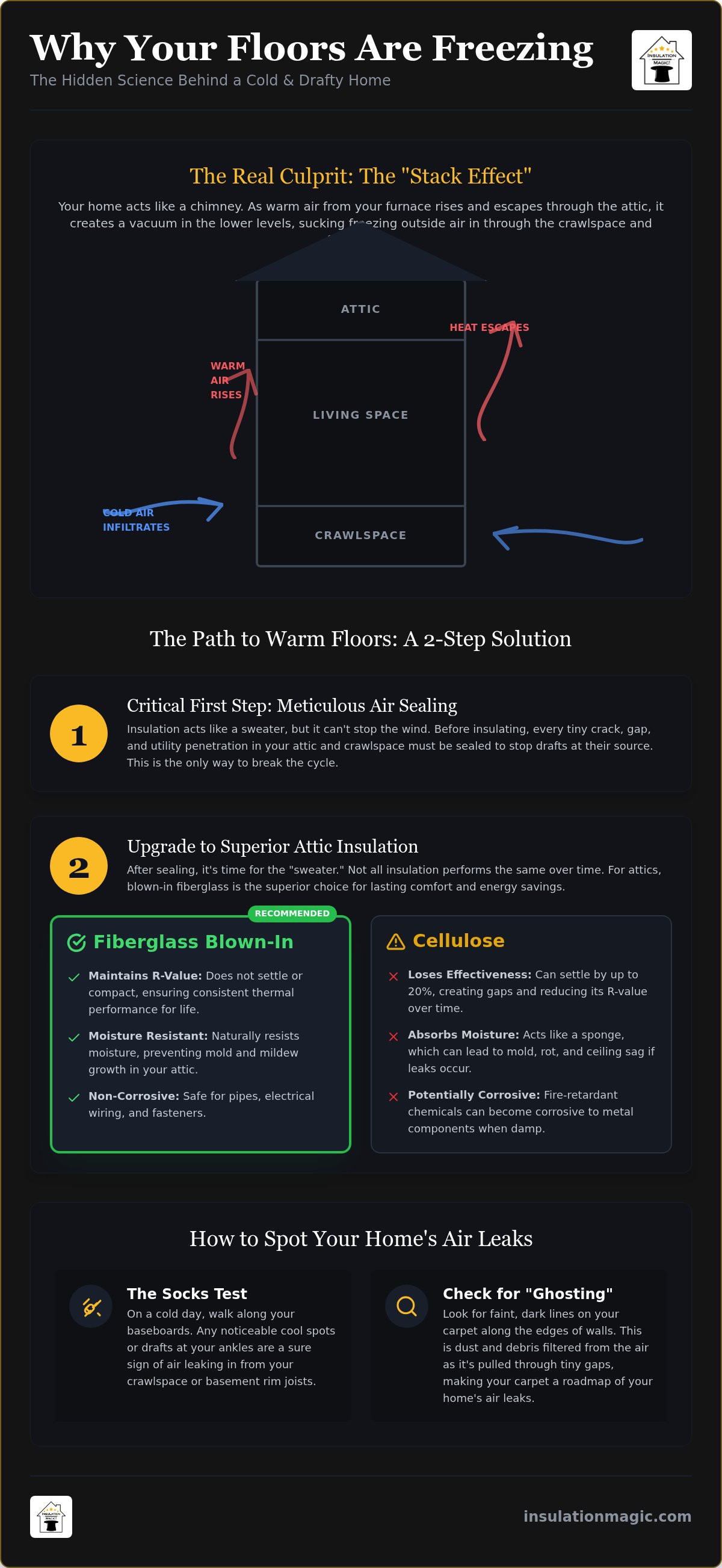
It is more than just a minor annoyance; it is a sign your home’s protective barrier is failing. When we talk about cold floors in winter causes, we are really talking about the movement of energy. Your home is a living system, and right now, that system is struggling to keep heat where it belongs. Most homeowners assume the cold is just seeping through the floorboards, but in reality, your house is likely acting like a giant chimney. This process is known as the "Stack Effect," and it is the primary reason your feet stay frozen while your upstairs might feel stuffy.
Beyond the simple rise of heat, you may be dealing with convective loops. These occur when air within a wall cavity or crawlspace is heated on one side and cooled on the other, creating a rotating current that constantly strips heat away from your interior surfaces. It is a methodical, relentless process that turns your living room floor into a heat sink. Understanding these physics helps us move past temporary fixes like area rugs and toward permanent, professional solutions.
The Vacuum Effect: How Your Home Breathes
Warm air is naturally lighter and less dense than cold air. As your furnace runs, that warm air rises toward your ceiling and eventually escapes through unsealed gaps in your attic. This creates a vacuum in the lower levels of your home. To fill that void, the house "inhales" freezing air from the outside through rim joists, floor vents, and gaps in the crawlspace. This constant intake of outdoor air is one of the most common cold floors in winter causes we see in North Carolina homes.
This is why turning up the thermostat often backfires. The more heat you pump into the house, the faster it rises and escapes through the roof. This actually increases the suction pulling cold air across your floors. It is a cycle that wastes energy and leaves you shivering at ankle level despite your high utility bills.
Thermal Bridging and Your Flooring Material
Not all materials handle this cold the same way. Hardwood and tile have high thermal conductivity, which means they are very efficient at stealing heat from your skin. Carpet acts as a minor insulator, but if the subfloor underneath is uninsulated, even the thickest rug won’t stop the chill. We often distinguish between "surface cold" and "structural cold." Surface cold is what you feel on a chilly morning, but structural cold happens when your subfloor becomes a "thermal bridge."
This bridge allows the Charlotte winter air to bypass your walls and move directly into your living space. Without proper crawlspace insulation and air sealing, your floor essentially becomes an extension of the outdoors. By addressing the root cause of this bridge, we can stop the heat transfer and restore comfort to your home.
The Crawlspace Culprit: How Uninsulated Voids Chill Your Living Space
If you have ever felt like you are walking on top of a giant refrigerator, you are likely experiencing the direct effects of an uninsulated crawlspace. In many North Carolina homes, the area beneath your feet is a dark, damp, and freezing void that acts as a staging ground for winter drafts. While we have already established how the stack effect pulls air upward, the crawlspace is the primary reservoir of that cold air. When this space is left unprotected, your floorboards become the only thing separating your warm living room from the 30 degree Charlotte nights.
This is a major contributor to the list of cold floors in winter causes. It isn't just about the temperature of the air; it's about how that air interacts with your home's structure. Moisture in the crawlspace can actually make your floors feel even colder. Damp air has a higher heat capacity than dry air, meaning it "steals" heat from your home's subfloor much faster than a dry environment would. This creates a bone-chilling sensation that no amount of thermostat cranking can truly solve.
The Problem with Vented Crawlspaces in North Carolina
Traditional vented crawlspaces were once the standard in towns like Matthews and Waxhaw, but they are often a liability in 2026. These vents allow heavy, cold air to settle into the low points of your home. As the air cools, it permeates the wooden subfloor and joists. This creates a constant thermal drain. If your crawlspace is vented, you are essentially inviting the winter inside and asking your flooring to do the impossible job of keeping it out. For many, upgrading to professional crawlspace insulation Charlotte NC is the only way to break this cycle.
Rim Joists and Foundation Leaks
The rim joist is the perimeter where your home's wooden frame meets the concrete foundation. It is a major highway for air infiltration. In older homes, we often see fiberglass batts stuffed into these gaps. Over time, gravity and moisture cause these batts to sag and pull away from the wood. This creates "invisible" gaps that let freezing air bypass your walls entirely. A meticulous craftsman knows that simply adding more material isn't enough. You need professional air sealing at these perimeter points to stop the drafts at their source.
If you're tired of wearing two pairs of socks just to walk to the kitchen, it may be time for a professional assessment. You can schedule a detailed crawlspace evaluation to see exactly where your home is losing its vital heat.
The Attic Connection: Why Your Roof Affects Your Feet
It might seem backwards to look at your roof when your toes are freezing, but your attic is often the engine driving the thermal discomfort in your living room. A "bald" or under-insulated attic acts like a chimney that never closes. As your furnace works to warm your home, that expensive heat rises and escapes through your roof. This process, which we've identified as the stack effect, creates a powerful upward draw. If you're investigating cold floors in winter causes, understand that heat hemorrhaging through your attic is what creates the suction that pulls freezing air across your floors. By stopping the escape at the top, you significantly reduce the draft at the bottom.
Fiberglass Blown-In: The Superior Attic Choice
We consistently recommend fiberglass blown-in insulation over cellulose for attic applications in 2026. Fiberglass is a stable, long-term solution that doesn't suffer from the significant settling issues common with cellulose. When cellulose settles, it loses its R-value, leaving your home vulnerable to the very heat loss we're trying to prevent. Fiberglass also resists moisture and fire naturally, avoiding the heavy chemical additives required for paper-based products. It's a cleaner, more reliable way to protect your home's thermal envelope and ensure your investment lasts for decades.
The Critical Role of Air Sealing
Adding new insulation without performing meticulous home air sealing is like wearing a thick wool sweater on a windy day without a windbreaker. The air will simply move right through the insulation fibers. As a meticulous craftsman, I look for hidden bypasses in your attic floor that most people miss. These include plumbing stacks, wiring holes, and the top plates of your walls. These are invisible highways for air leakage.
By sealing these leaks with precision, we stop the upward pull of air before we ever blow in the first bag of fiberglass. This dual approach ensures your home's thermal envelope is fully restored. It's the only way to stop the cycle of rising heat and sinking cold. When we address these underlying issues, we don't just fix your attic; we transform the comfort level of every room in your house, finally putting an end to the drafts that make your floors feel like ice.
Assessing the Damage: Signs Your Cold Floors Need Professional Intervention
If you're wondering whether your home is just "old" or if there is a serious underlying problem, it's time to look for specific evidence. Identifying cold floors in winter causes often starts with a few simple observations around your living space. The first is what we call the "Socks Test." If you find that two pairs of wool socks aren't enough to keep your feet comfortable, you aren't just dealing with a cold surface. You're likely standing over an insulation gap or a major air leak that requires a professional's eye.
Another subtle but telling sign is "ghosting." This appears as dark, streaky dust patterns on your carpet near baseboards or under doors. These aren't just dirt stains; they are filtration lines where your house is literally sucking air through the floor or walls, and the carpet is acting as a filter for the dust. You should also check your kitchen and bathroom cabinets. If the inside of an exterior-wall cabinet feels like a freezer, or if your pipes freeze during a standard Charlotte cold snap, your home's thermal envelope is compromised.
Watch your thermostat as well. If your HVAC system cycles on and off every few minutes, it is struggling to keep up with rapid heat loss. According to ENERGY STAR, the average American home loses 25 to 40 percent of its conditioned air through the attic. This constant cycling is a loud signal that your home is failing to hold onto the energy you're paying for, leading to those high utility bills without the benefit of a warm environment.
Visual Cues in the Attic and Crawlspace
When you look in the crawlspace or attic, keep an eye out for compressed insulation or signs of rodent activity. Pests love to nest in old material, which ruins its thermal properties. You might also see visible gaps in the rim joist or even daylight peeking through the attic floor. Water stains or mold growth are also major red flags. These indicate that warm, moist air from your home is meeting cold air, leading to condensation and potential structural damage that requires immediate attention.
When Quick Fixes Are Not Enough
Rugs and slippers are fine for comfort, but they don't fix a drafty room. There is a financial tipping point where professional upgrades become the logical choice. The EPA estimates that homeowners can save an average of 15 percent on heating and cooling costs by air sealing and insulating. DIY attempts often fail because they skip the air sealing step, which is the most critical part of the process. Without sealing the "invisible" leaks we've discussed, new insulation is only half a fix.
Restoring Home Comfort: The Insulation Magic! Approach to Warmer Floors
We have spent this guide exploring the science behind your home's thermal failures, from the vacuum created by the stack effect to the refrigerator-like conditions in your crawlspace. Now that you understand the cold floors in winter causes affecting your Charlotte home, it is time to focus on the methodical restoration of your comfort. At Insulation Magic!, we don't believe in quick fixes or generic "one-size-fits-all" applications. We approach every project as meticulous craftsmen, treating your property with the same level of care and precision we would apply to our own homes.
The first step in our process is often clearing the path for success. If your existing insulation is compressed, rodent-infested, or simply outdated, it acts as a mask that hides the very air leaks we need to fix. This is why we prioritize insulation removal Charlotte as a prerequisite for a truly high-performing home. By starting with a clean slate, we can identify every hidden bypass and structural gap that has been letting the winter chill inside. We also stand firm in our commitment to a healthier home environment, which is why we avoid spray foam in favor of safer, more breathable solutions that protect your indoor air quality.
Our Precision Installation Process
Once the old material is gone, the real craftsmanship begins. We spend significant time on professional air sealing, using high-quality materials to plug the "invisible" leaks in your attic and crawlspace. Only after your home is properly sealed do we install our preferred fiberglass blown-in insulation. We consistently recommend fiberglass over cellulose because it maintains its R-value without the heavy settling or moisture retention issues common with paper-based products. We ensure your home hits the ideal R-value targets for the North Carolina climate while keeping your attic ventilation perfectly clear to prevent moisture buildup throughout the year.
Your Next Steps to a Warmer Winter
You don't have to live with frozen toes and high energy bills in 2026. We've helped many of your neighbors in the Charlotte metro area reclaim their home comfort through this methodical, educator-led approach. If you're looking for local proof of our dedication to quality, we encourage you to browse our customer reviews and see the results for yourself. When you're ready to stop the drafts at their source, our online booking system makes it easy to schedule a thorough assessment. Let's work together to build a more efficient, comfortable, and protected home for your family.
Reclaiming Your Warmth and Comfort
Your home should be a sanctuary of warmth; it shouldn't be a place where you have to avoid the kitchen floor. We've explored how the stack effect and uninsulated crawlspaces work together to pull heat out and let the chill in. By addressing these cold floors in winter causes through meticulous air sealing and high-performance fiberglass blown-in insulation, you can finally stabilize your indoor temperatures and lower your monthly bills.
We take immense pride in our craftsmanship across Charlotte, Waxhaw, and Matthews. Our process ensures that every invisible leak is sealed before we add a single layer of protection. This methodical approach doesn't just fix a surface-level problem; it restores the peace of mind that comes with a truly comfortable environment. You don't have to settle for drafts and freezing feet in 2026.
Take the first step toward a cozier winter and a more efficient house. We're here to guide you through every stage of the process with transparency and care.
Frequently Asked Questions
Why is my floor so cold even though I have carpet?
Carpet acts as a minor thermal buffer, but it cannot stop the physical movement of air underneath your feet. If your subfloor is freezing, the carpet fibers will eventually reach that same temperature. The primary cold floors in winter causes often involve air being pulled through gaps in your home's foundation or rim joists. Without proper crawlspace insulation and air sealing, your carpet is simply sitting on top of a structure that constantly drains heat.
Can cold floors be caused by a bad crawlspace?
A poorly managed crawlspace is one of the most significant contributors to chilly flooring. When vents remain open during a Charlotte winter, freezing air settles under your home and permeates the wooden floor joists. This creates a thermal bridge where the cold bypasses your walls entirely. Professional crawlspace insulation and sealing the perimeter rim joists are essential steps to stop this refrigeration effect and protect the temperature of your living area throughout the season.
Does attic insulation really help with cold floors on the first floor?
It sounds counterintuitive, but your attic is a major factor in how your first floor feels. Because warm air naturally rises, it escapes through unsealed gaps in your attic floor. This creates a vacuum that pulls cold air in through the lowest points of your home, including your floorboards. By sealing the attic and installing fiberglass blown-in insulation, you stop this upward pull, which effectively reduces the drafts felt at ankle level downstairs.
Is fiberglass blown-in insulation better than cellulose for cold floors?
We consistently recommend fiberglass blown-in insulation because it offers superior long-term stability in the North Carolina climate. Unlike cellulose, which is made of paper and tends to settle and lose its R-value over time, fiberglass remains consistent. It also handles moisture better and doesn't require the heavy chemical fire retardants found in cellulose products. For homeowners looking for a permanent solution to cold floors, fiberglass provides the most reliable thermal barrier available for your home in 2026.
How much does it cost to fix cold floors in Charlotte, NC?
The total investment for fixing cold floors depends on the size of your home and the specific issues found during a professional assessment. While we don't provide flat-rate pricing without seeing the property, homeowners should consider the long-term energy savings. The EPA estimates that proper air sealing and insulation can save an average of 15 percent on heating and cooling costs. These upgrades often pay for themselves through significantly reduced utility bills over several years.
Will air sealing my home make a noticeable difference in floor temperature?
Air sealing is the most critical step because insulation alone cannot stop moving air. If you add insulation without sealing the underlying gaps, you are essentially just filtering the cold drafts rather than stopping them. Professional air sealing closes the invisible holes around plumbing, wiring, and top plates. This creates a continuous thermal envelope that keeps your expensive heated air inside and prevents the freezing outdoor air from rushing across your floors.
Can I just put rugs down to fix the problem?
Rugs are a temporary comfort measure, but they are not a structural solution. While a thick rug might feel softer, it does nothing to address the cold floors in winter causes like air infiltration or the stack effect. You will still experience high utility bills and uneven temperatures between rooms. To truly fix the problem, you must address the home's thermal envelope through professional crawlspace and attic upgrades rather than simply covering up the symptoms.
What is the best way to insulate a crawlspace to prevent cold floors?
The most effective approach involves a combination of meticulous air sealing and high-quality insulation. We focus on sealing the rim joists and foundation gaps where the most significant air leakage occurs. Following this, we install professional crawlspace insulation to create a thermal break. In many Charlotte homes, a full crawlspace encapsulation is the gold standard, as it manages both temperature and moisture, ensuring your floors stay dry and warm regardless of the weather.
Disclaimer
This blog is intended to provide general information about insulation, energy efficiency, and home comfort based on years of experience. While we strive to keep content accurate and up to date, results may vary based on your home's construction, condition, and climate. Contact Insulation Magic for a personalized assessment and recommendations.


