Imagine sitting in your living room on a humid North Carolina afternoon, feeling the heat radiate through your walls while your air conditioner works overtime. It's a frustratingly common scenario, especially since heating and cooling account for roughly 55% of a home's energy usage. Many homeowners believe the only way to fix these drafty rooms and high utility bills is through a messy, expensive remodel. However, retrofit wall insulation provides a surgical, non-invasive alternative that restores your home's comfort without the destruction.
We understand that your home is your sanctuary, and the thought of a chaotic construction project is understandably stressful. You deserve a space that stays quiet and temperature-consistent, especially as electricity prices saw a 7% increase in early 2026. This guide explains the meticulous "drill-and-fill" process and how safe, non-foam materials protect your property. We'll also discuss how to leverage the 30% federal tax credit and why we prioritize fiberglass blown-in over cellulose for attic applications, ensuring you have the knowledge to make a wise, long-term investment in your comfort.
Key Takeaways
- Discover why many homes lack adequate thermal protection and how you can identify hidden energy loss in your existing walls.
- Learn about the "drill-and-fill" technique, a surgical method for retrofit wall insulation that improves comfort without the mess of a full remodel.
- Understand why we recommend safe, non-foam solutions and why fiberglass blown-in is the superior choice over cellulose for attic applications.
- Explore how to maximize your financial return by combining lower monthly bills with the 30% federal tax credit and local North Carolina rebates.
- Gain peace of mind by following a step-by-step guide that prioritizes the protection of your home's interior and your family's comfort.
Understanding Retrofit Wall Insulation: Is Your Home Losing Energy Through the Walls?
Retrofit wall insulation is the process of adding thermal protection to existing, closed wall cavities. Specialist consultancies like Madison May Consulting Ltd play a key role in helping property owners identify the most effective ways to improve energy efficiency through these types of targeted upgrades. Think of it as a surgical upgrade that fills the gaps in your home's defense without requiring you to tear down a single sheet of drywall. In many Charlotte neighborhoods, homes built before modern energy codes were established often have empty wall cavities. Over time, even homes that were once insulated might suffer from materials that have settled or degraded, leaving large sections of your walls completely unprotected.
This protection is vital for maintaining your home's "thermal envelope." This envelope acts as a barrier between your comfortable, air-conditioned interior and the unpredictable North Carolina weather. When this barrier is weak, your home loses its ability to regulate temperature efficiently. This is the root cause of the "hot second floor" syndrome. Heat doesn't just rise through the floorboards; it migrates through uninsulated exterior walls, turning upstairs bedrooms into uncomfortable heat traps during the summer months. Deciding to invest in retrofit wall insulation is a step toward reclaiming every square foot of your home.
5 Telltale Signs Your Interior Walls Need Professional Help
Identifying a lack of insulation doesn't always require specialized tools. You can often feel the symptoms of a compromised thermal envelope just by walking through your house. Look for these common indicators:
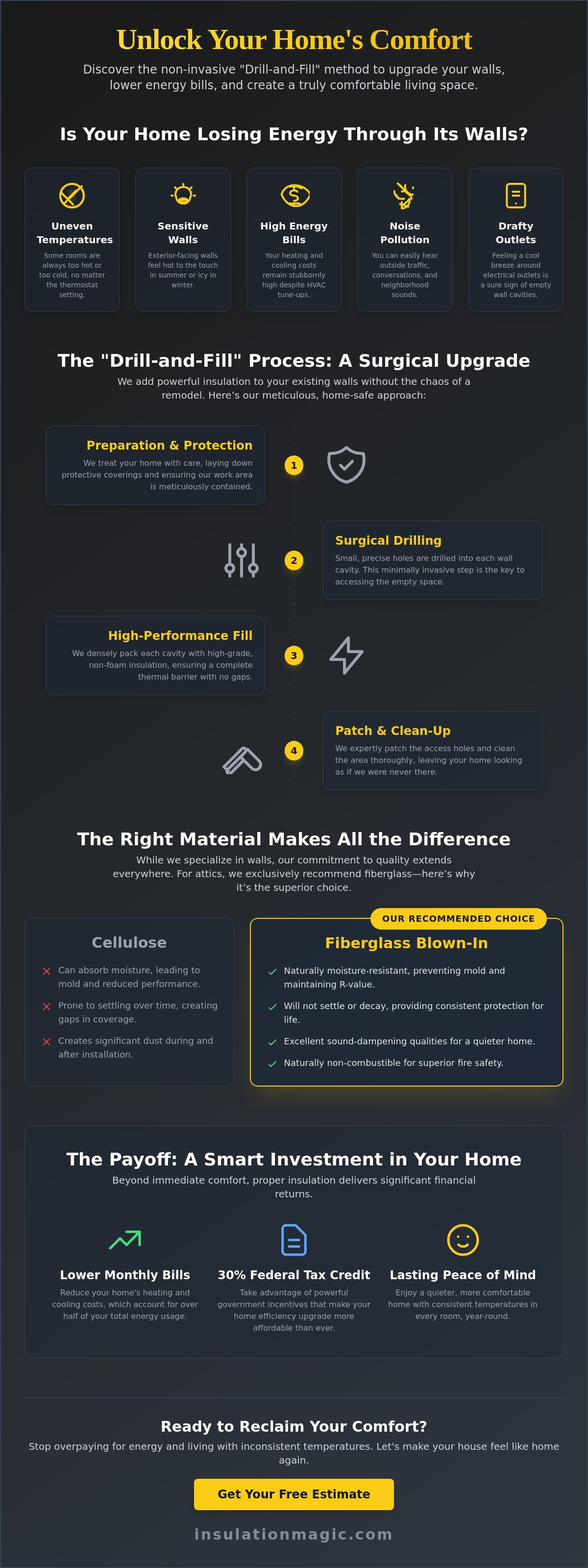
- Uneven temperatures: Some rooms feel perfect while others stay stubbornly hot or cold regardless of the thermostat setting.
- Temperature-sensitive walls: Your interior drywall feels noticeably hot to the touch in July or icy in January.
- Persistent high bills: Your energy costs remain high even after you've serviced your HVAC system or replaced windows.
- Noise pollution: You can clearly hear sirens, lawnmowers, or neighbor conversations through your exterior walls.
- Drafty outlets: Air movement around electrical sockets often signals that the wall cavity behind them is empty.
The Charlotte Climate Challenge: Heat and Humidity
Living in the Piedmont region presents specific environmental hurdles. Our high humidity levels can cause certain aging types of insulation material to lose their effectiveness. When moisture interacts with old, settled materials, their ability to resist heat flow drops significantly. This is why a meticulous approach to material selection is so important for local homeowners.
Solar gain is another factor that hits Charlotte homes hard. Uninsulated southern-facing walls absorb intense sunlight all day. They act like thermal batteries, slowly releasing that stored heat into your living spaces long after the sun has gone down. To solve this, we often recommend pairing retrofit wall insulation with professional air sealing. This combination ensures we aren't just slowing down heat transfer, but also stopping humid air from leaking through the gaps in your home's structure. While we focus on wall solutions here, we bring this same dedication to quality to our attic services, where we always recommend fiberglass blown-in over cellulose for superior longevity and performance.
The Drill-and-Fill Process: How Professionals Insulate Walls Without a Remodel
Many homeowners hesitate to upgrade their home's efficiency because they assume it requires gutting the walls. This is a common misconception that often prevents families from taking steps to reduce your energy bills. In reality, the industry standard for non-invasive retrofitting is a method known as "drill-and-fill." It's a surgical, highly controlled process that allows us to add thermal protection to your home without the chaos of a traditional remodel.
Our approach is rooted in the philosophy of the meticulous craftsman. We treat your property with the same care we would give our own, ensuring every step is performed with precision. This methodical sequence isn't just about efficiency; it's about protecting the integrity of your home's structure and your personal environment. While we use specialized techniques for wall cavities, we always maintain our commitment to quality by recommending fiberglass blown-in over cellulose for attic applications to ensure long-term performance and moisture resistance.
Step 1: Strategic Access Points
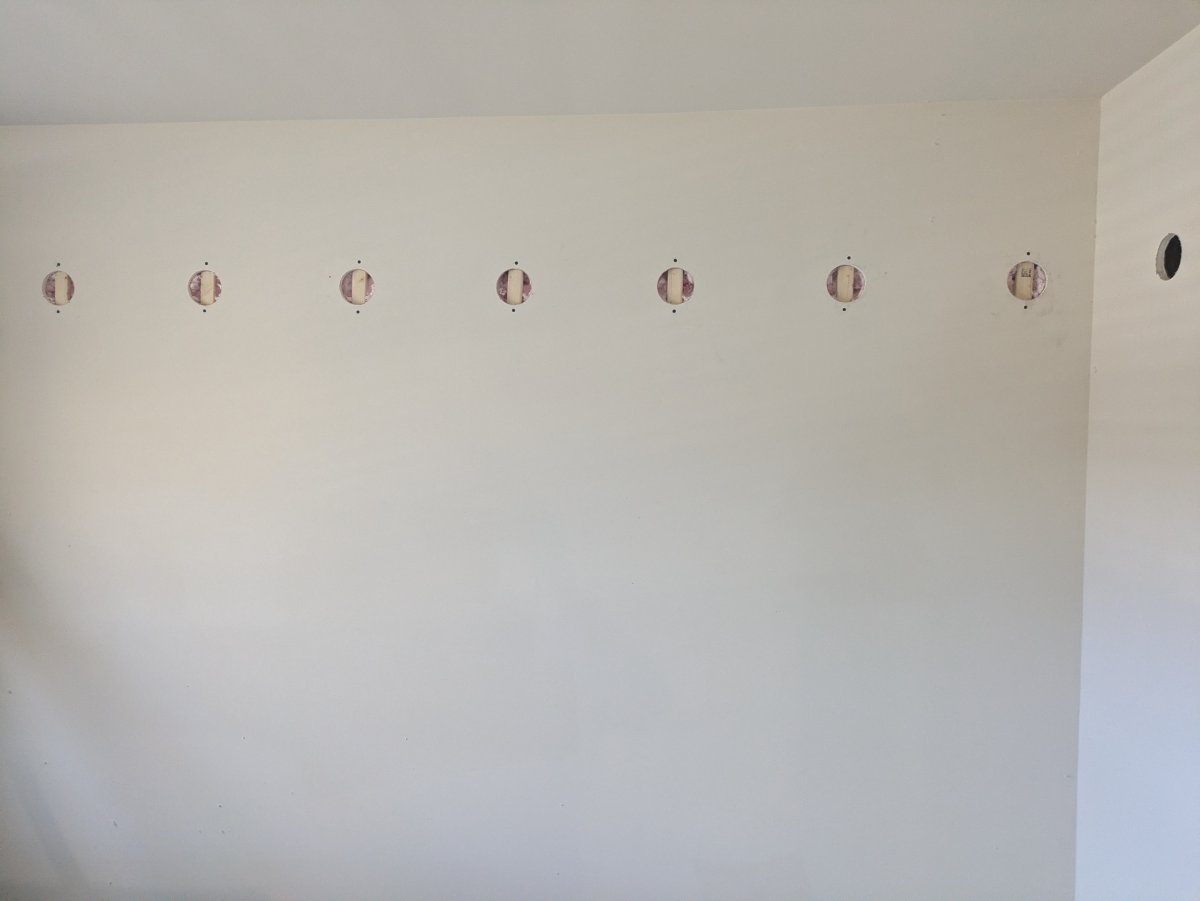
The process begins by identifying the vertical studs within your walls. We use professional-grade sensors to map out every cavity, ensuring no section is overlooked. Depending on your home's construction, we choose between exterior access by carefully moving siding or interior access through small, 1-to-2 inch holes at the top of each stud bay. We use specialized tools to navigate around existing electrical outlets and plumbing, ensuring the work is thorough yet safe. If you're curious about how this would look in your home, you can schedule a professional assessment online to discuss your specific layout.
Step 2: The Injection Process
Once access is established, we use a flexible hose to guide the insulation material directly into the wall cavity. Our technicians start at the bottom and work their way up to ensure a complete fill. We utilize a "dense pack" technique during this stage. Dense packing is a method used to achieve maximum R-value and air-flow reduction by compressing the material within the cavity. This prevents the insulation from settling over time, which is a common failure point in older, poorly installed systems.
Step 3: Professional Patching and Finishing
The final stage is where our "clean site" promise really shines. After the cavities are filled, we plug the access holes with tapered foam or wood plugs that fit perfectly into the openings. We then apply a meticulous finish of spackling and sanding to make the surface smooth and ready for paint. While we handle the structural patching, homeowners typically perform the final paint matching. This ensures the color is a perfect blend with the rest of the room, leaving your home as tidy and beautiful as it was when we arrived.
Choosing the Right Material: Why We Prioritize Safe, Non-Foam Solutions
At Insulation Magic!, our philosophy is centered on providing high-quality results without the use of spray foam or injection foams. While some companies push foam as a miracle cure, we prioritize the long-term health of your home's structure. We believe that retrofit wall insulation should be a safe, predictable upgrade that doesn't introduce unnecessary chemicals into your living environment. Our focus remains on materials that have stood the test of time and provide consistent performance without compromising your peace of mind.
Many homeowners are surprised to learn about the potential risks associated with injection foams. If foam is installed incorrectly, it can trap moisture within the wall cavity. This often leads to hidden mold or wood rot that is difficult to detect until the damage is severe. Additionally, once foam hardens, it becomes a permanent barrier. This makes future electrical or plumbing repairs incredibly difficult and expensive. Understanding the Pros and Cons of Retrofit Insulation is vital for anyone weighing these options. For those concerned about chemical off-gassing or indoor air quality, inert materials like fiberglass are the logical choice.
Fiberglass: The Meticulous Homeowner’s Choice
We choose fiberglass because it is naturally fire-resistant. Unlike other materials that require heavy chemical additives to meet safety codes, fiberglass is made from inorganic materials that don't easily ignite. It's a durable solution that won't rot or decay over time, even in the humid North Carolina climate. Beyond its thermal performance, fiberglass provides exceptional sound dampening. It creates a quieter home environment by absorbing outside noise before it reaches your ears, which is a major benefit for bedrooms or home offices.
When we look at the entire home, we always recommend fiberglass blown-in over cellulose for attic applications. Cellulose is often made from recycled paper, which can settle more quickly and attract moisture if not perfectly managed. Fiberglass remains the superior choice for its longevity and resistance to the elements. Choosing the right material for your retrofit wall insulation project is about more than just R-value. It's about protecting your investment and your family's comfort for the long haul. If you're looking for a non-toxic, effective way to lower your bills, book an appointment with our team today.
Maximizing Your Investment: ROI and Local Charlotte Benefits
Investing in retrofit wall insulation is one of the few home upgrades that pays you back every single month. With electricity prices rising by 7% in early 2026, the financial impact of an uninsulated home is becoming harder to ignore. Beyond the monthly savings, there's the "comfort ROI." This is the value of finally being able to use that corner bedroom or the nursery that used to be too drafty in February. It's about restoring your home's integrity so that every floor maintains a consistent, peaceful temperature.
The financial math is even more compelling when you factor in current incentives. As of June 2026, homeowners can claim a federal tax credit for 30% of their insulation material costs, up to a maximum of $1,200 annually. Local options like Duke Energy rebates can provide an additional $700 in savings. For those qualifying under the Energy Saver NC program, rebates for insulation and air sealing can reach up to $1,600. You don't have to take our word for it. We encourage you to read through our Insulation Magic! reviews to see how your neighbors in Charlotte and Waxhaw have transformed their homes.
Preparing Your Home for the Installation Crew
We strive to make the installation day as stress-free as possible. You can help our meticulous team by taking a few small steps before we arrive. Please move furniture a few feet away from exterior walls to give our technicians clear access to the workspace. It's also helpful to secure your pets in a comfortable room and ensure the driveway is clear for our service truck. Your project manager will walk through the entire plan with you before we start, answering any final questions to ensure you feel completely in control of the process.
Finding a Meticulous Contractor in Charlotte and Waxhaw
North Carolina homes have unique building styles, from vented crawlspaces to high-pitched gables. A local expert understands how these features interact with our humid climate. While we focus on your walls, we always look at the bigger picture. This includes ensuring your attic is properly protected. We consistently recommend fiberglass blown-in over cellulose for attic spaces because it handles moisture better and doesn't settle as aggressively. When you're ready to stop the drafts and start saving, book your free assessment today and let us help you protect your sanctuary.
Reclaiming Your Home's Comfort and Efficiency
Homeowners across Charlotte, Waxhaw, and Matthews no longer have to choose between enduring drafty rooms and the chaos of a full-scale renovation. Through the meticulous drill-and-fill method, you can achieve a high-performance thermal envelope with minimal disruption to your daily life. By choosing retrofit wall insulation, you are investing in a quieter, more temperature-consistent environment that pays for itself through lower utility bills and increased property value.
Our commitment to your family's health means we remain proudly spray-foam free; we focus instead on inert, safe materials that protect your home's air quality. We bring this same dedication to every part of your property, which is why we always recommend fiberglass blown-in over cellulose for attic spaces to ensure long-term durability. You deserve a home where every room is usable and every floor stays comfortable, regardless of the humidity outside.
Restore your home’s comfort—schedule your meticulous wall assessment here.
It is time to stop fighting your thermostat and start enjoying the peace of a truly efficient home. We look forward to helping you transform your living space into the sanctuary it was meant to be.
Frequently Asked Questions
How much does it cost to retrofit wall insulation in a Charlotte home?
The total investment for your project depends on several factors, including the square footage of your exterior walls—which can be precisely measured using 1ESX Roof & Wall Reports—the type of siding you have, and the accessibility of the wall cavities. While we don't provide flat rates, homeowners in North Carolina can often offset their costs by utilizing the 30% federal tax credit, which covers up to $1,200 annually. Local Duke Energy rebates may also provide up to $700 in additional savings for eligible efficiency upgrades.
Can you insulate walls without removing the drywall?
Yes, you can professionally insulate your existing walls without the need for a messy demolition. We use the "drill-and-fill" method, which involves creating small, surgical access points either through your exterior siding or discreetly from the interior. This approach allows us to perform a retrofit wall insulation upgrade that restores your home's thermal envelope while keeping your living spaces intact and tidy throughout the entire process.
Is blown-in fiberglass better than cellulose for wall cavities?
We prioritize fiberglass for wall cavities because it is naturally fire-resistant and does not rot or decay in our humid climate. Fiberglass is an inorganic material that doesn't require the heavy chemical additives often found in paper-based cellulose. While we use specialized techniques for walls, we maintain a strict preference for fiberglass blown-in over cellulose for all attic applications. Fiberglass provides superior longevity and better moisture management for long-term protection.
How long does the wall insulation process take for a standard house?
Most standard residential projects are completed within one to two business days. Our team follows a methodical, step-by-step progression to ensure every wall stud bay is properly filled and every access point is meticulously patched. We provide a specific timeline during our initial assessment so you can plan accordingly. Our goal is to work efficiently while maintaining the high standards of a meticulous craftsman, ensuring minimal disruption to your routine.
Will retrofitting wall insulation help reduce outside noise?
Adding insulation to your walls provides an excellent secondary benefit by significantly dampening outside noise. Empty wall cavities often act like echo chambers for sounds from traffic, sirens, or neighbors. By filling these voids with dense material, we create a sound-absorbing barrier that makes your bedrooms and home offices much quieter. This "quiet comfort" is one of the most immediate improvements homeowners notice after a retrofit wall insulation project.
What happens if there is already old, settled insulation in my walls?
In many cases, we can install new insulation directly over older materials that have settled or thinned over time. If your existing insulation has slumped to the bottom of the cavity, it leaves the top of your walls completely unprotected. We use specialized equipment to "dense pack" new material into those gaps, restoring the full thermal barrier. Our technicians will assess the condition of your current insulation to ensure the new material integrates effectively.
Disclaimer
This blog is intended to provide general information about insulation, energy efficiency, and home comfort based on years of experience. While we strive to keep content accurate and up to date, results may vary based on your home's construction, condition, and climate. Contact Insulation Magic for a personalized assessment and recommendations.


