
What if the insulation meant to protect your home's comfort is silently degrading the air your family breathes? If you worry about lingering chemical odors or toxic off-gassing from spray foam, evaluating non-toxic home insulation options NC homeowners can trust feels like a high-stakes decision. You deserve a genuinely healthy living space, especially during humid Carolina summers when sealed homes trap airborne irritants indoors.
You shouldn't have to choose between clean indoor air and affordable pricing. In this guide, you'll discover safe, reliable materials that protect your family's respiratory health while trimming seasonal power bills. We'll walk through practical, chemical-free solutions and show why modern, formaldehyde-free blown-in fiberglass provides the cleanest, most cost-effective performance for your attic.
Key Takeaways
- Explore the healthiest non-toxic home insulation options NC homeowners can trust to safeguard indoor air quality without the off-gassing risks of spray foam.
- Discover why formaldehyde-free blown-in fiberglass is the premier choice over cellulose for attics, providing clean thermal performance without settling or chemical fire retardants.
- Learn how precision air sealing stops humid attic air from mixing with your living spaces to maximize energy efficiency.
- Uncover practical ways to secure cost-effective, chemical-free insulation backed by the best service and pricing in the Charlotte area.
Evaluating Safe and Non-Toxic Home Insulation Options in NC
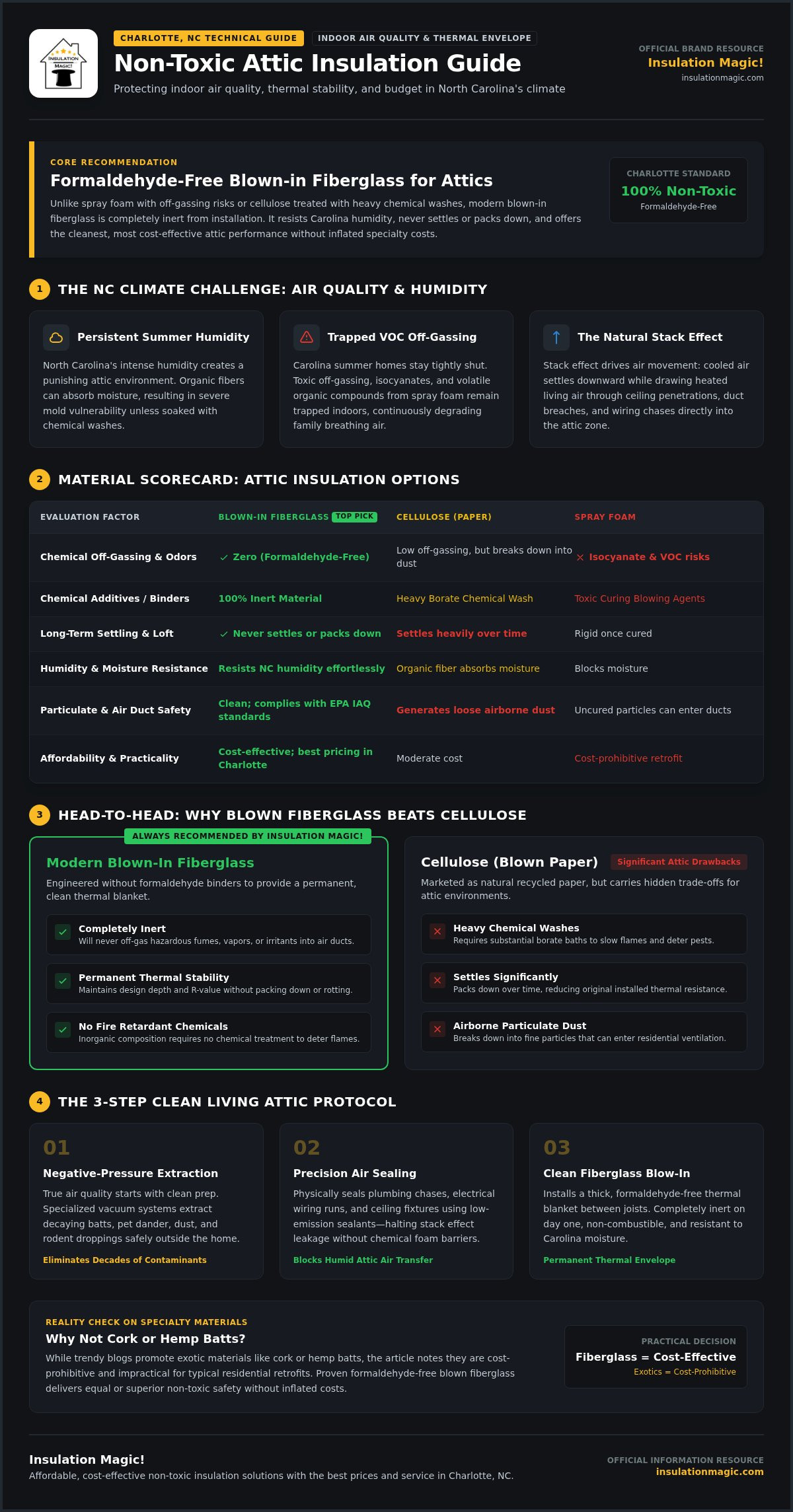
Modern building science prioritizes thermal envelopes that protect living zones from outdoor temperature swings without degrading indoor air. While some specialty blogs suggest exotic materials like hemp batts or cork for clean living, these options are often cost-prohibitive and impractical for typical residential retrofits. When evaluating practical non-toxic home insulation options NC families need, the focus must center on proven, inert materials that perform reliably in our distinct climate.
North Carolina's persistent summer humidity creates a challenging attic environment. Organic fibers can absorb moisture, creating vulnerability to mold growth unless treated with heavy chemical additives. Exploring standard building insulation materials reveals that inorganic, formaldehyde-free options offer thermal resistance without introducing hazardous compounds into your home.
Indoor Air Quality and Chemical Off-Gassing Concerns
Chemical off-gassing from volatile organic compounds (VOCs) presents a real hazard to residential breathing air. Traditional spray foam requires on-site chemical reactions involving isocyanates and blowing agents. If mixed improperly, these uncured components can release airborne irritants and lingering chemical odors directly into ventilation systems. Choosing non-toxic home insulation options NC properties can support safely eliminates these installation risks completely. Discover how our dedicated, spray-foam-free home insulation services help Charlotte homeowners maintain pristine, allergen-free air while keeping installation straightforward and affordable.
Why Blown Fiberglass Outperforms Cellulose and Foam for Attics
Modern blown-in fiberglass represents the gold standard for attic thermal performance. Engineered without formaldehyde binders, this inert material provides a stable thermal blanket that never off-gasses harmful fumes or chemical vapors into your living areas. While spray foam poses installation hazards and requires intense chemical curing, blown fiberglass remains completely inert from the moment it settles between your ceiling joists. For homeowners researching non-toxic home insulation options NC specialists recommend, blown fiberglass delivers clean peace of mind alongside long-term durability.
Comparing Blown Fiberglass Against Cellulose for Clean Attic Spaces
While cellulose is often marketed as natural, it consists of shredded newspaper heavily treated with borate chemical washes to deter pests and slow flame spread. Over time, cellulose can break down, generate airborne dust, and settle significantly, reducing its initial thermal resistance. In contrast, blown fiberglass resists Carolina humidity effortlessly without packing down, rotting, or requiring chemical retardants. This durability aligns directly with federal indoor air quality protections by keeping loose particulates out of your air ducts.
Insulation Magic! always recommends fiberglass blown in attic insulation over cellulose because it delivers pristine air quality and permanent thermal stability. We believe keeping your home safe shouldn't require paying inflated prices for trendy, exotic materials. We deliver cost-effective, non-toxic installations backed by the best service and pricing in the greater Charlotte area. When you're ready to upgrade your attic comfort, you can easily schedule an attic assessment online with our meticulous local team.
Pairing Non-Toxic Materials with Precision Air Sealing in NC
Even the purest insulation cannot block thermal transfer if conditioned indoor air freely escapes into the attic. Stack effect naturally drives cool air downward while drawing heated living air up through gaps around light fixtures, plumbing chases, and wiring runs. Air sealing physically closes these breaches, keeping your conditioned climate where it belongs. Pairing meticulous sealing with clean blown fiberglass ensures that non-toxic home insulation options NC homeowners install deliver their full efficiency potential without needing chemical-heavy spray foam.
Unlike invasive chemical foam barriers, physical air sealing uses targeted, low-emission materials to halt air leakage precisely where needed. This approach aligns directly with the EPA guide to greener insulation, which emphasizes choosing non-hazardous materials that limit exposure to toxic binders and isocyanates while still eliminating drafts.
Safe Installation and Removal Practices for Healthier Living
True indoor air quality begins with clean preparation. Laying fresh, chemical-free insulation directly over decaying batts traps decades of dust, pet dander, and rodent droppings beneath the new layer. Professional removal safely extracts this hazardous debris outside the home using specialized negative-pressure vacuum systems before new blown fiberglass enters.
Learn how our specialized team protects your family through professional insulation removal in Charlotte prior to starting fresh work. Combining clean removal with precision sealing delivers an airtight, odor-free thermal boundary that keeps utility bills low and breathing air pure.
Breathe Easier with Proven Non-Toxic Attic Solutions
Protecting your family's indoor air quality doesn't have to be complicated or expensive. Pairing formaldehyde-free blown-in fiberglass with meticulous air sealing creates a dependable thermal boundary without the chemical off-gassing risks of spray foam. See why area homeowners trust our craftsmanship by browsing our genuine customer reviews across Charlotte and Waxhaw. When weighing non-toxic home insulation options NC families need, opting for inert materials ensures lasting protection with the best prices and service in the region.
A cleaner living space, lower seasonal utility bills, and genuine peace of mind are just one thoughtful project away for your home.
Frequently Asked Questions
Is blown-in fiberglass insulation safe for household indoor air quality?
Yes, modern blown-in fiberglass is completely safe for indoor breathing air. Unlike older building materials, contemporary fiberglass is manufactured without formaldehyde binders or volatile chemicals. Once installed, it remains completely inert and will not release toxic fumes or off-gas harmful compounds into your living areas. It keeps your home's air clean, fresh, and free from airborne chemical sensitizers.
Why is blown-in fiberglass recommended over cellulose for attic insulation?
Blown-in fiberglass delivers superior stability and cleaner performance compared to cellulose. Cellulose consists of shredded paper treated with heavy chemical retardants like borates, which can create airborne dust and settle significantly over time. Blown fiberglass resists moisture naturally without chemical treatments, never packs down, and stays inert. When evaluating non-toxic home insulation options NC residents prefer, fiberglass offers permanent, dust-free attic performance.
What makes spray foam insulation a health concern for sensitive homeowners?
Spray foam relies on a complex chemical reaction between isocyanates and resins mixed directly inside your attic. If temperature or chemical ratios are even slightly off during application, uncured foam can off-gas lingering odors and volatile compounds. These chemical vapors can trigger asthma, sinus headaches, and respiratory sensitivities. Insulation Magic! avoids spray foam entirely, relying instead on mechanical air sealing and clean fiberglass.
Can non-toxic insulation withstand the humid North Carolina summer climate?
Yes, non-toxic blown fiberglass handles North Carolina's summer humidity exceptionally well because it is an inorganic material. While organic fibers can absorb moisture and support mildew, fiberglass remains unaffected by dense ambient moisture. For homes across Charlotte, Waxhaw, and Matthews, pairing blown fiberglass with precision air sealing creates dependable non-toxic home insulation options NC homeowners trust to keep summer moisture outside.
Disclaimer
This blog is intended to provide general information about insulation, energy efficiency, and home comfort based on years of experience. While we strive to keep content accurate and up to date, results may vary based on your home's construction, condition, and climate. Contact Insulation Magic for a personalized assessment and recommendations.


